Komatsu and AIM Put Physical AI at the Centre of Autonomous Earthmoving
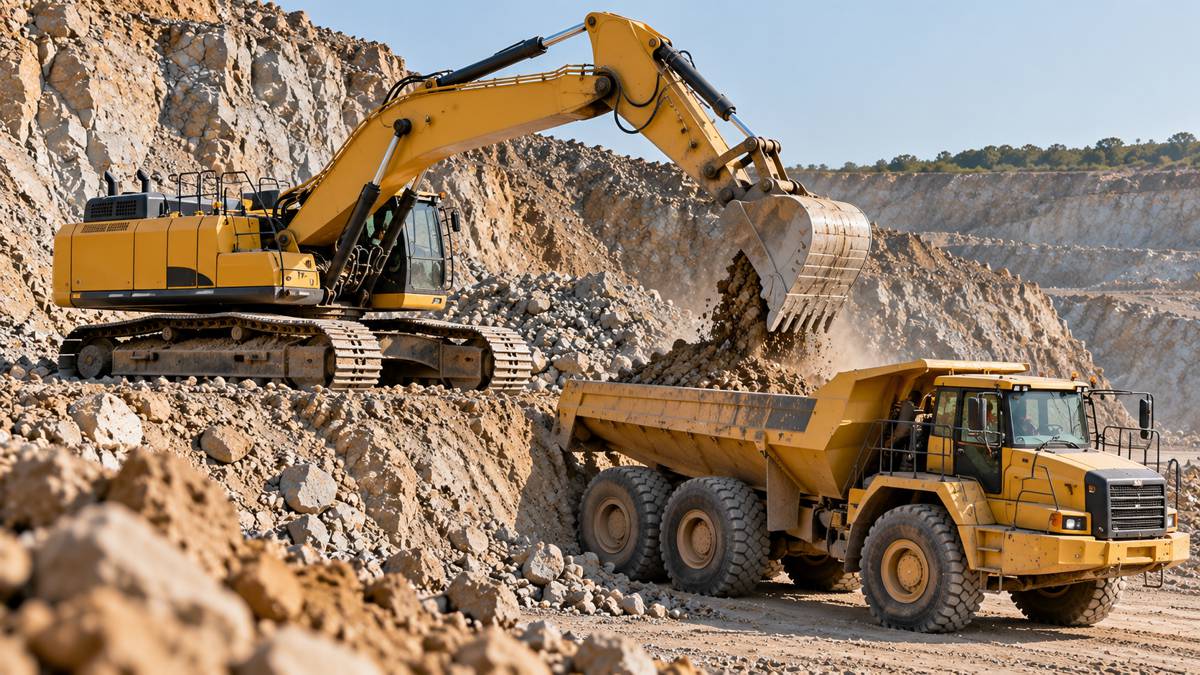
Komatsu has spent nearly two decades proving that heavy machines can run themselves. Its FrontRunner system put the first commercial autonomous haul trucks into mines in 2008, and in April 2026 the company became the first manufacturer to commission a thousand ultra-class driverless trucks, machines that have collectively shifted more than 11.5 billion tonnes of material.
Yet the strategic partnership Komatsu and its EARTHBRAIN subsidiary have now struck with AIM Intelligent Machines, a four-year-old Seattle-area startup, is an admission that the hardest part of construction autonomy sits well beyond the mine haul road. Moving earth on a live building site, where the terrain changes by the hour and no two tasks repeat, is a fundamentally different problem to hauling ore along a fixed route, and it is the problem the wider market is now racing to solve.
The commercial significance of this deal is not that Komatsu has discovered autonomy. It is that a century-old original equipment manufacturer with world-leading haulage technology has chosen to buy earthmoving intelligence from an outside developer rather than build the entire stack in-house, and has done so precisely as a wave of venture capital floods brand-agnostic retrofit autonomy. That timing is the story.
The value in construction equipment is migrating from the iron itself towards the software, data and autonomy layer that sits on top of it, and Komatsu is moving to make sure that layer runs through its ecosystem rather than around it.
Briefing
- Komatsu, EARTHBRAIN and AIM Intelligent Machines have moved their autonomous earthmoving collaboration into commercial deployment, with Komatsu machines already operating at United States customer sites and a Japanese launch planned from 2027.
- The solution pairs EARTHBRAIN’s Smart Construction planning and terrain data with AIM’s physical AI platform, allowing bulldozers and hydraulic excavators to determine their own methods and routes and execute earthmoving tasks autonomously.
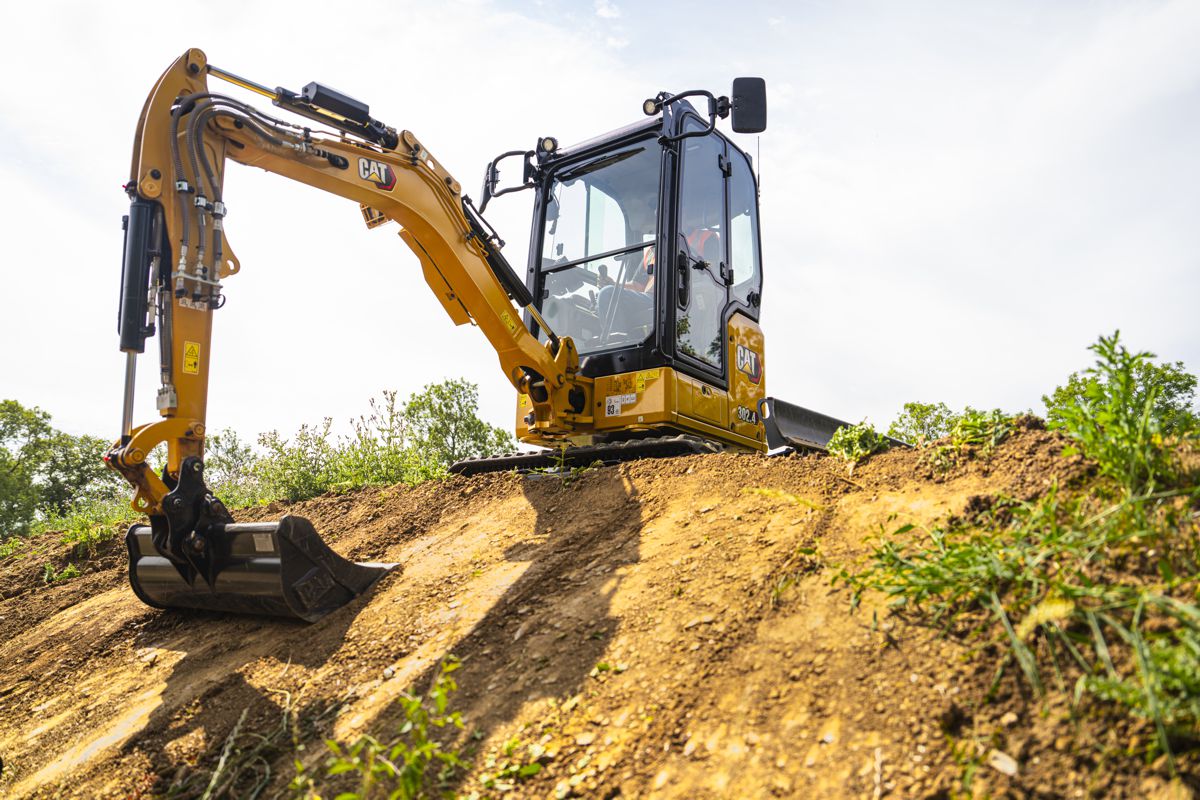
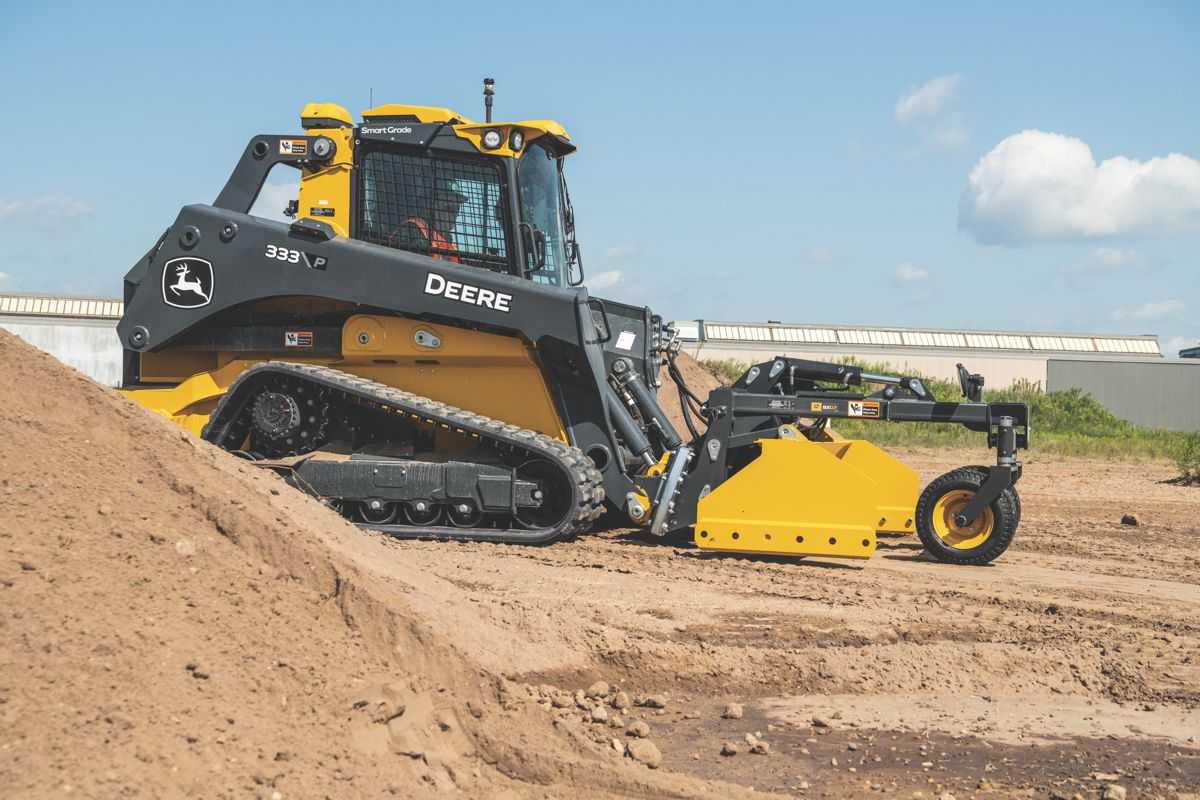
- AIM’s technology retrofits existing bulldozers and excavators regardless of make, model or age, letting contractors add autonomy to current fleets rather than waiting for equipment replacement.
- The deal positions Komatsu against a fast-growing field of venture-backed retrofit autonomy developers, including Bedrock Robotics, Built Robotics and Gravis Robotics, many founded by former self-driving car engineers.
- The partnership signals a wider shift in where construction equipment value is captured, moving from one-off machine sales towards recurring software, autonomy and data revenue anchored in Smart Construction.
A Strategic Bet on Borrowed Intelligence
The partnership brings together three capabilities that have until now sat in separate hands. Komatsu contributes the machines and a global service network; EARTHBRAIN contributes Smart Construction, the digital platform that connects site planning, machine guidance, progress tracking and remote operation; and AIM contributes the physical AI that lets a bulldozer or hydraulic excavator interpret a construction plan, decide its own method and travel route, and execute the work without an operator in the cab.
The combination is designed to run as a single digital workflow, from the design of the target terrain through to autonomous execution and performance reporting, and the companies have already moved past validation into commercial deployment.
That commercial status matters more than the announcement language suggests. Komatsu autonomous machines built on AIM’s platform are already working at customer sites in the United States, with a Japanese market introduction planned from 2027. Crucially, AIM’s technology can be retrofitted to existing bulldozers and excavators, which means a contractor can introduce autonomy across a current fleet without waiting for a capital replacement cycle.
For an industry where a single large excavator represents a six-figure asset with a working life measured in thousands of hours, the ability to add autonomy without buying new iron changes the adoption maths entirely, and it is the same lever that a cohort of well-funded startups is using to prise open the market.
Why a Century-Old Manufacturer Is Buying Autonomy It Could Build
Komatsu’s autonomy record makes the make-or-buy decision behind this partnership genuinely revealing. The company already owns one of the most mature autonomous systems in heavy industry, and it is extending automation across mine operations with driverless water trucks and unified fleet control. It is also developing autonomous articulated and rigid dump trucks for civil and quarry work through a separate collaboration with TIER IV, the open-source autonomous driving specialist behind the Autoware stack, targeting practical use in Japan by fiscal 2027.
On paper, a manufacturer with that depth of capability might have been expected to internalise earthmoving autonomy as well.
The reason it has not comes down to the nature of the task. Autonomous haulage is a structured, repetitive problem on private, controlled ground, which is why it scaled first. Dozing, grading and excavating on an active construction site demand continuous perception, judgement and adaptation in an unstructured environment shared with people and other plant, and that is closer to the perception challenge that self-driving car engineers have spent a decade attacking.
AIM’s founding team carries exactly that pedigree, with chief executive Adam Sadilek having spent years at Waymo and Google before the company was founded in 2021. Rather than rebuild that expertise from scratch and lose ground while doing so, Komatsu has chosen to integrate a specialist and keep its own effort focused on the machine, the ecosystem and the customer relationship. As Sadilek put it, “By combining AIM’s physical AI platform with Komatsu’s ecosystem, construction machines can autonomously perform earthmoving tasks at the jobsite.”
The Retrofit Wave Komatsu Has Chosen to Absorb
The competitive backdrop explains the urgency. AIM raised roughly $50 million in 2025 from investors including Khosla Ventures, General Catalyst, Human Capital, Ironspring Ventures, Mantis and DCVC, and has since won a United States Air Force contract for autonomous airfield repair. It is far from alone. Bedrock Robotics, founded in 2024 by former Waymo engineers, closed a $270 million Series B in February 2026 that took its total funding above $350 million, and is pushing towards fully operator-less excavator deployments with general contractors including Sundt and Zachry.
Built Robotics has been retrofitting excavators and dozers with its Exosystem kit for years and holds a training partnership with the International Union of Operating Engineers. Gravis Robotics, working with Develon and Hitachi, has taken its physical AI platform from live deployments at Manchester Airport and Holcim quarries into a United States expansion.
The common thread across these challengers is the retrofit model, and it is precisely the disintermediation threat that should concentrate any manufacturer’s attention. A brand-agnostic autonomy kit that turns any excavator into a self-operating machine, whatever badge it wears, decouples the intelligence from the iron and lets a startup sell the highest-margin part of the future jobsite directly to contractors.
Left unchecked, that dynamic relegates the manufacturer to supplying commoditised hardware while the software layer, and the customer relationship, migrates elsewhere. By folding AIM’s retrofit-capable platform into Smart Construction, Komatsu converts that threat into a channel. The retrofit is still the entry point, but it now deepens engagement with Komatsu’s digital ecosystem rather than bypassing it, and it works across the mixed fleets that real sites actually run.
Moving the Money From Iron to the Data Layer
The economics underneath this shift are more interesting than the technology. AIM has indicated that each autonomous machine can generate in the order of $1 million a year in additional value for an operator, largely by lifting utilisation on assets that too often sit idle for want of available operators, and its commercial model takes a share of that created value rather than selling a box outright.
That is a recurring, outcome-linked revenue structure of the kind construction equipment has rarely supported, and it points to where margin in this industry is heading. Komatsu already understands the model at scale, having reported that FrontRunner generated around $2.4 billion in assessed social impact in 2024, and it has every incentive to anchor the next wave of value-based autonomy inside a platform it controls.
Smart Construction is that anchor. Built through EARTHBRAIN, a joint venture of Komatsu, NTT Communications, Sony Semiconductor Solutions and Nomura Research Institute, it already links planning, digitally enabled machines, site management and remote operation, and adding autonomous execution completes the loop from design intent to finished terrain.
Chikashi Shike, President of Komatsu’s Solution Division, framed the ambition in exactly those terms, describing a partnership that will “integrate Smart Construction with AIM’s technology to create a seamless connection from construction planning and management to autonomous execution, accelerating the optimization of entire jobsites.” For contractors, the appeal is a single workflow rather than a patchwork of point solutions. For Komatsu, the strategic prize is a durable software and data relationship that outlasts any individual machine sale and protects the aftermarket that sits alongside it.
Two Roads to the Autonomous Jobsite
The Komatsu approach throws its principal rival’s strategy into sharp relief. Caterpillar used CES 2026 and CONEXPO-CON/AGG 2026 to stage its own autonomy offensive, unveiling intelligent excavators and loaders, a Cat AI Assistant and an expanded collaboration with NVIDIA, all built on more than three decades of automation heritage drawn largely from mining haulage. Caterpillar’s instinct has been to keep the autonomy stack close, integrating it vertically into its own machines, dealer network and data platform. It is a coherent bet on scale and control, and with 2024 sales and revenues of $64.8 billion the company has the resources to pursue it.
Komatsu has taken the other road, partnering with an external specialist and running a portfolio of collaborations, AIM for earthmoving and TIER IV for haulage, rather than a single monolithic programme. Each approach carries a different risk profile. Vertical integration promises tighter control and cleaner economics if the in-house technology keeps pace, but it exposes the manufacturer to the speed of external innovation.
The partner-and-integrate model buys access to that outside speed and reduces development risk, at the cost of sharing value and depending on alliances holding together. What both manufacturers have concluded is identical, and it is the point contractors should absorb: the competitive battleground has moved off the machine and onto the intelligence that directs it.
The Labour Arithmetic Underwriting Adoption
Whichever strategy prevails, the demand signal driving all of it is structural rather than cyclical. Associated Builders and Contractors has estimated that the United States construction sector needs to attract around 349,000 net new workers in 2026 alone to meet demand, and the shortage of skilled equipment operators has been widening for years across mature markets.
Autonomy is not being pitched as a way to remove people so much as a way to let a constrained workforce do more, moving experienced operators into higher-value site supervision while machines handle repetitive earthmoving. AIM has argued that automation lets construction firms build more with the teams they already have, and that framing is landing with an industry that simply cannot recruit its way out of the gap.
Safety reinforces the case. Construction remains one of the most hazardous sectors in developed economies, and AIM, citing federal labour statistics, notes that a construction worker dies in the United States roughly every 99 minutes. Autonomous operation supports zero-entry working, keeping people away from the most dangerous machine interactions, which addresses risk at its source rather than mitigating it with protective equipment.
The macro backdrop is equally supportive of investment: McKinsey has estimated that around $106 trillion of cumulative infrastructure investment will be required globally by 2040, from data centres and reindustrialisation to housing and transport. That pipeline of earthmoving, set against a shrinking pool of operators, is why capital is flowing into autonomy now and why manufacturers are moving to secure their position in it.
What Fleet Owners, Contractors and Investors Should Do Next
For fleet owners and contractors, the practical takeaway is that autonomous earthmoving has crossed from pilot into procurement, and the retrofit route means the decision no longer waits on a fleet replacement cycle.
The sharper question is platform choice rather than machine choice. Committing to autonomy embedded in Smart Construction, in a rival manufacturer’s ecosystem, or in an independent developer’s kit carries real consequences for data ownership, mixed-fleet flexibility and long-term switching costs, and those consequences deserve as much scrutiny as headline productivity claims. Buyers should treat autonomy as a multi-year platform decision, test it against their own mixed fleets, and weigh the recurring, value-linked commercial models now emerging against the familiar economics of outright purchase.
For investors and industry strategists, this partnership is a marker of where value is consolidating. The manufacturers with the strongest futures will be those that own the intelligence and data layer of the jobsite, whether built or borrowed, not merely those that build the best machines.
Komatsu’s decision to align with AIM, Caterpillar’s decision to integrate autonomy in-house, and the scale of venture funding behind Bedrock, Built and Gravis all point the same way. The next phase of competition in heavy equipment will be fought over software, autonomy performance and recurring revenue, and the companies positioning for it today are the ones most likely to define how the world’s infrastructure gets built over the coming decade.
Key Industry Questions
- What exactly does the Komatsu and AIM Intelligent Machines partnership deliver? It combines three assets into one workflow. EARTHBRAIN’s Smart Construction supplies the construction plan and target terrain data, AIM’s physical AI platform interprets that plan and lets bulldozers and hydraulic excavators determine their own methods and routes, and Komatsu supplies the machines and global service network. The result is a single digital process running from planning through autonomous execution to progress visualisation and performance reporting. The solution has already moved beyond testing into commercial deployment, with Komatsu autonomous machines operating at United States customer sites and a Japanese market introduction planned from 2027. It is intended to automate and optimise the whole construction process rather than a single task.
- Can existing machines be made autonomous, or is new equipment required? AIM’s technology is designed to retrofit existing bulldozers and hydraulic excavators regardless of make, model, size or age, which is central to its commercial appeal. Contractors can introduce autonomy gradually across a current fleet rather than waiting for a capital replacement cycle, spreading cost and reducing the risk of committing to unproven technology all at once. This matters because heavy machines are long-life, high-value assets, and the ability to add intelligence without buying new iron changes the return-on-investment calculation. It also allows autonomy to operate across the mixed fleets that real sites run, rather than being confined to a single manufacturer’s latest models.
- How does this differ from Komatsu’s existing autonomous haul trucks? Komatsu’s FrontRunner system automates haulage, moving material along largely fixed routes on controlled mine sites, and it is highly mature, having surpassed a thousand commissioned trucks and 11.5 billion tonnes moved since 2008. Earthmoving autonomy is a harder, less structured problem. Dozing, grading and excavating on active construction sites require continuous perception and judgement in changing conditions shared with people and other plant. That closer resemblance to self-driving car challenges is why Komatsu has partnered with a specialist whose founders came from the autonomous vehicle sector, rather than extending its haulage stack directly into the task.
- Who are the main competitors in autonomous earthmoving? The field is crowded and well funded. Bedrock Robotics raised a $270 million Series B in early 2026, taking total funding above $350 million, and is pursuing operator-less excavator deployments with general contractors. Built Robotics has long offered retrofit autonomy kits and holds a training partnership with the International Union of Operating Engineers. Gravis Robotics, working with Develon and Hitachi, has expanded from European deployments into the United States. Among manufacturers, Caterpillar has mounted a major autonomy push built on decades of experience and a deepening NVIDIA collaboration. Komatsu is therefore competing against both venture-backed disruptors and its largest traditional rival simultaneously.
- Why would a manufacturer partner rather than build autonomy itself? The decision reflects speed and focus. Earthmoving autonomy draws heavily on perception expertise concentrated in the self-driving vehicle sector, and rebuilding that capability internally would cost time in a fast-moving market. By integrating AIM, Komatsu gains access to proven technology while keeping its own effort on the machine, the ecosystem and the customer relationship. The approach also lets Komatsu absorb the retrofit model that startups are using to reach contractors directly, turning a potential disintermediation threat into a channel that runs through its Smart Construction platform. The trade-off is shared value and dependence on the alliance, which the company evidently judges worthwhile.
- What does the partnership mean for equipment operators and site jobs? The technology is being positioned as a response to a structural labour shortage rather than as straightforward job displacement. Associated Builders and Contractors has estimated the United States needs around 349,000 net new construction workers in 2026, and skilled operators are in short supply across mature markets. Autonomy is intended to let constrained teams achieve more, shifting experienced operators towards higher-value site supervision while machines handle repetitive earthmoving. Zero-entry working also removes people from the most dangerous machine interactions. Roles will change rather than simply vanish, with growing demand for operators who can plan, oversee and manage autonomous fleets.
- How is the commercial model changing for construction equipment? Value is shifting from one-off machine sales towards recurring, outcome-linked revenue. AIM has indicated each autonomous machine can generate around $1 million a year in additional value by lifting utilisation, and its model takes a share of that value rather than selling hardware outright. Embedding autonomy in Smart Construction gives Komatsu a durable software and data relationship that outlasts individual sales and protects its aftermarket. For buyers, this means weighing subscription and value-share arrangements against familiar purchase economics, and treating autonomy as a multi-year platform commitment with implications for data ownership and switching costs.
- When will autonomous earthmoving be widely available? It is already commercially deployed rather than experimental. Komatsu machines running AIM’s platform are operating at United States customer sites now, with a Japanese launch planned from 2027, and rival developers are targeting operator-less deployments over the same period. Widespread adoption will depend on proven reliability across varied site conditions, clear commercial terms, and contractor confidence in safety systems. The retrofit approach should accelerate uptake by lowering the barrier to entry. Realistically, the next few years will see autonomous earthmoving move from early commercial deployments with leading contractors towards broader mainstream use as the technology and the supporting economics mature.
Strategic Takeaways
- Autonomous earthmoving has crossed from pilot to procurement, and the retrofit model means contractors can adopt it across existing mixed fleets without waiting for a capital replacement cycle.
- The most valuable position in heavy equipment is shifting from building the best machine to owning the autonomy, software and data layer that directs it, which is why Komatsu is anchoring AIM’s technology inside Smart Construction.
- Komatsu’s partner-and-integrate strategy and Caterpillar’s build-in-house approach represent two divergent bets on the same conclusion, that competition has moved off the iron and onto the intelligence.
- Recurring, value-linked commercial models are displacing outright equipment sales, so buyers should scrutinise data ownership, mixed-fleet flexibility and long-term switching costs as carefully as headline productivity gains.
- A structural operator shortage and a vast global infrastructure pipeline make autonomy adoption a matter of when rather than whether, positioning the manufacturers and developers that move early to shape how infrastructure is built over the coming decade.