One Bobcat’s T86 Compact Track Loader and a $59 Billion Market
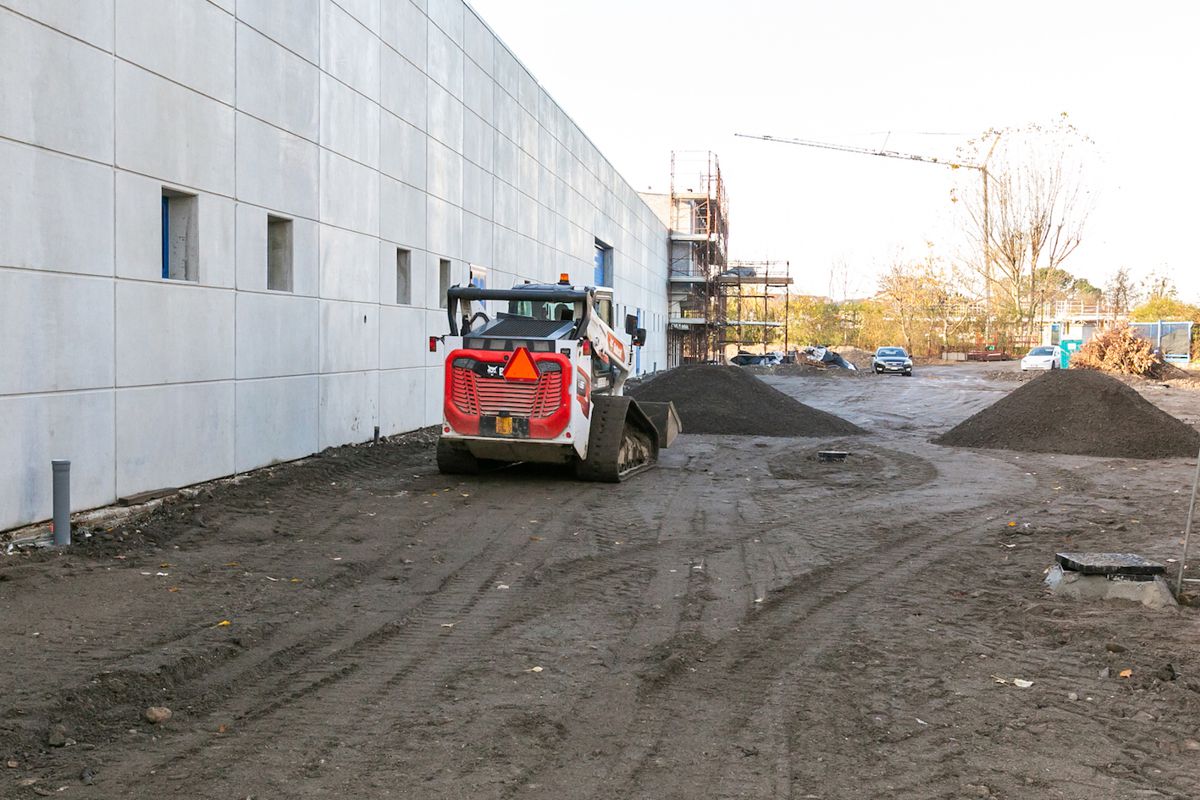
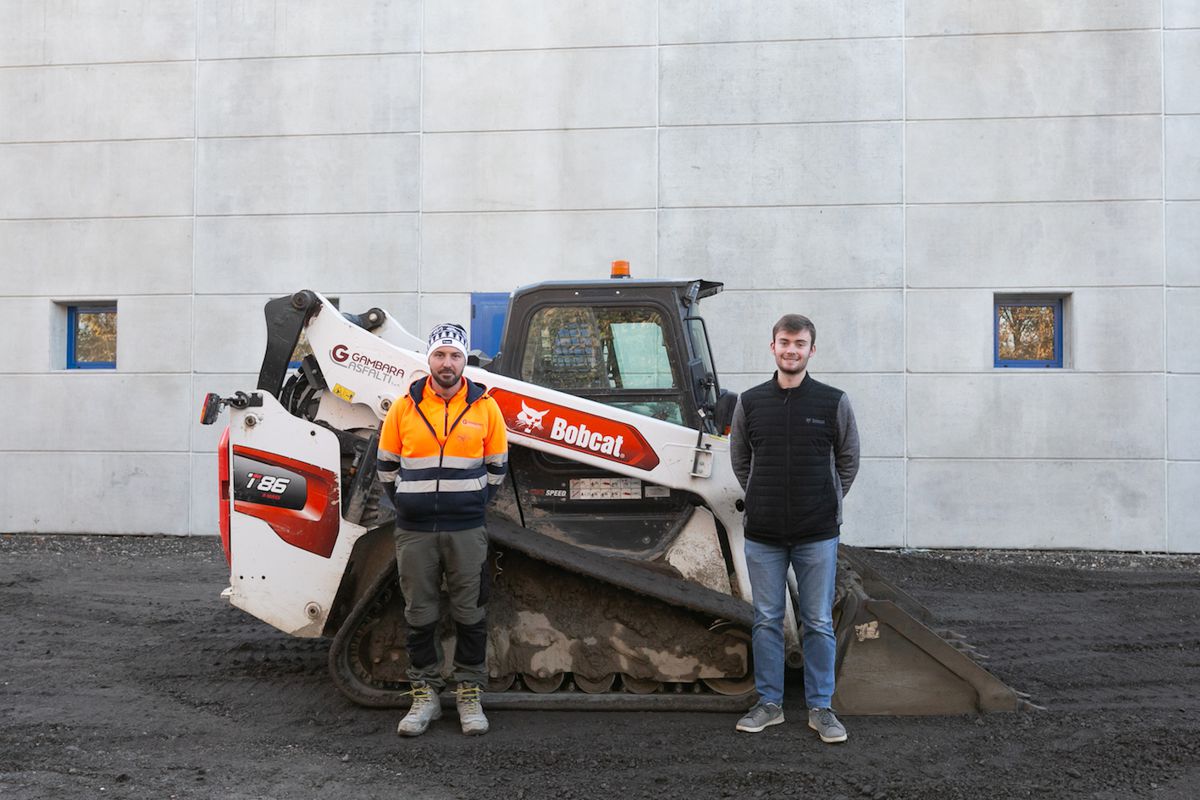
A single compact track loader arriving on a roadworks site near Brescia would not normally register as market news. Gambara Asfalti, a paving and asphalt contractor of forty years’ standing that works across the northern Italian provinces of Brescia, Cremona, Mantua, Parma and Piacenza, has added one Bobcat T86 to its fleet and now runs it continuously through the preparatory phases of its contracts.
Taken in isolation, that is a routine equipment decision by a competent regional specialist. Read against the wider market, it is a small but revealing data point in the most commercially significant shift in construction plant: the steady migration of value, competition and manufacturer investment towards the compact class.
Compact loaders now sit at the centre of a market that the largest manufacturers are actively fighting to control. The Business Research Company valued the global compact construction equipment sector at roughly US$46.7 billion in 2025 and expects it to approach US$59.4 billion by 2030, a trajectory built on demand for smaller, attachment-driven machines that can absorb work previously spread across several single-purpose units.
That growth helps explain why Doosan Bobcat spent late 2025 pursuing a multi-billion-dollar takeover of a European rival, and why it opened simultaneous patent actions against Caterpillar across three jurisdictions in the same period. The T86 working through topsoil on a Gambara Asfalti site is the visible, operating end of a business that has become one of the industry’s principal battlegrounds.
Briefing
- Gambara Asfalti has deployed a Bobcat R-Series T86 compact track loader for continuous site preparation and material handling on roadworks contracts across five northern Italian provinces, and is already weighing the purchase of a second unit alongside a wheeled loader and further attachments.
- The T86 headlines Bobcat’s R-Series in engine and hydraulic output, pairing a 78 kW (105 HP) 3.4-litre Stage V engine with auxiliary hydraulic flow selectable up to 159 l/min in the Bobcat-exclusive Super Flow mode.
- The Business Research Company valued the global compact construction equipment market at approximately US$46.7 billion in 2025 and forecasts close to US$59.4 billion by 2030, as contractors consolidate tasks onto versatile carriers.
- Doosan Bobcat reported full-year 2025 revenue of about US$6.18 billion, with European, Middle Eastern and African demand for compact equipment leading its 2026 recovery, up 18 per cent year on year in the first quarter.
- Bobcat’s abandoned Wacker Neuson takeover and its patent litigation against Caterpillar underline how aggressively manufacturers are now competing for position in a segment where much of the value has shifted to control systems, hydraulics and dealer support.
Why The Compact Loader Now Leads Construction’s Growth Curve
The compact class has become the part of the equipment market that behaves least like a cyclical afterthought and most like a structural growth story. The Business Research Company links the sector’s expansion to sustained public and private investment in residential, commercial and infrastructure work, alongside a broader shift towards electrification in Europe and North America.
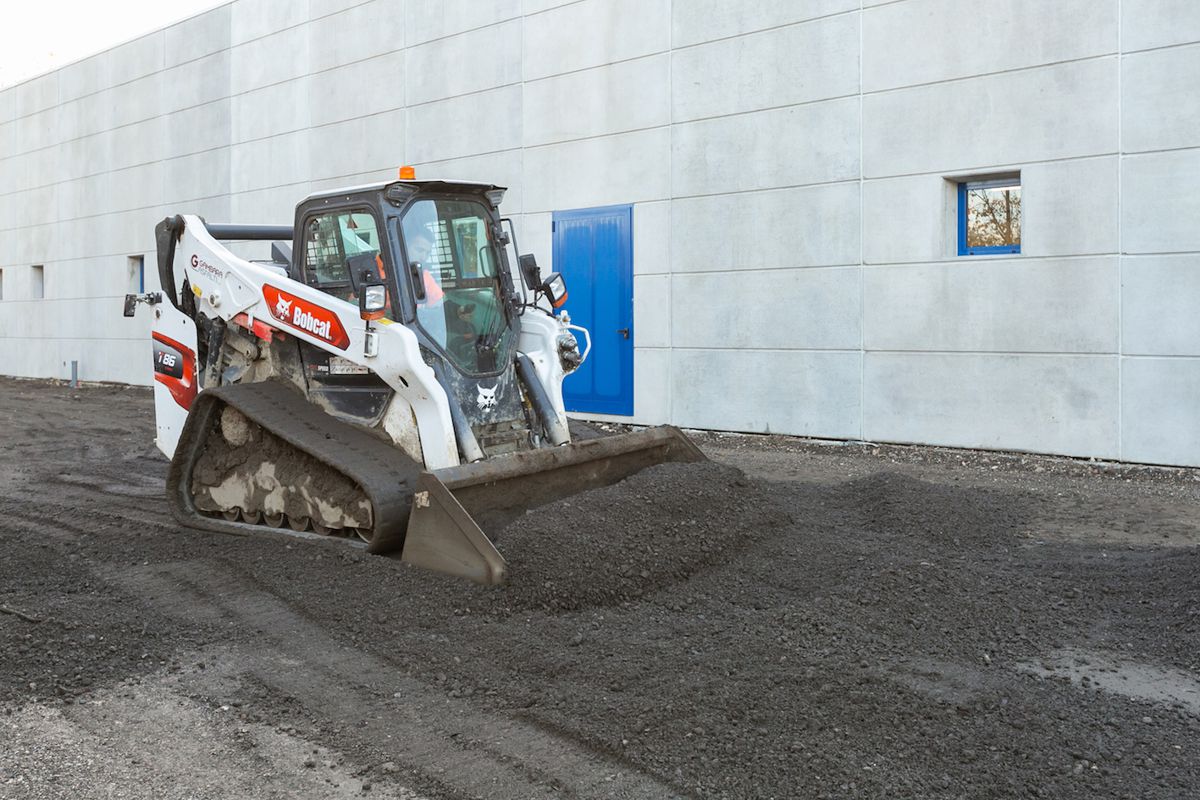
For a paving and yard-construction firm such as Gambara Asfalti, the appeal is more immediate than any market forecast. A machine that can strip topsoil, level a sub-base and shift kerbs and pipes with a change of attachment removes the need to mobilise and finance a separate unit for each of those tasks.
That consolidation logic is reshaping how contractors think about fleet composition. Where an older approach might have justified a small excavator, a dedicated loader and a telehandler for the preparatory phase of a roadworks contract, a single high-output compact track loader running the right attachments can cover much of that ground.
The commercial consequence is a better utilisation rate on fewer assets, lower transport and insurance overheads, and a simpler maintenance regime built around one carrier rather than several. A persistent shortage of experienced operators sharpens the case further, since a versatile machine that one skilled operator can run across multiple duties is worth more to a stretched crew than a yard full of specialised iron sitting idle between phases.
One Carrier, Many Machines: The Hydraulic Case
The feature that turns a compact track loader from a single-purpose earthmover into a genuine platform is its hydraulic system, and this is where the T86 does most of its commercial work. The machine offers three selectable auxiliary flow levels: 87 l/min for buckets, hauling and lower-demand tools, 138 l/min in High Flow for more intensive attachments, and 159 l/min in Super Flow for the most hydraulically hungry applications. That range matters because it dictates which attachments a contractor can actually run at full productivity. A planer or a cold-milling head that starves for oil on a lesser machine can be driven properly on a Super Flow carrier, which is precisely the distinction that determines whether an attachment strategy delivers on site or disappoints.
Gambara Asfalti’s own plans illustrate how that flexibility converts into a purchasing pattern. Majkol Fornari, Site Manager at the firm, describes a machine already earning its place across the business and setting the stage for further investment: “We use it every day across all our sites—primarily with a bucket for ground preparation, ranging from removing irregularities to surface levelling, but also with forks for handling kerbs, pipes and other site materials. The machine has proved to be powerful and capable of meeting the most complex demands of our work. Thanks to this performance, we are considering purchasing a second T86 and a wheeled loader, as well as new Bobcat attachments like the planer and trencher, to further expand our operational capabilities on site.”
The pattern is instructive for manufacturers and dealers alike, because the money increasingly follows the carrier-plus-attachment ecosystem rather than the base machine alone. Each additional tool extends the loader’s addressable work without a proportional rise in fleet count, and it deepens the customer’s commitment to a single brand’s hydraulic architecture and coupling standards.
Continuous Duty On The Roadworks Site
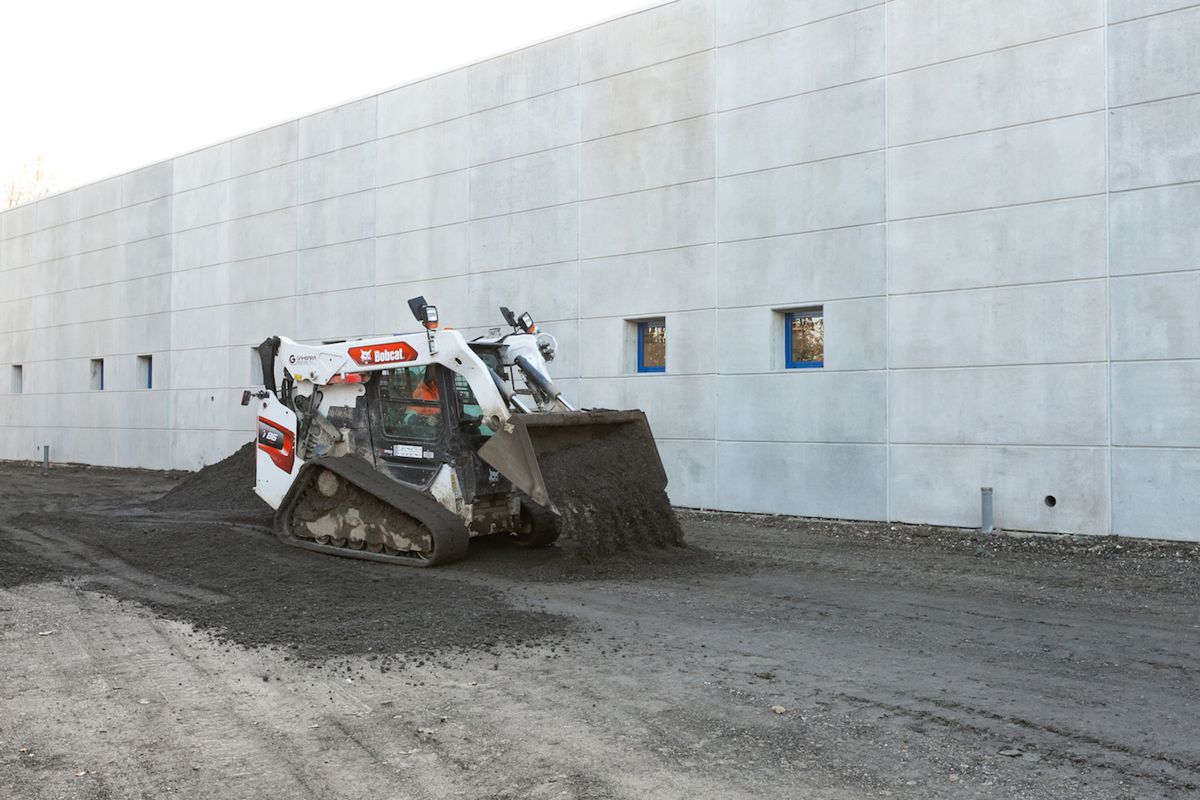
The value of a compact track loader on a paving programme is measured less in headline capability than in its ability to run without interruption at the front of the schedule. On a roadworks project at Dello in the Brescia province, the T86 handled the full sequence of ground preparation ahead of the paving crews, stripping the topsoil layer to remove irregularities and debris, then spreading and levelling stabilised base material to leave a uniform, compacted surface.
That preparatory phase gates everything downstream, since a paving team cannot proceed over a base that has not been cut and levelled to specification. A reliable prep machine therefore protects the productivity of the far more expensive operations that follow it, which is why continuity of operation, rather than peak output, tends to decide the commercial case.
The engineering that underpins that continuity is deliberately unglamorous. The proven 3.4-litre Bobcat Stage V engine delivering 78 kW answers the two constraints that matter most on a European site, namely emissions compliance in built-up areas and fuel consumption over long shifts. Fornari is unequivocal about the machine’s standing in the fleet, describing it as “the flagship of the Bobcat range” and “an extremely powerful machine that is making many of our tasks simpler and faster.”
For a contractor producing its own asphalt and running work across five provinces, the ability to keep a single machine moving through back-to-back preparatory phases has a direct bearing on how many contracts the business can service in a season. That is the quiet productivity argument that has driven compact track loaders from a niche into the mainstream of European roadworks fleets.
Aftersales Decides The Next Purchase
The most under-appreciated part of a compact equipment transaction is what happens after the sale, and this is where repeat business is genuinely won or lost. Gambara Asfalti bought its T86 through the dealer Zanon & Ormac, which operates from five locations across northern Italy, with maintenance and repair workshops in Bolzano, Trento and Bergamo, a dedicated workshop site at Torbole Casaglia in Brescia, and mobile units that carry qualified assistance directly to site.
Tommaso Brognoli, Director of Gambara Asfalti, is explicit about the weight that support carries in the relationship: “We are thoroughly pleased with the purchase of the Bobcat T86 loader, supplied by the dealer, Zanon, with whom we have built a relationship based on deep trust. The availability, rapid response times and reliability Zanon demonstrates in its after-sales service are of fundamental value to us. We know we can always count on them as a serious and competent partner.”
That endorsement points to the structural advantage embedded in Bobcat’s route to market. The brand sells through a worldwide network of independent dealers and distributors, and the quality of that network is often the deciding factor when a contractor chooses between broadly comparable machines. A loader that spends a day waiting for parts costs a paving programme far more than the price difference between competing models, so a dealer that can dispatch a mobile workshop and turn a fault around quickly effectively lowers the total cost of ownership.
The commercial significance for the wider market is that the aftermarket has become a moat rather than a service line. When Gambara Asfalti contemplates a second T86, the dealer relationship is doing as much to secure that repeat purchase as the machine’s specification, and that dynamic increasingly favours manufacturers with dense, responsive distribution over those competing on list price alone.
Europe Is Rebuilding Bobcat’s Momentum
The Gambara deployment is best understood as a single visible instance of a regional recovery that is now clearly reflected in Doosan Bobcat’s numbers. The group reported full-year 2025 revenue of about US$6.18 billion at a 7.8 per cent operating margin, a modest decline on the prior year as North American demand softened.
The picture turned in 2026, and Europe led the turn. In the first quarter the company posted revenue of US$1.534 billion, up 6.2 per cent year on year, with the Europe, Middle East and Africa region growing 18 per cent on recovering compact equipment demand, the clearest single growth signal in the results. Second-quarter figures reinforced the trend, with group revenue of US$1.63 billion, operating profit up sharply to US$195 million at an 11.9 per cent margin, and EMEA up a further 10 per cent. That operating-profit jump was flattered by the early recognition of an US$81 million United States tariff refund, and excluding one-off and currency effects the underlying dollar figure was softer, but the regional demand signal held.
The relevant point is what that recovery looks like at ground level. A regional Italian contractor re-equipping its preparatory fleet with a premium compact track loader, and lining up a second, is exactly the kind of purchasing behaviour that aggregates into an 18 per cent regional gain. Doosan Bobcat has guided towards full-year 2026 revenue of around US$6.45 billion, a mid-single-digit increase, while cautioning that demand across major markets remains uneven and that the group is leaning on dealer inventory and market-share gains to drive growth.
Europe’s compact segment is carrying a disproportionate share of that effort, and roadworks, urban infrastructure maintenance and rental-fleet renewal are among the drivers doing the carrying. The T86 at Dello is a footnote in a US$6 billion business, but it is a representative one.
The Contest To Own The Compact Machine
The intensity of the competition for this segment became impossible to ignore over the winter of 2025 and into 2026. In December 2025 Doosan Bobcat’s North American arm opened litigation against Caterpillar, filing in the US District Court for the Eastern District of Texas, lodging a parallel complaint with the US International Trade Commission, and pursuing further actions in the German courts and the Unified Patent Court of the European Union.
Engineering News-Record reported that Bobcat asserted a portfolio of 14 patents, including its Sticksteer joystick machine control and its E-fence geofencing safety software, casting Caterpillar as a late entrant that had built on Bobcat’s innovations. Caterpillar rejected the claims and, in March 2026, filed a counterclaim in the Texas case asserting six of its own patents. It then escalated sharply in late May 2026, opening a separate front with a fresh lawsuit in the US District Court for the District of Delaware and a new complaint to the International Trade Commission over four further patents, while alleging that Doosan Bobcat had run an extensive competitive-intelligence programme to reverse-engineer Caterpillar technology.
The ITC voted to institute an investigation into Doosan Bobcat’s imports in June 2026, and by mid-year the combined dispute spanned more than forty patents filed by both firms over eight decades. The matter is unresolved, but its existence tells the market something important: the value in a modern compact machine has shifted into control systems, energy management and machine-guidance software, and that value is now worth litigating across continents.
Consolidation pressure ran alongside the courtroom manoeuvring. In December 2025 Doosan Bobcat confirmed advanced discussions to acquire roughly 63 per cent of Germany’s Wacker Neuson, in a deal reported at around US$3.4 billion that would have folded a substantial European compact and light-equipment maker into the group and widened its dealer footprint across the continent. Those talks were called off in January 2026 without a transaction. For equipment buyers, the episode and the litigation carry a shared lesson.
The manufacturers competing for the compact segment are prepared to spend heavily on acquisition and to defend their engineering aggressively, which means platform continuity, intellectual-property ownership and the durability of a chosen brand’s technology roadmap now belong on the same evaluation checklist as horsepower and hydraulic flow. A contractor committing to a carrier and its attachment ecosystem is, in effect, backing a competitive position as much as a machine.
What The Next Generation Signals For Buyers
The direction of travel for the platform Gambara Asfalti has just bought is already visible. At ConExpo-Con/Agg 2026 in March, Bobcat unveiled the next evolution of its compact loader line, revising the R-Series nomenclature so that successive generations carry a “-2” suffix and splitting the range into Classic and Pro tiers. The T86-2 leads that line-up, lifting output to 115 horsepower and lift height to around 3.7 metres, and the Pro machines introduce four selectable drive modes, upgraded operator stations and, in the flagship configuration, an in-cab AI voice-command system that Bobcat calls Jobsite Companion.
The company framed much of that technology around the coming retirement of a large share of the construction workforce, positioning intuitive controls and operator assistance as a response to a labour problem rather than a novelty. A June 2026 memorandum of understanding with autonomy specialist MAUM.AI to develop automated task technology for compact equipment points further down the same road.
For a firm running today’s T86, none of that diminishes the machine in hand. It confirms instead that the class is being pushed steadily upmarket, with more power, more selectable behaviour and more embedded intelligence arriving generation on generation. The practical guidance for contractors and infrastructure owners is to weigh the whole proposition rather than the headline figure.
Dealer responsiveness of the kind Gambara Asfalti values in Zanon & Ormac, the breadth and future-proofing of the attachment ecosystem, and the manufacturer’s evident commitment to defending and advancing its platform all shape the return on a purchase far beyond the delivery date. A single loader on an Italian roadworks site is a modest transaction, but the forces converging on it, from a US$59 billion market and a European demand recovery to cross-border patent fights and AI in the cab, are anything but modest. Reading that transaction correctly is how buyers stay ahead of where the market is heading.
Key Industry Questions
- Why are contractors choosing compact track loaders over dedicated single-purpose machines for roadworks? The decisive factor is task consolidation. A high-output compact track loader running interchangeable attachments can strip topsoil, level a sub-base, handle kerbs and pipes and drive planers or trenchers, absorbing work that once required several separate machines. For a paving contractor, that means better utilisation on fewer assets, lower transport and insurance costs, and a simpler maintenance regime. Persistent operator shortages add to the appeal, since one versatile carrier that a single skilled operator can run across multiple duties is more valuable than specialised units standing idle between project phases. The result is a machine that reduces both capital tied up in the fleet and the coordination burden of moving several units around a site.
- What makes hydraulic flow capacity important when specifying a compact track loader? Hydraulic flow determines which attachments a machine can run at full productivity, and it is often the specification that separates a capable carrier from a limited one. The Bobcat T86 offers three levels, from 87 l/min for standard work up to 159 l/min in Super Flow mode for the most demanding tools. Hydraulically hungry attachments such as cold planers, mulchers and high-torque trenchers will underperform or stall on a machine that cannot supply enough oil. Specifying adequate flow therefore protects a contractor’s attachment strategy and the productivity that depends on it. It also influences resale value, because a higher-flow carrier retains a wider range of viable future applications.
- How significant is dealer aftersales support in compact equipment purchasing decisions? Aftersales support is frequently the deciding factor between broadly comparable machines, and it directly affects total cost of ownership. A loader waiting on parts or a technician costs a paving programme far more than any list-price difference, so rapid response, local workshops and mobile service capability carry real commercial weight. Gambara Asfalti’s relationship with dealer Zanon & Ormac, which runs five locations and dispatches mobile workshops to site, illustrates how support secures repeat business. For manufacturers, a dense and responsive independent dealer network functions as a competitive moat rather than a cost centre, favouring brands that can keep machines working over those competing purely on price.
- What does the Bobcat and Caterpillar patent dispute mean for equipment buyers? The litigation, filed by Doosan Bobcat in December 2025 across US federal court, the US International Trade Commission, the German courts and the Unified Patent Court, signals that the value in compact machines has moved into control systems, energy management and machine-guidance software. Engineering News-Record reported that 14 patents were asserted, including Bobcat’s Sticksteer control and E-fence geofencing. Caterpillar denied the claims, countersued in the Texas case in March 2026, and in May 2026 opened a second front with a separate Delaware lawsuit and its own ITC complaint over four more patents, after which the ITC agreed to investigate Doosan Bobcat’s imports in June 2026. For buyers, the immediate operational impact is limited, but the dispute is a reminder that platform continuity and a manufacturer’s willingness to defend its technology are legitimate considerations when committing to a carrier and its ecosystem over a multi-year ownership period.
- Why did Doosan Bobcat pursue and then abandon the Wacker Neuson acquisition? Doosan Bobcat confirmed advanced talks in December 2025 to acquire roughly 63 per cent of Germany’s Wacker Neuson, in a deal reported at around US$3.4 billion that would have expanded its compact and light-equipment range and deepened its European dealer footprint. The talks ended in January 2026 without a transaction, and neither party has completed a deal. The episode reflects the strategic premium manufacturers place on European distribution and product breadth in a growing compact market. For the industry, it demonstrates that consolidation remains an active lever, even when individual approaches fall away, and that European market position is worth pursuing at scale.
- Is the compact equipment market still growing despite wider construction uncertainty? The evidence points to continued structural growth. The Business Research Company valued the global compact construction equipment sector at about US$46.7 billion in 2025 and expects it to approach US$59.4 billion by 2030, driven by infrastructure investment, urban maintenance and electrification. Doosan Bobcat’s own results reinforce the trend at regional level, with EMEA revenue up 18 per cent year on year in the first quarter of 2026 on recovering compact equipment demand, and a further 10 per cent in the second quarter. Broader construction demand remains uneven, and North American housing weakness is a constraint, but the compact class is outperforming the wider market rather than tracking it.
- What changes did Bobcat introduce with the next-generation T86-2 at ConExpo 2026? At ConExpo-Con/Agg 2026, Bobcat revised its R-Series naming so successive generations carry a “-2” suffix and divided the range into Classic and Pro tiers, with the Classic tier replacing the older M-Series. The T86-2 leads the line-up with output raised to 115 horsepower and lift height increased to around 3.7 metres. Pro models add four selectable drive modes, upgraded operator stations with larger touchscreens, and an in-cab AI voice-command system named Jobsite Companion. Bobcat presented much of this technology as a response to workforce retirement and the need for more intuitive operation. The changes confirm that the class is being pushed steadily upmarket in power, control sophistication and embedded intelligence.
- How does Stage V compliance affect compact equipment on European roadworks sites? Stage V is the European Union’s emissions standard for non-road engines, and compliance is a practical requirement for machines working in built-up areas and on public infrastructure contracts. The T86’s 3.4-litre Stage V engine meets those limits while delivering 78 kW, allowing the machine to operate in urban and roadside settings without falling foul of low-emission requirements. Beyond regulatory access, Stage V engines are engineered for controlled fuel consumption over long shifts, which matters on continuous preparatory duty. For contractors, compliance is both a licence to operate on many sites and a contributor to the running-cost calculation that underpins the case for a modern compact carrier.
Strategic Takeaways
- The compact class has become construction equipment’s structural growth engine, heading from roughly US$46.7 billion in 2025 towards US$59.4 billion by 2030, which makes it the segment where procurement, competition and manufacturer investment are now concentrated.
- Value in these machines has shifted from raw earthmoving to hydraulics, control systems and machine-guidance software, so contractors should specify flow capacity and attachment compatibility as deliberately as horsepower to protect long-term versatility and resale value.
- Dealer aftersales has become a genuine competitive moat rather than a service line, and responsive local support with mobile workshop capability now influences repeat purchases as much as machine specification.
- Europe is leading Doosan Bobcat’s recovery, with EMEA compact equipment demand up 18 per cent in early 2026, signalling that regional fleet renewal by contractors such as Gambara Asfalti is where the upturn is materialising on the ground.
- Cross-border patent litigation with Caterpillar and the abandoned Wacker Neuson takeover show that platform continuity and intellectual-property ownership belong on the buyer’s evaluation checklist, because committing to a carrier ecosystem increasingly means backing a manufacturer’s competitive position.