The Global Bitumen Supply Chain Explained
Consider a typical single resurfacing project on a road project anywhere in the world. The binder arriving at the asphalt plant may have been refined from crude extracted on the other side of the world, held for weeks at 150°C in a heated tanker, transhipped through a storage terminal on a different continent, and trucked the final miles in an insulated road tanker, all to lay a surface most drivers will never give a second thought. That material is bitumen, and the journey behind it is one of the least visible yet most consequential in modern infrastructure.
Every day, billions of people rely on roads built with it. It lies beneath commuter traffic in cities, supports freight movements across continents, connects remote mining operations to ports and carries economic activity through some of the world’s fastest-growing urban regions. Without it, modern transport networks would look very different.
Although steel, concrete and aggregates often dominate discussions about infrastructure, bitumen remains one of the most strategically important construction materials on the planet. It binds together the vast majority of the world’s asphalt pavements, protects structures from water ingress, supports airport runways handling millions of passengers annually and enables governments to build and maintain transport networks that underpin economic growth. Yet despite its importance, the industry responsible for producing, transporting and supplying bitumen remains largely invisible outside specialist circles.
For policymakers and infrastructure investors, this relative lack of visibility can obscure a critical reality. Roads do not begin at the asphalt plant. Long before paving crews arrive on site, an extensive international supply chain has already been operating for weeks or months. Crude oil must be extracted, transported and refined. Specialised refinery units must produce bitumen grades meeting precise specifications. Heated storage facilities must maintain product quality. Dedicated vessels, terminals and logistics systems must move material safely across continents. Every link in the chain must function reliably if highways, airports and urban infrastructure projects are to proceed on schedule.
The scale of dependence is enormous. Industry bodies such as the European Asphalt Pavement Association and its North American counterpart consistently report that asphalt accounts for the overwhelming majority of surfaced roads — by most estimates well above ninety percent in mature markets. From high-capacity motorways to municipal streets, industrial yards, airport aprons and rural access roads, asphalt remains the preferred paving solution in many regions because of its durability, flexibility, speed of construction and lifecycle economics. At the heart of every asphalt mixture sits bitumen, acting as the binder that holds aggregates together and allows pavements to withstand years of traffic loading and environmental exposure.
The connection between bitumen and economic development is equally significant. The World Bank, OECD and numerous development institutions have repeatedly highlighted the relationship between transport infrastructure and economic productivity. Efficient road networks reduce logistics costs, improve access to markets, facilitate trade and support regional development. In emerging economies, new roads often provide the first reliable connection between communities and essential services. In mature markets, pavement maintenance programmes protect existing assets worth hundreds of billions of dollars. In both cases, dependable access to bitumen remains fundamental.
Yet bitumen is not mined from the ground as a finished construction product. Nor is it manufactured in dedicated factories built solely for road construction. In the majority, its production is intimately connected to the global petroleum industry. Bitumen emerges from highly sophisticated refinery processes designed primarily to convert crude oil into fuels and other petroleum products. As refining technologies evolve, energy policies shift and fuel demand patterns change, bitumen supply can be affected in ways that many outside the industry rarely consider.
These relationships have become increasingly important over the past two decades. Refinery closures across parts of Europe and North America have altered regional supply dynamics. Rapid infrastructure expansion in Asia, Africa and the Middle East has increased demand for construction materials. International trade networks have expanded to connect producing regions with import-dependent markets. At the same time, geopolitical tensions, shipping disruptions and changing environmental regulations have introduced new complexities into supply planning.
Recent events have illustrated how quickly global supply chains can come under pressure. Disruptions affecting major shipping corridors, refinery operations or energy markets often influence bitumen availability and pricing far beyond the immediate area involved. Contractors bidding on long-term infrastructure projects, government agencies planning maintenance programmes and investors evaluating construction opportunities increasingly recognise that understanding the bitumen supply chain is no longer solely a concern for specialist traders or refinery operators.
Technology is also reshaping the sector. Digital logistics platforms, advanced quality-control systems and improved supply-chain visibility tools are creating greater transparency throughout the industry. New terminal investments are expanding storage capacity in strategic locations. Sustainable pavement technologies are encouraging greater recycling rates while maintaining demand for high-quality binders. Meanwhile, developing economies continue investing heavily in transport infrastructure, creating substantial long-term requirements for reliable bitumen supply.
Despite these developments, misconceptions remain common. Even within construction circles, terminology is frequently used inconsistently. The words bitumen and asphalt are often treated as interchangeable despite having different meanings in many parts of the world. Supply chains are frequently assumed to be local when they may span several continents. Refinery production is often viewed as straightforward when, in reality, it involves highly specialised processes and significant technical expertise.
Understanding how bitumen moves from crude oil reservoir to completed pavement therefore provides valuable insight into one of the world’s most important infrastructure industries. It reveals the complex relationship between energy markets and construction activity. It explains why certain regions dominate production and export. It highlights the logistical challenges involved in moving a temperature-sensitive material across global markets. Most importantly, it demonstrates how a product rarely seen by the public helps sustain economic activity on a remarkable scale.
This guide follows that journey from refinery to road, exploring the production processes, trade networks, transportation systems and market forces that keep the world’s pavements moving. From the chemistry of bitumen itself to the future challenges facing the industry, it provides a comprehensive examination of the supply chain that supports modern transportation infrastructure across every continent, and serves as the foundation for the more detailed features that follow throughout Asphalt and Bitumen Month.
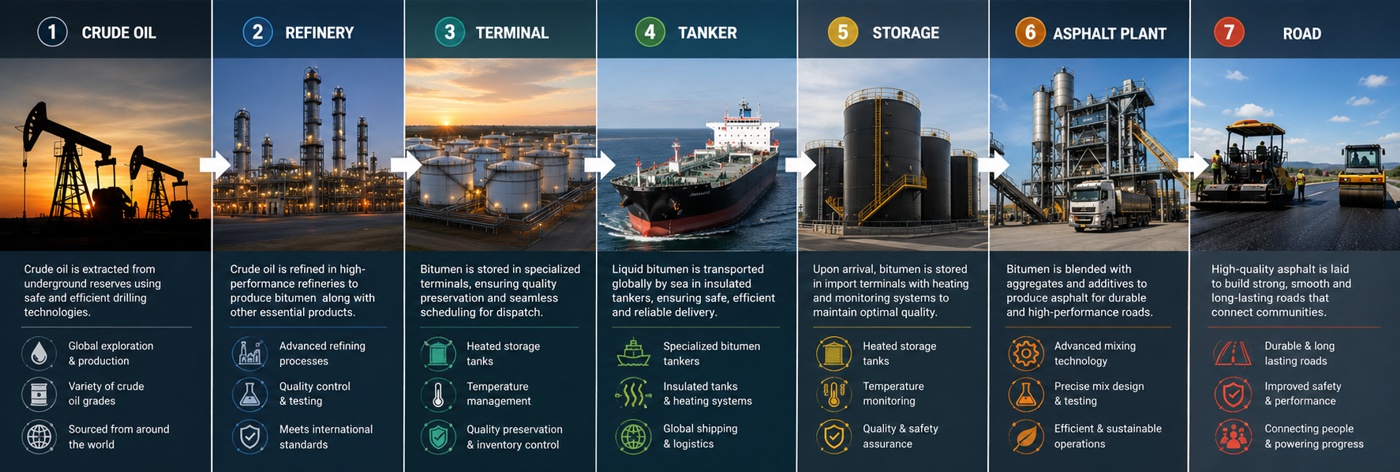
Briefing
- Bitumen is one of the world’s most important infrastructure materials, serving as the binding agent in the vast majority of asphalt pavements used for roads, airports and industrial surfaces.
- Production begins in sophisticated oil refineries, where specialised distillation and processing systems separate heavy residual fractions from crude oil to create bitumen products meeting strict performance specifications.
- Global supply depends upon an interconnected network of refineries, storage terminals, specialised vessels, logistics providers, traders and asphalt producers operating across international markets.
- Market availability and pricing are influenced by refinery economics, crude oil characteristics, freight costs, infrastructure investment cycles, geopolitical developments and regional supply-demand balances.
- Future supply chains will be shaped by evolving refinery capacity, digitalisation, sustainability initiatives, changing trade flows and growing infrastructure demand across emerging economies.

What Bitumen Really Is
Bitumen is often described simply as the black, sticky material used in road construction, but such a description barely scratches the surface. From a scientific perspective, bitumen is a highly complex mixture of hydrocarbons and other organic compounds derived from crude oil. It possesses unique physical properties that make it exceptionally effective as a construction binder, allowing it to hold aggregates together while resisting water penetration and accommodating pavement movement under traffic loads.
At normal ambient temperatures, bitumen typically appears as a dark brown or black semi-solid material. When heated, however, it becomes increasingly fluid and workable, enabling transportation, storage, mixing and application during construction. Once cooled, it regains the stiffness necessary to bind aggregates into durable pavement structures. This combination of flexibility and strength has made bitumen indispensable to road engineering for more than a century.
Chemically, bitumen contains thousands of individual compounds. Industry specialists commonly classify these into broad groups including saturates, aromatics, resins and asphaltenes. The relative proportions of these components influence key performance characteristics such as viscosity, temperature susceptibility, durability and ageing behaviour. Although the underlying chemistry can be extraordinarily complex, the practical result is straightforward: different crude oils and refining processes produce bitumen with different engineering properties.
Its waterproofing capability represents another important characteristic. Bitumen’s natural resistance to water allows pavements to protect underlying layers from moisture damage while also making the material valuable in roofing, waterproofing membranes, bridge deck protection systems and numerous industrial applications. In road construction, preventing water intrusion is often as important as supporting traffic loads, making the binder’s waterproofing properties particularly valuable.
The material’s adhesive characteristics are equally critical. Bitumen effectively coats aggregate particles and maintains a durable bond under varying traffic and environmental conditions. This ability allows engineers to combine locally available stone, gravel and sand into pavement systems capable of carrying everything from passenger vehicles to heavily loaded freight traffic. Without a reliable binder, aggregates would quickly separate under repeated loading, leading to pavement deterioration.
Although most commercial bitumen originates from crude oil refining, naturally occurring bituminous deposits also exist. Historic examples include deposits found in Trinidad, Venezuela and other regions where heavy hydrocarbons accumulated naturally over geological timescales. While these resources played important roles in the early development of the industry, modern global supply is overwhelmingly sourced from petroleum refineries.
Understanding bitumen therefore requires understanding crude oil itself. Crude oil is not a single substance but rather a naturally occurring mixture of hydrocarbons formed over millions of years from ancient organic matter subjected to heat, pressure and geological processes. Different crude oils possess distinct chemical compositions, densities and sulphur contents. These differences influence refinery operations and ultimately affect the characteristics of the bitumen produced.
Some crude oils are considered relatively light and yield higher proportions of fuels such as petrol, diesel and jet fuel. Others are heavier and contain larger quantities of high-molecular-weight compounds suitable for producing residual products including bitumen. Refiners carefully evaluate these characteristics when selecting feedstocks and optimising production strategies.
This connection between crude oil characteristics and bitumen quality helps explain why not every refinery produces bitumen and why production capacity can vary significantly between facilities. Producing consistent, specification-compliant bitumen requires appropriate crude oil selection, suitable refinery configuration and careful process control throughout production.
The result is a construction material that combines chemistry, engineering and industrial manufacturing in a unique way. Although often viewed simply as a paving product, bitumen is actually the outcome of sophisticated refining operations and decades of materials science research. Its performance influences the durability, safety and lifecycle cost of transport infrastructure worldwide.

The Journey Through the Refinery
Before bitumen reaches storage terminals, asphalt plants or construction projects, it must first pass through one of the most technologically sophisticated industrial environments in the world: the modern oil refinery.
Refineries exist primarily to transform crude oil into usable products. Petrol, diesel, aviation fuel, marine fuels, lubricants, petrochemical feedstocks and bitumen all originate from the same raw material. The challenge facing refiners lies in separating crude oil’s many components and converting them into products demanded by the market. Achieving this requires an intricate combination of thermal, chemical and mechanical processes operating continuously around the clock.
The journey begins with atmospheric distillation. After arriving at the refinery, crude oil is heated to temperatures approaching 350°C before entering a distillation column. Inside the tower, hydrocarbons separate according to their boiling points. Lighter components rise towards the top while heavier fractions remain lower in the column.
Products such as liquefied petroleum gas, naphtha, petrol and kerosene are recovered from higher sections of the tower. Diesel and gas oils are collected lower down. The heaviest materials, unable to vaporise under atmospheric conditions, remain at the bottom as atmospheric residue. This residue forms the starting point for many bitumen production pathways.
However, atmospheric distillation alone is not sufficient. Most modern refineries send the heavy residue into a second processing stage known as vacuum distillation. By reducing pressure within the distillation unit, refiners can separate additional valuable products without exposing the material to excessively high temperatures that could cause thermal degradation.
The vacuum distillation unit extracts further gas oils and intermediate products, leaving behind vacuum residue. This extremely heavy fraction contains many of the high-molecular-weight compounds associated with bitumen. Depending on refinery configuration and market requirements, this residue may undergo further processing or be blended directly into finished bitumen grades.
Refinery Configurations and Their Impact on Bitumen Production
Not all refineries are created equal. While every refinery begins with the same fundamental objective of separating crude oil into usable products, the configuration of processing units within each facility can vary dramatically. These differences have a profound influence on the quantity and quality of bitumen available to the market.
At the simplest end of the spectrum are hydroskimming refineries, which primarily rely on atmospheric and vacuum distillation with limited conversion capability. Such facilities tend to produce relatively large volumes of residual products, including fuel oils and bitumen. Historically, many traditional bitumen-producing refineries operated using this approach because heavy residual fractions remained available after fuel production requirements had been met.
More complex conversion refineries take a different approach. These facilities incorporate technologies such as fluid catalytic cracking, hydrocracking and coking units designed to convert heavy fractions into higher-value transportation fuels. As fuel demand increased throughout much of the twentieth century, refiners invested heavily in these technologies to maximise production of petrol, diesel and aviation fuels.
This evolution created an interesting challenge for bitumen markets. The more efficiently a refinery converts heavy residues into lighter fuels, the less material remains available for bitumen production. In some cases, refinery upgrades designed to improve fuel yields have reduced local bitumen availability, forcing markets to seek supply from alternative sources.
The relationship between refinery complexity and bitumen production is therefore not always straightforward. A highly sophisticated refinery may possess enormous crude-processing capacity while producing relatively little bitumen. Conversely, a smaller refinery configured to retain heavy residual fractions may play a disproportionately important role within regional bitumen markets.
This dynamic has become increasingly significant as environmental regulations and changing fuel consumption patterns reshape global refining. Many refineries have prioritised investments aimed at producing cleaner fuels, while others have closed altogether due to economic pressures. These developments can influence bitumen supply even when overall crude oil processing capacity remains relatively stable.
How Crude Oil Characteristics Influence Bitumen Quality
The type of crude oil entering a refinery plays a critical role in determining the properties of the final bitumen product. Crude oils vary enormously in composition, density, sulphur content and molecular structure, creating important differences in production outcomes.
Heavy crude oils generally contain larger proportions of high-molecular-weight hydrocarbons suitable for producing bitumen. These crudes often generate higher residual yields following distillation, providing refiners with greater flexibility for bitumen manufacture. Many bitumen-producing regions have historically benefited from access to such feedstocks.
Light crude oils, by contrast, are typically richer in fractions suitable for transportation fuels. While bitumen can still be produced from lighter feedstocks, yields may be lower and blending strategies more complex. Refiners must carefully balance product demand, crude oil economics and operational requirements when determining production plans.
Beyond simple yield considerations, crude characteristics also influence engineering performance. Different feedstocks can affect penetration values, softening points, viscosity characteristics and long-term ageing behaviour. Refiners therefore employ rigorous quality-control systems to ensure finished products consistently meet specification requirements regardless of variations in crude supply.
This complexity explains why bitumen production combines both science and operational expertise. Refinery operators must understand not only the behaviour of individual crude oils but also how blending strategies, processing conditions and seasonal requirements interact to influence final product performance.
Practical Examples from Around the World
The global bitumen industry provides numerous examples of how refinery configurations influence supply dynamics.
In the Middle East, many large export-oriented refineries have developed substantial bitumen production capabilities alongside fuel manufacturing operations. Facilities in countries such as the United Arab Emirates, Bahrain, Saudi Arabia and Iran serve both domestic infrastructure programmes and international markets stretching across Africa, Asia and beyond.
Europe presents a different picture. Several refineries historically supplying regional bitumen demand have faced closure or restructuring over recent decades. As a result, some countries have become increasingly reliant on imports despite maintaining substantial construction activity. This trend has elevated the importance of marine logistics and storage infrastructure throughout the region.
North America benefits from extensive refining capacity and a mature asphalt industry, yet regional imbalances still occur. Seasonal demand fluctuations, maintenance shutdowns and changing refinery economics can all influence local availability and pricing patterns.
Meanwhile, rapidly developing economies across Asia continue expanding infrastructure investment programmes. Growing demand for roads, airports and industrial facilities has increased the strategic importance of both domestic production and imported supply, reinforcing the global nature of the bitumen trade.
What these examples share is a single underlying principle: bitumen supply cannot be understood simply by examining local production. Modern markets operate within an interconnected international system where refinery decisions, logistics networks and regional demand patterns combine to shape availability.

The Difference Between Bitumen and Asphalt
Few topics generate more confusion within the construction industry than the distinction between bitumen and asphalt. The terms are frequently used interchangeably in everyday conversation, yet their meanings vary considerably depending on geography and professional context.
Understanding these differences is important not only for technical accuracy but also for procurement, specification writing and international trade. Misunderstandings can easily arise when contractors, engineers and suppliers from different regions use the same words to describe different products.
At its simplest, bitumen is the binder. Asphalt is the mixture.
Bitumen acts as the adhesive component that binds aggregates together. Asphalt is the engineered paving material created when bitumen is combined with aggregates such as crushed stone, gravel and sand in carefully controlled proportions.
While this distinction appears straightforward, terminology has evolved differently across global markets, creating significant regional variation.
UK Terminology
In the United Kingdom, the term bitumen generally refers to the black petroleum-derived binder used within asphalt mixtures. Engineers, contractors and material suppliers typically describe penetration grades, polymer-modified binders and other binder products simply as bitumen.
Asphalt refers to the finished paving mixture produced by combining aggregates and bitumen. Depending on application requirements, this mixture may be designed for surface courses, binder courses, base layers or specialised pavement systems.
The UK industry also uses terminology such as stone mastic asphalt, hot rolled asphalt and asphalt concrete to describe specific pavement types. In each case, bitumen remains the binder while asphalt describes the completed mixture.
This distinction aligns closely with terminology adopted throughout much of Europe and many international trade markets.
European Terminology
Across continental Europe, terminology generally follows a similar pattern. Bitumen refers to the binder, while asphalt describes the engineered paving material.
European standards developed through organisations such as the European Committee for Standardization (CEN) define numerous binder grades and asphalt mixture classifications. Contractors purchasing bitumen receive a binder product meeting specified engineering properties. Asphalt producers then incorporate that binder into finished paving mixtures tailored to local traffic and environmental conditions.
This approach provides clear separation between raw material supply and pavement manufacturing, helping facilitate international trade and technical standardisation.
European producers also make extensive use of modified binders designed to enhance performance under specific conditions. Polymer-modified bitumen, rubber-modified binders and specialty formulations are increasingly common within high-performance pavement applications.
North American Terminology
North America employs somewhat different terminology, creating occasional confusion in international discussions.
In the United States and parts of Canada, the binder itself is often referred to as asphalt cement or asphalt binder. The finished paving material may be called asphalt concrete, hot mix asphalt or simply asphalt.
As a result, an American engineer discussing asphalt may sometimes be referring to the binder and at other times to the completed pavement mixture. Context usually clarifies the intended meaning, but international audiences must remain attentive to these distinctions.
Modern North American specifications increasingly utilise performance-graded binders, commonly known as PG grades. These systems classify asphalt binders according to expected climatic performance rather than relying solely on traditional penetration measurements.
Despite differences in terminology, the underlying material remains fundamentally the same petroleum-derived binder used worldwide.
International Trade Terminology
Global trade introduces yet another layer of terminology.
Commodity traders, shipping companies and exporters frequently use terms such as paving grade bitumen, penetration grade bitumen, viscosity grade bitumen or asphalt binder depending on destination market requirements.
For example, a shipment destined for East Africa may be described as penetration-grade bitumen, while similar material sold into North America might be marketed using asphalt binder specifications. The terminology changes, but the product serves essentially the same purpose.
International contracts often include detailed technical specifications precisely because terminology varies across regions. Clear definitions help ensure buyers and sellers share a common understanding of product requirements.
The grading systems behind these terms – penetration grades, viscosity grades and the performance-graded (PG) approach, along with the CEN, AASHTO and ASTM frameworks that govern them are examined in depth in our Week 3 feature, Decoding Bitumen Specifications Around the World.
Understanding Asphalt Mixtures
Once bitumen leaves the refinery and enters the construction supply chain, it is transformed into asphalt through a carefully controlled manufacturing process.
At an asphalt plant, aggregates are dried, heated and screened into different size fractions. Bitumen is heated separately to achieve suitable workability before being combined with aggregates within a mixing system. The resulting mixture must achieve precise balance between strength, flexibility, durability and workability.
The bitumen content within most asphalt mixtures typically ranges between four and seven percent by weight. Although it represents a relatively small proportion of the total material, its influence on pavement performance is enormous. Too little binder can lead to cracking and premature deterioration. Too much can create rutting and deformation under traffic loads.
Modern asphalt mixtures may also incorporate reclaimed asphalt pavement, fibres, additives and performance-enhancing technologies designed to improve sustainability and durability.
Regardless of these variations, the fundamental principle remains unchanged. Bitumen provides the binding and waterproofing properties, while aggregates provide structural strength and load-bearing capacity. Together they create one of the most widely used construction materials in the modern world.
More Than a Matter of Semantics
The distinction between bitumen and asphalt may appear academic at first glance, but it reflects the structure of the entire industry.
Bitumen producers operate within the global petroleum sector. Asphalt producers belong primarily to the construction materials industry. One supplies the essential binder. The other manufactures the finished paving material used to build and maintain transport infrastructure.
Recognising this difference helps explain supply chains, procurement systems and market dynamics throughout the industry. It also provides the foundation for understanding how bitumen moves from refinery production units into the asphalt mixtures that support economic activity around the world.

Mapping Global Production
Bitumen may be used locally, but its production is concentrated within a relatively small number of refining regions. The geographical distribution of refineries, crude oil resources, export infrastructure and domestic demand has created a global market in which some countries produce far more bitumen than they consume while others depend heavily on imports to maintain their road networks.
Unlike aggregates or cement, which are generally sourced close to construction projects, bitumen frequently crosses international borders before reaching an asphalt plant. A road built in East Africa may contain binder refined in the Persian Gulf. A highway resurfacing project in Europe may rely partly on imported material from another continent. These international connections have become increasingly important as refining capacity has consolidated and infrastructure investment has expanded across developing economies.
The result is a global supply network shaped by refinery economics, logistics infrastructure and regional construction demand. Understanding where bitumen is produced provides valuable insight into the broader dynamics influencing availability, pricing and long-term market stability.
The Middle East and the Gulf Export Engine
Few regions exert greater influence over international bitumen markets than the Middle East. Home to some of the world’s largest oil reserves and refining complexes, the Gulf region has developed into one of the most important sources of internationally traded bitumen.
Countries including Saudi Arabia, the United Arab Emirates, Bahrain, Kuwait and Iran have built substantial refining sectors capable of producing large export volumes alongside domestic supply requirements. Their geographical location provides direct access to major shipping routes connecting Asia, Africa and Europe, giving Gulf producers a significant logistical advantage.
Iran has historically occupied a particularly important position within the export market. The country’s refineries have supplied large quantities of paving-grade bitumen to destinations across South Asia, Southeast Asia and Africa. Competitive pricing and proximity to emerging markets helped establish Iranian material as a significant component of international trade flows for many years.
The United Arab Emirates has evolved into both a producer and trading hub. Facilities in Fujairah and Jebel Ali handle substantial volumes of bitumen moving between producing regions and international buyers. Extensive storage infrastructure, sophisticated logistics services and strong maritime connectivity have reinforced the country’s position within the global supply chain.
Saudi Arabia and Bahrain also contribute significant production volumes, supporting both regional infrastructure development and export markets. Together, Gulf producers form the backbone of many international supply chains serving rapidly growing economies throughout the developing world.
Asia’s Expanding Production Landscape
Asia combines some of the world’s largest refining systems with some of its fastest-growing infrastructure markets. The region’s role within the bitumen industry continues to expand as governments invest heavily in transport networks, industrial development and urbanisation programmes.
China possesses enormous refining capacity and substantial domestic demand. Massive highway programmes, urban expansion and logistics infrastructure development have made the country one of the largest consumers of road construction materials globally. While domestic production satisfies much of this demand, regional trade continues to play an important role in balancing supply requirements.
India presents another major growth story. Ambitious national highway programmes, rural road initiatives and airport developments have driven sustained demand for bitumen over the past two decades. The country maintains significant domestic refining capacity, yet imports continue to supplement local production in certain circumstances.
Elsewhere across Asia, countries such as South Korea, Singapore, Thailand and Malaysia contribute to regional production and trading activity. Singapore, despite limited domestic consumption relative to larger nations, has become one of the world’s most important trading and storage centres, serving as a strategic hub for cargo redistribution throughout the region.
The scale of infrastructure investment across Asia means the region will remain one of the most influential drivers of global bitumen demand for decades to come.
Europe’s Mature but Changing Market
Europe possesses a highly developed road network and a sophisticated asphalt industry, yet the region faces unique supply challenges. Several decades of refinery rationalisation have altered the production landscape considerably, reducing the number of facilities supplying local markets.
Many European refineries were originally designed to serve fuel demand patterns that have evolved significantly over time. Environmental regulations, changing energy consumption and economic pressures have encouraged operators to modernise facilities, alter product slates or close less competitive plants altogether.
These changes have affected bitumen availability in several countries. While domestic production remains substantial, imports have become increasingly important in balancing regional demand. Marine terminals across the Mediterranean, North Sea and Baltic regions now play critical roles in ensuring supply continuity.
Countries such as Spain, Italy, Greece, Turkey and the Netherlands occupy strategic positions within European trade networks. Their ports, storage facilities and refining infrastructure help connect regional markets with international sources of supply.
Europe’s experience demonstrates how refining policy and industrial restructuring can influence construction materials markets long after decisions have been made within the energy sector.
North America’s Integrated Supply System
North America benefits from one of the world’s largest and most sophisticated refining industries. Extensive production capacity across the United States and Canada supports a mature road construction market characterised by large-scale maintenance programmes and ongoing infrastructure investment.
The United States possesses an extensive network of refineries producing asphalt binders for domestic consumption. Regional variations exist, however, reflecting differences in refinery configurations, crude oil availability and local demand patterns. Some areas maintain surplus production while others rely on interregional transfers to balance requirements.
Canada contributes both refining capacity and significant heavy crude oil resources. The characteristics of Canadian crude feedstocks can make them particularly suitable for producing residual products, including asphalt binders used throughout North American markets.
Seasonality plays an important role within the region. Construction activity often peaks during warmer months, creating substantial fluctuations in demand. Storage infrastructure and logistics planning therefore become essential components of supply-chain management.
The integrated nature of North American refining and transportation systems provides considerable resilience, although regional disruptions can still affect local availability and pricing.
Africa’s Growing Dependence on Imports
Africa represents one of the most promising long-term growth markets for bitumen consumption. Expanding populations, economic development initiatives and significant infrastructure deficits continue driving investment in transport networks across the continent.
Many African nations remain heavily dependent upon imported bitumen. While some countries maintain domestic refining capacity, production often falls short of infrastructure requirements or may not include sufficient bitumen manufacturing capability.
As a result, imports from the Gulf, Europe and Asia play a critical role in supporting road construction programmes. East African markets frequently source material from Middle Eastern suppliers, while North and West African countries may utilise a broader mix of regional and international sources.
The continent’s infrastructure ambitions suggest demand growth is likely to remain strong for many years. This outlook has encouraged investment in storage terminals, logistics facilities and distribution networks designed to improve supply reliability.
For exporters, Africa represents both a major market opportunity and a strategic destination for long-term trade relationships.
Latin America’s Diverse Supply Picture
Latin America presents a varied production landscape shaped by domestic oil resources, refining capacity and infrastructure investment priorities.
Countries such as Brazil, Mexico and Venezuela possess significant refining sectors capable of producing bitumen for domestic markets. Other nations rely more heavily on imports to satisfy construction requirements.
Brazil’s vast geography and extensive road network create substantial ongoing demand for pavement materials. Mexico combines domestic production with international trade, while numerous smaller markets utilise a mix of regional and imported supply.
Economic cycles can influence demand significantly across the region, affecting both domestic production patterns and import requirements. Nevertheless, long-term infrastructure needs continue supporting a sizeable market for bitumen and asphalt products.
Across these varied national pictures, one common thread emerges: the diversity of supply models is itself a defining feature of the global industry, with no single template applying everywhere.
The International Trade Network
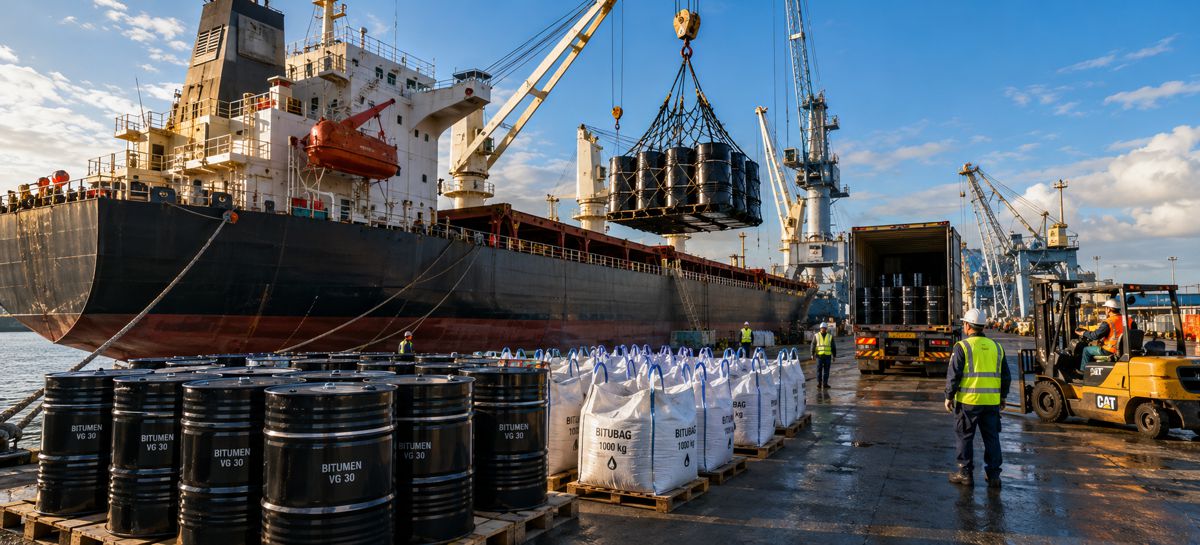
Bitumen may originate in refineries, but international trade is what connects production centres with the roads, airports and infrastructure projects that ultimately consume it. Every year, millions of tonnes move across oceans and through complex logistics networks linking producers, traders, terminals, distributors and contractors.
Unlike many petroleum products, bitumen requires specialised handling throughout its journey. It must remain heated, protected from contamination and carefully managed to preserve quality. These requirements create a highly specialised trading ecosystem supported by dedicated infrastructure and industry expertise.
Global trade has become increasingly important as refining capacity and construction demand have evolved at different rates around the world. Countries with surplus production export to markets where domestic supply is limited, helping balance regional shortages and support infrastructure development.
Export Hubs That Feed Global Demand
A relatively small number of export hubs dominate international bitumen trade. These locations combine refining capacity, storage infrastructure and maritime connectivity to serve markets across multiple continents.
The Gulf region remains the most influential export source. Refineries in the UAE, Saudi Arabia, Bahrain and Iran collectively supply substantial volumes to Asia, Africa and other international destinations. Their proximity to key shipping routes and access to large crude oil resources support competitive export operations.
Singapore functions as another major hub despite limited domestic demand. The city-state’s strategic location at the crossroads of Asian shipping routes has enabled it to develop extensive storage, blending and redistribution capabilities. Cargoes frequently pass through Singapore before continuing to final destinations throughout the Asia-Pacific region.
In Europe, Rotterdam serves as one of the continent’s most important petroleum trading centres. Its extensive storage facilities, terminal infrastructure and connections to inland transportation networks make it a vital component of regional supply chains. Mediterranean ports also play significant roles in distributing material throughout Southern Europe, North Africa and neighbouring markets.
These hubs provide flexibility, inventory management and logistical efficiency that would be difficult to replicate through direct refinery-to-customer shipments alone.
Import-Dependent Nations and Strategic Buyers
Many countries consume far more bitumen than they produce. These import-dependent markets rely upon international trade to support infrastructure programmes and maintain existing transport assets.
Numerous African nations fall into this category. Rapid road development combined with limited refining capacity has created sustained demand for imported material. Similar patterns exist in parts of Southeast Asia, island economies and smaller developing nations where domestic production is either unavailable or insufficient.
Importing countries typically seek supply diversity to reduce risk. Governments, contractors and distributors often maintain relationships with multiple suppliers across different regions, helping protect against disruptions affecting any single source.
Large infrastructure programmes can influence purchasing strategies significantly. Major highway corridors, airport developments or urban transport projects may require long-term procurement planning extending several years into the future. Reliable supply becomes as important as price when projects involve substantial investment and tight delivery schedules.
Trading Houses and Market Intermediaries
Between producers and end users sits a network of traders, distributors and logistics specialists that helps facilitate global commerce.
Trading companies perform numerous functions within the market. They aggregate demand, manage inventories, arrange transportation, finance transactions and connect buyers with producers. Their activities help smooth regional imbalances and improve market efficiency.
In many developing markets, traders also provide essential local expertise regarding import regulations, terminal operations and distribution networks. Their knowledge can be particularly valuable when serving regions with limited direct refinery access.
While traders rarely attract public attention, their role within the global supply chain is substantial. Many infrastructure projects ultimately depend upon commercial relationships established and managed through these intermediary organisations.
Strategic Shipping Routes
Geography exerts a powerful influence on bitumen trade. Certain maritime corridors have become indispensable to the movement of petroleum products and construction materials.
The Strait of Hormuz remains one of the most critical routes, connecting Gulf producers with international markets. Cargoes destined for Asia, Africa and beyond frequently transit this narrow waterway before entering broader shipping networks.
The Suez Canal provides another essential link, shortening transit times between Europe, the Middle East and Asia. Any disruption affecting the canal can alter freight economics and vessel scheduling throughout multiple markets.
The Strait of Malacca serves as a gateway between the Indian Ocean and the Pacific, supporting trade flows involving Singapore and numerous Asian economies. Meanwhile, Mediterranean shipping routes connect European producers and importers with markets across Africa and the Middle East.
These corridors form the arteries of the global bitumen trade. Their reliability directly influences transportation costs, delivery schedules and market stability.
Storage Hubs and Market Flexibility
Storage terminals often receive less attention than refineries or vessels, yet they perform a vital function within the international trade network.
By holding inventory close to demand centres, terminals provide flexibility that helps absorb supply disruptions and seasonal fluctuations. Contractors can access material when required without relying solely on immediate refinery production or incoming shipments.
Strategically located storage hubs also support trading activity. Cargoes arriving from one region may be stored temporarily before being redistributed to multiple destinations. Blending operations, quality control procedures and inventory management systems all contribute to market efficiency.
Major storage centres in Singapore, Fujairah, Rotterdam and numerous Mediterranean ports have become essential components of the modern supply chain. Without them, international trade would be considerably less responsive and resilient.
The journey from refinery to terminal represents the next stage of the supply chain, where specialised vessels, heated cargo systems and carefully controlled logistics operations ensure bitumen arrives ready for its final transformation into asphalt pavement.
The corridors, chokepoints, export hubs and shifting trade flows introduced here are mapped in full in our Week 2 feature, Mapping the World’s Bitumen Trade Routes, which traces where cargoes actually move and why those routes are changing.

From Tanker to Terminal
Moving bitumen across oceans presents challenges that differ significantly from those associated with crude oil, diesel or petrol. Unlike many liquid petroleum products that remain fluid at ambient temperatures, bitumen must be heated continuously throughout transportation and storage. If temperatures fall too low, the material becomes increasingly viscous and difficult to pump, eventually behaving more like a solid than a liquid.
This characteristic has shaped the development of a specialised maritime logistics sector dedicated to transporting bitumen safely and efficiently. Every stage of the process, from loading at the refinery to final discharge at a storage terminal, revolves around maintaining product temperature, preserving quality and ensuring operational reliability.
The journey often begins at refinery storage tanks, where bitumen is heated to a carefully controlled temperature suitable for loading. From there, the material is transferred through insulated pipelines into dedicated bitumen tankers designed specifically for handling high-viscosity cargoes.
Dedicated Bitumen Tankers
Modern bitumen tankers differ considerably from conventional petroleum product vessels. Their cargo tanks are equipped with heating systems capable of maintaining temperatures typically ranging between 140°C and 180°C depending on product grade and voyage requirements.
Most vessels utilise thermal oil heating systems circulating through coils installed within cargo tanks. These systems provide uniform heating while minimising temperature fluctuations that could affect product quality. Extensive insulation helps reduce heat loss during transit and improve energy efficiency.
Cargo handling equipment must also be capable of managing highly viscous products. Powerful pumps, specialised pipework and carefully engineered loading systems ensure bitumen can be transferred safely during both loading and discharge operations.
Many vessels operate within regional trading networks, making frequent voyages between refineries, storage terminals and import markets. Others undertake longer international routes connecting major export hubs with distant destinations in Africa, Asia and Europe.
The specialised nature of these ships means fleet availability can influence freight rates and supply-chain flexibility. During periods of strong demand or shipping disruption, securing suitable vessels may become an important consideration for traders and distributors.
Temperature Control Throughout the Voyage
Maintaining correct cargo temperature represents one of the most critical aspects of bitumen transportation.
Excessive cooling can make unloading difficult or impossible without extensive reheating. Excessive heating, meanwhile, may accelerate ageing processes or alter product characteristics. Operators therefore monitor cargo temperatures continuously throughout the voyage.
Weather conditions, voyage duration and product specifications all influence temperature-management strategies. A short regional shipment may require relatively little intervention, while long-haul international voyages demand careful heating management to maintain cargo quality.
Fuel consumption associated with cargo heating also affects transportation economics. Operators constantly balance energy efficiency against operational requirements, particularly during extended voyages where heating systems may operate continuously for several weeks.
The emphasis placed on temperature management highlights a broader reality within the bitumen industry: logistics expertise is every bit as important as production capacity.
Terminal Operations and Storage Infrastructure
Upon arrival at its destination, bitumen enters another specialised environment: the storage terminal.
Modern bitumen terminals function as critical links between international trade and local distribution networks. They receive imported cargoes, maintain inventory, preserve product quality and coordinate onward delivery to customers.
Storage tanks used for bitumen differ substantially from those handling conventional fuels. Heavy insulation, heating systems and temperature monitoring equipment help ensure material remains within required operating ranges. Tank designs must also accommodate thermal expansion and the unique handling characteristics of viscous products.
Many terminals maintain multiple storage tanks capable of holding different grades simultaneously. This flexibility enables operators to serve diverse customer requirements while managing inventory efficiently.
Strategically located terminals often become important regional supply hubs. A single facility may support numerous asphalt plants, contractors and infrastructure projects spread across a wide geographical area.
Distribution Beyond the Terminal
The supply chain does not end when bitumen reaches storage.
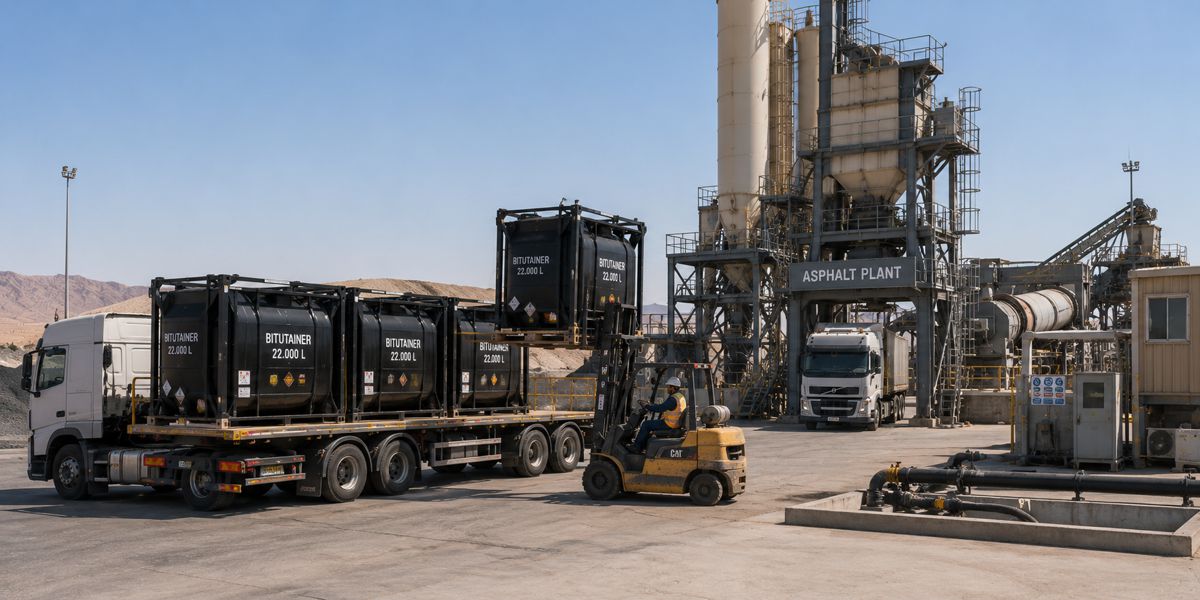
From terminals, material is distributed through road tankers, rail systems, pipelines or smaller coastal vessels depending on regional infrastructure and customer requirements. In many countries, insulated road tankers provide the final link connecting storage facilities with asphalt plants and construction sites.
Timing remains critical throughout this process. Asphalt production schedules, weather conditions and construction programmes all influence delivery requirements. Terminal operators must therefore coordinate closely with customers to ensure material arrives when needed.
This combination of specialised shipping, heated storage and coordinated distribution highlights the complexity hidden behind what appears to be a simple construction material. Every kilometre of asphalt pavement relies on a logistics network capable of maintaining product integrity from refinery to job site.
Packaging the World’s Bitumen
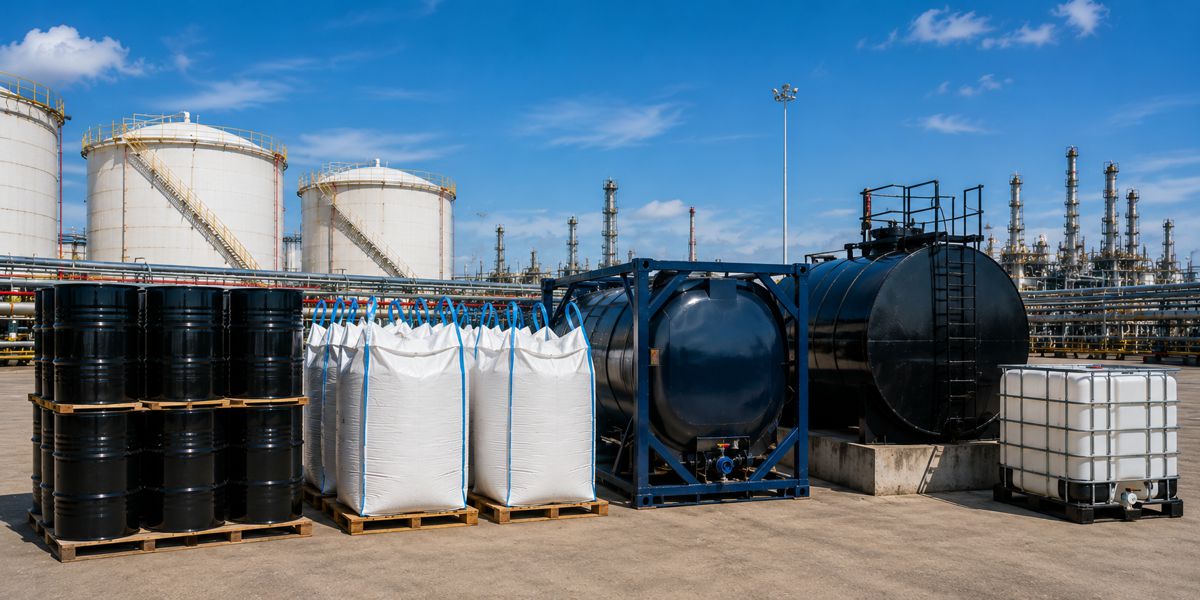
While bulk transportation dominates major markets, not all bitumen moves through large-scale tanker and terminal networks. Across many developing regions, remote construction projects and smaller markets, packaged bitumen solutions provide essential flexibility.
Packaging systems allow suppliers to serve locations lacking dedicated storage infrastructure while expanding market access beyond traditional logistics corridors. Over time, several distinct approaches have emerged, each offering unique advantages and limitations.
Bulk Supply
Bulk delivery remains the preferred option wherever infrastructure permits.
Transporting bitumen in heated tankers, railcars or vessels provides the lowest cost per tonne and minimises packaging waste. Large contractors, asphalt producers and government agencies generally favour bulk supply because it supports continuous operations and high-volume consumption.
The primary limitation lies in infrastructure requirements. Bulk handling demands heated storage tanks, specialised unloading systems and trained personnel. Markets lacking these facilities may struggle to utilise bulk deliveries effectively.
Despite these challenges, bulk transportation remains the backbone of global bitumen trade and accounts for the majority of international movements.
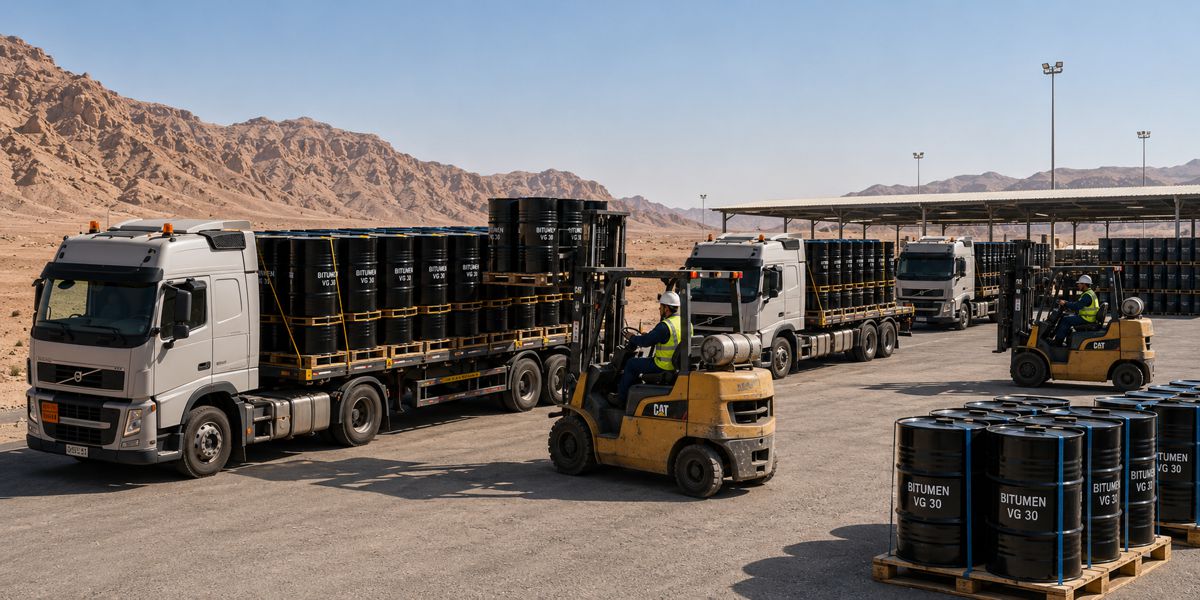
Steel Drums
Steel drums represented one of the earliest methods of exporting bitumen internationally and continue serving many markets today.
Typically holding between 150 and 200 kilograms, drums allow material to be transported without requiring heated storage infrastructure during transit. Once delivered, contents can be heated and utilised as needed.
The system offers flexibility and simplicity, particularly in regions where logistics networks remain underdeveloped. Individual drums can be handled using standard equipment and transported through conventional freight systems.
However, drum packaging increases handling costs, generates waste and requires additional labour during unloading. Recycling or disposal of empty drums can also present environmental and logistical challenges.
Nevertheless, drums continue playing an important role in remote locations and specialised applications where alternative systems may not be practical.
Polybags and Bitubags
The development of polybag technology transformed packaged bitumen logistics by eliminating many limitations associated with steel drums.
Bitumen-filled polymer bags are designed to melt into the asphalt mixing process, leaving little or no packaging waste. This approach simplifies handling while reducing disposal requirements.
Polybag systems have gained popularity in export markets serving Africa, Asia and other developing regions. They provide flexibility comparable to drums while improving operational efficiency and sustainability.
Transportation typically occurs within standard shipping containers, allowing suppliers to utilise established global logistics networks without requiring specialised equipment.
For many importers lacking extensive storage infrastructure, polybags have become an attractive alternative balancing convenience, cost and environmental performance.
Containerised Supply Systems
Containerised bitumen transportation has expanded significantly over recent decades.
Specially designed insulated containers enable bitumen to move through intermodal transport networks combining ships, railways and trucks. These systems offer enhanced flexibility while maintaining product quality throughout the supply chain.
Some designs incorporate heating systems allowing cargo to remain fluid during transit and discharge. Others transport solidified material intended for reheating at the destination.
Containerisation provides access to markets beyond traditional tanker routes and supports infrastructure projects in geographically challenging locations. It also facilitates smaller shipment sizes, enabling customers to purchase quantities aligned with project requirements.
As international logistics networks continue evolving, containerised systems are likely to play an increasingly important role in expanding market accessibility.
Regional Preferences and Market Differences
Packaging preferences vary considerably across global markets.
Developed economies with mature infrastructure generally favour bulk transportation due to its efficiency and lower overall cost. Extensive terminal networks and asphalt production capacity support this approach.
Emerging markets often utilise a combination of bulk and packaged supply depending on local infrastructure availability. Remote projects may depend heavily on drums or polybags even within countries possessing some bulk handling capability.
Island nations and geographically isolated regions frequently benefit from containerised solutions capable of integrating with broader freight networks.
These variations illustrate how logistics requirements influence commercial practices throughout the industry. There is no universal solution. Successful supply strategies must reflect local infrastructure, project requirements and economic realities.

Managing Quality Across the Supply Chain
Bitumen may appear uniform to the casual observer, but maintaining consistent quality throughout the supply chain requires rigorous technical oversight. Small variations in product properties can influence pavement performance, durability and long-term maintenance costs. Consequently, quality management occupies a central position within the industry.
Every stage of the supply chain, from refinery production to final delivery, incorporates procedures designed to verify compliance with technical specifications and preserve product integrity.
Sampling and Testing
Quality assurance begins at the refinery.
Production batches undergo extensive laboratory testing to verify characteristics such as penetration, softening point, viscosity, ductility and ageing behaviour. Results are compared against national and international specifications before products are released for sale.
Sampling continues throughout transportation and storage. Cargoes may be tested before loading, upon arrival at terminals and during transfer to customers. These checks help identify contamination, temperature-related degradation or other issues affecting performance.
Accurate sampling techniques are essential. Improper procedures can produce misleading results, potentially masking problems or creating unnecessary disputes between buyers and suppliers.
Modern laboratories employ sophisticated analytical equipment capable of evaluating both conventional and modified binders. Increasingly advanced testing methodologies allow engineers to predict field performance more accurately than ever before.
Specifications and Standards
The global bitumen industry operates within a framework of technical standards developed by governments, industry associations and standards organisations.
Common specifications include penetration grades, viscosity grades and performance grades, each reflecting different approaches to characterising material behaviour. Europe relies heavily on standards developed through CEN, while North America uses systems developed through organisations such as AASHTO and ASTM. Many countries maintain national specifications aligned with local climatic and engineering requirements.
Despite regional differences, the underlying objective remains consistent: ensuring materials possess characteristics suitable for their intended application. These standards create confidence throughout the supply chain and facilitate international trade by providing common reference points for buyers and sellers.
This is the high-level view; the grading systems themselves – what each specification actually measures, how penetration, viscosity and PG approaches differ, and why a binder accepted in one market may be rejected in another are unpacked in our Week 3 feature, Decoding Bitumen Specifications Around the World.
Traceability and Documentation
Modern supply chains increasingly emphasise traceability.
Detailed documentation accompanies products throughout production, transportation and delivery. Batch numbers, test certificates, shipment records and inventory management systems create an auditable trail linking finished material to its origin.
This capability becomes particularly important when investigating quality concerns or verifying compliance with project specifications.
Digital technologies continue improving transparency across the sector. Electronic documentation systems, inventory tracking platforms and integrated quality databases allow stakeholders to access information more efficiently than traditional paper-based processes.
As infrastructure owners place greater emphasis on accountability and lifecycle performance, traceability is becoming an increasingly valuable component of quality management.
Why Consistency Matters
Road pavements are expected to perform for many years under varying traffic loads and environmental conditions. Achieving this reliability depends heavily on material consistency.
Variations in binder properties can influence resistance to rutting, cracking, fatigue and moisture damage. While individual differences may appear small during laboratory testing, their cumulative impact over years of service can be substantial.
For infrastructure owners managing large asset portfolios, consistency translates directly into predictable performance and maintenance planning. For contractors, it reduces operational uncertainty and supports quality construction outcomes.
Ultimately, quality management protects the value of infrastructure investment. Roads, airports and industrial facilities represent significant public and private expenditures. Ensuring bitumen performs as intended helps maximise returns on those investments while supporting long-term network reliability.

The Economics of Supply
Bitumen pricing is influenced by a complex interaction of factors extending far beyond the construction industry itself. Unlike aggregates, which are largely shaped by local market conditions, bitumen sits at the intersection of global energy markets, refinery economics, international shipping and infrastructure investment.
Although bitumen represents only one output from the refining process, its availability is affected by decisions made across the broader petroleum sector. Refineries are designed primarily to maximise overall profitability rather than optimise production of any single product. Consequently, changes in fuel demand, crude oil selection and refining margins can indirectly affect bitumen supply and pricing.
The result is a market that responds to both construction demand and energy-sector dynamics. Road authorities planning resurfacing programmes may therefore find themselves competing with forces originating far outside the infrastructure sector. Several distinct influences are worth understanding in outline.
Crude oil prices remain the most visible influence. Since bitumen originates from petroleum refining, changes in crude prices inevitably affect production economics, though the relationship is not perfectly linear. During periods of strong infrastructure demand, prices may remain firm despite weaker crude markets; conversely, abundant supply can moderate price increases even when oil markets strengthen.
Refinery margins and production decisions add a second layer. When demand for transportation fuels is strong, operators may prioritise strategies that maximise petrol, diesel and jet fuel output, with complex refineries converting heavy residual fractions that might otherwise contribute to bitumen. Seasonal maintenance shutdowns can tighten regional supply rapidly, particularly when several facilities undertake work simultaneously.
Freight costs and logistics economics weigh heavily on delivered prices. Specialised vessels, heated storage and dedicated handling all contribute to expense, and import-dependent markets sourcing from distant suppliers can find transportation representing a significant proportion of final landed cost.
Currency fluctuations introduce further risk, since most internationally traded bitumen is priced in US dollars. A strengthening dollar can increase import costs even when underlying prices remain unchanged — a consideration that governments and contractors must build into long-term budgets.
Infrastructure investment cycles ultimately drive demand. Government spending programmes, stimulus initiatives and private investment all influence consumption, with emerging economies representing a particularly important source of long-term growth.
Each of these forces – and the way they interact to move prices up and down is the subject of our Week 4 feature, Why Bitumen Prices Move, which examines the drivers behind market volatility and what they mean for procurement and project budgeting.

Geopolitics, Conflict and the Fragility of Global Supply Chains
The events of 2026 provided a powerful reminder that bitumen markets remain vulnerable to geopolitical disruption. The conflict that began in late February, when the United States and Israel launched strikes against Iran, dominated global headlines through the spring. While much of the coverage focused on crude oil prices and regional security, the implications for bitumen supply chains were equally significant.
The Middle East occupies a central position within global bitumen trade. Major producers across the Gulf region supply substantial volumes to markets throughout Asia, Africa and beyond. Much of this trade depends upon uninterrupted access through the Strait of Hormuz, one of the world’s most strategically important maritime corridors. The conflict placed that corridor at the very centre of international concern, particularly after the initial ceasefire gave way to a tense standoff over access to the Strait.
The disruption was not merely theoretical. During the conflict, Iranian strikes reached Gulf states including the United Arab Emirates, Bahrain, Saudi Arabia and Kuwait — the same nations that anchor much of the world’s bitumen production and export capacity. Facilities at major trading hubs were caught up in the wider instability, illustrating how quickly events originating in the energy and security spheres can reach into construction materials markets.
Any threat to shipping movements within the region creates immediate uncertainty. Vessel operators reassess routes. Insurers adjust risk premiums. Freight markets react to changing conditions. Buyers evaluate inventory levels and alternative sources of supply.
Bitumen markets are particularly sensitive because specialised logistics systems limit flexibility. Unlike some commodities that can be transported through numerous alternative channels, bitumen relies upon dedicated heated vessels, specialised terminals and carefully coordinated handling procedures.
The Strategic Importance of the Strait of Hormuz
The Strait of Hormuz connects Gulf producers with international markets and serves as a vital artery for global energy trade.
A significant proportion of the world’s seaborne petroleum exports passes through this narrow waterway each year. Bitumen shipments originating in the Gulf frequently depend upon the same route before continuing towards destinations in Africa, South Asia and Southeast Asia.
The 2026 conflict underlined the point starkly. Once the initial fighting subsided, attention turned to the question of navigation through the Strait, with restricted access becoming a central pressure point between the parties. During periods of geopolitical tension, concerns regarding navigation safety and shipping continuity can influence freight costs long before any physical disruption occurs. Markets often react to perceived risk as much as to actual supply interruptions.
For importing countries dependent upon Gulf-origin material, such developments create uncertainty regarding future deliveries and project planning.
Freight Markets and Insurance Costs
One of the most immediate effects of geopolitical instability is rising transportation risk.
War-risk insurance premiums may increase significantly. Vessel owners can demand higher charter rates. Some operators may avoid affected areas altogether, reducing available shipping capacity.
These additional costs eventually work their way through the supply chain. Importers face higher landed costs. Distributors encounter greater uncertainty. Contractors and infrastructure agencies may experience increased procurement expenses.
Even where physical supply remains available, logistics-related cost increases can affect market pricing and project economics.
Lessons from Recent Disruptions
The conflict reinforced several important lessons for infrastructure stakeholders.
First, diversification matters. Countries relying heavily on a single source region face greater exposure when geopolitical events affect supply routes.
Second, storage infrastructure provides resilience. Strategic inventories can help buffer temporary disruptions and maintain project continuity while markets adjust.
Third, logistics networks are every bit as important as production capacity. Refinery output alone cannot guarantee supply if transportation systems come under pressure.
Finally, bitumen should be recognised as a strategic infrastructure commodity rather than merely a refinery by-product. Its availability influences road construction, airport development and economic activity across multiple sectors.
Risks Facing the Industry
While geopolitical instability attracts significant attention, it represents only one of several challenges confronting the bitumen industry.
Supply chains have become increasingly efficient and interconnected, yet this interconnectedness can also create vulnerabilities. Understanding potential risks is essential for developing resilient procurement and infrastructure strategies.
Refinery Closures and Capacity Rationalisation
Refinery closures have emerged as a significant issue in several mature markets.
Economic pressures, environmental regulations and changing fuel demand patterns have encouraged consolidation across parts of Europe and North America. Facilities unable to justify major investment programmes have sometimes ceased operations entirely.
The consequences extend beyond fuel markets. When bitumen-producing refineries close, replacement supply must often travel greater distances, increasing dependence on imports and logistics infrastructure.
In some regions, reduced domestic production has permanently altered supply-chain structures, reinforcing the importance of international trade.
Shipping Disruptions
Global trade depends upon reliable transportation networks.
Events affecting major shipping corridors, ports or vessel availability can quickly influence market conditions. The COVID-19 pandemic demonstrated how rapidly logistics disruptions can spread through international supply chains, affecting everything from container movements to bulk commodities.
Weather events present additional challenges. Hurricanes, cyclones and severe storms can disrupt port operations, delay shipments and damage infrastructure.
As trade volumes continue growing, maintaining resilient transportation networks will remain a priority for industry stakeholders.
Environmental Regulation
Environmental policy is reshaping many aspects of the petroleum sector.
Refineries face increasingly stringent emissions requirements. Marine transportation is adapting to evolving fuel regulations. Infrastructure owners are seeking more sustainable construction solutions.
These developments create both challenges and opportunities. Compliance costs may increase, yet innovation can improve efficiency and environmental performance.
The bitumen industry has already responded through improved production processes, energy-efficient logistics systems and greater use of recycled materials within asphalt mixtures.
Energy Transition Pressures
The global transition towards lower-carbon energy systems introduces additional uncertainty.
As demand patterns for petroleum products evolve, refinery operators may reconsider long-term investment strategies. Decisions regarding capacity upgrades, product slates and facility closures could influence future bitumen availability.
Importantly, however, reduced fuel demand does not automatically eliminate demand for bitumen. Roads, airports and infrastructure assets will continue requiring construction and maintenance regardless of changes in vehicle technology.
The challenge lies in ensuring refining systems remain capable of supplying construction materials alongside evolving energy requirements.
Building the Next Generation of Supply Networks
The future of the bitumen industry will be shaped by a combination of infrastructure demand, technological innovation and evolving supply-chain strategies.
While many fundamentals remain unchanged, significant developments are already transforming how material is produced, traded and delivered.
Emerging Markets and New Infrastructure Investment
The strongest growth opportunities continue to emerge from developing economies.
Large populations, expanding urban areas and ambitious transport programmes are driving sustained investment across Asia, Africa and parts of Latin America. New highways, logistics corridors, industrial zones and airport projects will require substantial quantities of paving materials.
Governments increasingly recognise transport infrastructure as a foundation for economic development. As a result, long-term demand prospects remain broadly positive despite periodic market fluctuations.
New Terminal Investments
Storage infrastructure is expanding in response to changing trade patterns.
New terminals are being developed in strategic import markets while existing facilities undergo modernisation. Increased storage capacity enhances supply security and improves market flexibility.
Advanced automation systems, improved inventory management and enhanced environmental controls are becoming standard features within modern facilities.
These investments strengthen resilience while supporting more efficient distribution networks.
Digitalisation and Market Transparency
Digital technologies are beginning to reshape the traditionally conservative world of commodity logistics.
Electronic trading platforms, real-time shipment tracking, digital documentation and integrated inventory-management systems are improving transparency throughout the supply chain.
Buyers gain greater visibility into product availability and delivery schedules. Suppliers can optimise logistics operations more effectively. Quality documentation becomes easier to access and verify.
Over time, these capabilities are likely to reduce inefficiencies while strengthening confidence throughout international markets.
Sustainability and Circular Economy Initiatives
Sustainability has become a major focus across the asphalt sector.
Reclaimed asphalt pavement technologies enable valuable materials to be recovered and reused within new pavements. Warm-mix asphalt technologies reduce energy consumption during production and placement. Improved pavement design extends service life and reduces lifecycle resource requirements.
These developments complement rather than replace bitumen demand. Even highly recycled mixtures require fresh binder input, while expanding infrastructure networks continue generating substantial requirements for new construction.
The industry’s challenge is not simply reducing environmental impact but achieving sustainability while maintaining performance, safety and economic viability.
The longer view – how energy transition, decarbonisation, new materials and shifting demand will reshape the industry over the coming decades is the focus of our Week 5 feature, The Future of Bitumen, which closes the series by looking at where the industry goes from here.

Supporting Infrastructure for a Connected World
Bitumen rarely attracts the attention given to steel, concrete or emerging construction technologies. Yet few materials have contributed more to the development of modern transportation networks.
Every motorway carrying international freight, every airport runway supporting global travel and every urban road connecting communities depends upon reliable access to high-quality bitumen. Behind these assets lies a sophisticated global supply chain linking crude oil production, refining, international trade, specialised logistics and construction expertise.
The industry faces genuine challenges. Refinery restructuring, geopolitical uncertainty, environmental pressures and changing energy markets will all influence future supply dynamics. At the same time, growing infrastructure investment, technological innovation and improved logistics capabilities are creating opportunities to strengthen resilience and efficiency.
The coming decade is unlikely to reduce the importance of bitumen. If anything, expanding infrastructure needs across developing economies will reinforce its strategic role. Roads remain fundamental to economic growth, trade and social development, and bitumen remains the material that binds those networks together.
From refinery distillation towers to highway paving crews working thousands of kilometres away, the global bitumen supply chain continues performing one of the most important yet least visible functions in modern infrastructure. Understanding how that system operates is essential for anyone involved in planning, financing, building or maintaining the transport networks that keep the world moving.

CONTINUE THE SERIES – Asphalt & Bitumen Month
This cornerstone guide is the foundation for four feature articles:
- Week 2: Mapping the World’s Bitumen Trade Routes
- Week 3: Decoding Bitumen Specifications Around the World
- Week 4: Why Bitumen Prices Move
- Week 5: The Future of Bitumen