Bobcat Wins Three CMME Awards Signalling a Broader Play for Gulf Worksites
Bobcat left the 2026 Construction Machinery Middle East (CMME) Awards in Dubai with three trophies, and on the surface that reads as a straightforward night of industry recognition. The more instructive story sits in the shape of the categories the company won rather than the count.
Bobcat took Original Equipment Manufacturer of the Year for Compact Equipment through Doosan Bobcat EMEA, Skid Steer Loader of the Year for the S450, and Logistics Equipment of the Year for Bulk Handling with the DV250S-7 heavy forklift. Those three prizes map onto three distinct zones of the modern worksite, from compact groundwork machines to skid steers to a 25-tonne diesel forklift, and taken together they describe a manufacturer that has stopped presenting itself as a compact-equipment specialist and started presenting itself as a full-spectrum worksite and material-handling supplier.
That repositioning matters because of where it has landed. The Gulf equipment market is broadening well beyond traditional earthmoving as Saudi Arabia and the United Arab Emirates pour investment into manufacturing, logistics and warehousing, and as national industrial policy increasingly rewards suppliers who can serve the whole value chain rather than a single machine category.
The DV250S-7 award is the clearest tell in the set, because that machine comes from the former Doosan Industrial Vehicle forklift business now consolidated under the Bobcat name, a portfolio the company has continued to expand with heavier forklifts, warehouse equipment and lithium-powered machines. Read in that context, the three wins are less a celebration and more a statement of intent about which parts of the industrial worksite Bobcat now intends to own.
Briefing
- Bobcat won three categories at the 2026 CMME Awards in Dubai on 25 June, covering compact equipment, skid steers and heavy material handling, a spread that reflects deliberate portfolio breadth rather than a single flagship product.
- The DV250S-7 heavy forklift win showcases the former Doosan Industrial Vehicle range, acquired by Doosan Bobcat in 2021 and progressively rebranded under the Bobcat name since 2023, now marketed alongside the company’s compact machinery.
- Bobcat has pushed up the tonnage curve and into the warehouse, adding heavy DV-series diesel forklifts, its own lithium iron phosphate battery range, and new warehouse equipment including pallet trucks and stackers.
- Gulf demand is shifting from pure earthmoving toward ports, factories and distribution centres, with Saudi Arabia’s localisation drive and megaprojects such as NEOM, the Red Sea Project and Qiddiya sustaining equipment throughput across far more than construction.
- Saudi industrial policy under the National Industrial Development and Logistics Programme is tightening local-content expectations, which favours manufacturers able to offer a single, broad portfolio backed by regional dealer and aftermarket support.
A Portfolio That Now Spans the Whole Worksite
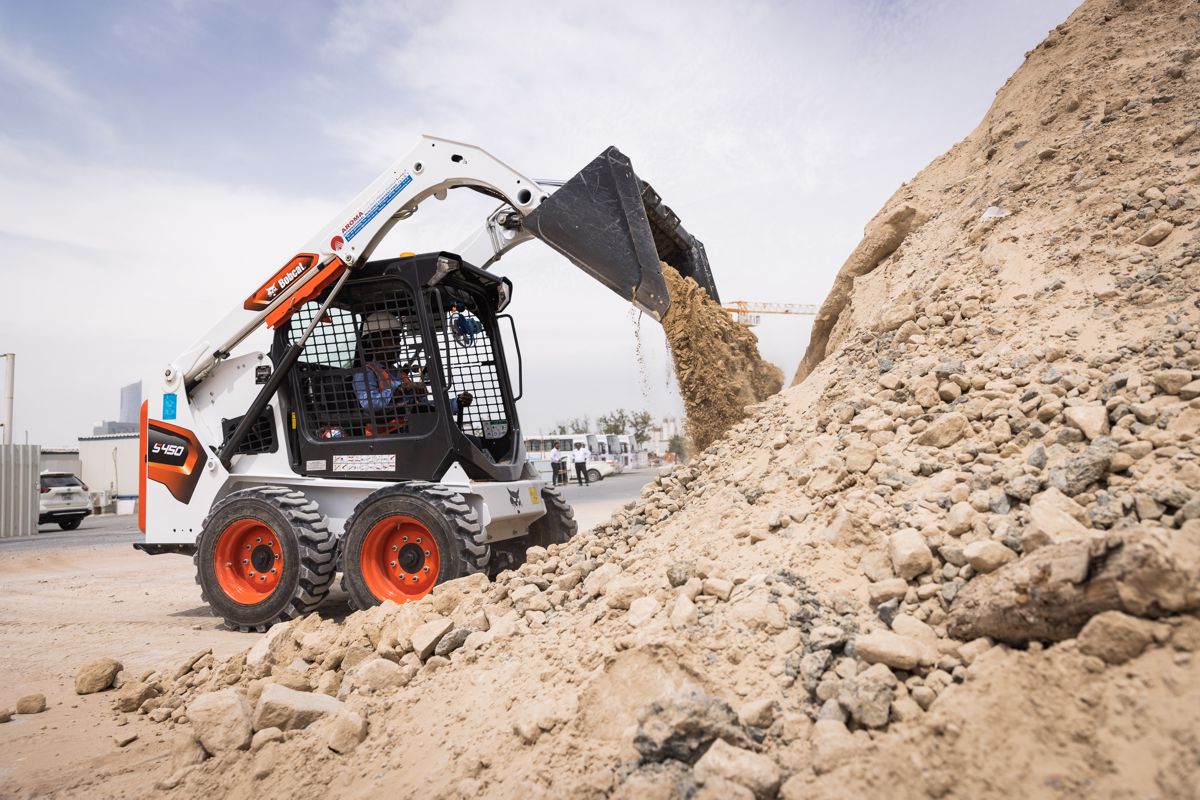
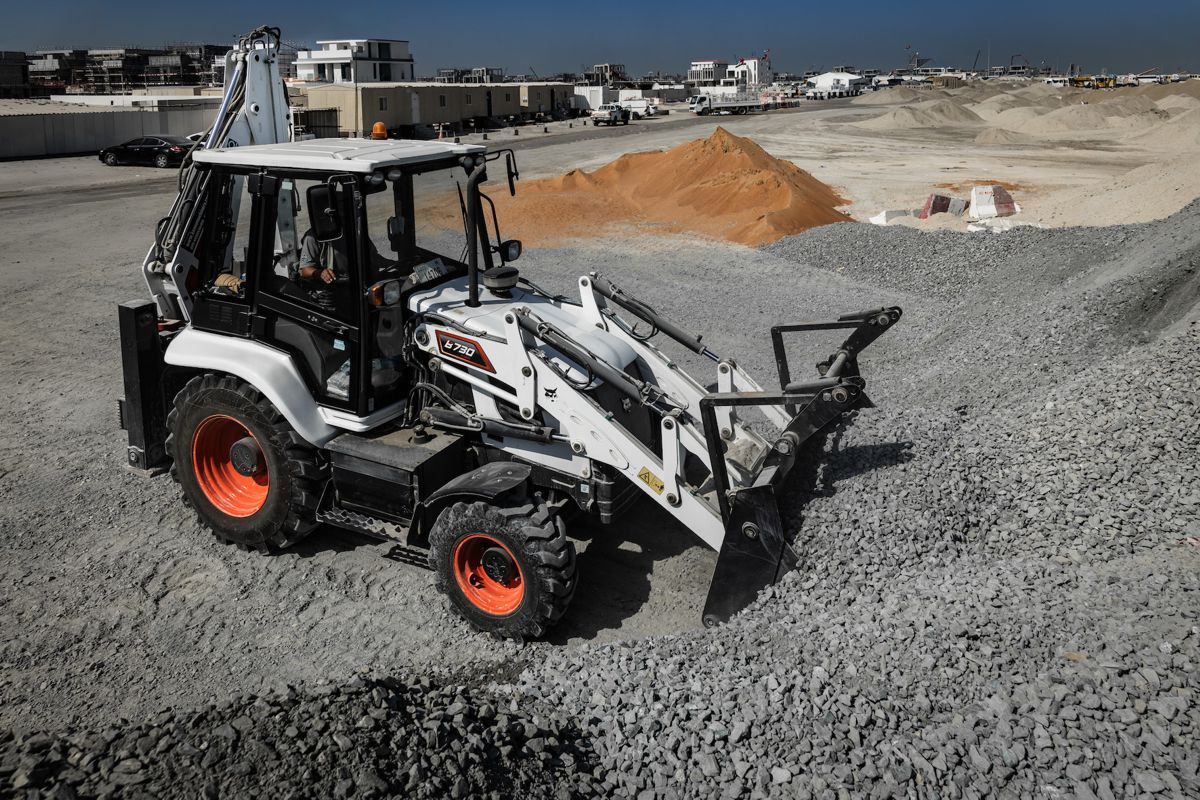
The commercial significance of the three wins lies in how little they overlap. Original Equipment Manufacturer of the Year for Compact Equipment recognises the heartland business that built the Bobcat name, the loaders and excavators that effectively created the compact segment. Skid Steer Loader of the Year for the S450 reinforces that core, and it does so as a repeat performance, since the same model took the skid steer title at the 2025 CMME Awards, where Bobcat was also named Outstanding Manufacturer of the Year.
The third prize sits in an entirely different part of the yard, because Logistics Equipment of the Year for Bulk Handling rewards a heavy diesel forklift built for ports, laydown areas and heavy construction. A company collecting trophies across compact groundwork, skid steers and heavy load handling in a single evening is describing a much wider addressable market than earthmoving alone.
That breadth is the strategic point, and Bobcat’s regional leadership framed the wins in exactly those terms.
Gaby Rhayem, Regional Director for Middle East-Africa-CIS-Turkey at Doosan Bobcat, said the awards: “highlight what matters most in our industry: performance, reliability, innovation and customer trust. They also reflect the strength of the Bobcat product portfolio, the dedication of our teams and the continued trust of our customers and partners. This reinforces Bobcat’s position, one more time, as a leader in compact equipment and logistics solutions.”
The pairing of compact equipment and logistics solutions in a single sentence is deliberate, and it captures a business that increasingly wants buyers to think of it as a portfolio rather than a product line. The competitive field at the same awards underlines why that matters, with Hangcha taking the broader logistics, warehousing and material handling category for a ten-tonne diesel forklift and Manitou winning Telehandler of the Year, a reminder that the material-handling segment is contested by specialists Bobcat must now meet on their own ground.
The Doosan Industrial Vehicle Consolidation Comes of Age
The DV250S-7 award is the most telling of the three because of where the machine comes from. Doosan Bobcat acquired the group’s forklift operation, Doosan Industrial Vehicle, in 2021, folding a business that held a commanding share of the South Korean domestic forklift market and generated revenue on the order of a trillion Korean won into its construction-equipment affiliate.
In 2023 the company announced a global brand strategy that moved the forklift, portable power and industrial air businesses under the Bobcat name across North America, Europe and applicable markets, retaining the Doosan brand only in territories such as South Korea, China and India where it already carried weight. The forklift range has since been progressively rebranded model by model, and a machine such as the DV250S-7 now sits in Bobcat trade dress rather than Doosan livery. A regional award for that specific forklift is therefore evidence that the consolidation has matured from a corporate branding exercise into a product line winning on its own merits in a competitive market.
The logic behind that consolidation is straightforward commercial arithmetic. Bringing forklifts under the Bobcat name lets the company market a single portfolio through a single dealer relationship, which reduces duplication, sharpens aftermarket coverage and creates natural cross-selling between a customer’s earthmoving fleet and its material-handling fleet. For a contractor or logistics operator, the appeal of sourcing loaders, telehandlers and forklifts from one manufacturer and one dealer network is real, since it simplifies parts, service contracts and operator training.
The former Doosan forklift range brought Bobcat immediate scale and credibility in material handling that would have taken years to build organically, and the CMME result suggests that scale is now translating into brand recognition in the Gulf. The strategic question for competitors is no longer whether Bobcat is serious about material handling, but how quickly it intends to move up-market.
Heavy Forklifts and the Move up the Tonnage Curve
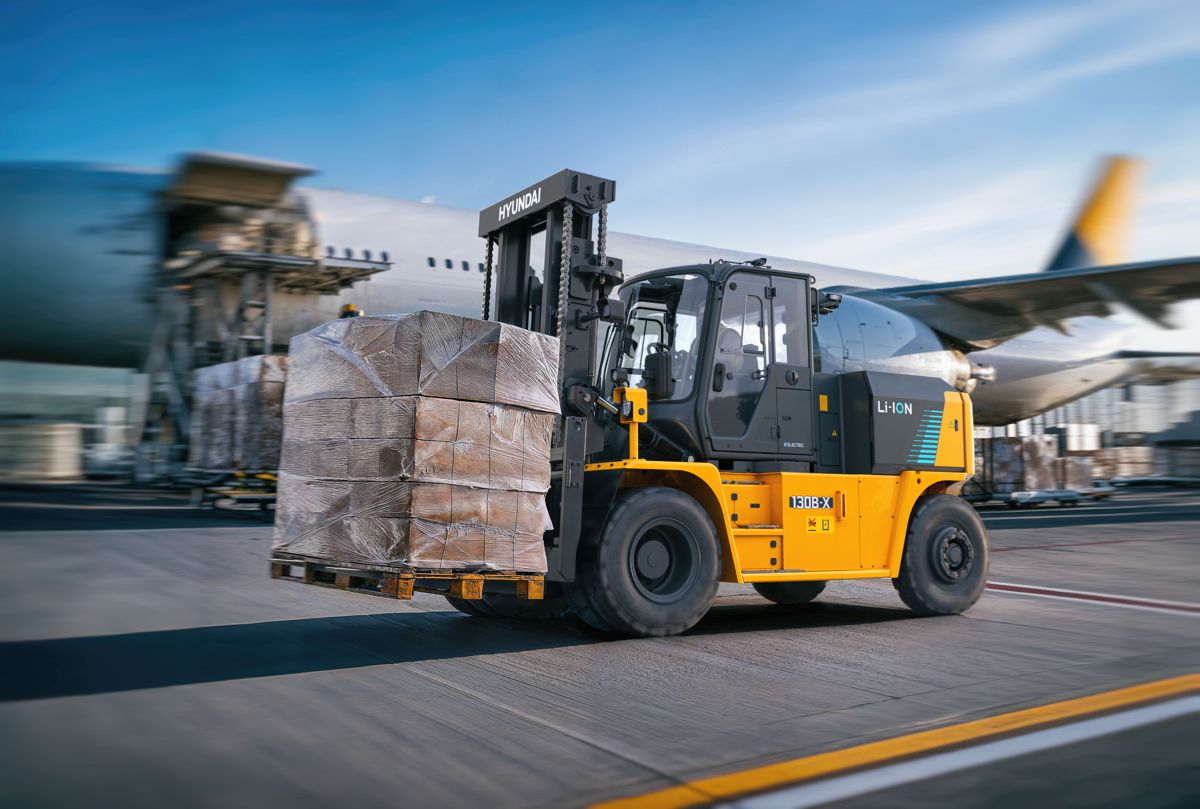
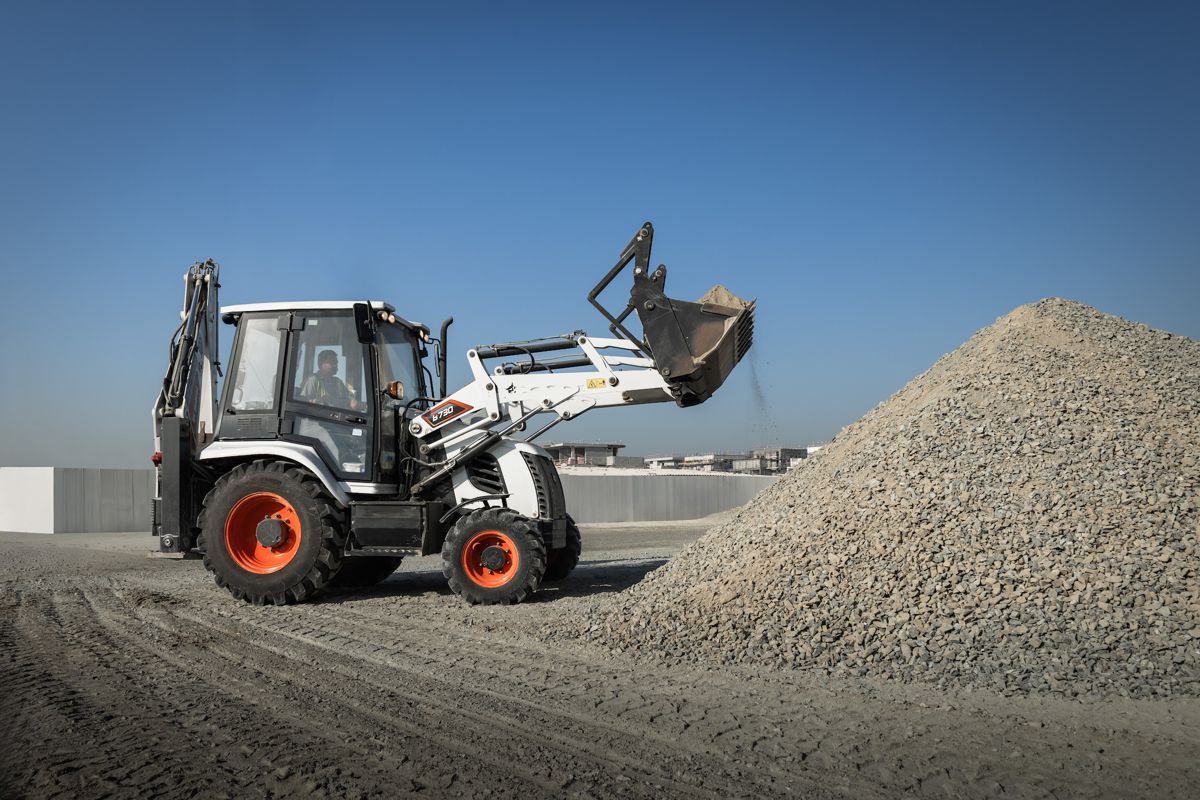
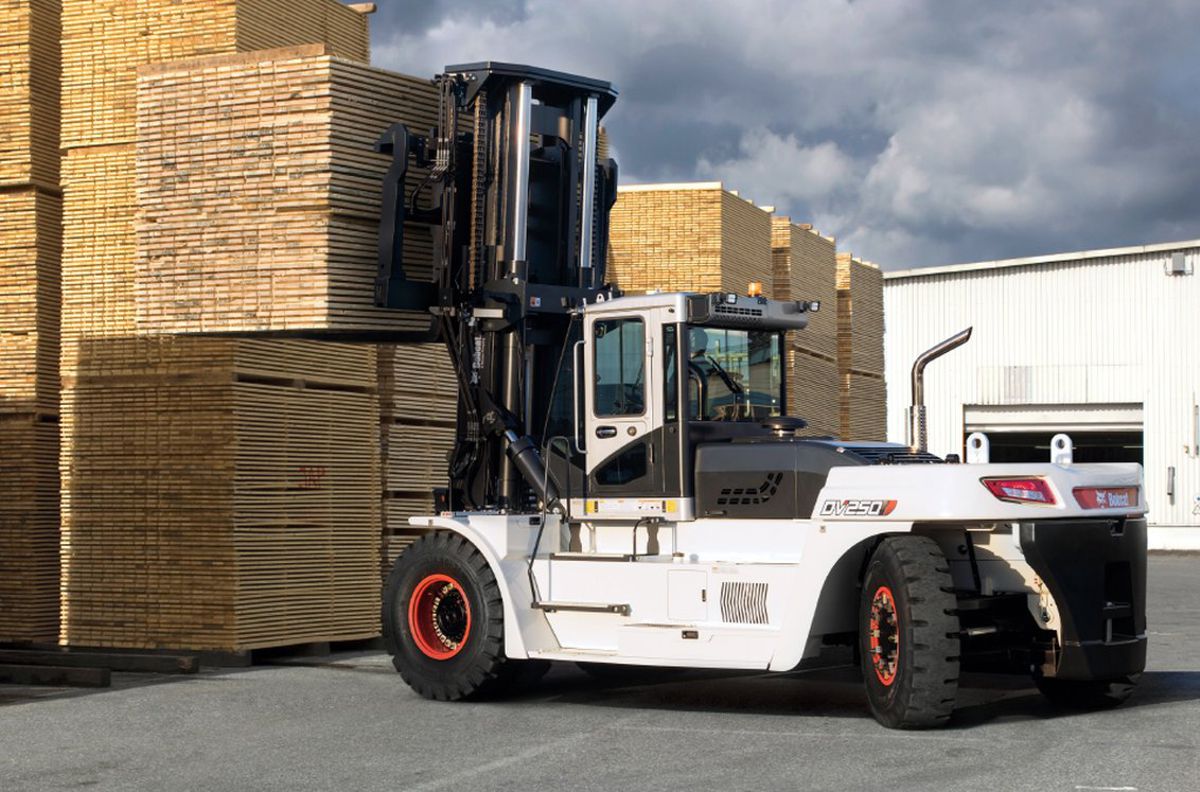
The DV250S-7 itself signals ambition at the heavier end of handling. It is a heavy-duty diesel pneumatic-tyre forklift built around a Doosan Industrial Vehicle engine, with capacity in the region of 20 to 25 tonnes, and it is designed for the demanding environments of ports, shipping yards, heavy construction sites and industrial operations. Machines of this class are not adjacent to Bobcat’s compact heritage so much as at the opposite end of the spectrum, and winning a bulk-handling award with one is a marker of how far the portfolio has stretched. The commercial relevance is that heavy load handling is exactly where Gulf demand is concentrating, in the container yards, laydown areas and materials terminals that feed the region’s construction and industrial expansion.
Bobcat has made clear this is a direction of travel rather than a single product. At LogiMAT 2026 the company announced the DV180 and DV250S-9 diesel forklifts, positioning them as the largest machines in its line-up and as an extension of its heavy-duty material-handling range for the Europe, Middle East and Africa market.
Moving up the tonnage curve puts Bobcat into direct competition with established heavy-forklift and reach-stacker specialists, and it aligns the company with the parts of the market least exposed to short-term construction cycles, since ports and industrial terminals handle throughput regardless of whether new projects break ground. For infrastructure owners and terminal operators in the Gulf, the arrival of a broader heavy-handling option from a manufacturer already embedded in their compact fleets changes the procurement conversation, because it opens the possibility of consolidating suppliers across machine classes that were previously bought separately.
Electrification and the Warehouse Play
At the lighter end of the same portfolio, Bobcat has been building a warehouse and electrification story that matters more to the Gulf than the earthmoving legacy might suggest. At LogiMAT 2025 the company introduced its own lithium iron phosphate battery range, which it says offers a service life several times longer than lead-acid packs and which it backs with a lengthy warranty, alongside the BNT series of three-wheel forklifts described as its first models built exclusively around lithium-ion technology.
The company also expanded its warehouse portfolio with new pallet trucks, platform trucks and stackers, many available with lithium batteries from production and monitored through the Machine IQ telematics system. These are not headline machines in the way a 25-tonne forklift is, but they address the fastest-growing corner of regional demand, the distribution centres and manufacturing floors multiplying across Saudi Arabia and the UAE.
The economics of that shift favour Bobcat’s timing. Lithium iron phosphate batteries reduce charging downtime and maintenance compared with lead-acid, which matters most in multi-shift warehouse operations where a forklift out of service is a direct hit to throughput, and their emission-free operation suits the enclosed environments and tightening emissions expectations of modern logistics facilities.
Regional analysts expect Middle East forklift demand to grow at mid-single-digit rates through the rest of the decade, with warehousing and logistics the leading application and electric models gaining ground fastest in the Gulf’s newer facilities. A manufacturer arriving in that market with a fresh lithium range, integrated telematics and a warehouse line-up is positioned for the demand that construction-equipment brands historically left to material-handling specialists, and that convergence is precisely what the CMME categories now capture.
Why the Gulf Is the Right Market at the Right Time
The backdrop that gives these product moves their commercial weight is Saudi Arabia’s industrial strategy. Machinery and equipment sit at the centre of the Kingdom’s diversification agenda, with localisation, higher-value exports and Industry 4.0 competitiveness all explicit objectives. Under the National Industrial Development and Logistics Programme, launched in 2019, Saudi Arabia aims to lift manufacturing from roughly 13 percent of gross domestic product toward 20 percent by 2030, with a sister industrial strategy targeting tens of thousands of operating factories within the following decade and a stated ambition to expand non-oil exports several times over.
Each of those objectives requires equipment far beyond the excavators and dozers associated with construction, extending into the forklifts, warehouse trucks and factory-floor handling machines that keep manufacturing and logistics moving. The Kingdom’s positioning as a logistics hub between Asia, Europe and Africa reinforces that demand, since ports, distribution centres and industrial zones all run on material handling.
Megaprojects sustain the construction side of the equation while the industrial strategy broadens it. Programmes such as NEOM, the Red Sea Project and Qiddiya keep material transport elevated across large construction footprints, and the wider Gulf pipeline continues to underpin demand for heavy machines. Market researchers value the Saudi construction equipment market at around 1.45 billion US dollars in 2024, with steady growth expected through 2030, and they project the Saudi forklift market to expand at mid-to-high single-digit rates over a similar horizon on the strength of logistics and e-commerce build-out.
For a manufacturer that can now field compact machines, heavy forklifts and warehouse equipment under one brand, the Gulf offers a market where the full portfolio is in demand at once. The localisation emphasis adds a further layer, because Saudi procurement rules increasingly favour suppliers able to demonstrate local content and support, which rewards breadth, regional presence and aftermarket depth over a narrow product offer.
What the Awards Signal for Buyers and Competitors
For construction professionals, infrastructure owners and logistics operators in the region, the practical takeaway is that the supplier landscape is consolidating around breadth. A single manufacturer offering loaders, skid steers, telehandlers, heavy forklifts and warehouse trucks through one dealer network changes procurement calculus, because it allows buyers to standardise parts, service and operator training across machine classes that were previously sourced from separate specialists. That convenience carries a competitive edge for the supplier, and it puts pressure on pure-play material-handling brands to defend their position on price, specification and service rather than category familiarity.
Anirban Bagchi, head of content for CMME organiser CPI Trade Media, noted that the 2026 edition was “among our most successful ones yet, that’s quite an achievement when you consider all that’s going on in the region,” a comment that reflects how much competitive activity the awards now capture across an expanding equipment market.
The forward-looking signal is about where value is migrating. As Gulf demand tilts from earthmoving toward ports, factories and distribution centres, the manufacturers best placed to capture it are those who have already stretched their portfolios across the worksite and can meet localisation expectations with regional support. Bobcat’s three CMME wins show a company that has made that stretch deliberately, using the acquired Doosan forklift business to leapfrog into material handling and then investing in heavier machines and electrified warehouse equipment to widen the offer.
Whether rivals respond by broadening their own ranges, deepening local content or defending specialist niches will shape the regional equipment market through the rest of the decade, and the categories contested at events such as the CMME Awards will remain a useful early read on which strategy is winning.
Key Industry Questions
- Why do Bobcat’s three CMME wins matter beyond the recognition itself? The value is in the spread of categories rather than the number of trophies. Bobcat won across compact equipment, skid steers and heavy bulk handling, three distinct parts of the worksite, which signals a deliberate move from compact-equipment specialist to full-spectrum worksite and material-handling supplier. That breadth matters commercially because it changes how buyers can source machines and because it lands as Gulf demand expands beyond earthmoving into ports, factories and warehouses. For competitors, the wins confirm that Bobcat is serious about material handling and intends to compete across machine classes rather than defend a single heartland, which reshapes the regional supplier landscape and the procurement choices available to contractors and logistics operators.
- What is the significance of the DV250S-7 forklift specifically? The DV250S-7 is a heavy-duty diesel forklift with capacity in the 20 to 25 tonne range, built for ports, shipping yards and heavy construction, and it comes from the former Doosan Industrial Vehicle range now carrying the Bobcat name. Winning a bulk-handling award with it shows that the consolidation of the acquired forklift business into the Bobcat brand has matured into a product line competitive on its own merits. It also demonstrates how far Bobcat has moved from its compact heritage, since a 25-tonne machine sits at the opposite end of the spectrum from a skid steer, and it targets the heavy load-handling demand concentrating in the region’s ports and industrial terminals.
- How did Bobcat come to sell forklifts in the first place? Doosan Bobcat acquired Doosan Industrial Vehicle, the group’s forklift business, in 2021, bringing in an operation with a leading share of the South Korean domestic forklift market and substantial annual revenue. In 2023 the company announced a global brand strategy to move its forklift, portable power and industrial air businesses under the Bobcat name across North America, Europe and applicable markets, while retaining the Doosan brand in territories such as South Korea, China and India. The forklift range has been progressively rebranded since then, so machines once sold as Doosan now carry Bobcat identification, marketed alongside the company’s compact machinery through the same dealer networks.
- Why is the Gulf such an important market for this strategy? Saudi Arabia and the UAE are investing heavily in manufacturing, logistics and warehousing, which broadens equipment demand beyond traditional earthmoving into forklifts, warehouse trucks and factory-floor handling machines. Saudi Arabia’s National Industrial Development and Logistics Programme targets a significant rise in manufacturing’s share of the economy and positions the Kingdom as a logistics hub between three continents, both of which require material-handling equipment at scale. Megaprojects such as NEOM, the Red Sea Project and Qiddiya sustain construction demand alongside the industrial build-out. A manufacturer able to supply compact machines, heavy forklifts and warehouse equipment under one brand finds its whole portfolio in demand at once in this market.
- What role does electrification play in Bobcat’s material-handling push? Bobcat has introduced its own lithium iron phosphate battery range and a series of three-wheel forklifts built around lithium-ion technology, alongside new warehouse equipment such as pallet trucks and stackers. Lithium iron phosphate batteries reduce charging downtime and maintenance compared with lead-acid and operate without emissions, which suits multi-shift warehouse environments and the tightening emissions expectations of modern logistics facilities. This positions Bobcat for the fastest-growing corner of regional demand, the distribution centres and manufacturing floors expanding across the Gulf, and it moves the company into territory that construction-equipment brands historically ceded to dedicated material-handling specialists.
- How does Saudi localisation policy affect equipment manufacturers? Saudi Arabia’s industrial strategy places explicit emphasis on localisation, local content and domestic supply-chain development, enforced through procurement rules that increasingly favour suppliers who can demonstrate local presence and content. That environment rewards manufacturers with broad portfolios, regional dealer networks and strong aftermarket support, because breadth and local support are easier to align with local-content expectations than a narrow imported product offer. For a company like Bobcat, which can field a wide range of machine classes through established regional channels, the policy direction is advantageous, while narrower specialists may face pressure to deepen their local footprint to remain competitive in public and quasi-public procurement.
- Who are Bobcat’s main competitors in Gulf material handling? The material-handling segment is contested by dedicated specialists and diversified equipment groups alike. At the 2026 CMME Awards, Hangcha won the broader logistics, warehousing and material handling category with a ten-tonne diesel forklift, and Manitou took Telehandler of the Year, illustrating the strength of specialist competitors. Across the wider market, established forklift brands and material-handling groups compete on specification, price and service. Bobcat’s advantage is the ability to bundle forklifts with its compact and heavy machinery under one brand and dealer network, but that advantage must be defended against specialists with deep material-handling heritage and against diversified groups pursuing the same convergence strategy.
- What should buyers take from the trend toward broader portfolios? Buyers should recognise that sourcing across machine classes from a single manufacturer can simplify parts, service contracts and operator training, which reduces total fleet complexity and can lower lifecycle cost. At the same time, breadth should not override specification, so buyers are best served comparing individual machines on capacity, reliability, energy source and aftermarket support rather than defaulting to a single supplier for convenience alone. The broader trend means more genuine choice, since manufacturers historically confined to one category are now competing across several, and that competition is likely to sharpen pricing and service standards across compact equipment, heavy forklifts and warehouse handling in the Gulf market.
Strategic Takeaways
- The commercial story in Bobcat’s three CMME wins is portfolio convergence, with a former compact-equipment specialist now competing across compact machines, skid steers, heavy forklifts and warehouse equipment under a single brand and dealer network.
- The DV250S-7 award confirms that the acquired Doosan Industrial Vehicle forklift business has matured from a branding exercise into a competitive product line, giving Bobcat instant scale and credibility in material handling that would otherwise take years to build.
- Gulf equipment demand is migrating from earthmoving toward ports, factories and distribution centres, and manufacturers who have stretched their portfolios across the whole worksite are best positioned to capture that shift.
- Saudi localisation policy under the National Industrial Development and Logistics Programme favours suppliers with broad ranges, regional presence and aftermarket depth, turning portfolio breadth into a procurement advantage rather than merely a marketing one.
- Electrification and warehouse equipment, less visible than heavy machines, address the fastest-growing corner of regional demand, and Bobcat’s lithium battery range and warehouse line-up position it for logistics growth that construction brands historically left to specialists.