Construction Waste is Becoming a New Revenue Stream for Contractors in UK
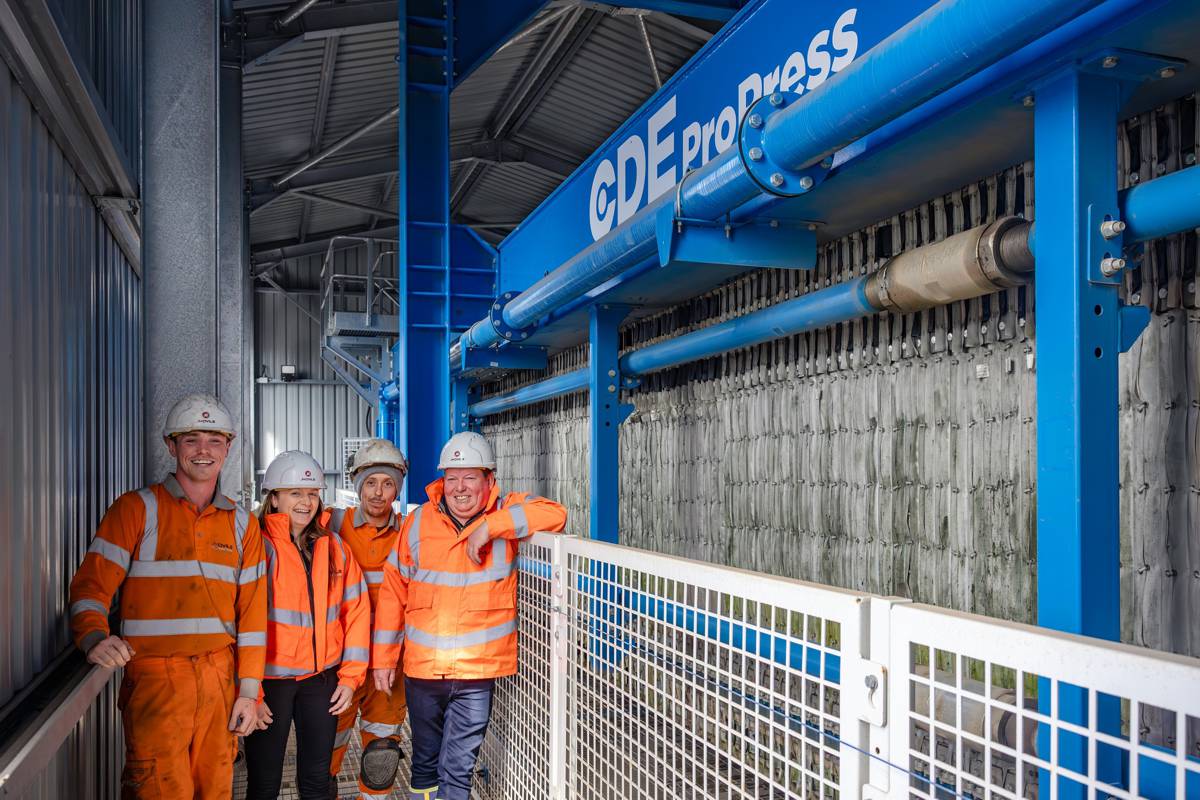
The headline event is modest on paper, in that a UK civil engineering contractor in Blackpool has commissioned a wash plant. The significance sits underneath it. When JN Civils switched on a 150-tonnes-an-hour construction, demolition and excavation (CD&E) recycling plant, engineered by Northern Ireland’s CDE at its Olympic Way facility, the company was not simply buying equipment. It was reclassifying construction waste from a disposal liability into a vertically integrated source of materials, margin and recurring revenue, and doing so at precisely the moment when the economics of that shift have tilted decisively in the contractor’s favour.
That shift is the real story for the wider infrastructure market rather than the plant itself. Across Great Britain, recycled and secondary aggregates now meet close to a third of national demand, and the fiscal and supply-side pressures pushing contractors toward internal recovery are intensifying rather than easing.
Set the rising cost of landfill against the falling replenishment of virgin quarry reserves, layer in a tax system that penalises primary extraction while leaving reclaimed material largely untouched, and the logic of owning the recovery process rather than renting it becomes difficult to argue against. JN Civils offers a clean illustration of that logic in motion, and its decision reads less as an environmental gesture than as a hard commercial calculation.
Briefing
- JN Civils has commissioned a 150-tonnes-an-hour CD&E waste recycling wash plant from CDE at its Olympic Way facility in Blackpool, moving material recovery in-house after years of paying to haul and process waste elsewhere.
- England’s standard Landfill Tax rate rose to £130.75 a tonne from April 2026, while the lower rate for inert material more than doubled to £8.65, sharply raising the cost of disposing of unrecovered waste.
- The Aggregates Levy increased to £2.16 a tonne on virgin material from April 2026, yet recycled aggregate derived from material previously used in construction generally sits outside the levy, widening the price advantage of reclaimed product.
- Recycled and secondary aggregates supplied 74.3 million tonnes across Great Britain in 2023, around 31% of a roughly 240-million-tonne market, a recycling share the Mineral Products Association describes as higher than almost any other European nation.
- Recovered material now feeds JN Civils’ own projects and is sold externally to construction and groundworks businesses, turning a former cost centre into a new revenue stream.
The Tax Arithmetic Now Rewards Keeping Material in Circulation
The commercial case starts with the cost of doing nothing. From 1 April 2026, the standard rate of Landfill Tax in England rose to £130.75 a tonne, while the lower rate for qualifying inert material more than doubled to £8.65, matching the cash increase applied to the standard rate. Layered on top of gate fees and haulage, that turns even inert excavation spoil into an expensive stream to dispose of, and it removes much of the historic comfort that burying inert material was cheap. For a contractor generating steady volumes of soil, rubble and mixed inert waste, the disposal bill has stopped being a rounding error on a project budget and become a line worth engineering out.
The other side of the equation is the Aggregates Levy, which increased to £2.16 a tonne on primary sand, gravel and crushed rock from April 2026. Recycled aggregate derived from material that has previously been used in construction generally falls outside the levy altogether, a deliberate policy design intended to tilt demand toward reclaimed product and away from fresh extraction.
The combined effect is a widening price wedge, because virgin aggregate carries both an extraction cost and a tax that recycled product does not, while the disposal of unrecovered waste attracts a landfill charge that recovery avoids. A contractor that processes its own arisings therefore captures value at both ends, cutting what it pays to dispose of waste and reducing what it pays to buy material back in.
From Cost Centre to Revenue Stream
The route JN Civils took to the plant is instructive because it began with the pain the new plant removes. Before investing, the company hauled waste to a third-party wash plant, which happened to run CDE equipment, and paid for both transport and processing while waiting for recovered material to be returned to circulation.
Operations manager David Scott was candid about why that arrangement had a shelf life, noting that “It was a workable solution to recover as much material as possible, but haulage costs, processing fees, and delays in being able to return those materials back to use meant we needed a more sustainable option over the long term.” The third-party model worked technically, in other words, but it leaked money and time at every stage of the cycle.
Bringing the process in-house changes the ownership of that value. CDE business development manager Nathan Loboda-Smith framed the move as a question of control, arguing that “Bringing wet processing capabilities in-house gives JN Civils greater control over material quality, availability and, importantly, cost, all while creating a platform for sustainable growth through the sale of recycled products to construction and groundworks customers.”
The plant now recovers washed and graded sand and aggregate for use on the contractor’s own sites, displacing bought-in virgin material, while surplus output is sold externally to construction and groundworks businesses as a fresh revenue line. A cost that once flowed out of the business has been reversed into an income stream, which is the essence of what vertical integration is meant to achieve.
A Repeatable Pattern Across the UK Materials Market
JN Civils is not an outlier, and that is what lifts the development from anecdote to trend. The same wet processing supplier has delivered comparable in-house recovery plants for a string of UK contractors and materials firms, each following the same logic of converting site arisings into saleable product.
The Ruttle Group, another North West operator, installed an 80-tonnes-an-hour plant at its Chorley site to produce around 170,000 tonnes of recycled aggregate a year, moving on from the low-grade crush-and-screen reuse it had relied on previously.
In Essex, SRC Group’s plant at Martell’s Quarry near Colchester was the eighth CDE system that processor had commissioned, while in Scotland’s central belt Brewster Bros built a facility with capacity to recycle 400,000 tonnes of CD&E waste annually.
Read together, these projects describe a market in which the supplier of recovery equipment is quietly becoming a structural player in aggregate supply. CDE, headquartered in Northern Ireland with a North American base south of Dallas-Fort Worth and regional offices across Europe, the Middle East, Africa and Australasia, states that it has delivered close to 2,000 wet processing projects in more than 100 countries.
Whether the customer is a family civils firm or an established quarry operator, the commercial pitch stays the same, because material quality, throughput and yield determine whether recovered waste can command a market price. Wet processing is what lifts arisings above sub-base grade into specification-compliant sand and aggregate that a buyer will pay for.
Why Scarcer Virgin Supply Makes Recovery Strategic
The pull factor behind all of this is the tightening of primary supply. According to the Mineral Products Association, recycled and secondary aggregates supplied 74.3 million tonnes across Great Britain in 2023, equivalent to 31% of a market that runs at roughly 240 million tonnes a year, a recycling rate the association describes as higher than almost any other European nation.
That achievement sits alongside a warning, because primary aggregates still account for the bulk of demand and the rate at which quarry reserves are being replenished through the planning system has fallen to an all-time low. The construction pipeline is leaning ever harder on a virgin resource base that is not being renewed at the pace the country’s projects require.
For contractors and infrastructure owners, that combination reframes recovered material from a sustainability talking point into a supply-security asset. The MPA is careful to note that the availability of recycled aggregate is tied to demolition activity and the flow of suitable waste, which means the contractors who control both the arisings and the processing capacity are best placed to guarantee their own supply.
Quality standards reinforce the point, since recovered aggregate only substitutes for virgin product when it meets technical specification, and the WRAP quality protocol and associated standards have done much to establish that credibility over two decades. Wash plants, rather than crushers alone, are the equipment that turns variable, contaminated arisings into a product the market will accept.
The Technology Case Is a Margin Case
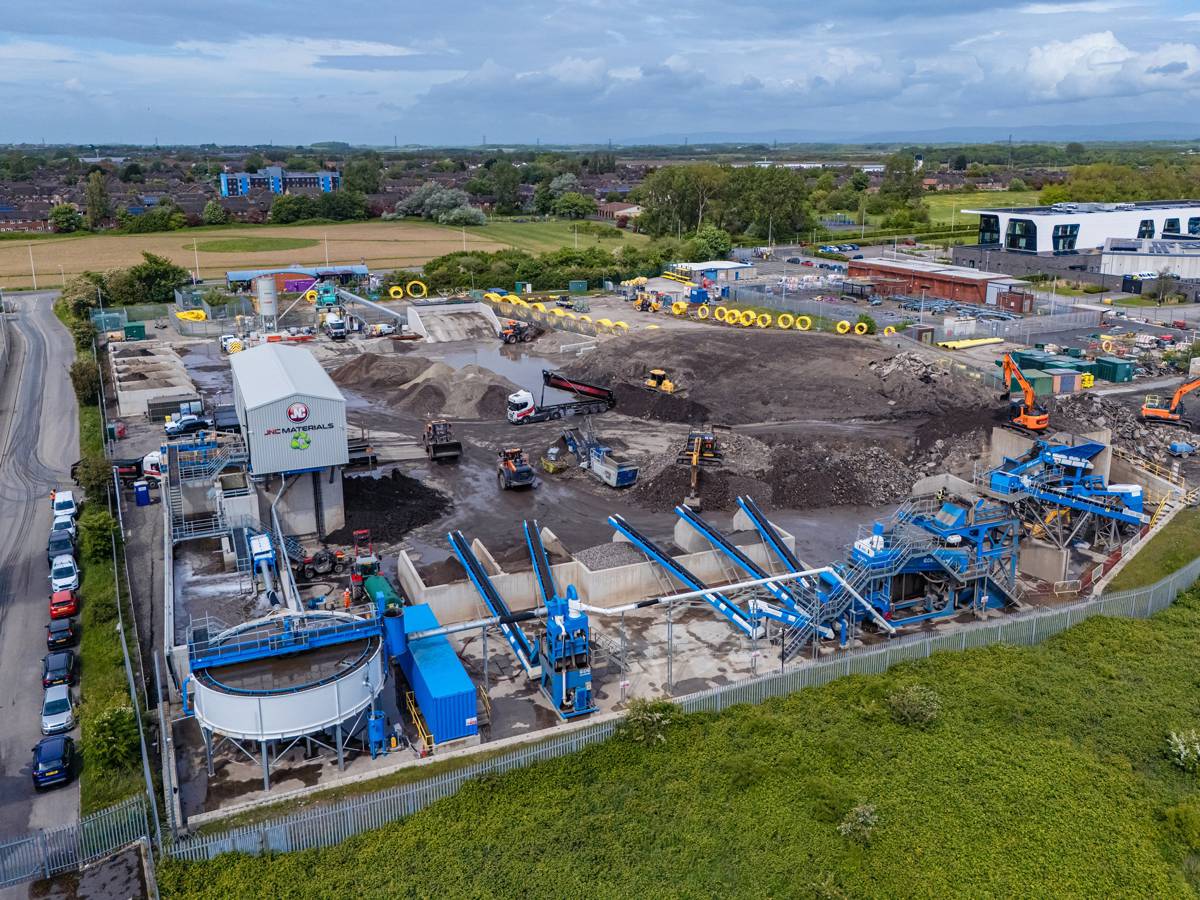
The specification of the JN Civils plant matters chiefly because it explains where the margin comes from, and here the water circuit is as important as the screens. The CDE system pairs an R4500 feeder, an AggMax scrubbing and classification module and an EvoWash sand washing unit with an AquaCycle thickener and an X3 ProPress filter press, the last two of which recover process water and compress residual fines into a manageable filter cake. Closed-loop water handling reduces both the volume of fresh water the operation must buy and the cost and regulatory burden of discharge, and it allows a plant of this capacity to sit on a compact urban footprint rather than requiring settlement lagoons. For an operator working from a site like Olympic Way, that footprint is a condition of being able to run the plant at all rather than a technical footnote.
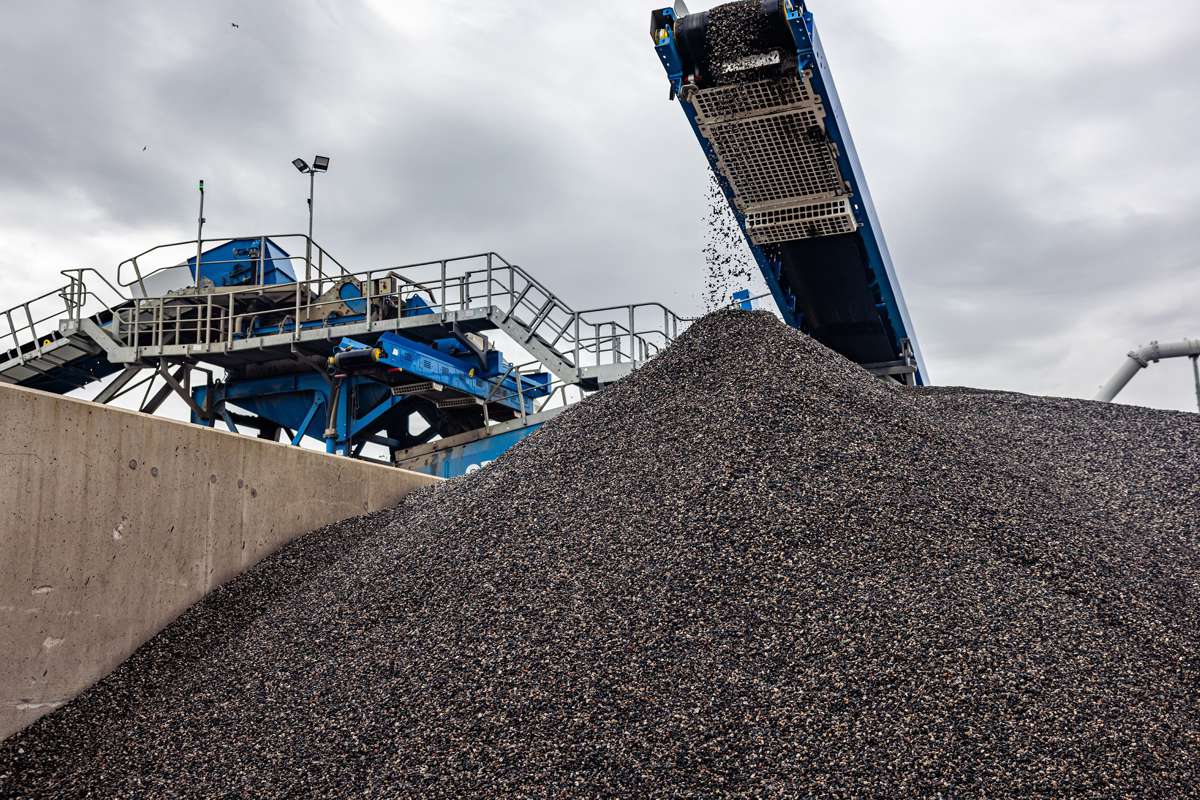
The output is what converts that engineering into commercial product. The plant is configured to yield fine and coarse sand alongside graded aggregates, which are exactly the fractions that displace bought-in virgin material and that carry a market value when sold on. CDE ProMan David Gordon tied the design back to that intent, stating that “The vision for this project was clear from the outset; to help JN Civils take greater control of its waste streams, improve operational efficiency, and recover high-quality materials that can support sustainable construction.” Independent trade coverage of the plant’s June 2026 open day put its annual output potential above 300,000 tonnes of recycled construction material, a figure that indicates the scale at which a single mid-sized contractor can now supply the local market.
Where This Leaves Contractors, Investors and Policymakers
The direction of travel is clear enough to act on. As landfill costs climb, the Aggregates Levy widens the gap between virgin and recycled material, and primary reserves tighten, the contractors that own their recovery process will enjoy lower input costs, a hedge against material scarcity and a secondary revenue stream that rivals renting third-party capacity cannot match. JN Civils has said it aims to recover up to 80% of its excavation waste initially, with a longer-term target approaching 90%, and David Scott framed the investment as one made after genuine scrutiny, recalling that “This is understandably a major investment for us, so we did our due diligence.” The capital outlay is real, but so is the structural advantage it buys over the life of the asset.
For investors and policymakers, the plant is a small data point in a larger reallocation of where value sits in the materials chain. Equipment suppliers, waste-processing operators and vertically integrated contractors are capturing an expanding share of aggregate supply, and the planned rollout of mandatory digital waste tracking should, over time, sharpen the data on which such investment decisions are made. CDE, which has set a target of net zero by 2050 with a 50% cut in scope 1 and 2 emissions by 2030, is positioning its equipment sales within that circular-economy narrative. The wider lesson for the industry is straightforward, because construction waste has stopped being something contractors pay to make disappear and started being a resource they compete to own.
Key Industry Questions
How much does the 2026 Landfill Tax increase add to construction disposal costs? From 1 April 2026 the standard rate reached £130.75 a tonne and the lower rate for inert material rose to £8.65, and both figures apply on top of gate fees and haulage rather than in place of them. For high-volume producers such as civil engineering and demolition contractors, the effect compounds quickly, since a single project can generate thousands of tonnes of soil, rubble and mixed inert waste. The practical consequence is that diversion into recovery or reuse now produces measurable savings against a rising baseline, which is why the tax is increasingly treated as a driver of plant investment rather than simply a compliance cost.
Is recycled aggregate exempt from the Aggregates Levy? Recycled and reclaimed aggregate, including material derived from concrete, brick rubble and reused road planings, generally falls outside the Aggregates Levy, which applies to the commercial exploitation of virgin sand, gravel and crushed rock. The levy was designed from the outset to encourage recycling and reduce primary extraction, so the exemption is a deliberate policy lever rather than an accident of drafting. From April 2026 the levy stands at £2.16 a tonne on qualifying primary material. For contractors, the difference means recovered product avoids a tax that its virgin equivalent carries, widening the commercial gap in favour of reclaimed aggregate before extraction and haulage costs are even considered.
Why are contractors bringing waste recycling in-house rather than using third-party processors? Third-party processing works technically but leaves value on the table through haulage charges, processing fees and the delay in returning material to circulation. Owning the plant removes those frictions and gives the contractor direct control over material quality, availability and cost. It also unlocks a second benefit that outsourcing cannot, namely the ability to sell surplus recovered product to other builders and groundworkers as a revenue stream. When landfill and virgin-material costs are both rising, the internal economics increasingly favour capital investment in recovery capacity over ongoing operational spend with an external processor, particularly for firms generating consistent waste volumes.
What share of UK aggregate demand is met by recycled and secondary material? The Mineral Products Association estimates that recycled and secondary aggregates met 74.3 million tonnes of demand across Great Britain in 2023, around 31% of a market of roughly 240 million tonnes a year. That is a higher recycling share than almost any other major European economy, and the figure has climbed steadily as producers invest in more advanced recovery. Primary aggregates still supply the majority of demand, however, and the MPA warns that quarry reserve replenishment through the planning system is at an all-time low. The scarcity of new virgin supply is a central reason recovered material is becoming strategically important rather than merely environmentally desirable.
What is the commercial difference between a wash plant and a crush-and-screen operation? Crushing and screening can produce low-grade fill and sub-base from inert waste, but it struggles to remove clay, silt and fine contamination, which limits the value and market of the output. Wet processing scrubs and washes the material, classifies it by size and separates out contaminants, producing washed sand and graded aggregate that can meet technical specification and command a market price. The distinction matters commercially because specification-compliant product substitutes directly for virgin material and can be sold externally, whereas unwashed reuse tends to stay on site at low value. The wash plant is therefore what converts a waste stream into a saleable material.
How does closed-loop water recovery affect plant economics and siting? Water management is a significant cost and regulatory factor in any wash plant, and closed-loop systems recycle the great majority of process water rather than discharging it. That reduces the volume of fresh water the operation must buy and limits the discharge consents and associated compliance the site requires. Just as importantly, thickening and filter-press technology compresses residual fines into a stackable cake and removes the need for large settlement lagoons, which allows a high-capacity plant to occupy a compact footprint. For operators on constrained urban or industrial sites, that footprint is often the deciding factor in whether a recovery plant is viable at the location at all.
What are the limits or risks of the vertically integrated recovery model? The model depends on a steady flow of suitable waste, and the MPA notes that recycled aggregate availability is inherently tied to demolition and construction activity in the local area. A contractor that owns processing capacity but sees its arisings fall can find the plant under-utilised, while variable contamination in incoming material affects yield and product quality. There is also a meaningful capital commitment and the operational demands of running processing equipment, aftercare and maintenance. These factors explain why buyers place weight on supplier support and uptime, and why the return on a plant is strongest for firms with predictable, high waste volumes and a reliable local market for the output.
What does this trend mean for virgin aggregate producers and quarry operators? Growing recovered supply does not remove the need for primary aggregate, which still meets the majority of demand, but it does intensify competition at the margin and reward operators who diversify into recycling themselves. Many established quarry firms have already added wet processing to convert incoming inert waste into recycled product alongside their extracted material. With virgin reserve replenishment constrained by the planning system and the Aggregates Levy raising the relative cost of primary material, the commercial logic increasingly favours producers who can supply both streams. The likely outcome is further blending of extraction and recovery within single operations rather than a straightforward substitution of one for the other.
Strategic Takeaways
- The 2026 tax settlement has turned material recovery into a balance-sheet decision, because rising landfill charges and a levy that spares recycled aggregate now reward contractors for keeping material in circulation at both the disposal and procurement ends.
- Vertical integration of recovery is emerging as a durable competitive advantage, giving contractors that own their wash plants lower input costs, greater supply security and a secondary revenue stream that firms relying on third-party processing cannot replicate.
- With recycled and secondary material already meeting close to a third of national aggregate demand and virgin reserve replenishment at record lows, recovered aggregate should be treated as a supply-security asset rather than a purely environmental initiative.
- Wet processing, not crushing alone, is the technology that unlocks value, because only washed and classified product reaches the specification needed to displace virgin material and sell into the open market.
- Value in the materials chain is shifting toward equipment suppliers, processing operators and integrated contractors, a reallocation that mandatory digital waste tracking is likely to make more visible and more investable over the coming years.