Nepal Plans Elevated Wildlife Highway in $305.75 Million Road Upgrade
Nepal is preparing to carry a four-lane highway above an important wildlife corridor as part of a $305.75 million road improvement programme financed by the Asian Development Bank (ADB). The investment will upgrade two of the country’s principal transport routes, combining almost 80 kilometres of highway improvements with new bridges, flood protection and measures to reconnect wildlife habitats divided by the road network.
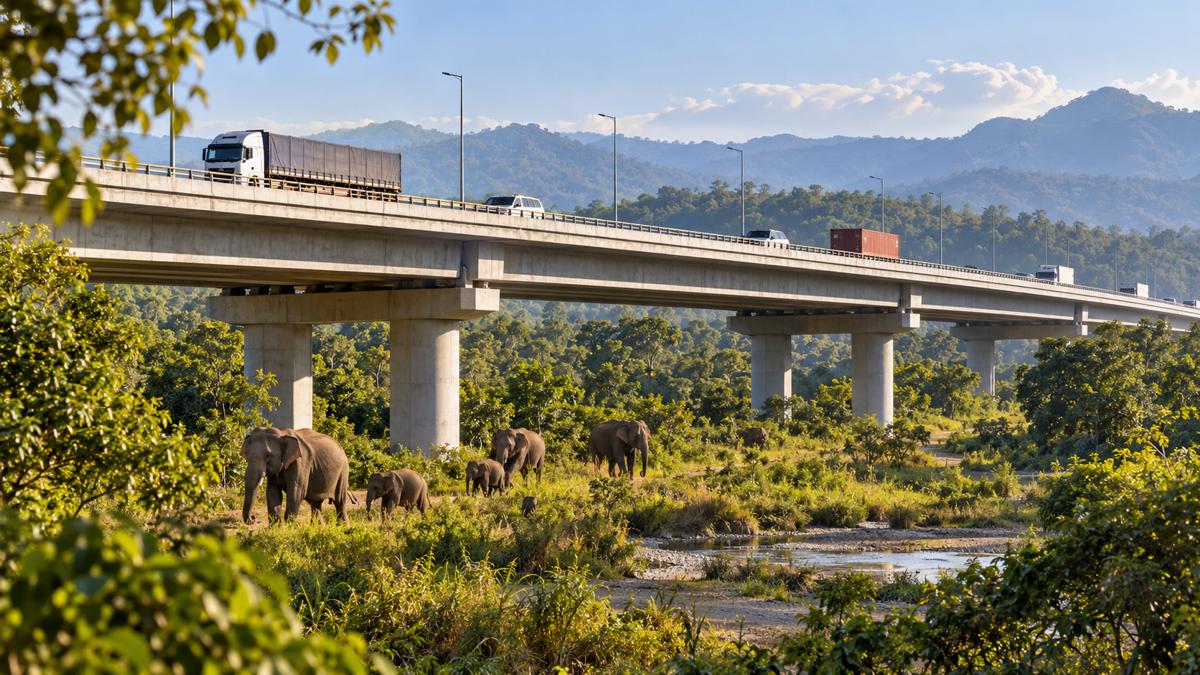
The most unusual engineering component is an elevated section of the East–West Highway through the Barandabhar wildlife corridor, where traffic will pass above an ecological connection within the Terai Arc Landscape. The arrangement is intended to allow animals to move between habitats without crossing the carriageway, addressing a longstanding challenge in a region where transport infrastructure and wildlife movement intersect.
The financing, approved under the SASEC Highway Improvement and Ecosystem Restoration Project, will support the widening of the Narayanghat–Hetauda section of the East–West Highway and improvements to the Mugling–Abukhaireni section of the Prithvi Highway. Both routes are important to Nepal’s domestic economy, although their engineering challenges differ considerably.
Briefing
- $305.75 million in ADB financing will support highway modernisation, environmental protection and technical assistance in Nepal.
- Approximately 70 km of the East–West Highway between Narayanghat and Hetauda will be widened from two to four lanes.
- The Mugling–Abukhaireni section of the Prithvi Highway will also be upgraded to four lanes, including new road sections and bridges.
- An elevated highway section through the Barandabhar wildlife corridor will provide space for animals to move beneath the carriageway.
- Flood protection, drainage improvements, embankment strengthening and slope stabilisation are included in the engineering programme.
Upgrading Nepal’s Strategic Highways
The East–West Highway, also known as the Mahendra Highway, forms the principal road connection across Nepal’s southern lowlands. Running through the Terai, it links major population centres and commercial areas while carrying freight and passenger traffic between different parts of the country. Its performance also affects international trade, much of which depends on road connections between Nepal’s inland markets and its southern border crossings.
The Narayanghat–Hetauda section connects two established transport nodes, with the proposed widening from two to four lanes intended to increase capacity and improve traffic flow. The work will involve upgrading an existing corridor rather than establishing an entirely new route, bringing the usual challenges of construction alongside live traffic, existing junctions and roadside communities.
The Prithvi Highway presents a different engineering environment. The Mugling–Abukhaireni section forms part of the busy route connecting Kathmandu with Pokhara, where difficult terrain and constrained road geometry complicate highway improvements. ADB’s programme provides for widening to four lanes, together with new road sections and bridge construction.
Although the Prithvi Highway component is considerably shorter than the East–West Highway works, its location introduces different construction demands. Widening roads through constrained terrain can require substantial earthworks, retaining structures and careful drainage management, particularly where excavation affects existing slopes.
The improvements are intended to make journeys safer and more reliable on both routes. The detailed arrangements for traffic management during construction, including how existing road users will be accommodated while widening takes place, will become clearer as implementation progresses.
Engineering a Wildlife Corridor
Barandabhar lies within the wider ecological landscape associated with Chitwan and Nepal’s Terai Arc, where forest connections allow wildlife to move between habitats. Roads crossing these areas can interrupt established movement routes, creating barriers for animals and increasing the likelihood of collisions with vehicles.
Rather than relying entirely on individual wildlife underpasses, the project proposes an elevated highway section that will carry traffic above the corridor. By maintaining space beneath the road, the design is intended to preserve opportunities for wildlife movement across a broader area of the landscape.
The distinction is relevant to both the engineering and environmental design. Conventional wildlife underpasses concentrate movement at designated crossing points, while an elevated structure can provide a more continuous passage beneath the carriageway. Its effectiveness will depend on factors including structural clearance, the positioning of foundations, the surrounding vegetation and how animals respond to the completed infrastructure.
For the construction team, the elevated section introduces a substantial structural component into what would otherwise be a more conventional highway widening programme. Foundations, supporting structures, drainage and long-term maintenance requirements must be accommodated alongside the operational demands of a four-lane road. Construction activity will also need to be managed within an environmentally sensitive corridor.
“The project will revitalize one of Nepal’s most important transport corridors, improving connectivity for people, businesses, and tourism while helping restore wildlife corridors,” said ADB Country Director for Nepal Arnaud Cauchois.
The wildlife crossing forms part of a broader conservation programme supported by grant financing. This will include additional biodiversity measures, wildlife connectivity infrastructure and sustainable tourism investments in the Chitwan area.
The environmental objectives extend beyond preventing collisions. Maintaining connections between habitats can support the movement of wildlife across fragmented landscapes, although the performance of the new crossing will ultimately depend on its detailed design, management and use by animals after construction.
Building Resilience into the Roads
Nepal’s geography creates very different operating conditions across its highway network. The southern lowlands face flooding and drainage challenges during heavy rainfall, while roads through the hills are vulnerable to landslides, erosion and slope instability. Both can interrupt traffic for extended periods and damage infrastructure that is difficult to repair while routes remain in use.
ADB’s programme includes improved drainage systems, strengthened embankments, slope stabilisation works and resilient bridge designs. The measures will be incorporated into the highway improvements to reduce exposure to natural hazards and limit damage during severe weather.
On the East–West Highway, drainage and embankment protection will be particularly important as the carriageway is widened. Additional paved surfaces can alter runoff patterns, requiring drainage infrastructure capable of collecting and directing water without increasing erosion or concentrating flows in vulnerable locations. Culverts and roadside channels must also accommodate the wider road formation while maintaining appropriate water movement across the surrounding landscape.
The Prithvi Highway section requires greater attention to the relationship between road geometry and the surrounding terrain. Excavation and widening can affect slope stability, especially where steep ground, weathered materials and intense rainfall combine. The programme’s slope stabilisation measures are intended to address these risks, although the specific engineering techniques for individual locations have not been detailed in the financing announcement.
Bridge construction and strengthening also form part of the resilience programme. Structures must accommodate the upgraded road geometry while accounting for the hydraulic and geotechnical conditions at their locations, including flood flows, erosion and the potential for damage around foundations and approaches.
The two highway sections will therefore require different combinations of earthworks, drainage, structural engineering and protective measures, shaped by their respective terrain and exposure to natural hazards.
Financing and Project Delivery
The $305.75 million financing package comprises a $285 million loan from ADB’s ordinary capital resources, a $20 million grant from the Asian Development Fund’s regional cooperation and integration thematic window, and $750,000 in technical assistance from ADB’s Technical Assistance Special Fund.
The grant will support biodiversity conservation, wildlife connectivity infrastructure and sustainable tourism investments around Chitwan. It will also contribute to road safety initiatives, training programmes intended to improve livelihood opportunities for women, and institutional capacity in sustainable transport planning.
The project forms part of the South Asia Subregional Economic Cooperation (SASEC) programme, which supports transport connectivity and economic cooperation across participating countries. For landlocked Nepal, the reliability of domestic highways is closely connected to regional trade, particularly where freight must travel long distances between commercial centres and international border crossings.
The investment is also aligned with ADB’s country partnership strategy for Nepal for 2025–2029, which places sustainable economic infrastructure and regional integration among its priorities.
Financing approval establishes the framework for the programme, but the supplied announcement does not confirm the construction contract award dates or completion schedule. Detailed procurement and implementation arrangements will determine how the two highway sections are delivered, including the sequencing of widening works, bridge construction and environmental protection measures.
The elevated Barandabhar crossing will be a particularly interesting component to follow as the project moves into detailed implementation. Its structural design, construction methodology and integration with the surrounding wildlife corridor will determine how an established national highway can be expanded while retaining an important ecological connection.
Key Industry Questions
- How much has ADB approved for Nepal’s highway improvements? ADB has approved $305.75 million, comprising a $285 million loan, a $20 million grant and $750,000 in technical assistance.
- Which sections of Nepal’s highways will be upgraded? The programme covers approximately 70 km of the East–West Highway between Narayanghat and Hetauda, alongside the Mugling–Abukhaireni section of the Prithvi Highway.
- What is planned for the Barandabhar wildlife corridor? An elevated section of the East–West Highway will allow wildlife to move beneath the carriageway, reducing the need for animals to cross live traffic lanes.
- Why use an elevated highway instead of conventional wildlife underpasses? An elevated road can preserve a more continuous area of habitat connectivity beneath the structure, rather than concentrating wildlife movement at individual crossing points. Its effectiveness depends on the design and surrounding landscape.
- What improvements are planned for the Prithvi Highway? The Mugling–Abukhaireni section will be widened to four lanes, with additional road construction and bridges intended to improve capacity and safety.
- How will the project address flooding and landslides? The engineering programme includes upgraded drainage, strengthened embankments, slope stabilisation and resilient bridge designs to reduce damage and disruption from natural hazards.
- How does the investment support regional trade? Both highway sections contribute to Nepal’s domestic transport network and its connections with international trading routes under the SASEC regional cooperation framework.
- When will construction begin? The financing announcement does not establish a confirmed construction start date or completion schedule. Procurement and implementation details are available through ADB’s project information channels.
Strategic Takeaways
- Elevated highway construction at Barandabhar will require structural engineering and environmental design to be developed together, with wildlife movement influencing the road’s physical configuration.
- The East–West and Prithvi Highway improvements present different construction challenges, from widening across the Terai to working within more constrained terrain.
- Drainage, embankment protection and slope stabilisation will be central to maintaining the reliability of the upgraded routes.
- The financing structure provides dedicated grant support for biodiversity measures alongside the principal highway construction investment.
- Construction sequencing, procurement arrangements and the detailed design of the elevated crossing will be important indicators of how the programme progresses from approval to delivery.