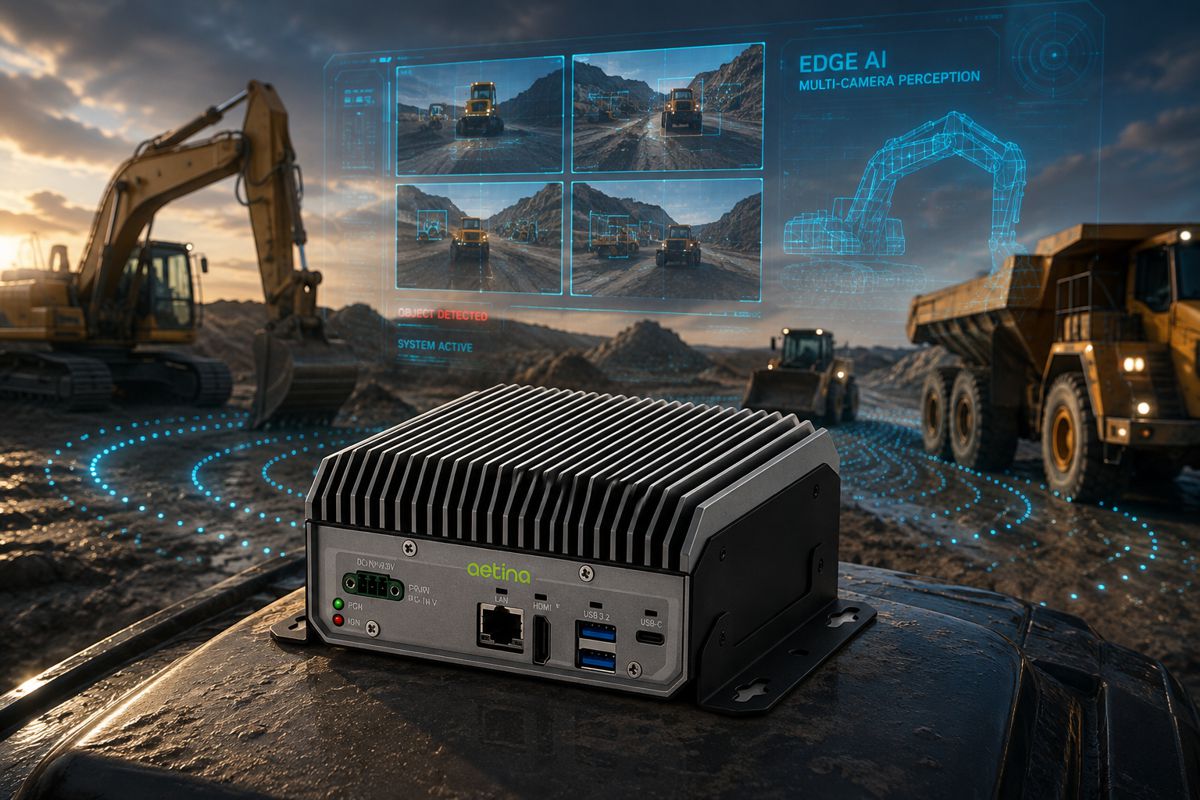
Emdoor’s Growing Industrial Computing Ambitions
Emdoor Information reported revenue of RMB 4.583 billion in 2025, up 44.15% on the previous year, as the Chinese electronics manufacturer continued developing its international industrial computing business. Behind those figures is a manufacturing operation with a stated annual capacity of 7.8 million devices and a product portfolio extending from rugged handheld terminals to vehicle-mounted computers and industrial control systems.
Listed on the Shenzhen Stock Exchange since 2023, Emdoor has built its industrial offering around in-house manufacturing, hardware customisation and software integration. Its rugged computing products are intended for environments where conventional consumer devices may struggle, including construction sites, industrial plants, transport operations and remote infrastructure installations.
The company’s business extends beyond supplying physical devices. Industrial customers need computers that can communicate with existing equipment, run specialist applications and remain supportable for years after installation. Emdoor’s approach brings these requirements into a single manufacturing and development operation, supported by an extensive range of processor platforms, operating systems and hardware configurations.
Briefing
- Emdoor Information reports 2025 revenue of RMB 4.583 billion, an increase of 44.15% year on year.
- Its Shenzhen manufacturing facility has a stated annual production capacity of 7.8 million units across its wider electronics operations.
- The company offers nearly 100 active models, including rugged tablets, laptops, handheld terminals and industrial computers.
- Its products support Windows, Android and Linux across five major processor platforms.
- Hardware customisation, software integration, device management and lifecycle services form part of its industrial computing offering.
Manufacturing and Product Reliability
Emdoor’s manufacturing operations are centred on a 20,000-square-metre facility within its Shenzhen headquarters complex. According to the company, the building accommodates four production floors and 15 integrated assembly and testing lines, with a combined annual capacity of 7.8 million units across its wider manufacturing activities.
The facility incorporates automated visual inspection and manufacturing execution systems to monitor production activity and component traceability. Development and manufacturing teams operate within the same complex, allowing engineers to investigate production issues and validate design changes without relying entirely on external manufacturing partners.
Emdoor also maintains dedicated reliability testing facilities covering environmental exposure, waterproofing, mechanical durability and drop resistance. The company says its rugged computing products undergo testing against applicable ingress protection requirements and methods associated with MIL-STD-810, the United States military environmental testing standard.
An IP rating identifies a defined level of protection against solid particles and water ingress, while MIL-STD-810 provides a collection of environmental testing methods rather than a single universal durability certification. The conditions and results of individual tests are therefore more informative than a general claim of military-grade construction.
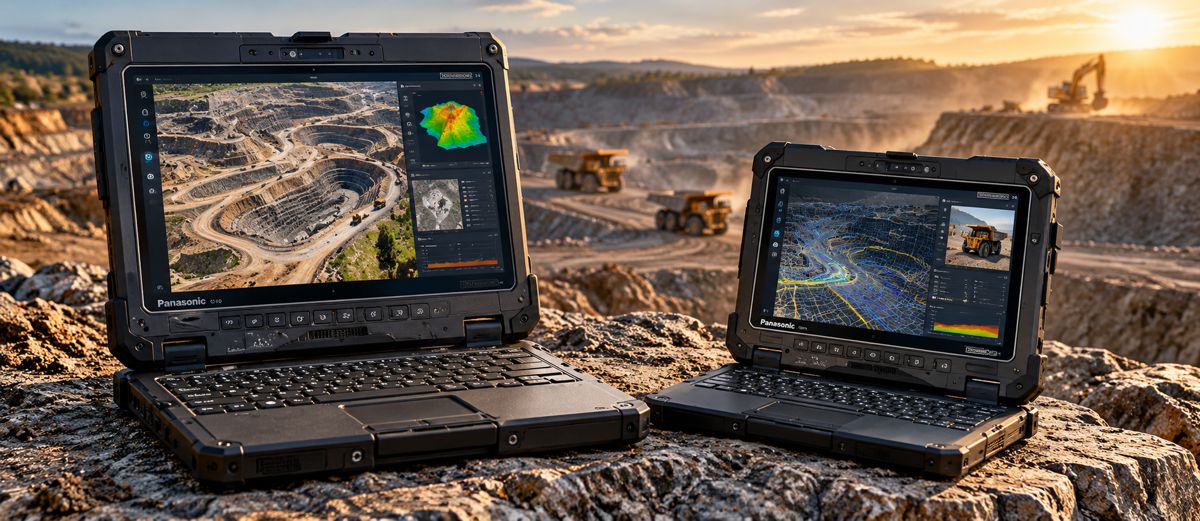
On a construction site, the distinction can be substantial. A tablet mounted inside an excavator cab may encounter continuous vibration, airborne dust and considerable temperature variations, while a surveying computer carried outdoors must also withstand rain, accidental drops and changing light conditions. The appropriate specification depends on the application, with environmental performance established at the individual product level.
The company’s integrated manufacturing model also supports product customisation. Structural modifications, hardware changes and software requirements can be considered during development, rather than being left entirely to third-party integrators after a device has been manufactured.
Rugged Computing for Construction and Infrastructure
Emdoor’s industrial computing portfolio includes rugged tablets, notebooks, handheld terminals, vehicle-mounted computers and industrial panel PCs, with display sizes ranging from 4 to 21.5 inches. These products serve different operational requirements, from portable data collection to fixed equipment monitoring and control.
For construction surveyors and site engineers, rugged tablets provide a portable platform for viewing drawings, recording inspections and working with mapping or measurement applications. Their suitability for specialist surveying work depends on software compatibility and the connections available for GNSS receivers, measurement instruments and other equipment.
Vehicle-mounted computers present a different engineering challenge. Equipment installed in an excavator, wheel loader or quarry hauler must be secured against sustained vibration while remaining accessible to the operator. Electrical supply arrangements, display visibility, physical controls and connections to external systems all influence the design.
Where computers are integrated directly with machinery, communication interfaces and software compatibility become particularly important. Depending on the application, a vehicle-mounted terminal may need to exchange information with positioning equipment, diagnostic systems or external communication modules. Such connections require appropriate hardware and software support rather than rugged construction alone.
Industrial panel PCs are generally intended for fixed installations, including production machinery, process monitoring and factory automation. Similar equipment can be used in aggregate processing plants, asphalt production facilities and construction materials operations, where dust, vibration and demanding temperatures can make conventional office computers unsuitable.
Handheld terminals address more mobile applications, including barcode scanning, asset identification, warehouse operations and inventory management. For contractors operating equipment stores, maintenance depots or distributed fleets, these devices can provide a direct connection between physical assets and digital records.
Emdoor supports Intel, AMD, Qualcomm, MediaTek and Rockchip processor platforms across Windows, Android and Linux operating systems. The range gives customers different options for processing performance, power consumption, application compatibility and peripheral support, although the available combinations vary between individual products.
Hardware Customisation and Software Integration
Industrial computing installations frequently involve requirements that standard consumer devices cannot readily accommodate. A machinery manufacturer may need dedicated physical buttons, particular communication interfaces or a display designed for permanent installation, while a utilities contractor might prioritise wireless connectivity, barcode scanning and compatibility with an established asset management system.
Emdoor provides customisation covering industrial design, structural engineering, hardware architecture and software integration. Its development capabilities also include validation testing, allowing changes to be assessed against the environmental and operational requirements of the intended application.
The company offers software tools for physical key remapping, kiosk operation and system configuration, together with a mobile device management platform designed for administering multiple devices remotely.
Centralised administration allows organisations to distribute configurations, manage access restrictions and undertake software maintenance across field computing fleets. For contractors working across several sites, this can reduce the need to return individual devices to an office whenever settings or applications require attention.
Emdoor also provides software development kits and application programming interfaces for selected hardware modules, including barcode scanners. These interfaces allow developers to connect supported device functions to existing applications, although integration requirements depend on the hardware, operating system and software environment involved.
The breadth of the product range also allows customers to select different computing formats for related operations. A construction equipment manufacturer might use an industrial panel PC within a production facility, a vehicle-mounted computer in a machine cab and a handheld terminal for maintenance or parts management, while retaining common elements of its software infrastructure where supported.
Supply Chain and Equipment Availability
Emdoor identifies Intel, Qualcomm and Rockchip among its established technology relationships and manages component procurement through a centralised group supply chain operation. The company says it maintains strategic inventories of critical materials, particularly memory and storage components, to help manage fluctuations in availability and cost.
Its reported finished-goods inventory is valued at approximately RMB 120 million. Emdoor quotes fulfilment periods of one to three days for standard configurations and seven to thirty days for customised products, although the announcement does not establish whether these periods include international shipping. Actual availability will depend on the equipment specification, order requirements and destination.
For industrial customers, component availability can influence more than delivery schedules. Machinery control interfaces, specialist inspection equipment and other integrated systems may be developed around a particular hardware configuration, making subsequent changes to processors, connectors or peripheral drivers potentially disruptive.
A replacement computer with different internal components may require additional software validation even when its external dimensions and intended function remain unchanged. Manufacturers and system integrators therefore have an interest in maintaining consistent configurations or establishing suitable replacement options throughout a product’s service life.
Emdoor’s use of several processor platforms provides flexibility in product development, but long-term configuration availability still depends on component manufacturers and their support arrangements. Customers planning extended deployments will need to establish how hardware revisions, component substitutions and operating system updates are managed.
Equipment Lifecycles and International Support
Industrial computing systems are frequently expected to remain operational for considerably longer than typical consumer devices. Emdoor describes equipment lifecycles of five to ten years as a consideration in its service model, particularly where computers form part of larger industrial installations.
The company provides repair services through facilities in Hong Kong, supported by technical assistance and an online system for managing service requests. It also offers maintenance training intended to help customer engineering teams undertake routine support activities.
For international customers, the location and availability of service facilities can influence purchasing decisions. A contractor operating equipment across several countries may need to establish whether repairs can be undertaken locally, how replacement components are supplied and what arrangements exist for devices that cannot be removed from service for extended periods.
Batteries, displays, connectors and physical controls remain subject to wear even when the surrounding equipment is designed for demanding environments. Their availability as replacement components can influence the practical working life of a device, particularly when it has been incorporated into a specialised machine or installation.
Software introduces a parallel set of considerations. Applications may depend on particular operating system versions, communication drivers or security configurations, and changes to those components can affect compatibility with established industrial systems. Long-term support consequently involves maintaining a workable combination of hardware, software and peripheral equipment.
Emdoor also provides support to channel and distribution partners, including technical training, marketing materials and project registration arrangements. Such partnerships offer a route to international markets, although the extent of local technical and repair services will depend on the arrangements established in each territory.
Building a Long-Term Industrial Computing Business
Emdoor’s industrial computing portfolio now spans handheld terminals, rugged laptops, vehicle-mounted systems and fixed industrial computers, supported by a manufacturing operation capable of producing a much broader range of electronic devices. Its combination of processor platforms, operating systems and customisation services gives customers several routes to developing equipment around existing applications.
The company has also committed substantial resources to product development. According to its announcement, research and development personnel account for more than 40% of its workforce, while cumulative R&D expenditure over the previous five years reached RMB 964 million. These figures describe the wider company’s development activities rather than investment dedicated exclusively to rugged computing.
The next test is how consistently Emdoor can support its industrial products across international markets. Construction and infrastructure operators may keep specialist equipment in service for many years, often in locations far removed from the original supplier. Product continuity, technical assistance and access to replacement components will remain central to the company’s relationships with industrial customers.
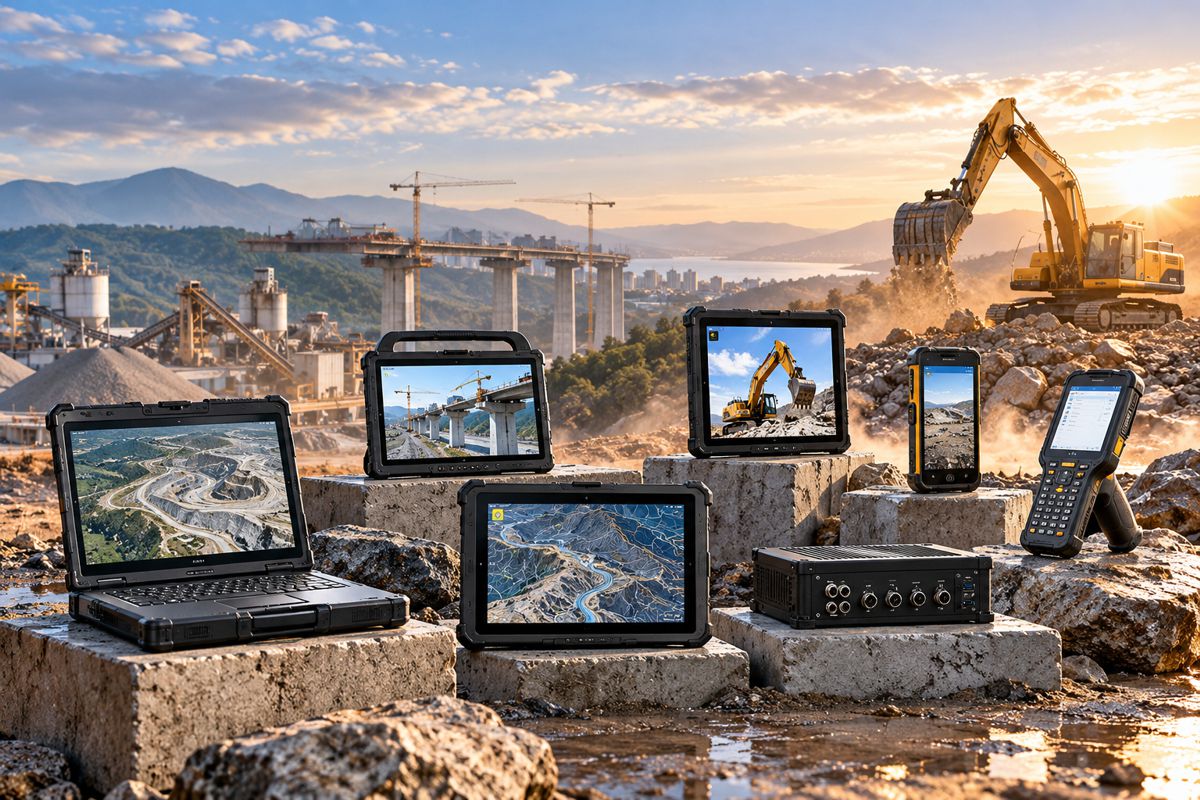
Key Industry Questions
- What types of rugged computers does Emdoor manufacture? Emdoor offers rugged tablets, laptops, handheld terminals, vehicle-mounted computers and industrial panel PCs, with configurations intended for mobile and fixed industrial applications.
- Where are rugged tablets used in construction? Applications include surveying, digital inspections, equipment diagnostics, asset management, maintenance reporting and access to project drawings or mapping software.
- What is the difference between IP ratings and MIL-STD-810? IP ratings classify protection against solid particles and water ingress. MIL-STD-810 provides environmental testing methods covering conditions such as shock, vibration and temperature exposure. Actual performance depends on the tests conducted for each product.
- Can rugged computers connect to construction machinery? Yes, provided suitable communication interfaces and compatible software are available. Integration may involve diagnostic equipment, positioning systems, external sensors or other machine electronics.
- Which operating systems does Emdoor support? The company’s industrial computing portfolio includes devices using Windows, Android and Linux, supported by Intel, AMD, Qualcomm, MediaTek and Rockchip processor platforms.
- Can Emdoor customise rugged computers for industrial applications? The company offers hardware, structural and software customisation, including physical controls, communication interfaces and configurations developed for particular operational requirements.
- How long should an industrial rugged computer remain in service? Service life depends on operating conditions, component availability, software support and maintenance arrangements. Emdoor identifies five-to-ten-year industrial equipment lifecycles as a consideration in its support model, rather than a universal product guarantee.
- What should contractors check before selecting rugged computers? Relevant considerations include environmental test results, application compatibility, connectivity, battery performance, display visibility, replacement components, warranty coverage and regional repair arrangements.
Strategic Takeaways
- Industrial computing requirements are increasingly shaped by equipment integration, software compatibility and operating conditions rather than processor specifications alone.
- Emdoor’s manufacturing capacity and broad product range provide flexibility for standard and customised deployments, although individual configurations require separate assessment.
- Long-term hardware consistency is particularly relevant where computers are incorporated into machinery, surveying systems or other specialist equipment.
- Centralised device management can simplify software administration and configuration across geographically dispersed field operations.
- International service coverage, replacement component availability and software continuity can have a substantial influence on the lifetime cost of industrial computing equipment.