Georgia can turn the Middle Corridor into an Industrial Economy
Georgia has spent three years being courted as a transit country, and in one narrow sense the pitch has worked. Freight is moving, the ports are busier and the multilateral money is arriving. A new argument set out on the Asian Development Blog on 4 August 2026 by Maria Pia Ancora, Principal Urban Development Specialist in the ADB Sectors Department, reframes what that traffic is actually worth.
Her piece, Georgia’s Next Growth Engine: Circular Special Economic Zones, makes the case that carrying other countries’ goods is among the least valuable things Georgia can do with its geography, and that the real prize lies in capturing more of the value those flows create through manufacturing, processing, recycling, logistics and industrial services.
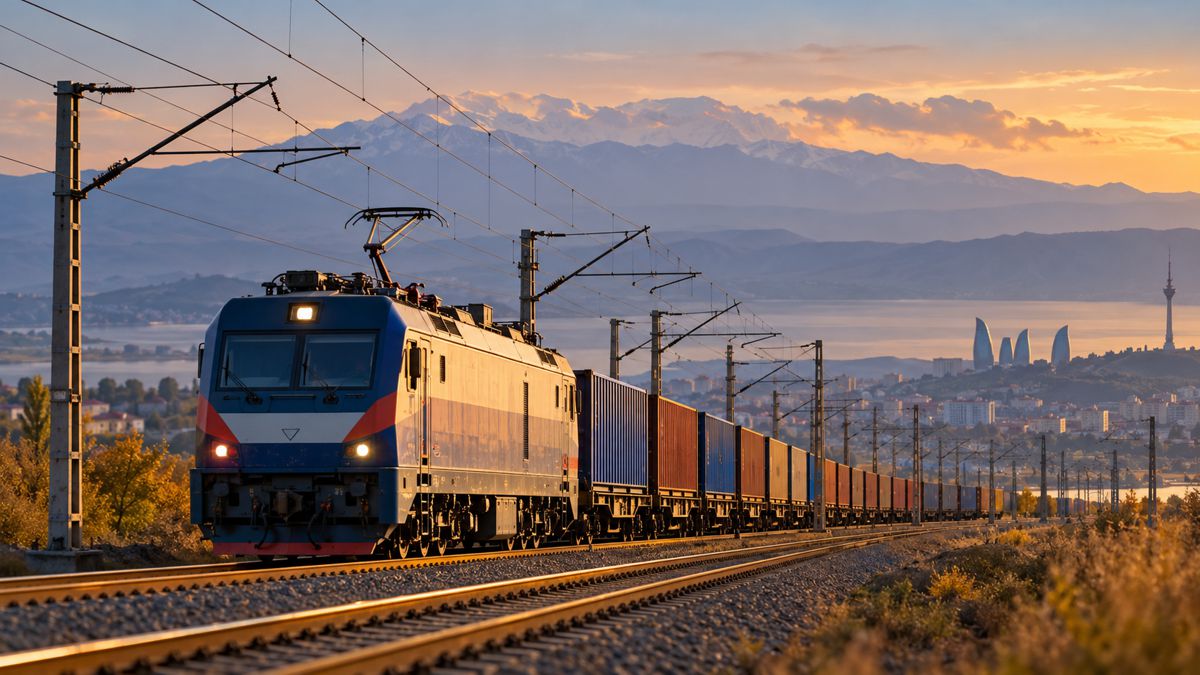
That framing lands directly on top of the argument we reported from Bituroad 2026 in Tbilisi, where the emphasis fell on converting strategic geography into reliable, bankable infrastructure. The two cases fit together rather than compete. The corridor question is not only whether Georgia can carry freight reliably and lawfully, which was the Bituroad article thesis, but whether it can hold on to the economic value that freight generates instead of watching it settle in factories and recyclers elsewhere.
For contractors, materials suppliers and infrastructure financiers, the shift matters because it changes where the work is. If Georgia builds integrated industrial zones rather than transit yards, the pipeline moves from roads and warehousing toward plants, recycling facilities, power and water systems, and the residential and services infrastructure that an industrial workforce needs.
Briefing
- ADB’s Sectors Department has proposed that Georgia build a new generation of comprehensive special economic zones on circular-economy principles, integrating manufacturing, logistics, services, research and housing rather than repeating the isolated free-zone model.
- The commercial logic is value capture, since Middle Corridor freight has climbed past four million tonnes a year and rose by more than sixty per cent in 2024, yet Georgian exports remain concentrated in lower-value goods such as vehicle spare parts, metals and minerals.
- ADB has proposed distinct roles for the three anchor sites, with Tbilisi focused on green logistics and digital services, Kutaisi on circular manufacturing and renewables, and Poti on recycling, resource recovery and circular logistics tied to its port.
- Concrete industrial-symbiosis options identified in ADB’s underlying research include turning industrial-zone waste into construction materials, converting Poti port sludge into cement and recovering Kutaisi photovoltaic waste into remanufactured components.
- ADB ranks among Georgia’s largest multilateral financiers, with cumulative approvals above USD 1.9 billion since 2007, and has signalled it could fund feasibility work, zone infrastructure and capacity building, building on spatial master-planning it already finances.
From Moving Goods to Making Them
Georgia’s economic story of the past decade has rested on openness, location and investment, and it has delivered solid growth. The limitation is the kind of activity that growth rewards. Exports remain weighted toward vehicle spare parts, metals and minerals, low-complexity goods that generate thin margins and little domestic upgrading.
Transit itself is a similarly thin business, because a country that mainly moves freight collects fees and handling charges while the manufacturing value, the assembly, the finishing and the recycling accrues at the two ends of the route. Ancora’s argument, reduced to its core, is that Georgia has been optimising the least profitable layer of the corridor.
The alternative she sets out is to convert transit flows into homegrown, higher-value production and services. Rising trade across the Caspian strengthens Georgia’s position as a logistics hub and creates openings in warehousing and processing, but those openings only turn into durable value if the country builds the industrial base to use them. That reframing changes the investment case in a way that suppliers and contractors should register early.
It moves the measure of success from a volume story counted in tonnes and containers to a value story counted in what gets made, remanufactured or recovered on Georgian soil, and that distinction decides whether the next decade of corridor spending funds more asphalt and sheds or a broader industrial build-out.
From Isolated Enclaves to Integrated Zones
Georgia already operates free industrial zones in Tbilisi, Kutaisi and Poti, and they have done part of the job by offering fiscal incentives and lighter regulation. The weakness, in Ancora’s assessment, is that many function as isolated enclaves with weak links to local suppliers, skills and knowledge networks, which limits their ability to host complex value chains or generate spillovers into the wider economy.
Gaps in transport, power, water and digital connectivity compound the problem, as do skills shortages and the limited capacity of domestic firms. A model built on privately run parks competing for mobile rather than committed investment has struggled to align with national development goals, since footloose capital tends to leave as readily as it arrives.
The comprehensive special economic zone is offered as the correction. Instead of standalone parks, this model brings manufacturing, logistics, services, research and residential areas together in a single planned ecosystem, which creates economies of scale, stronger links between sectors and a more predictable environment for investors. Embedded in wider industrial and skills strategies, such zones can support export diversification, technology upgrading and the growth of domestic supplier networks.
The practical appeal for Georgia is that the approach connects the economy it already has, built on trade and logistics, with the economy it wants, built on productivity and higher-value industry, without asking the country to abandon the corridor advantage it has spent years developing.
Designing Circularity In From the Start
Building these zones on circular-economy principles is presented as both strategic and pragmatic, and the pragmatism is the stronger half of the case. Georgia’s circularity rate, the share of recovered materials fed back into the economy, is low against European benchmarks, which leaves substantial room to cut waste and improve resource efficiency.
The country also faces tightening environmental standards, including waste reduction and extended producer responsibility, and those obligations are cheaper to meet when resource efficiency is designed into infrastructure, regulation and business services from the outset rather than retrofitted later at higher cost. Designing circularity in also aligns Georgia with EU and international practice and appeals to the sustainability-minded investors who increasingly screen for it.
The evidence that this works at industrial scale is well established. The Kalundborg eco-industrial park in Denmark, running since 1972, has grown into a network of sixteen public and private companies that exchange energy, water and materials so that one plant’s by-product becomes another’s feedstock, cutting costs and emissions at the same time.
Comparable industrial-symbiosis clusters in the People’s Republic of China and the Republic of Korea show that the approach travels well beyond a single Danish town. One consistent finding from the Kalundborg experience is that trust between the participating firms is essential to making the exchanges hold, which echoes the point made at Bituroad that reliability and reputation, not physical assets alone, determine whether capital commits.
Three Sites, Three Roles
The plan does not treat the three zones as interchangeable, and the proposed division of labour reflects each site’s existing strengths. Tbilisi would concentrate on green logistics, business services and digital platforms that improve resource efficiency and connectivity, playing to its role as the commercial and administrative centre. Kutaisi would become a hub for circular manufacturing while integrating renewable energy and research capacity, giving the zone an industrial and innovation anchor. Poti, built around its Black Sea port, would specialise in recycling, resource recovery and circular logistics linked to maritime trade, turning the point where goods enter and leave the country into a place where materials are also recovered and reprocessed.
The underlying ADB research puts concrete industrial content behind those roles. It identifies symbiosis opportunities such as turning industrial-zone waste into construction materials, converting Poti port sludge into cement and recovering Kutaisi photovoltaic waste into remanufactured components, each of which ties a waste stream to a construction or manufacturing input.
Rather than developing the three sites in isolation, a national framework could connect them, set common standards and create synergies between them, which applies the same integration logic at the level of the country rather than the single zone. For the construction and materials sector in particular, sludge-to-cement and waste-to-aggregate routes are not abstract sustainability gestures but potential feedstock streams with real procurement implications.
Where the Construction and Materials Value Sits
Several sectors are flagged as strong candidates for circular transformation, and construction sits near the centre of the list. Construction can cut waste and emissions by recycling materials and using more sustainable inputs, energy and infrastructure investment can be planned around efficiency gains and renewables, and battery recycling and electric mobility are named as emerging opportunities as regional transport systems modernise.
Each of those is a construction and industrial-plant workload before it is an environmental outcome, because recycling facilities, remanufacturing lines, renewable generation and the water and drainage systems that circular industry depends on all have to be built, connected and maintained.
There is early evidence that value is already forming around the Georgian nodes of the corridor rather than simply passing through them. The Poti Trans-terminal, a joint venture involving Kazakhstan’s PTC Holding, the Azerbaijani firms INNOPRO and Alliance Multimodal and Georgian partners, opened in August 2025 at a cost of around EUR 18 million, a modest figure that nonetheless marks cross-border operators putting fixed assets on Georgian soil.
Building integrated, circular zones around that kind of anchor is how a single terminal grows into an industrial cluster. The commercial reading for suppliers is that the pipeline ADB describes runs through plants, recycling infrastructure, power and water rather than roads alone, which widens the addressable market well beyond the paving and earthworks that have dominated corridor spending so far.
Turning Geography Into Bankable Projects
The move from concept to construction depends on the same unglamorous foundations the Bituroad keynote identified. A legal and institutional framework for the zones is needed to define responsibilities, incentives and accountability, and feasibility work must assess market demand, infrastructure needs and environmental risks across the proposed sites before capital commits.
That is the point at which Ancora’s industrial argument and the wider Middle Corridor story converge. Industrial zones and transport infrastructure ultimately depend on many of the same foundations: clear rules, transparent procurement, enforceable contracts, regulatory consistency and the confidence that commitments made today will still hold tomorrow. Physical infrastructure can create the opportunity, but the institutional framework surrounding it determines whether investors are prepared to commit capital and build long-term economic value.
“Georgia’s strategic advantage is not simply that goods pass through its territory, but that value can be created, retained and multiplied here. The Middle Corridor can become far more than a transit route — it can become the legal, industrial and economic foundation for Georgia’s next stage of development. For this to happen, infrastructure, investment and industrial policy must be supported by something equally important: a predictable legal environment, enforceable rules and investor confidence. Geography gives Georgia the opportunity; law and institutions determine whether we can turn that opportunity into lasting economic value.”
Davit Kortava, Lawyer & Managing Partner, Kortava Khatashvili Legal Intelligence.
ADB has positioned itself to help build that foundation. The bank has proposed supporting the design and construction of zone infrastructure and providing capacity building, starting with a feasibility study that would incorporate the water and drainage sector and align with the national and local master plans it already finances through Georgia’s Spatial and Urban Development Agency.
That role fits a long track record, since ADB has supported Georgia since 2007 with cumulative approvals above USD 1.9 billion and ranks among the country’s largest multilateral financiers, and its 2024 to 2028 country partnership strategy already commits to developing a circular economy. Set alongside the World Bank, the European Bank for Reconstruction and Development, which estimates that Central Asia’s corridor-linked projects need in the order of EUR 18.5 billion, and the Asian Infrastructure Investment Bank, the financing architecture for this kind of build-out is already assembling around the wider route.
The Window Georgia Is Working Within
The timing of the argument is not incidental. Trade is diversifying away from the sanctioned northern route through Russia, sustainability criteria are moving to the centre of investment decisions, and neighbouring corridor states are spending heavily to capture the flows. The World Bank approved an USD 846 million guarantee in early 2026 to support around USD 1.4 billion of financing for Kazakhstan’s national railway, and Azerbaijan is expanding the Port of Baku toward 25 million tonnes and 500,000 containers of annual capacity.
Georgia’s competitors are not standing still, and a transit position that looks valuable today is not guaranteed to stay that way, particularly while an alternative route through Armenia is developed and the Anaklia deep-water port remains unresolved.
Ancora’s closing framing is that the real question is no longer whether Georgia should pursue circular comprehensive zones but how quickly it can do so. Read alongside the corridor-reliability case, the combined message to Georgian policymakers and to the contractors, financiers and suppliers who would build these zones is reasonably clear.
Reliability keeps the freight moving, value capture decides how much the country earns from it, and the two together settle whether Georgia ends the decade as a place goods pass through or a place where they are made, finished and recovered. The industrial base does not build itself, and the economies that turn corridors into lasting growth are the ones that decide early to keep the value rather than wave it past.
Key Industry Questions
- What is a comprehensive special economic zone, and how does it differ from Georgia’s free industrial zones? A comprehensive special economic zone integrates manufacturing, logistics, services, research and residential areas within a single planned ecosystem, rather than operating as a standalone tax-advantaged park. Georgia’s existing free industrial zones in Tbilisi, Kutaisi and Poti offer fiscal incentives and lighter regulation, but ADB’s assessment is that many behave as isolated enclaves with weak links to local suppliers and skills. The comprehensive model is designed to create economies of scale, connect sectors and embed the zone in national industrial and skills strategies. The practical effect is a more predictable environment for investors and a stronger chance of generating domestic supplier networks and technology upgrading rather than short-lived, footloose investment.
- Why does ADB stress value capture over freight volume? Transit is a low-margin activity. A country that mainly moves freight earns fees and handling charges while the higher-value work of assembly, finishing and recycling happens at the origin and destination of the goods. Georgian exports remain concentrated in low-complexity products such as vehicle spare parts, metals and minerals, which reinforces the pattern. ADB’s argument is that Georgia should use rising Middle Corridor flows as a platform for domestic production and services, so that more of the value is created and retained locally. For construction and industrial suppliers, that shift matters because it moves the addressable market from roads and warehousing toward plants, recycling capacity, power and water systems.
- What does designing circularity in from the start actually save? Retrofitting resource efficiency into finished industrial estates is expensive and often only partial. Designing it in from the outset lets infrastructure, regulation and business services be built around efficient resource use, which lowers long-term resource bills and makes tightening environmental standards, including waste reduction and extended producer responsibility, cheaper to meet. Georgia’s circularity rate is low against European benchmarks, so the improvement headroom is significant. The strategic benefit is alignment with EU and international practice, which reduces regulatory friction and appeals to sustainability-minded investors. The industrial-symbiosis precedent at Kalundborg shows that shared water, energy and material streams can cut costs and emissions together once the exchanges are engineered in.
- Which construction and materials opportunities does the plan point to? The proposal names several concrete routes with direct relevance to the sector. Industrial-zone waste could be processed into construction materials, Poti port sludge could be converted into cement, and Kutaisi photovoltaic waste could be recovered into remanufactured components. Beyond these symbiosis streams, the broader programme implies demand for recycling facilities, remanufacturing lines, renewable generation and the water and drainage infrastructure that circular industry requires. Battery recycling and electric mobility are highlighted as emerging opportunities as regional transport modernises. For contractors and materials producers, the significance is that circular zones generate a construction and plant workload first, with the environmental outcome following from the assets that have to be built and maintained.
- How proven is the industrial-symbiosis model at scale? It is well established. The Kalundborg eco-industrial park in Denmark has operated since 1972 and now links sixteen public and private companies that exchange energy, water and materials, so that one plant’s by-product becomes another’s input. Similar clusters operate in the People’s Republic of China and the Republic of Korea, which demonstrates that the model is transferable across very different economies. The recurring lesson from Kalundborg is that trust and reliable relationships between participating firms are as important as the physical connections, and that the network tends to develop over time rather than arriving fully formed. For Georgia, the implication is that early standard-setting and a credible institutional framework matter as much as the initial capital.
- What role would ADB and other lenders play? ADB has proposed supporting the design and construction of zone infrastructure and providing capacity building, beginning with a feasibility study that would examine the water and drainage sector and align with national and local master plans it already finances through Georgia’s Spatial and Urban Development Agency. The bank has backed Georgia since 2007 with cumulative approvals above USD 1.9 billion and is one of its largest multilateral financiers, and its 2024 to 2028 country strategy already commits to developing a circular economy. The wider financing picture includes the World Bank, the EBRD, which estimates Central Asia’s corridor-linked projects need around EUR 18.5 billion, and the Asian Infrastructure Investment Bank, so the capital architecture around the route is already forming.
- What are the main risks to the plan? The concept is sound but delivery is demanding. It requires a legal and institutional framework that clearly assigns responsibilities and incentives, feasibility work across multiple sites, and coordinated investment in transport, energy, water and digital systems. Skills shortages and limited domestic firm capacity, the same constraints that held back the free zones, will not disappear on their own. Georgia’s wider transit position also carries uncertainty, with the Anaklia deep-water port still unresolved and an alternative route through Armenia under development. Success depends on the country building the industrial and institutional depth to use its geography, rather than assuming that rising freight volumes will convert into higher-value activity automatically.
- How does this connect to the corridor-reliability argument from Bituroad? The two arguments are sequential rather than separate. The Bituroad keynote, reported by this publication in July, held that Georgia must convert its geography into reliable, bankable infrastructure through sound roads, efficient borders, transparent procurement and enforceable law. ADB’s circular-zone proposal takes the next step, asking not only whether Georgia can carry freight well but how much of the value it can retain. Both rest on the same institutional foundations, since a zone becomes financeable for the same reasons a road does. Reliability keeps freight moving through the country, and value capture determines how much Georgia earns from it, so the strongest position combines both rather than treating them as alternatives.
Strategic Takeaways
- The commercial frontier for Georgia has moved from moving freight to keeping value, and the investment case now turns on what is manufactured, remanufactured and recovered domestically rather than on tonnes and containers passing through.
- Circular comprehensive zones point demand toward plants, recycling capacity, renewable generation and water infrastructure, widening the corridor construction market well beyond the paving and earthworks that have dominated spending to date.
- Designing resource efficiency in at the outset is cheaper than retrofitting it and pre-positions Georgian output for tightening EU-aligned environmental standards, which is a procurement and market-access advantage as much as a sustainability one.
- The institutional groundwork, clear rules, transparent procurement and enforceable contracts, is the same layer that makes both roads and industrial zones bankable, so legal and regulatory reform is a direct enabler of construction pipeline rather than a background concern.
- Multilateral capital from ADB, the World Bank, the EBRD and the AIIB is already concentrating around the Middle Corridor, and the countries that set standards and commission feasibility work early are the ones most likely to capture the industrial investment that follows.