Muography to Transform Tunnel Safety Monitoring
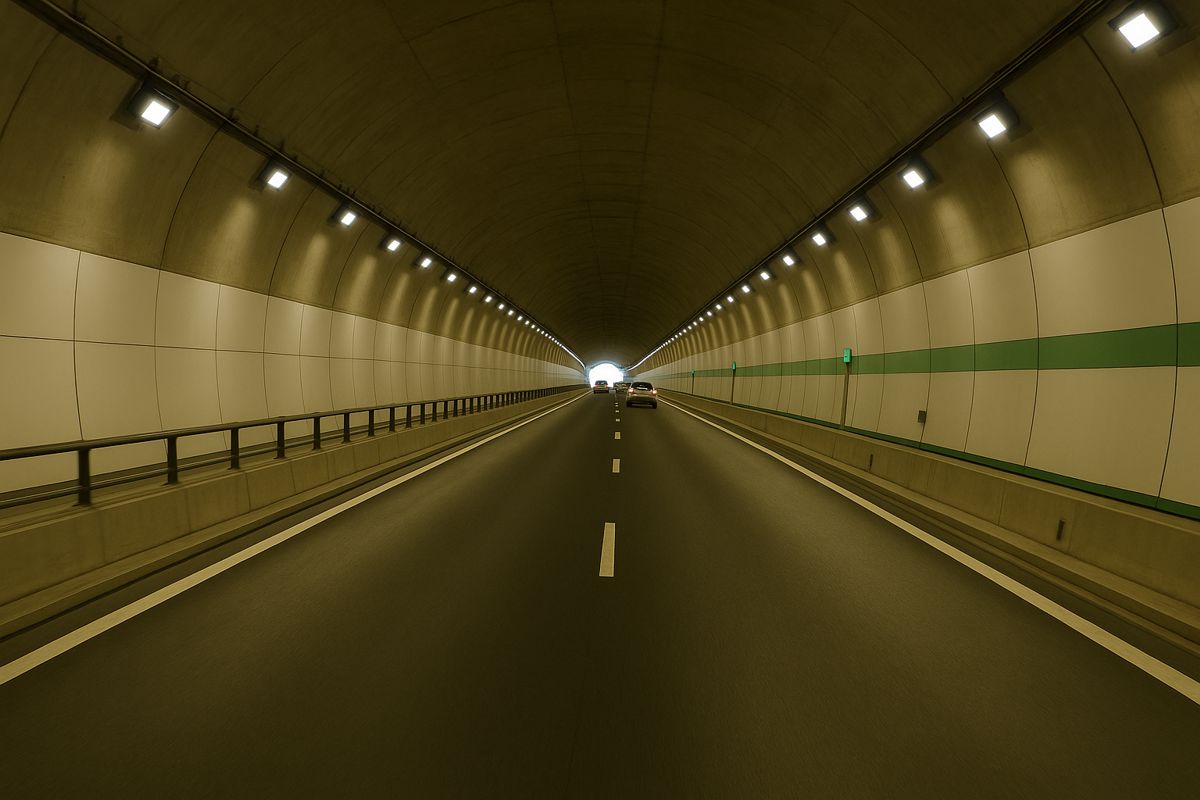
Underwater bridge tunnels have become vital arteries for cities, enabling smooth vehicular passage beneath rivers, bays, and inland waterways. More than 200 of these structures operate globally, yet their upkeep remains an intricate challenge. Engineers often face scenarios where essential maintenance requires disruptive closures or intrusive inspections that carry real structural risks. In a sector where resilience and reliability matter, the construction industry continues to search for sharper tools to protect ageing assets.
Innovations in particle physics are now stepping into the fold, opening the door to monitoring techniques previously thought too ambitious for real-world infrastructure. Muography, a technology built on the natural movement of high-energy muons, has drawn increased attention for its ability to peer through dense material without the disruption of traditional inspection methods. These fast-moving particles, created when cosmic rays strike Earth’s atmosphere, can travel through hundreds of metres of ground, offering a powerful and non-invasive way to examine buried structures.
A new study featured in the Journal of Applied Physics, published by AIP Publishing, highlights how this method is gaining traction in one of the world’s most ambitious urban engineering environments. Researchers from several public and private organisations in Shanghai have demonstrated how muography can detect sediment build-up around the Shanghai Outer Ring Tunnel, an underwater link beneath the Huangpu River.
Understanding Muography’s Potential Beneath the Surface
Muography stands apart from conventional inspection tools because it requires no physical contact with the tunnel structure. Instead, muons naturally pass through overhead geological layers and man-made elements, losing energy as they move through denser material. Sediment accumulation, which increases the density of the surrounding environment, reduces the number of muons successfully reaching detectors placed inside the tunnel.
This interaction makes muography especially useful for environments where access is difficult and excavation is unthinkable. As lead author Kim Siang Khaw explained: “Muons lose energy primarily through ionization, where they electromagnetically interact with and eject electrons from atoms, denser materials lead to a higher energy loss, effectively blocking more muons.” He added that the composition of the sediment, dominated by granular or clay particles, heightens this effect.
In Shanghai’s Outer Ring Tunnel, the geological setting includes layers of mucky soil and silty clay. These materials create higher density zones when they settle around the tunnel lining. Because water allows more muons to pass through than compacted sediment, muography provides a clear contrast that engineers can use to map problem points.
A Portable Detection System Tailored for Real Infrastructure
The Shanghai team deployed a portable muon flux detection system, developed specifically for tunnel environments. Designed to operate within operational transport infrastructure, the device captures muon flux variations with high sensitivity. During the pilot, researchers collected ten minutes of data at 50 metre intervals along the length of the tunnel. Although intended primarily as proof of concept, the results show the promise of continuous, automated monitoring.
Future plans involve installing multiple muon detectors permanently throughout the tunnel. Such a network would create a 24 hour data stream capable of alerting engineers to subtle changes long before they escalate into safety risks. This uninterrupted view of the tunnel’s sediment conditions could prove invaluable in fast growing cities where underwater tunnels endure constant pressure from shipping, tides, riverbed dynamics, and traffic volumes.
Sediment Mapping Through Scans and Simulation
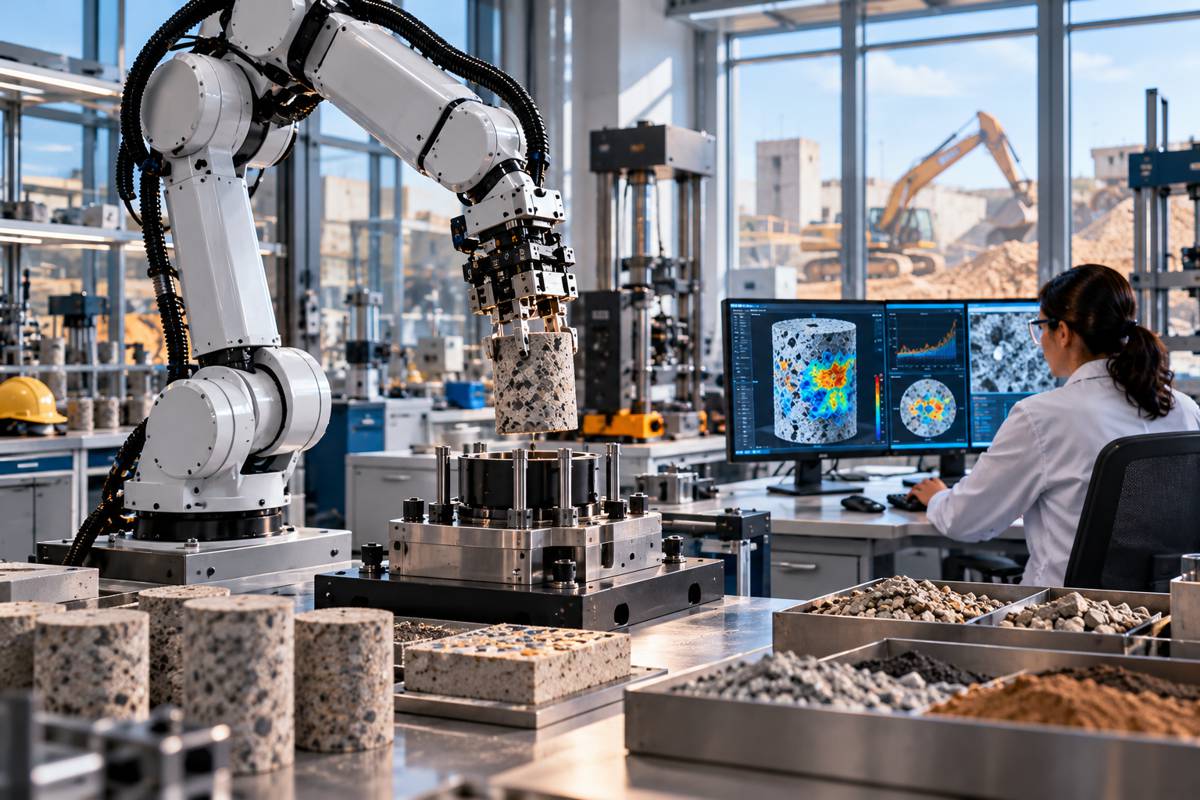
Accurate mapping forms the backbone of engineering diagnostics, and muography’s strength lies in providing constant comparisons between expected and observed conditions. The Shanghai team combined their physical scans with computer simulations of muons travelling through a simplified digital model of the tunnel.
By matching real world readings with predicted behaviour, the researchers produced a detailed representation of sediment thickness around the tunnel. Sediment build up can affect buoyancy, structural stress, and the long term stability of underwater tunnels. Muography offers engineers insight into these risks without drilling, coring, or shutting down lanes.
Khaw highlighted how straightforward the approach can be: “No complex models are necessary upfront, the method works with simplified inputs, validated through simulations in this study.” He added that muography can identify other underground hazards, including buried cavities formed by leaking pipes. In large cities, such erosion related voids can cause severe ground collapses if left undetected.
Expanding Muography Across Global Infrastructure
Shanghai’s pilot marks an important milestone for both scientific imaging and civil engineering. The team intends to expand its work to several additional tunnel structures across the city. Their goal is to refine the technology for mass deployment and establish standard procedures that other cities can follow.
Urban areas with multiple underwater crossings, such as Tokyo, New York, Singapore, London, and Hong Kong, could benefit enormously from noninvasive sediment monitoring. The barriers to adoption remain low. Engineers only need basic knowledge of tunnel geometry, local environmental conditions, and baseline muon flux data. Once installed, detectors continue to operate autonomously.
Muography has already carved a niche in archaeological surveying, volcanic imaging, mine exploration, and nuclear safety. However, adapting it to track changes in real infrastructure over time marks an important evolution. “We are now in a truly exciting era for muography,” said Khaw. “We hope to collaborate with more researchers to apply these advancements in fundamental science to solving pressing societal challenges.”
The Growing Case for Low Disruption Monitoring
Across the construction and infrastructure sectors, asset owners are under pressure to extend the lifespan of critical underground routes. With climate change intensifying extreme weather events and urban expansion reaching new levels, the demand for accurate, noninvasive diagnostic technologies is increasing.
Muon based imaging aligns well with modern lifecycle management strategies, helping operators detect developing issues early, plan maintenance efficiently, and reduce intrusive interventions. As the Shanghai study shows, advanced physics is no longer confined to laboratories. It is rapidly becoming a practical tool that complements digital twins, structural health monitoring sensors, and geophysical scanning.
A New Chapter in Tunnel Safety
As underwater tunnel networks expand worldwide, the need for reliable, real time sediment analysis will only grow. Muography’s momentum in Shanghai illustrates how scientific innovation can safeguard essential transport corridors.
By coupling cosmic particles with persistent engineering challenges, researchers are opening a new chapter in tunnel safety and lifecycle management.