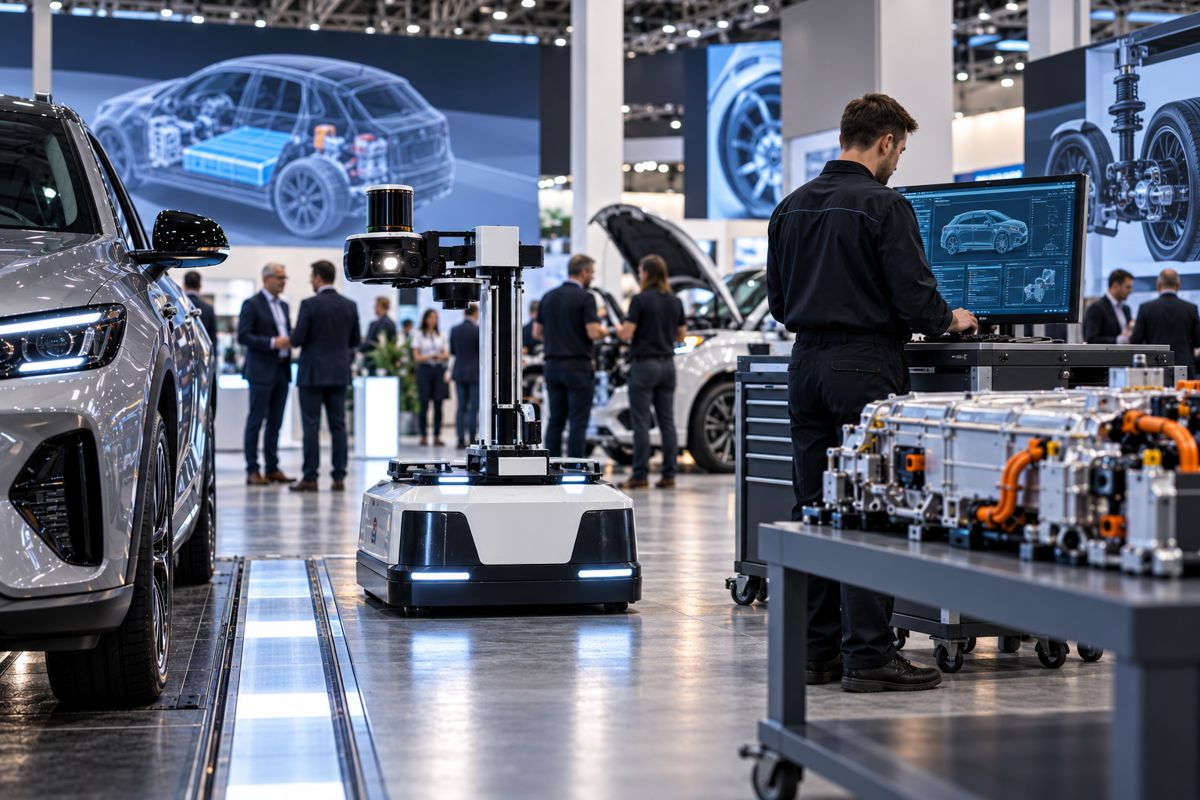
Rethinking Vehicle Intelligence for the Autonomous Mobility Era
Researchers at the Technical University of Munich have been developing a centralised software architecture designed to reshape how autonomous vehicles gather, analyse and act upon vast streams of real-time data.
Their research, carried out with leading automotive and semiconductor partners under the Central Car Server research project, sets the stage for a new generation of vehicles expected to appear from 2033 onwards. These vehicles will rely heavily on software-driven intelligence, advanced simulations and fully integrated onboard processing to operate safely regardless of weather, traffic or road conditions.
Building a Data-Rich Foundation for Autonomous Driving
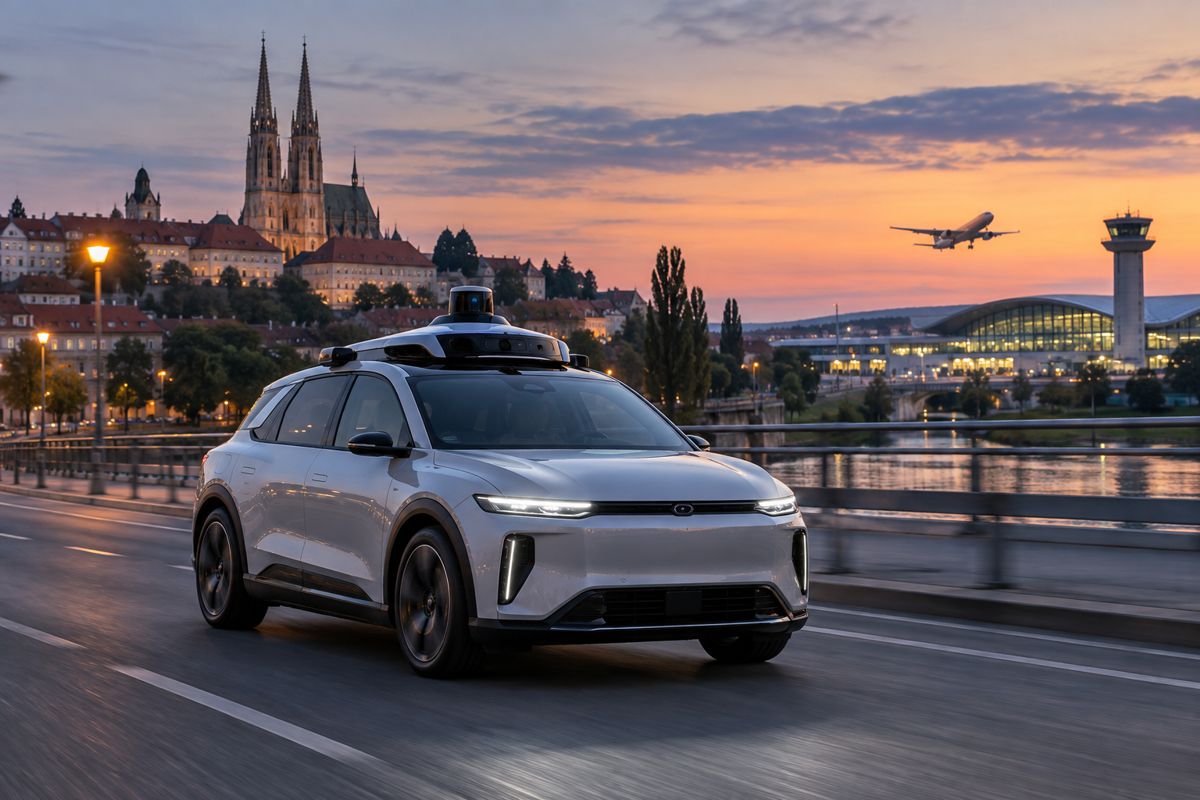
The future of autonomous mobility hinges on the ability to process immense quantities of sensor data with speed and precision. Autonomous vehicles already rely on lidar, radar, cameras, wheel sensors and GNSS technology to interpret their surroundings. TUM researchers expect the next generation of vehicles to integrate even broader sensor inputs sourced from infrastructure-mounted cameras and radar arrays, along with signals from other nearby vehicles.
Alois Knoll, head of the TUM Chair of Robotics, Artificial Intelligence and Real-Time Systems, highlights the scale of the data challenge: “For autonomous driving, the data recorded by the vehicle itself is combined with data from permanently installed cameras, lidars or radar sensors on sign bridges or from other nearby vehicles. That would be the maximum amount of information you could get.” Managing that level of information flow requires an overhaul of traditional vehicle electronics, replacing dozens of isolated control units with a unified, high-performance computing platform.
The Central Car Server Architecture
The CeCaS project demonstrates how a software-first vehicle can continuously evaluate and react to its environment through ad-hoc data analysis. Unlike conventional systems, which distribute responsibility among more than a hundred independent electronic control units, CeCaS consolidates vehicle intelligence into a small number of powerful processors. These systems perform centralised data fusion, eliminating duplicated effort and drastically simplifying the hardware installation.
This approach creates a foundation compatible with the idea of a software-defined vehicle, similar to how smartphones evolved from simple communication devices into multifunctional computing platforms. With software responsible for most in-vehicle behaviour, innovations can be delivered through regular updates, reducing development cycles and opening the door for customised user experiences.
Expanding the Role of Simulation
A cornerstone of the new architecture is the ability to simulate driving scenarios with realism and flexibility. Modern autonomous vehicle development already relies on digital testing, yet existing models struggle to capture rare or extreme events. TUM researchers have developed a graphics-accelerated simulation environment capable of generating highly detailed scenarios covering adverse weather, complex interactions with vulnerable road users and challenging road geometries.
These simulations provide safer, more efficient alternatives to real-world testing. Vehicles can be exposed to dangerous or unusual conditions repeatedly without risk. Once trained within this digital environment, a vehicle carries the learned scenarios onboard, improving its ability to respond to unexpected conditions. The team also intends to provide open-source access to selected scenarios, enabling broader collaboration across the automotive sector.
Cost Reductions Through Standardisation
Cost efficiency remains a decisive factor for the future competitiveness of autonomous vehicles. The transition to a centralised computing architecture sharply reduces the need for individual control units and complex wiring harnesses, both costly components in modern vehicles. The CeCaS concept replaces these with modular, programmable processors capable of supporting multiple applications through software alone.
This strategy offers several advantages:
- Reduced production costs through simplified electrical systems.
- Faster installation and lower maintenance demands.
- Extended vehicle lifespan through continual software refinements.
- Greater flexibility for manufacturers to roll out new features post-sale.
The smartphone analogy applies strongly here: as manufacturers increasingly move toward software-powered functionality, users can benefit from regular improvements without modifying hardware.
Digital Twins as Testing Powerhouses
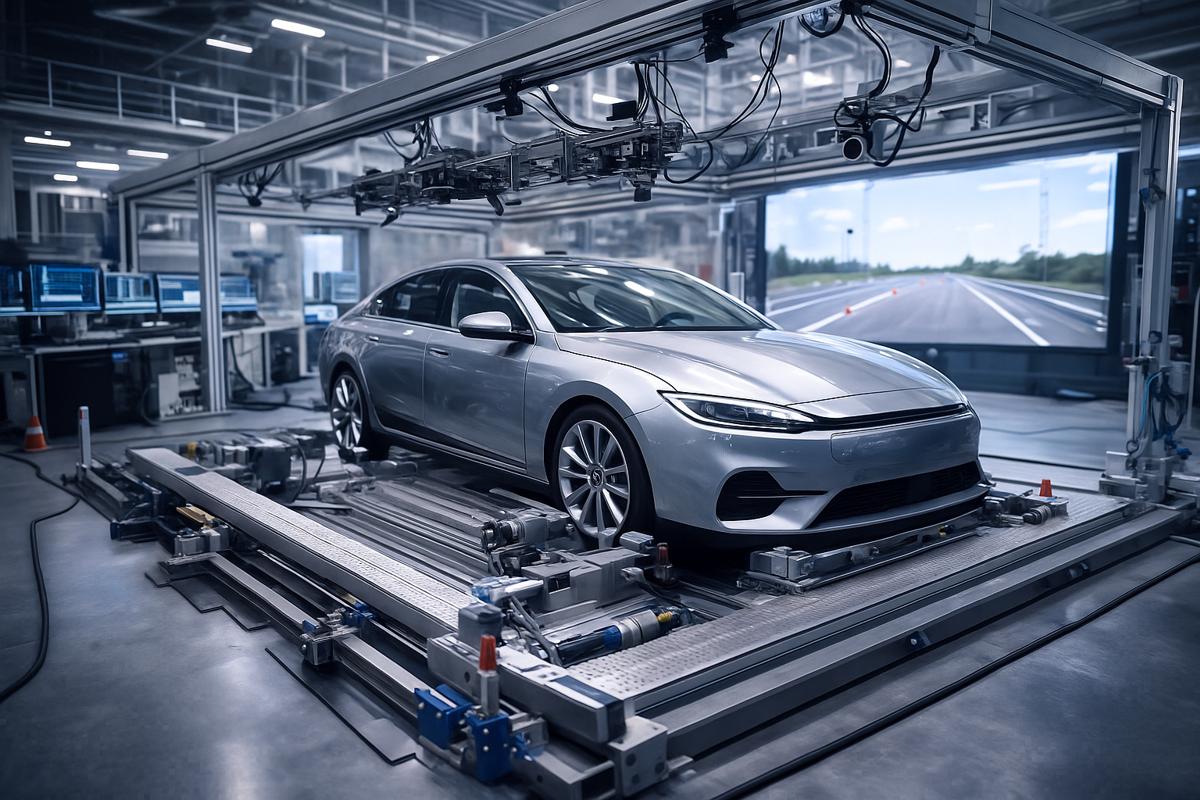
The integration of digital twins offers significant benefits for development and testing. TUM’s advanced test bench clamps a vehicle securely in place, enabling realistic real-time evaluation of braking systems, driver assistance tools and emergency response behaviours. Researchers can import fully simulated environments, allowing the physical vehicle to interact with digital road scenarios.
According to Knoll: “Using a digital twin of the vehicle, we can also import scenarios and perform live testing on the test bench.” This method extends far beyond routine validation. Developers can recreate real-world accident sequences involving autonomous or semi-autonomous systems, analysing failures and training responses without exposing human drivers to danger.
Digital twins are becoming industry standards, used across sectors such as aviation, construction and energy. Applying the same principle to autonomous vehicles supports predictive maintenance, operational optimisation and improved reliability.
Accelerating Innovation Through Artificial Intelligence
Artificial intelligence plays a central role in TUM’s future vehicle framework. Generative language models have shown the ability to read, interpret and transform detailed system specifications into functional software code. Knoll believes this capability could revolutionise automotive development timelines: “Understanding cars as software-defined vehicles, i.e. software platforms, is simply necessary in order to remain competitive in the vehicle market in the future.”
AI-driven code generation enables rapid prototyping and automated validation. Specifications are typically available in text form, capturing behaviours and operational rules. When these documents are complete, consistent and logically coherent, AI models can identify contradictions and produce ready-to-compile code in seconds.
The implication is profound. Vehicle manufacturers could significantly shorten development cycles while maintaining rigorous safety standards. The approach also reduces human error, one of the most significant challenges in complex software engineering.
Global Context and Industry Momentum
The transition to centralised, software-defined architectures is not isolated to Germany. International automakers including Tesla, Mercedes-Benz, Volvo and Toyota are investing heavily in similar frameworks. Semiconductor leaders such as NVIDIA and Qualcomm are also competing to supply automotive-grade processors capable of supporting high-throughput data fusion and advanced simulation.
Meanwhile, regulatory bodies across Europe, the United States and Asia are preparing for the shift. UNECE regulations governing automated lane-keeping systems, cybersecurity and software updates are being updated to ensure safety and accountability in highly automated vehicles.
Independent research bodies such as Euro NCAP and the American Insurance Institute for Highway Safety are developing new standards focused on software reliability, cloud connectivity and behaviour under extreme conditions. These efforts reinforce the importance of simulation-based validation and digital twins, two areas where TUM’s research has significant influence.
A Safe and Sustainable Road Ahead
Centralised intelligent architectures are poised to transform how autonomous vehicles behave, react and evolve. By integrating simulation, AI-driven software generation, digital twins and unified data processing, TUM’s research outlines a path toward safer, more affordable transport systems. This approach not only strengthens vehicle performance but also contributes to sustainability by reducing electronic waste, simplifying manufacturing and extending product lifespans.
With increasing pressures on global mobility systems, innovations of this kind serve as essential building blocks for future road safety, efficiency and environmental responsibility.