Smart Industrial Labelling with Toshiba’s Next-Generation Printers
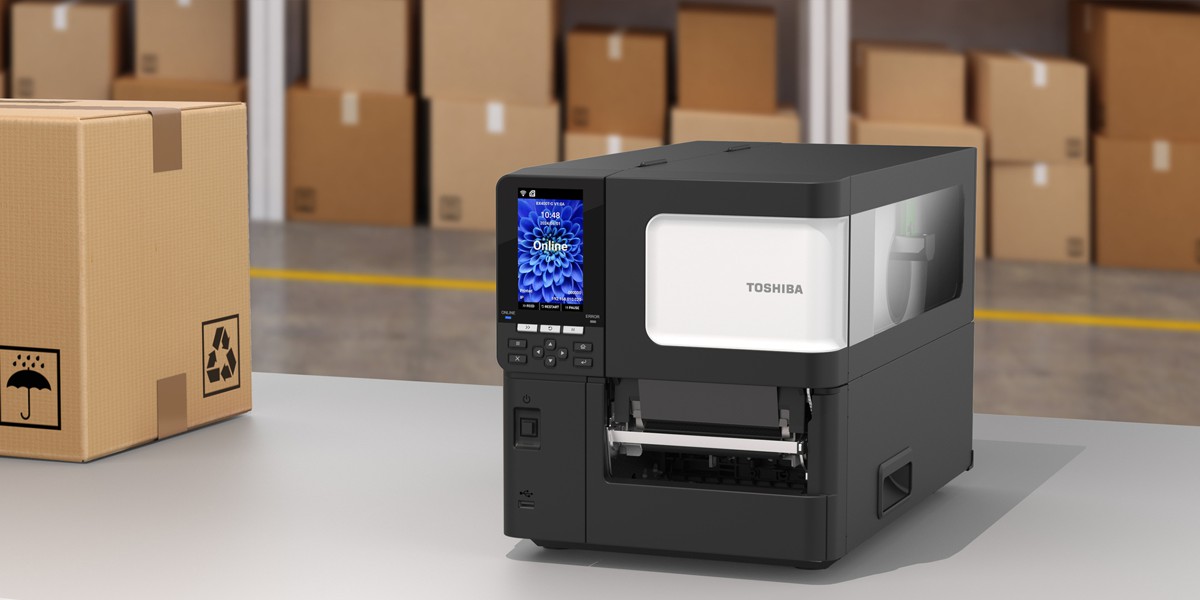
Toshiba America Business Solutions has strengthened its position in the global industrial printing market with the introduction of the BX420 Series and BX430 label printers.
Arriving on the heels of the well-received BX410T, these new models bring sharper resolutions, greater intelligence, and a remarkable leap in standalone capability for transport, warehousing, manufacturing, and retail operators seeking tighter accuracy and more responsive workflows.
Toshiba’s reputation for durable label printers has long centred on reliability and ease of use. With this new generation, however, the company has moved decisively toward an ecosystem that places cloud services, native PDF performance, and automation at the heart of industrial printing. For many organisations wrestling with legacy systems and compliance-heavy operations, the shift offers a measurable boost in speed, scalability, and print fidelity.
Native PDF Printing Speeds Up Deployment
Central to this new line is the inclusion of direct, driverless PDF printing. Native PDF support has become a quiet revolution in industrial environments where labels must be generated instantly from enterprise resource planning systems, mobile devices, or cloud-based applications.
Toshiba’s printers don’t simply accept PDF files. They interpret, rotate, scale, and render them in real time with precise clarity. This is where the BX420 and BX430 separate themselves from typical industrial units. Many conventional label printers rely on middleware, custom drivers, or proprietary plugins. By contrast, Toshiba’s approach removes these steps entirely.
The company’s A-BRID architecture makes this possible by combining two operating systems into one compact unit. A real-time OS drives the mechanical print engine, while an embedded Linux environment handles IT-level apps, logic, and processing. It is a dual-core strategy typically found in high-performance embedded systems rather than everyday label printers.
This capability matters for modern logistics, where variable-data PDFs—such as serialised text, QR codes, or batch-specific barcodes—must reach printers instantly. Toshiba states that organisations can deploy these units with up to 80 percent faster setup compared with legacy platforms, driving down IT overheads in multisite operations.
Cloud-Powered Intelligence for Remote Fleets
Industrial printing fleets are increasingly managed like IoT devices, and Toshiba has moved to match that trend. The BX420 and BX430 integrate directly with the company’s Elevate Sky MFPConnect platform as well as SOTI Connect, a widely used enterprise IoT management suite.
Through these systems, administrators can view device health, monitor usage counters, schedule automatic firmware updates, and access logs remotely. For distributed logistics providers or multi-warehouse retailers, the ability to monitor and reconfigure label printers from anywhere helps reduce costly downtime.
Cloud connectivity also supports Toshiba’s vision of the printer as a standalone labelling hub rather than a simple output device. Embedded apps run natively on the device, allowing workers to print labels directly from connected barcode scanners or keyboards. In facilities where PCs are impractical or unnecessary, this helps streamline workflows and reduce peripheral costs.
Simple Legacy Upgrades with Auto-Emulation
A common barrier to upgrading industrial printers is the fear of rewriting label templates or replacing long-standing firmware workflows. Toshiba tackles this with auto-emulation, allowing its printers to detect and mimic common legacy languages including ZPL II, TPCL, and DPL.
This drop-in compatibility enables organisations to swap out outdated printers without overhauling software environments. Toshiba estimates migration time reductions of up to 70 percent, an essential benefit for industries where downtime impacts shipping timelines, production cycles, or compliance requirements.
Practical Tools for Demanding Environments
The BX420 and BX430 do not rely solely on software improvements. Toshiba has carried across user-focused hardware features from earlier generations while adding refinements requested by operators.
The printers feature a 4.3-inch full-colour LCD panel providing clear navigation and device visibility. QR code links to self-help videos and technical resources allow frontline teams to troubleshoot issues quickly.
Toshiba’s proprietary Ribbon Save technology, standard across its industrial line, helps reduce ribbon usage during intermittent printing, lowering overall consumable costs. Label near-end detection adds another safeguard, helping operators avoid misprints or production halts.
Printer cloning enables rapid configuration of entire fleets, supporting corporate deployments and franchise operations that need consistent labelling performance across multiple locations.
Security has not been overlooked. Toshiba confirms that the printers can run certified, locked-down apps suitable for regulated environments such as healthcare supply chains or controlled manufacturing processes. Data integrity is preserved through encrypted communications and authorised update pathways.
BX420 and BX430 Serve Distinct Professional Needs
While the BX420 and BX430 share many intelligent features, their output capabilities address different operational demands.
The BX420, available in direct thermal (BX420D) and thermal transfer (BX420T) versions, prints at up to 300 dpi and supports 4-inch-wide labels. This makes it suitable for common tasks such as inventory control, retail compliance, shipping, pallet labelling, and cross-docking documentation.
For operations requiring pinpoint precision, the BX430 steps up to 600 dpi resolution. This allows the printer to produce micro-labels as small as 3 millimetres, used widely on printed circuit boards, small electronics, garment care tags, and high-legibility asset labels.
The BX430 can also be equipped with optional modules such as a high-function fabric cutter with kicker or a precision peel-off unit, giving manufacturers and fashion producers greater flexibility when working with delicate or continuous materials.
Market Confidence and Customer Demand
The momentum behind this product line builds on the success of the BX410T, which introduced many customers to the A-BRID architecture.
According to Bill Melo, Toshiba America Business Solutions Vice President of Marketing and Strategic Business Development, the new models provide a clear incentive for clients to modernise ageing fleets: “Clients raved about the BX410T’s A-BRID breakthrough, now with the BX420 Series and BX430, we’re delivering clients with a compelling reason to upgrade their legacy label printers.”
He highlights several performance advantages that influence purchasing decisions: “These products feature so many technological breakthroughs, but our PDF printing performance alone provides users with greater flexibility, faster workflows, lower TCO, and future-proof scalability. Toshiba isn’t following the market—we’re leading it.”
These comments mirror wider industry trends. As supply chains tighten and regulatory demands increase, label quality and accuracy play a growing role in product traceability, recall prevention, and global logistics efficiency. High-resolution, error-free printing has moved beyond convenience—it is now integral to risk management.
Pricing and Market Availability
The BX420 Series and BX430 are now available through authorised Toshiba resellers. The BX420 models start at a suggested retail price of 2,079 US dollars, while the higher-resolution BX430 begins at 6,409 US dollars.
Both devices position Toshiba as a strong competitor in the mid-to-high-end industrial labelling sector, where accuracy, durability, and integration flexibility shape long-term value.
A Technology Step Forward
With this launch, Toshiba has signalled that industrial labelling is evolving rapidly. The integration of native PDF workflows, multi-OS A-BRID intelligence, and cloud-centric management tools allows the BX420 and BX430 to serve as more than printers. They operate as intelligent process nodes within modern industrial networks.
Organisations that rely on fast throughput, serialised component tracking, or rigid compliance standards may find these units well aligned with emerging demands. The result is a platform capable of supporting today’s operational pressures while preparing businesses for more automated, data-driven labelling environments.