Shaping Industrial Workflows Through Spatial Intelligence
From January 6 to 9, 2026, Las Vegas once again becomes the centre of gravity for global technology as CES opens its doors. Among the thousands of exhibitors, XR spatial computing platform company DEEP.FINE will present its vision for the future of industrial operations. Exhibiting at the Las Vegas Convention Center North Hall, Booth 9674, the company is positioning its technology squarely in front of global decision makers, investors, and enterprise leaders searching for practical digital transformation tools.
CES has long been a proving ground where emerging technologies are measured not by novelty but by applicability. DEEP.FINE’s participation reflects confidence that its flagship solution, DEEP.FINE Spatial Crafter, is no longer experimental. Instead, it represents a mature, deployable platform designed to tackle long-standing inefficiencies across industrial environments.
Tackling Fragmentation in Industrial Operations
At the heart of DEEP.FINE’s technology strategy sits a clear diagnosis of a familiar problem. Industrial inefficiency rarely stems from a lack of data. More often, it arises because information, workflows, and operational intelligence remain fragmented across systems, departments, and physical locations.
DEEP.FINE has spent years advancing its AI capabilities around this reality. Rather than layering yet another dashboard onto existing systems, the company has focused on spatial intelligence as a unifying framework. By anchoring data to real-world environments, decisions can be contextual, collaborative, and actionable at the point of work.
What Is DEEP.FINE Spatial Crafter
DEEP.FINE Spatial Crafter, commonly referred to as DSC, is an XR based spatial intelligence solution designed to create accurate three dimensional digital representations of physical spaces. Unlike many digital twin platforms that rely on specialised scanners or costly hardware, DSC enables spatial capture using mobile devices alone.
This approach lowers the barrier to adoption dramatically. Enterprises can generate spatial data quickly, update environments as conditions change, and scale deployment across multiple sites without heavy capital investment. The result is a living spatial layer that reflects operational reality rather than static design intent.
From Spatial Data to Operational Intelligence
Once captured, spatial data becomes far more than a visual model. DSC integrates AI and XR technologies to transform scanned environments into interactive operational platforms. Teams can collaborate in real time, standardise workflows across locations, and make decisions informed by spatial context rather than abstract metrics.
The system supports space based decision making, enabling managers and frontline staff alike to understand how layout, movement, and process design influence performance. This capability is particularly valuable in environments where minor inefficiencies compound rapidly, such as warehouses, retail floors, and manufacturing facilities.
Proven Results Across Multiple Industries
DEEP.FINE’s technology is already deployed across a broad range of sectors, including retail, logistics, construction, manufacturing, tourism, and public sector operations. These are environments where space is both an asset and a constraint, making spatial intelligence a natural lever for improvement.
In logistics operations, the results have been especially measurable. The company reports a 44 percent increase in picking speed alongside a 30 percent reduction in workforce input. These figures underscore how spatial optimisation, when paired with AI driven insights, can translate directly into operational gains without adding physical infrastructure.
A Booth Designed as a Working Environment
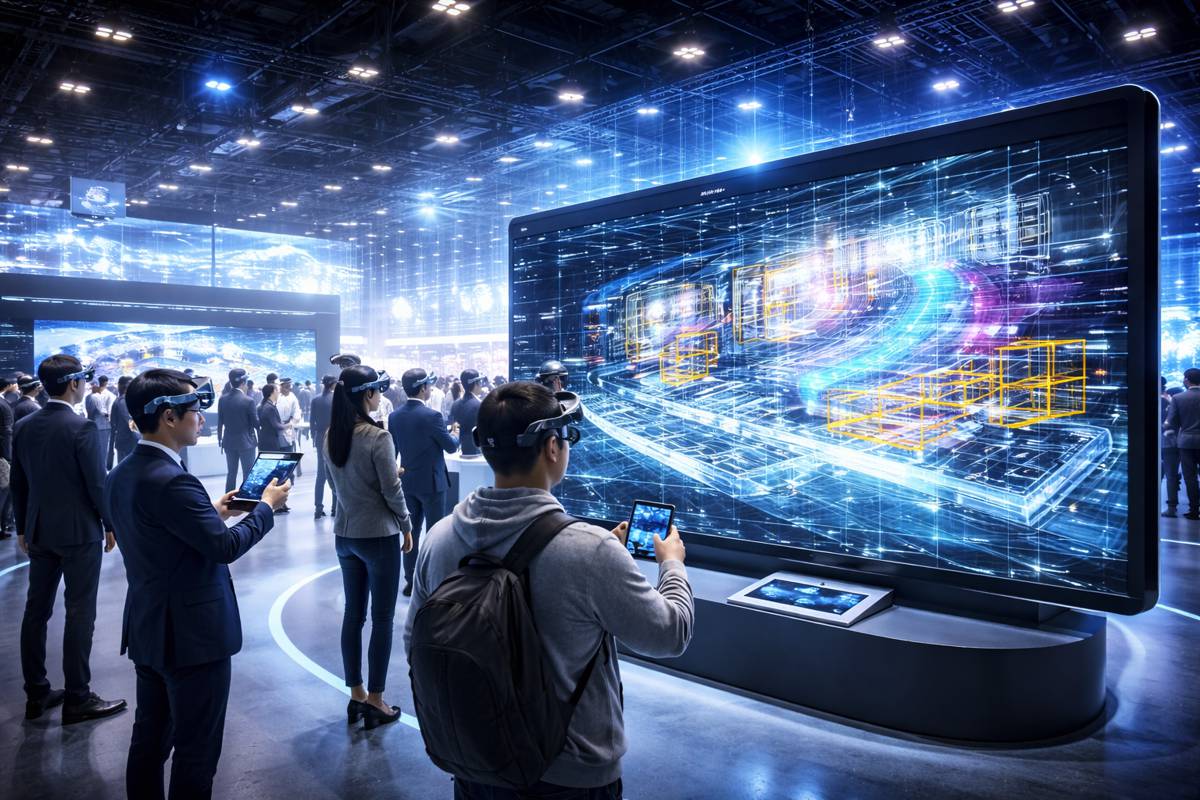
Rather than relying on abstract demonstrations, DEEP.FINE has designed its CES booth to function as a miniature industrial environment. Visitors entering Booth 9674 are guided through a cohesive narrative that shows how spatial data and AI intersect in real operational settings.
Through XR technologies, the booth demonstrates how retail and logistics operations can be enhanced intelligently. The emphasis is not on spectacle but on continuity, showing how spatial scanning feeds digital twins, which in turn support analytics, remote guidance, and workflow optimisation.
AR Guided Operations and Remote Instruction
One of the most compelling demonstrations at the booth focuses on AR based remote instructions. Visitors can observe how on site workers receive contextual guidance overlaid directly onto their physical environment. These instructions are powered by digital twins generated through spatial scanning and enriched with customer movement analysis.
This approach addresses a growing challenge in industrial sectors, where skilled labour shortages and distributed workforces demand new ways to transfer expertise. AR guidance reduces reliance on physical supervision while improving accuracy and consistency at the task level.
Optimising Logistics Through Guided Movement
Logistics remains a core application area for DEEP.FINE, and CES attendees will see this reflected in the demonstrations. Key processes such as picking automation and guided movement paths are presented through AR based navigation interfaces.
The system intuitively guides workers along optimised routes, reducing wasted motion and cognitive load. Product curation features are also showcased, highlighting how spatial intelligence can improve customer experience by aligning layout design with observed behaviour patterns.
Maintenance Repair and Operations Use Cases
Beyond logistics and retail, DEEP.FINE highlights Maintenance, Repair, and Operations as a critical growth area. MRO environments often struggle with outdated documentation, inconsistent procedures, and limited situational awareness.
DSC addresses these challenges through AI driven blueprint and manual interpretation, site recognition, and work procedure management. By linking technical documentation directly to spatial environments, maintenance teams can execute tasks more accurately and safely, even in complex or unfamiliar facilities.
Applications Beyond a Single Sector
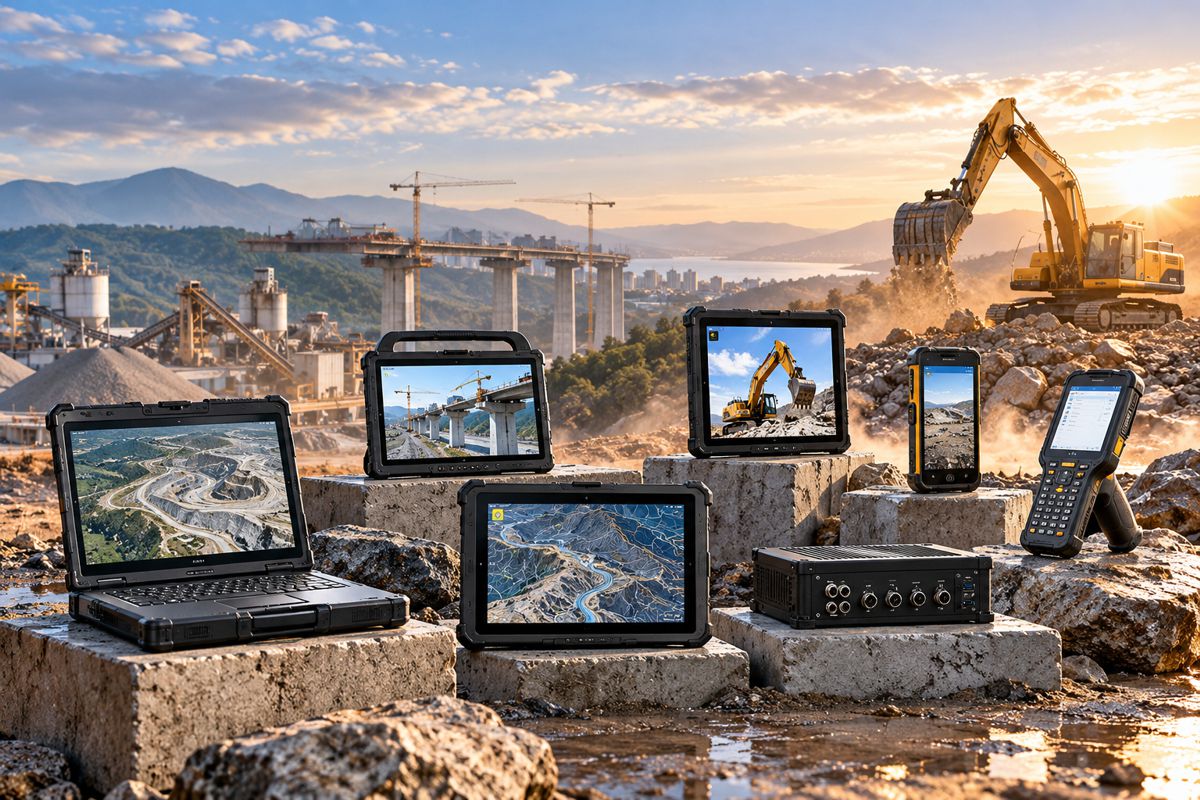
While logistics and MRO provide clear use cases, DEEP.FINE’s framework is intentionally cross industry. Construction sites can benefit from spatially anchored safety protocols and progress tracking. Manufacturing facilities gain visibility into workflow bottlenecks. Public sector operators can manage assets more transparently.
This versatility positions DSC not as a niche XR product but as an operational platform capable of supporting diverse industrial requirements without extensive customisation.
Leadership Perspective on Spatial Data
DEEP.FINE’s leadership frames spatial data as a strategic asset rather than a technical feature. Hyun-bae Kim, CEO of DEEP.FINE, explained the company’s vision clearly at the announcement of its CES participation: “Through CES, we plan to present how XR and AI technologies can be applied to on site workflows across industries including retail, logistics, construction, and manufacturing.”
He emphasised the broader implication for enterprise competitiveness, adding: “Spatial data will become a key asset influencing enterprise operational efficiency and competitiveness.”
Looking ahead, Kim outlined the company’s global ambitions: “DEEP.FINE will continue to expand global collaboration by connecting space based data to tangible business value through DSC.”
CES as a Catalyst for Global Expansion
For DEEP.FINE, CES 2026 represents more than an exhibition slot. It serves as a platform to accelerate international partnerships and validate its technology in front of a global audience that increasingly expects measurable return on digital investment.
As industrial sectors move beyond isolated pilot projects toward integrated digital ecosystems, spatial intelligence offers a unifying layer capable of aligning people, processes, and data. DEEP.FINE’s presence at CES signals confidence that this shift is no longer theoretical but actively underway.
Spatial Intelligence
Several macro trends converge to make spatial computing particularly relevant in 2026. Labour shortages continue to pressure productivity. Facilities grow more complex. Sustainability goals demand smarter use of existing assets rather than constant expansion.
In this context, solutions like DEEP.FINE Spatial Crafter offer a pragmatic pathway forward. By making space itself a data asset, organisations gain the clarity needed to optimise operations without disruptive overhauls. CES visitors will see not just what the technology looks like, but how it functions under real world conditions.
Efficiency, Scalability, and Measurable Outcomes
As DEEP.FINE steps onto the CES stage, it does so with a solution grounded in operational reality rather than experimental promise. The company’s focus on accessible spatial capture, AI driven insights, and XR enabled workflows reflects a broader shift in how industrial technology is evaluated.
Efficiency, scalability, and measurable outcomes now matter more than novelty. In that environment, spatial intelligence stands out as a technology whose time has arrived.