The Autonomous Supply Chain Era
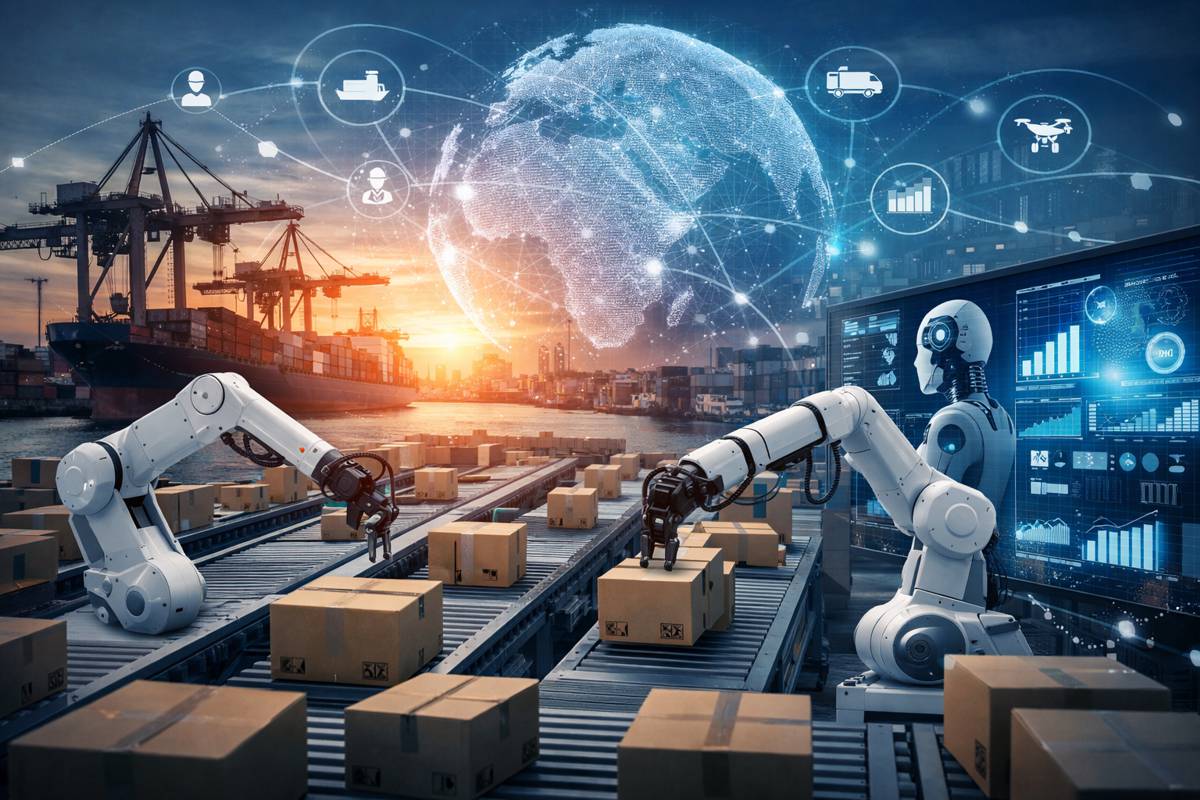
Supply chain management has never been short of ambition. For decades, the sector has chased efficiency through digitisation, optimisation software, and increasingly sophisticated automation. Yet, for all the dashboards and algorithms, decision making has remained firmly in human hands. That boundary is now dissolving. New research highlighted by Harvard Business Review signals a decisive shift from automated processes to genuinely autonomous supply chains, where artificial intelligence does not simply execute instructions but makes complex operational decisions independently.
At the centre of this shift is a recent article titled The Age of Autonomous Supply Chains Has Arrived, co authored by Andre Calmon of the Scheller College of Business, alongside collaborators from Harvard University and Massachusetts Institute of Technology. Their findings suggest that generative AI has crossed a critical threshold. Rather than assisting planners or flagging exceptions, advanced models are now capable of coordinating supply chain decisions end to end, often outperforming human teams in the process.
From Rule Based Systems to Learning Agents
Traditional supply chain automation has relied on predefined rules. Inventory policies, reorder points, and production schedules are typically hard coded by experts, refined slowly over time, and vulnerable to shocks. When demand patterns shift or disruptions occur, these systems struggle unless humans intervene. The research led by Calmon challenges that paradigm by deploying autonomous agents that learn, adapt, and coordinate in real time.
Unlike conventional systems, these agents do not follow a static playbook. They reason over shared data, anticipate downstream effects, and adjust actions dynamically. In practice, this means production, distribution, and inventory decisions are no longer optimised in isolation. Instead, they are synchronised across the entire network, responding continuously to changing conditions.
Testing Autonomy in the MIT Beer Distribution Game
To validate their approach, the researchers turned to the MIT Beer Distribution Game, a long standing simulation used worldwide to illustrate the bullwhip effect and coordination failures in supply chains. The game requires players to manage inventory and ordering decisions across a multi stage supply chain while coping with delayed information and fluctuating demand.
More than 100 students from Georgia Institute of Technology took part, forming human teams whose performance could be benchmarked against AI driven agents. The results were difficult to ignore. Autonomous systems reduced total supply chain costs by as much as 67 percent compared to their human counterparts, while also demonstrating greater stability and fewer extreme inventory swings.
The Role of Generative AI Models
Central to this performance was the use of large language models, including Llama 4 Maverick 17B, configured with carefully designed prompts, data sharing protocols, and operational guardrails. Rather than acting as a general purpose chatbot, the model was embedded within a structured decision environment, allowing it to reason about trade offs, constraints, and long term consequences.
This approach reflects a broader trend in industrial AI. Success is no longer defined by raw model size alone. What matters is how models are orchestrated, what data they can access, and the boundaries within which they operate. In supply chains, where errors can cascade quickly, these design choices become mission critical.
Four Foundations of Autonomous Supply Chains
The research identifies four factors that determine whether autonomous supply chains succeed or fail. Each addresses a common weakness in earlier AI deployments.
First comes model selection. Reasoning capability matters more than pattern recognition alone. Models must understand cause and effect, not simply predict the next data point.
Second are guardrails. Autonomous systems need clearly defined constraints to prevent actions that may be locally optimal but globally damaging. These guardrails encode business rules, ethical considerations, and risk tolerances.
Third is data orchestration. Information must be curated, shared, and timed correctly across functions. Fragmented or delayed data undermines even the most capable models.
Fourth is prompt refinement. How instructions are framed has a direct impact on decision quality. Iterative prompt engineering ensures that AI agents align with organisational priorities rather than drifting toward unintended objectives.
Reframing the Role of Human Managers
As autonomy increases, the role of supply chain professionals does not disappear. Instead, it shifts upstream. Operational firefighting gives way to strategic oversight. Managers focus on network design, supplier relationships, resilience planning, and policy setting, leaving day to day execution to machines.
This transition mirrors earlier industrial revolutions. Just as automation transformed factory floors without eliminating manufacturing expertise, autonomous supply chains elevate human contribution rather than replacing it. The difference lies in where judgement is applied and how value is created.
Competitive Advantage in an Uncertain World
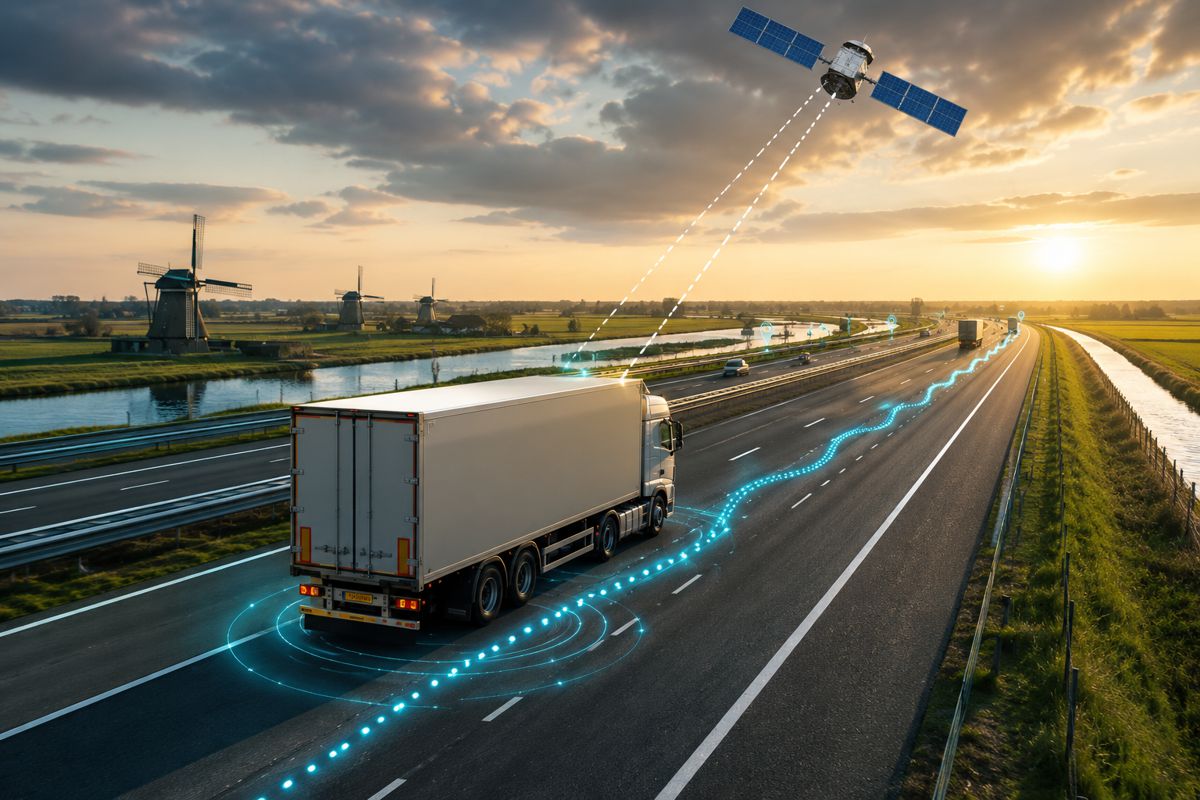
Global supply chains are under constant pressure. Geopolitical tensions, climate related disruptions, and volatile demand have exposed the limits of human centric planning. Autonomous systems offer a way to respond at machine speed, continuously recalibrating decisions as conditions evolve.
According to Andre Calmon, the implications are profound: “This breakthrough positions the Scheller College of Business as a thought leader at the intersection of AI and supply chain innovation. World class supply chain management is becoming a plug and play capability. Businesses that understand how to guide generative AI agents with the right data and policies will gain a decisive competitive edge.”
Beyond Cost Reduction
While the headline figure of 67 percent cost reduction is striking, the broader benefits may prove even more valuable. Autonomous supply chains are inherently more resilient. They dampen the bullwhip effect, reduce overreaction to short term signals, and maintain service levels during disruption.
Industry analysts increasingly point to autonomy as a cornerstone of future supply chain maturity. Research from consultancies and academic institutions alike suggests that firms embracing AI driven decision making are better positioned to absorb shocks and recover faster when disruptions occur.
A Turning Point for the Industry
The research published through Harvard Business Review marks a clear inflection point. Supply chain management is no longer just about better tools or faster analytics. It is about delegating operational intelligence to systems capable of learning, coordinating, and acting independently.
For construction, infrastructure, manufacturing, and logistics leaders, the message is clear. Autonomous supply chains are not a distant concept or laboratory curiosity. They are emerging now, backed by empirical evidence and measurable performance gains. Organisations that move early, invest in the right capabilities, and rethink how humans and machines collaborate will shape the next era of global supply networks.