EBRD Channels Investment into Türkiye’s Wind Power Future
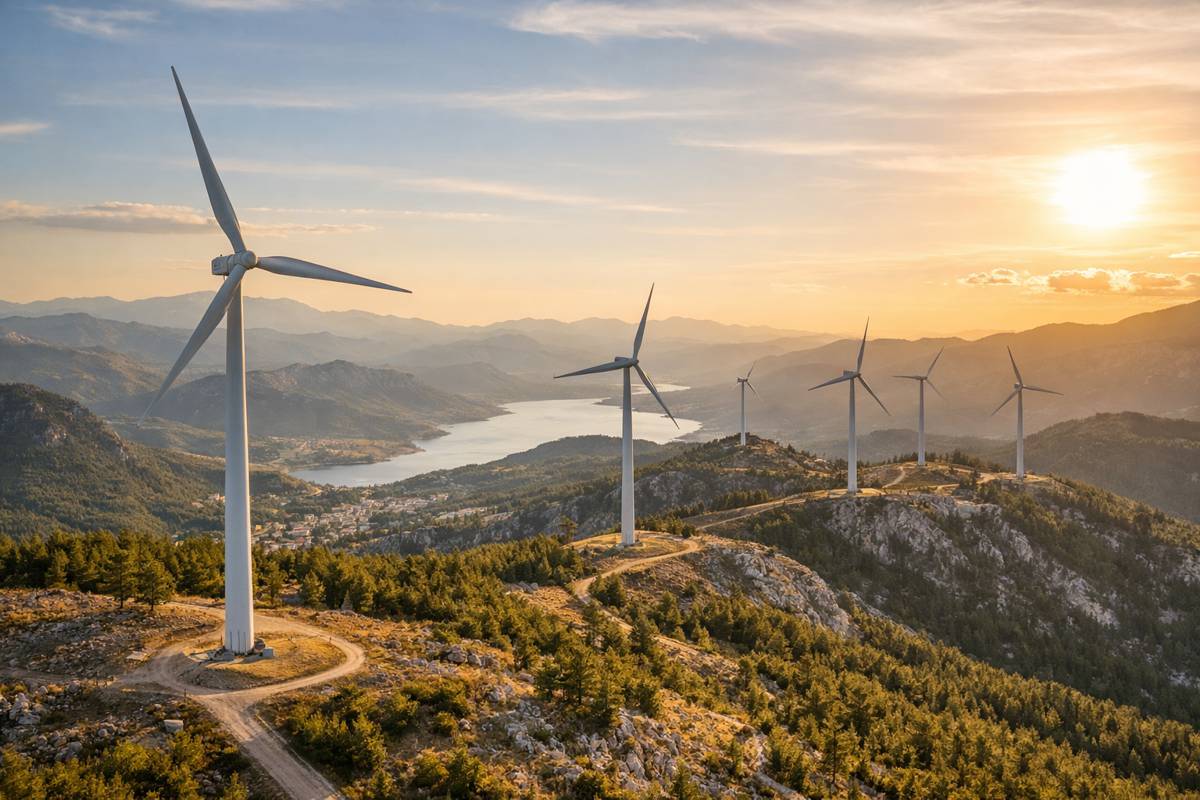
Türkiye’s renewable energy transition has taken another decisive step forward as the European Bank for Reconstruction and Development has committed US$ 200 million, equivalent to €172 million, to support new onshore wind capacity developed by Enerjisa Enerji Üretim A.Ş. The financing will enable the construction of 250 MW of wind power plants in Muğla Province, a region already emerging as a strategic hub for clean energy investment.
At a time when energy security, affordability and decarbonisation are all pulling in the same direction, the project lands with considerable weight. Beyond turbines and megawatts, the investment is structured to deliver long-term environmental and social dividends, aligning climate ambition with workforce transition and regional development.
Scaling Renewable Capacity at Speed
The Muğla wind programme forms part of Enerjisa Üretim’s broader 1 GW wind power portfolio, reflecting a deliberate push to scale renewables rapidly while maintaining operational resilience. Once operational, the new installations are expected to generate approximately 630 GWh of electricity each year, enough to supply hundreds of thousands of households with clean, domestically produced power.
That output translates directly into emissions reductions. The project is forecast to prevent around 221,000 tonnes of carbon dioxide emissions annually, reinforcing Türkiye’s national climate commitments and supporting its longer-term net zero ambitions. In a country where energy demand continues to grow, the capacity addition also reduces exposure to imported fossil fuels and volatile global energy markets.
Strengthening Energy Security and Independence
Türkiye’s energy strategy has increasingly prioritised domestic renewable resources as a hedge against supply disruption and price instability. Wind power, particularly in coastal regions such as Muğla, offers a reliable and scalable solution that complements hydroelectric and solar generation.
By expanding its wind fleet, Enerjisa Üretim is helping to diversify the national energy mix while improving system resilience. The new capacity enhances grid stability during peak demand periods and supports Türkiye’s objective of lowering its current account deficit by reducing fuel imports. In practical terms, cleaner power also means lower long-term generation costs, a benefit that ultimately filters through to consumers and industry alike.
A Just Transition at the Core
What distinguishes this investment is the emphasis placed on social outcomes alongside infrastructure delivery. As part of the financing agreement, Enerjisa Üretim will establish a nationally accredited vocational qualification and certification centre designed to reskill workers transitioning out of the coal sector.
The training programme will focus on equipping participants with skills relevant to renewable energy, agriculture and tourism, sectors that offer sustainable employment opportunities in regions historically dependent on fossil fuels. This approach reflects a growing recognition that decarbonisation must be accompanied by inclusive economic planning if it is to succeed over the long term.
By embedding workforce development into the project structure, the investment advances Enerjisa Üretim’s Just Transition agenda, ensuring that communities are not left behind as the energy system evolves.
Institutional Confidence and Long-Term Partnership
For the European Bank for Reconstruction and Development, the project finance loan reinforces a long-standing relationship with one of Türkiye’s most prominent power producers. The Bank’s involvement also signals confidence in the commercial and technical robustness of large-scale wind deployment in the country.
Şule Kılıç, EBRD Head of Energy Eurasia, underlined the broader rationale behind the investment: “We’re pleased to support our longstanding client, Enerjisa Üretim, in growing its renewable energy portfolio. Not only will this project create new green energy capacity, bringing cleaner and cheaper electricity, but it will also contribute to broader economic and social benefits. Partnering with Enerjisa Üretim reflects our commitment to scale up renewables in Türkiye and ensure the benefits reach people and communities.”
The statement highlights the dual-track approach increasingly favoured by development finance institutions, where climate mitigation, economic resilience and social inclusion are treated as interlinked objectives rather than isolated outcomes.
Enerjisa Üretim’s Expanding Renewable Strategy
Enerjisa Üretim has positioned itself as Türkiye’s largest independent power producer, with a diversified generation portfolio spanning wind, solar, hydroelectric and thermal assets. The company currently operates 4.2 GW of installed capacity and maintains a development pipeline of at least 1.5 GW, increasingly weighted towards renewables and emerging energy technologies.
That scale provides the platform for long-term planning and innovation, enabling the company to absorb new capacity while maintaining operational efficiency. Wind energy, in particular, has become central to Enerjisa Üretim’s growth strategy due to its maturity, cost competitiveness and alignment with national climate goals.
Mert Yaycıoğlu, Chief Financial Officer of Enerjisa Üretim, framed the investment within that wider vision: “As Türkiye’s largest independent power producer, Enerjisa Üretim is firmly committed to accelerating the country’s energy transition through sustainable and renewable investments. Our 4.2 GW of installed capacity, coupled with a solid pipeline of at least 1.5 GW and a portfolio increasingly focused on wind, solar and innovative energy technologies, allows us to see renewable energy not only as a growth area but as a long-term responsibility towards energy security, climate resilience and future generations. Partnerships with institutions such as the EBRD are instrumental in scaling this ambition and reinforcing Türkiye’s role in the global green energy transformation.”
Türkiye’s Renewable Momentum
Türkiye has made notable progress in expanding renewable generation over the past decade, with wind and solar capacity rising sharply as regulatory frameworks and grid infrastructure have matured. According to national energy statistics, wind power now accounts for a significant and growing share of installed capacity, particularly in the Aegean and Marmara regions.
International support has played a key role in that trajectory. Development banks and multilateral lenders have helped de-risk early-stage projects, attract private capital and promote best practices in environmental and social governance. The Muğla wind programme fits squarely within this pattern, blending commercial viability with development impact.
EBRD’s Broader Footprint in Türkiye
Since 2009, the European Bank for Reconstruction and Development has committed more than €23 billion to Türkiye across over 500 projects and trade finance facilities. The majority of that investment has flowed into the private sector, reflecting the Bank’s mandate to support market-led growth and institutional reform.
Energy has consistently been a priority area, with funding directed towards renewables, energy efficiency and grid modernisation. By backing projects such as Enerjisa Üretim’s wind expansion, the EBRD continues to support Türkiye’s transition towards a low-carbon, competitive and resilient economy.
Balancing Economic Growth with Climate Responsibility
The Muğla wind investment illustrates how large-scale renewable projects can deliver far more than clean electrons. By combining capacity expansion with workforce reskilling and regional development, the initiative sets a benchmark for how energy transition finance can be structured to maximise impact.
As Türkiye continues to balance economic growth with climate responsibility, partnerships between experienced developers and international financiers are likely to play an increasingly central role. In that context, the EBRD backed expansion of Enerjisa Üretim’s wind portfolio stands as a practical example of how climate ambition, energy security and social progress can move forward together.