Strategic Finance Behind Europe’s Lithium Energy Ambitions
Europe’s race to secure critical raw materials has taken a decisive step forward with the European Investment Bank agreeing to provide €250 million in project financing for Vulcan Energy’s Phase One Lionheart Project in Germany’s Upper Rhine Valley. Valued at approximately €2 billion, the project represents one of the most ambitious attempts yet to establish a domestic, low carbon lithium supply chain capable of supporting Europe’s rapidly expanding battery and electric vehicle industries.
At its core, Lionheart is designed to reduce Europe’s reliance on imported lithium, much of which currently arrives from politically and environmentally complex supply chains. By anchoring production within Europe and aligning it with renewable energy generation, the project supports both industrial resilience and climate policy objectives at a time when battery materials have become a strategic priority for governments and manufacturers alike.
Lithium, Strategy and the Critical Raw Materials Act
Lithium’s designation as both a critical and strategic raw material under the EU’s Critical Raw Materials Act has reshaped investment priorities across the continent. Demand projections for electric vehicles, grid scale storage and industrial electrification have exposed the fragility of Europe’s existing supply chains, which remain heavily dependent on imports.
The Lionheart Project directly addresses these vulnerabilities. Once operational, Phase One is expected to supply around 12 percent of Europe’s projected lithium hydroxide demand by 2030. That contribution alone has significant implications for Europe’s strategic autonomy, reducing exposure to external shocks while ensuring that environmental and social standards remain firmly under European oversight.
Geothermal Brines and a Different Kind of Mining
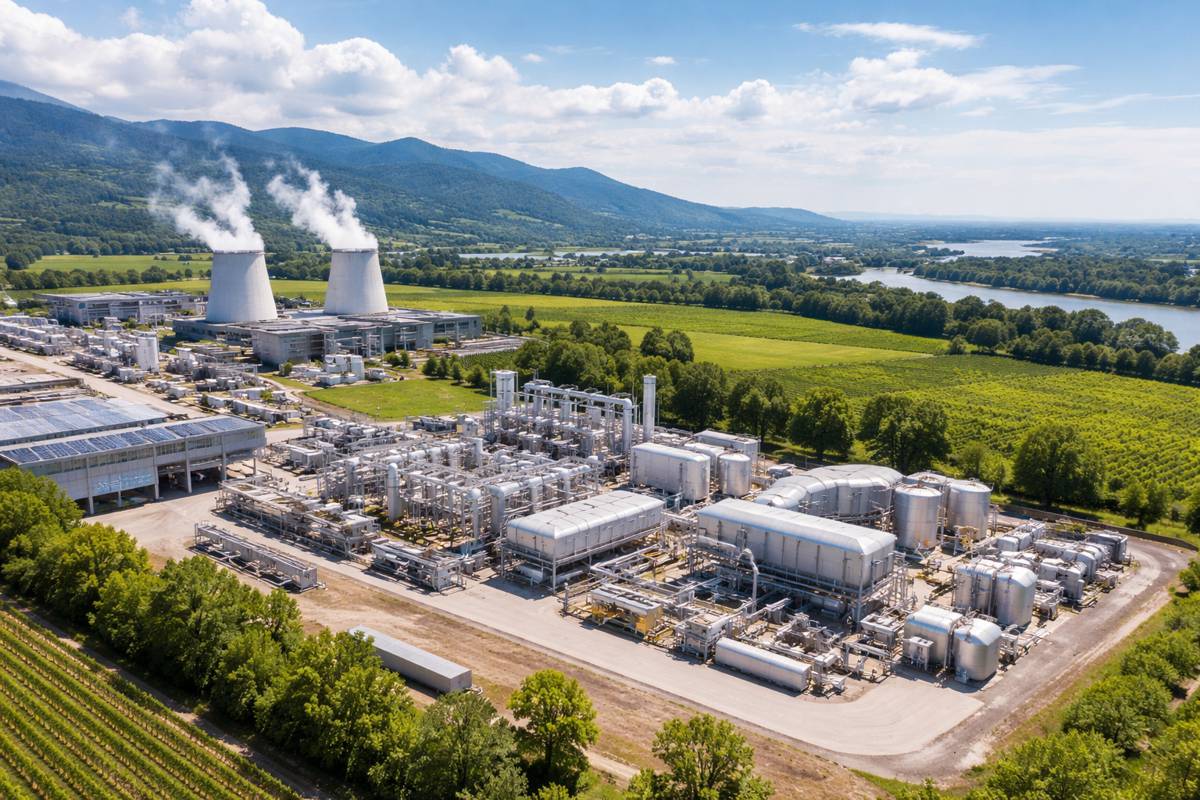
Unlike conventional lithium extraction methods that rely on hard rock mining or evaporation ponds, Vulcan Energy’s approach is rooted in geothermal brine extraction. Naturally heated brine is brought to the surface from deep underground reservoirs, where lithium is extracted before the brine is reinjected back into the subsurface.
This integrated system allows lithium extraction to run alongside renewable heat and power generation. The result is a process with significantly lower surface impact and a dramatically reduced carbon footprint. By avoiding large evaporation ponds and minimising land disturbance, the project challenges long held assumptions about the environmental cost of lithium production.
Setting a European Benchmark for Sustainable Lithium
The European Investment Bank has positioned its backing of Lionheart as part of a broader effort to align finance with Europe’s climate and industrial ambitions. According to the EIB’s Vice President, the project represents a milestone for sustainable raw material production in Europe: “Lionheart is Europe’s first project to combine Direct Lithium Extraction with renewable energy generation, setting a new standard for sustainable lithium. By securing a strategic supply of lithium for European industry, we are strengthening Europe’s sovereignty and supporting the energy transition. With innovative geothermal technology, domestic production, and strong public private cooperation, the project puts the EU’s Critical Raw Materials Act into practice and reinforces Europe’s supply chain resilience.”
That combination of sustainability, innovation and policy alignment has made Lionheart a flagship example of how Europe intends to translate regulation into industrial reality.
From Pilot Plants to Commercial Scale
Vulcan Energy’s pathway to commercial production has already moved beyond theory. Since April 2024, the company’s Lithium Extraction Optimisation Plant has successfully produced high purity lithium chloride from geothermal brine. This intermediate product is then converted into battery grade lithium hydroxide monohydrate at the Central Lithium Extraction Optimisation Plant in Frankfurt.
Phase One of the Lionheart Project scales these facilities to full commercial capacity. Once operational, the integrated system is designed to produce 24,000 tonnes of lithium hydroxide monohydrate annually, enough material to support the manufacture of approximately 500,000 electric vehicles each year. Construction is expected to take around two and a half years, with first production targeted for 2028.
Financing Europe’s Clean Technology Value Chain
The EIB’s €250 million commitment sits within a wider financing structure that reflects growing confidence in Europe’s clean technology sector. Alongside the EIB, commercial lenders including ABN AMRO, BNP Paribas, ING, KommunalKredit Austria, Natixis, OCBC and Unicredit are supporting the project.
Export credit agencies from France, Canada, Australia, Denmark and Italy have also joined the financing package, signalling international recognition of the project’s technical and commercial credibility. Earlier this year, Vulcan Energy further strengthened its funding position with two grants from the German government totalling €204 million.
Additional equity has been provided by Germany’s raw materials fund managed by KfW, alongside strategic investors such as Siemens, Hochtief and Demeter’s Climate Infrastructure Fund. Together, this blend of public finance, private capital and institutional backing underscores the project’s importance to Europe’s long term industrial strategy.
Supporting Local Communities Through Renewable Heat
Beyond lithium production, Lionheart delivers tangible benefits at a local level. Through its deep geothermal wells, Vulcan supplies renewable heat to EnergieSüdwest AG in Landau. This heat feeds directly into the city’s district heating network, reducing reliance on fossil fuels for space and water heating.
For households and businesses, the shift offers a practical pathway towards lower emissions without requiring disruptive changes to existing infrastructure. For municipalities, it demonstrates how industrial projects can be integrated into broader energy transition strategies that deliver immediate social value.
Exporting a European Model
While the Lionheart Project is firmly rooted in the Upper Rhine Valley, its implications extend far beyond Germany’s borders. The integration of direct lithium extraction with renewable energy generation positions Europe as a global leader in sustainable battery materials.
As other regions grapple with the environmental consequences of conventional lithium production, Europe’s approach offers a replicable alternative. The model developed at Lionheart has strong export potential, particularly in regions with geothermal resources and growing demand for low carbon battery materials.
The EIB’s Role in Strategic Autonomy
The EIB’s involvement in Lionheart aligns with its Critical Raw Materials Strategic Initiative and the TechEU programme, both of which are designed to support technologies that enhance Europe’s industrial competitiveness and strategic autonomy.
As the EU’s long term lending institution, the EIB focuses on projects that advance climate action, digitalisation, security, cohesion and sustainable growth. In 2024 alone, the EIB Group signed nearly €89 billion in new financing for more than 900 projects, reinforcing its role as a cornerstone of Europe’s investment landscape.
A Foundation for Europe’s Battery Economy
For Vulcan Energy, Lionheart represents a defining moment in its ambition to build the world’s first carbon neutral, integrated lithium and renewable energy business. Located within the Upper Rhine Valley Brine Field bordering Germany and France, the project taps what is recognised as Europe’s largest lithium resource and a tier one lithium asset globally.
By harnessing natural heat to extract lithium and power conversion to battery quality material using its proprietary technology, Vulcan is laying the groundwork for a resilient, local and sustainable supply chain. In doing so, Lionheart moves Europe closer to a future where clean transport, secure raw materials and industrial competitiveness are no longer competing objectives but parts of the same strategy.