Global Recognition for Excellence in Brick Architecture
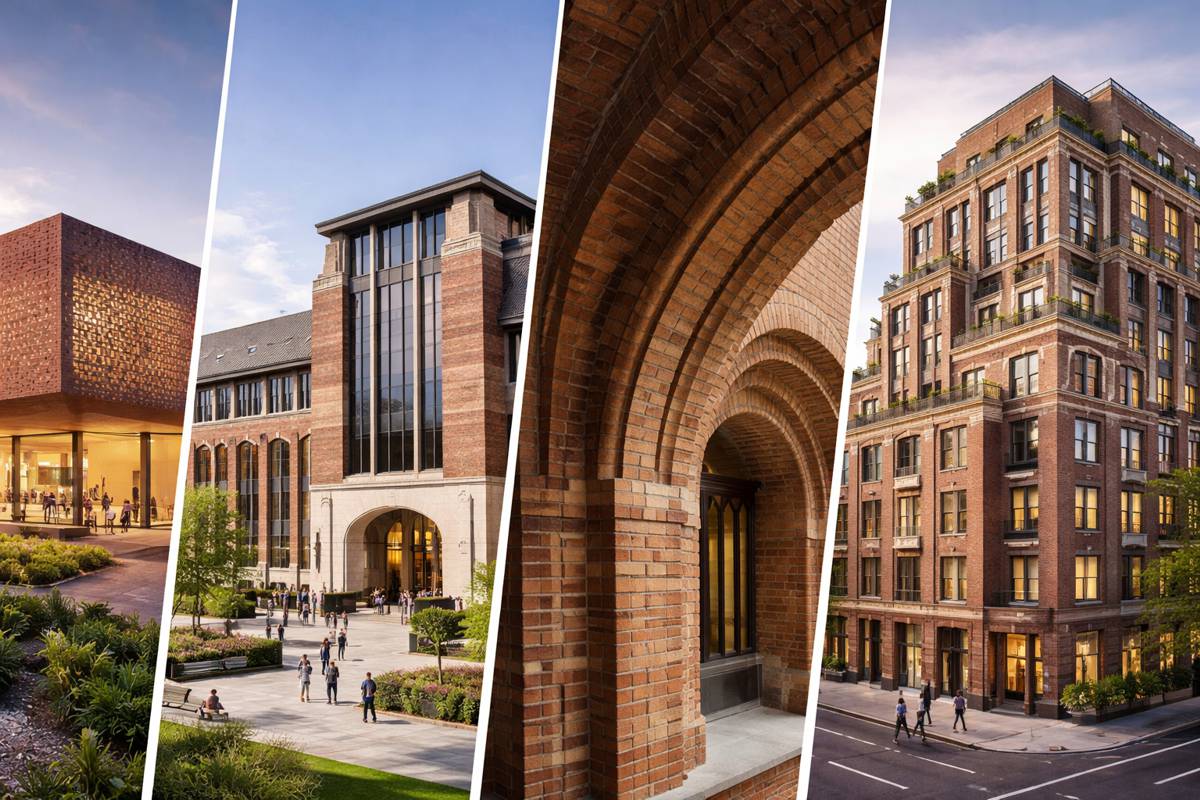
Brick has a habit of quietly enduring while trends come and go. In 2025, that staying power was placed firmly in the spotlight as the Brick Industry Association announced the winners of the Brick in Architecture Awards, widely regarded as the world’s leading design competition dedicated to fired-clay brick. From dense urban neighbourhoods to educational campuses and international settings, 42 projects were recognised for their design quality, technical execution and thoughtful use of one of construction’s most time-tested materials.
This year’s awards underline a broader truth the construction sector increasingly acknowledges. Brick is no longer viewed as merely traditional. Instead, it is being reappraised as a material that aligns naturally with sustainability, resilience and long-term value. With 120 entries submitted from across six countries, the competition demonstrated how fired-clay brick continues to adapt to contemporary architectural ambition without losing its inherent strengths.
Why Brick Still Matters in Modern Construction
At the heart of the awards programme lies a clear message about material performance. Brick’s longevity, fire resistance and thermal properties have made it a reliable choice for centuries, yet its relevance has arguably grown as regulators, investors and designers focus more sharply on whole-life performance. Brick buildings tend to age gracefully, require minimal maintenance and offer strong resistance to extreme weather, an increasingly important consideration in a warming climate.
Speaking on the significance of this year’s winners, BIA President and CEO Tricia Mauer highlighted the breadth of brick’s contribution to contemporary construction: “The winners demonstrate why brick matters as a sustainable building material offering exceptional durability, fire resistance, energy efficiency and the ability to achieve any aesthetic.”
That balance between performance and design freedom is central to brick’s renewed appeal. Advances in manufacturing, colour control and thin brick technologies now allow architects to experiment with texture, pattern and form while retaining the material’s proven technical credentials.
A Truly International Showcase of Craft and Design
Although rooted in North America, the 2025 awards reflect an increasingly global conversation around masonry design. Winning projects span the United States, Belgium, Canada, China, Colombia and South Africa, reinforcing the universal relevance of brick across cultures and climates. This diversity also illustrates how regional traditions can be reinterpreted through modern architectural language.
Judged by a jury of architectural peers, the awards recognise excellence across several categories, including Best in Class, Gold, Silver and Bronze. A dedicated Craftsmanship Award further celebrates the often-unsung expertise of masons whose skill transforms design intent into enduring built form. Together, these distinctions acknowledge that outstanding brick architecture is as much about execution as it is about concept.
Best in Class Winners Leading the Way
The Best in Class projects represent the highest level of achievement within their respective sectors, setting benchmarks for both design quality and technical delivery.
Commercial Architecture
The Amant Campus Gallery and Cafe in New York stands out as a refined example of brick used to create a contemporary cultural space. Designed by SO-IL, the project demonstrates how brick can shape light, enclosure and rhythm within an urban context. The collaboration between Acme Brick Company, Belden Tri-State Building Materials and Vertical Spaces highlights the integrated supply chain required to deliver complex masonry architecture.
Beyond aesthetics, the project underscores brick’s role in creating durable public spaces capable of withstanding heavy use while maintaining architectural integrity over time.
Higher Education Facilities
In Philadelphia, the Myers Switchgear project by Moto Designshop showcases brick within a university setting where adaptability and longevity are paramount. Educational buildings demand materials that balance cost efficiency with long-term performance, and brick’s low maintenance profile aligns well with institutional priorities.
The involvement of Diener Brick Company and General Masonry and Restoration reflects the specialist coordination needed to meet both functional and architectural expectations in higher education environments.
K to 12 Education
The Garden House Renovation and Expansion at The Packer Collegiate Institute in Brooklyn demonstrates how brick can sensitively bridge heritage and modernity. Designed by WXY architecture and urban design, the project respects the existing campus character while introducing contemporary spatial solutions.
Masonry teams including JJ Matthews Inc., Seamus McNabb and Archstone Builders LLC played a pivotal role in achieving a seamless integration between old and new fabric, a task that demands precision and deep material understanding.
International Excellence in Brick Architecture
The international Best in Class award was presented to the Preescolar Colegio Los Nogales in Bogotá, Colombia, designed by Taller de Arquitectura de Bogotá S.A.S. The project reflects how brick responds naturally to local climate conditions while contributing to a sense of place and cultural continuity.
In regions where temperature moderation and durability are essential, brick remains a logical choice. This project illustrates how thoughtful design can elevate a familiar material into a contemporary educational environment that feels both grounded and forward-looking.
Paving and Landscape Design
Brick’s versatility extends beyond vertical construction, as demonstrated by the Bridge District Pavers project in Washington, D.C. Designed by Lemon Brooke, the scheme uses brick to define public realm spaces that are both robust and visually cohesive.
With materials supplied by The Belden Brick Company and Potomac Valley Brick and Supply Company, and installed by AMA Construction, the project highlights brick’s suitability for high-traffic urban landscapes where durability and ease of repair are critical considerations.
Residential Architecture and Craftsmanship
Multifamily Housing
The residential multifamily Best in Class award, alongside the Craftsmanship Award, was claimed by 64 University Place in New York. Designed by Kohn Pedersen Fox, the building demonstrates how brick can contribute to high-density urban living without sacrificing refinement or detail.
The craftsmanship recognition acknowledges the work of SNG Brick and Stone, whose installation transformed design ambition into a precise and expressive facade. In an era of prefabrication and speed, this award serves as a reminder that skilled hands remain central to architectural quality.
Single Family Homes
Casa Lotus in Austin, Texas, designed by Miró Rivera Architects, illustrates brick’s adaptability within bespoke residential architecture. The project combines modern form with tactile materiality, showing how brick can feel both contemporary and deeply rooted.
Supplied by Cloud Ceramics and Upchurch Kimbrough and installed by BJK Masonry, the home reflects a growing interest among private clients in materials that offer longevity and authenticity alongside architectural expression.
Thin Brick and Innovation
The University of California Riverside School of Business project highlights the role of thin brick in contemporary construction. Designed by Moore Ruble Yudell Architects and Planners, the scheme demonstrates how thinner masonry solutions can deliver the visual depth of traditional brick while supporting modern construction methods.
Thin brick systems are increasingly attractive in retrofit and lightweight construction scenarios, offering designers greater flexibility without compromising on appearance or performance.
Judging Excellence Through Peer Review
The credibility of the Brick in Architecture Awards rests heavily on its judging panel. The 2025 jury brought together experienced practitioners including Carla Ceruzzi of Sasaki Design, Gabriel Deck of Gnome Architects, Michael LeBlanc of Utile and Jesse Mainwaring of DIGSAU.
Their collective expertise ensured projects were assessed not only on visual impact but also on technical execution, sustainability considerations and contribution to the built environment. Peer review remains a cornerstone of professional recognition, reinforcing the awards’ standing within the global design community.
Celebrating Brick on a Global Stage
For the first time in the awards’ history, winning teams will be honoured live at the Brick Excellence Gala on April 9, 2026 in Orlando, Florida. Held during the National Clay Brick Expo, the event will bring architects, designers and masonry professionals together to celebrate outstanding achievement in brick design and craftsmanship.
This live recognition marks a significant moment for the industry, elevating masonry craftsmanship to the same celebratory platform often reserved for other construction disciplines.
The Role of the Brick Industry Association
The Brick Industry Association continues to serve as the nationally recognised authority on clay brick construction, representing manufacturers, distributors and suppliers across the sector. Beyond awards, the organisation plays a vital role in technical guidance, research dissemination and advocacy for masonry within evolving building codes.
As sustainability metrics, fire safety regulations and lifecycle assessments gain prominence, the BIA’s work helps ensure that brick remains well understood and appropriately specified within modern construction projects.
A Material Built for the Long Term
Taken together, the 2025 Brick in Architecture Awards reinforce a simple but powerful idea. Brick is not a nostalgic choice. It is a pragmatic, adaptable and increasingly relevant material that aligns with the construction industry’s long-term priorities. Durability, energy efficiency and aesthetic flexibility are no longer optional extras but baseline expectations.
By recognising projects that push the boundaries of design while respecting material integrity, the awards programme continues to shape how brick is perceived by architects, clients and policymakers alike. In a sector searching for solutions that balance innovation with resilience, fired-clay brick remains firmly in the conversation.