Sumbu Exoskeleton Redefining Wearable Mobility at CES 2026
At CES 2026, Sumbu is stepping up to unveil its Exo-S3 series, introducing what it describes as the world’s first commercially available dual-vector exoskeleton designed for real-world terrain. While powered exoskeletons have existed for years, they have largely remained confined to laboratories, rehabilitation centres, or military research programmes. Sumbu’s announcement signals a decisive shift from specialist applications to consumer-ready mobility technology.
The Exo-S3 range, comprising the Exo-S3, Exo-S3 Pro, and Exo-S3 Ultra, establishes an entirely new market segment for lightweight, AI-powered wearable mobility systems aimed at everyday users. This move places Sumbu at the forefront of a growing convergence between robotics, artificial intelligence, and personal mobility, an area increasingly watched by construction professionals, policymakers, and investors alike.
Crucially, the Exo-S3 series has not been framed as a medical device, nor as industrial PPE, but as a consumer mobility enhancer. That distinction matters. It lowers regulatory barriers, broadens adoption potential, and positions exoskeletons as lifestyle technology rather than niche assistive equipment.
Dual-Vector Technology as the Defining Breakthrough
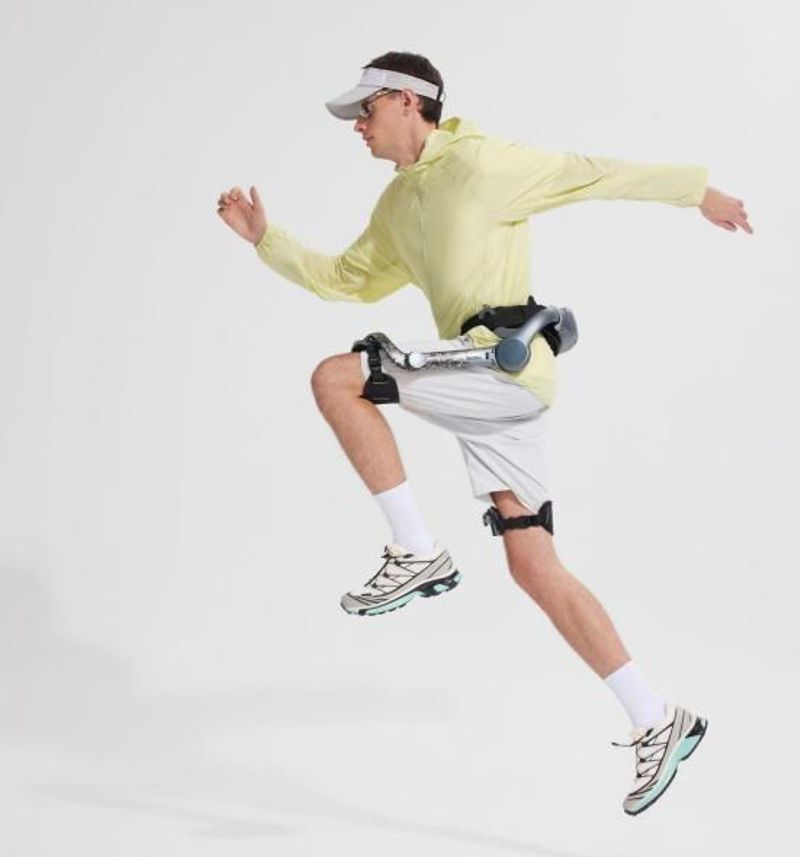
At the heart of the Exo-S3 series lies Sumbu’s dual-vector power architecture. Unlike traditional single-axis exoskeletons that assist movement in one dominant direction, dual-vector systems dynamically support multiple movement patterns across varied terrain. This enables seamless transitions between walking, climbing stairs, cycling, and uphill movement without manual intervention.
According to Sumbu, this approach boosts movement efficiency by approximately 20 percent, a figure that aligns with independent academic research into powered lower-limb assistance conducted at institutions such as MIT Media Lab and ETH Zurich. The implication is straightforward: reduced fatigue, improved endurance, and lower musculoskeletal strain during extended activity.
The company’s emphasis on adaptability rather than raw power reflects a broader shift within wearable robotics. Engineers are increasingly prioritising intelligent assistance that augments natural motion rather than overpowering it, a philosophy echoed across modern construction equipment and human-machine interface design.
A Tiered Product Strategy for Mass Adoption
Sumbu’s decision to launch three distinct models simultaneously demonstrates a clear understanding of market segmentation and adoption pathways.
The Exo-S3, priced at $1,199 USD, serves as the entry point. Designed primarily for domestic and urban environments, it provides lower-limb muscle support for daily activities such as walking, commuting, or navigating stairs. Its positioning as an accessible consumer product suggests potential applications ranging from ageing populations to professionals who spend long hours on their feet.
The Exo-S3 Pro, retailing at $1,499 USD, targets a more performance-oriented audience. This includes outdoor endurance athletes and individuals seeking active injury prevention during physically demanding activities. By reducing muscle soreness and joint fatigue, the Pro variant aligns with growing interest in preventative ergonomics, a theme increasingly prominent across construction safety and workforce wellbeing strategies.
At the top end of the range, the Exo-S3 Ultra, priced at $1,999 USD, has been optimised for extended outdoor use and professional applications. Enhanced battery life and durability make it suitable for explorers, field engineers, surveyors, and remote infrastructure professionals operating in challenging environments.
This tiered approach mirrors strategies seen in the automotive and industrial equipment sectors, where scalable platforms enable broader market penetration while maintaining premium performance options.
Human-Centric Design Driven by AI
Sumbu’s leadership has been keen to stress that the Exo-S3 series is built around the user rather than the machine. As founder and CEO Martin Hsu explained: “Our human-centric design approach means Sumbu’s users now have a consumer-grade exoskeleton option that adapts to their needs. The dual-vector drive means their exoskeleton automatically adjusts between power modes for uphill climbs, using stairs, and cycling.”
This adaptability is enabled by human-intent recognition AI, which continuously analyses shifts in posture, gait, and movement dynamics. Rather than relying on pre-set modes or manual controls, the system anticipates user intent and adjusts assistance accordingly. Similar intent-based control systems are already being deployed in collaborative robotics and advanced construction machinery, where intuitive interaction is critical for safety and productivity.
By embedding this intelligence into a consumer device, Sumbu is effectively translating industrial-grade AI concepts into wearable personal technology, a transition with far-reaching implications.
Engineering Foundations Behind the Performance
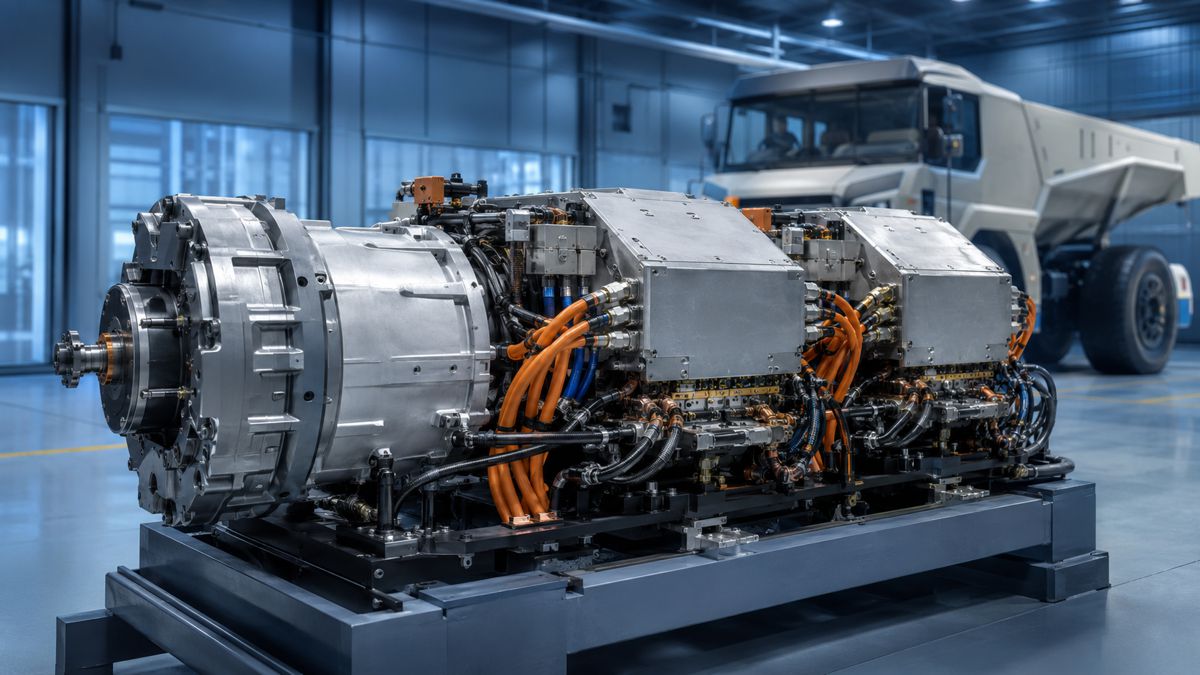
The technical architecture of the Exo-S3 series reflects a careful balance between power, efficiency, and comfort. A proprietary planetary gear motor delivers high torque while maintaining smooth, fluid motion. Planetary gearing is widely used in electric vehicles and heavy equipment due to its compactness and efficiency, making its application in wearable robotics particularly noteworthy.
Power is supplied by an automotive-grade energy cell, drawing on EV battery standards to ensure extended range and consistent performance. This choice suggests a deliberate move away from consumer electronics batteries toward more robust energy solutions, an important consideration for users operating over long durations.
Weight and ergonomics have clearly influenced the design process. The lightweight structure follows the body’s natural contours, reducing pressure points and improving comfort during prolonged wear. This is essential if exoskeletons are to transition from novelty to necessity in daily life.
Durability has not been overlooked. With an IP65 rating, the Exo-S3 series is dust-tight and water-resistant, ensuring reliability across varied weather conditions. For professionals working outdoors, particularly in infrastructure inspection, surveying, or site supervision, this level of protection is non-negotiable.
Implications for Construction and Infrastructure Workforces
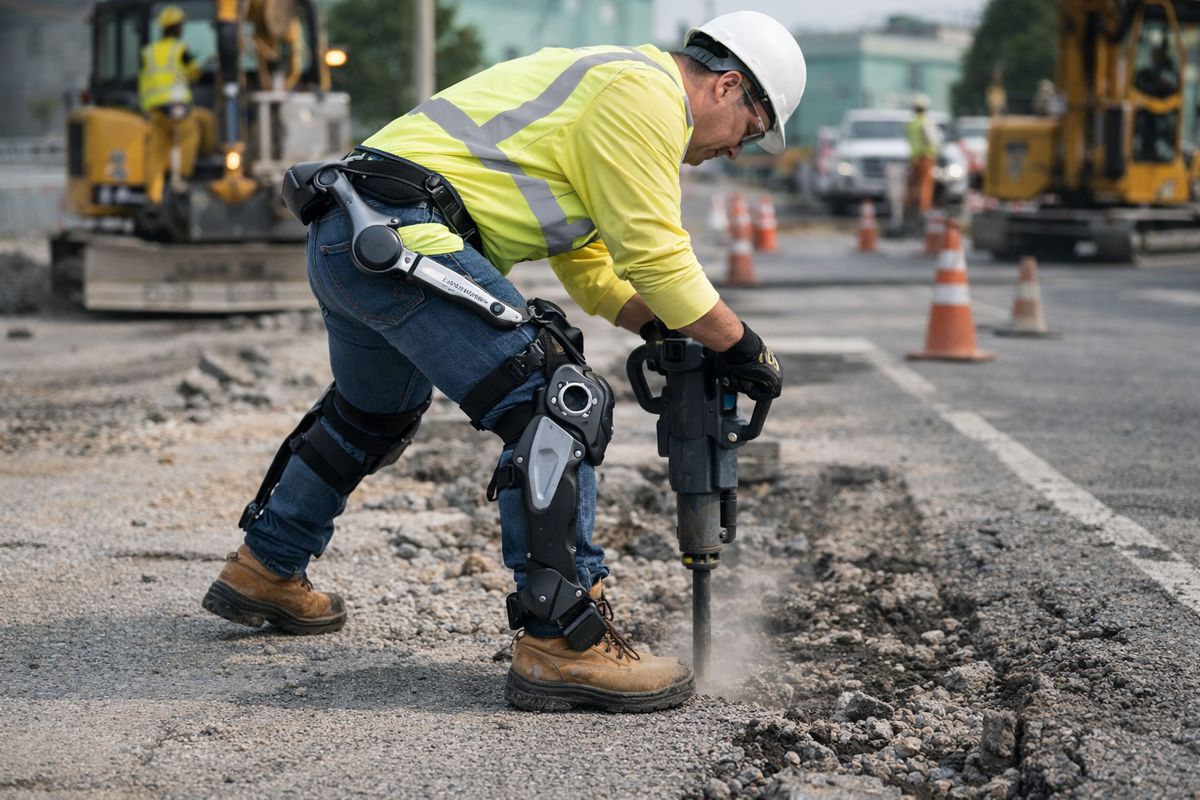
Although positioned as a consumer product, the Exo-S3 series carries clear relevance for construction and infrastructure sectors. Workforce fatigue, musculoskeletal injuries, and ageing demographics remain persistent challenges across the industry. Wearable mobility assistance offers a complementary approach to traditional safety equipment and mechanisation.
Exoskeletons have already been trialled on construction sites for overhead lifting and repetitive tasks. Sumbu’s lower-limb focus opens additional possibilities, particularly for roles involving walking long distances, climbing, or operating on uneven terrain. Site inspectors, project managers, and maintenance crews could all benefit from reduced physical strain without compromising mobility.
From a policy perspective, the emergence of affordable, non-medical exoskeletons raises important questions around workplace standards, insurance frameworks, and occupational health guidelines. As adoption grows, regulators may need to reconsider how wearable robotics fit within existing safety classifications.
A Growing Global Market for Wearable Robotics
Market analysts project the global exoskeleton market to exceed several billion dollars by the early 2030s, driven by advances in AI, battery technology, and materials science. Sumbu’s timing appears well judged. By launching a consumer-ready platform at CES, the company positions itself ahead of competitors still focused on institutional or industrial buyers.
Founded in 2025, Sumbu brings together expertise from ergonomics, mechanical engineering, biomedical science, electronics, and artificial intelligence. This multidisciplinary foundation reflects a broader trend within technology startups, where complex challenges demand integrated design thinking rather than siloed innovation.
The company’s stated mission of empowering humanity through technology resonates strongly with current debates around human augmentation and the future of work. Rather than replacing human capability, products like the Exo-S3 aim to extend it, a narrative likely to find favour with both investors and end users.
Availability and Market Outlook
The Exo-S3 series will be available for purchase from June 2026. Visitors to CES 2026 can explore the full range at booth number 61247 in Eureka Park, Venetian Expo, Hall G.
As wearable mobility technology edges closer to mainstream adoption, Sumbu’s Exo-S3 series represents a significant milestone. By combining intelligent assistance, robust engineering, and consumer accessibility, the company has set a new benchmark for what exoskeletons can be beyond the lab and the factory floor.
For construction professionals, policymakers, and technology investors, the message is clear. Wearable robotics is no longer a distant concept. It is stepping into everyday life, quite literally, one assisted stride at a time.