Inside ENGINEAI’s Vision for Robotics and Embodied Intelligence at CES
CES has long served as a barometer for technological momentum, separating speculative ideas from solutions that are ready to face real-world scrutiny. At CES 2026, that distinction became especially clear in the field of robotics. Embodied intelligence, once discussed largely in academic circles and research labs, emerged as a deployable, application-driven reality. Among the companies pushing that transition forward was ENGINEAI Robotics Technology, which presented two flagship platforms designed not for theory, but for practical interaction with people, spaces, and tasks.
By unveiling both the PM01 and the ENGINEAI T800 on one of the world’s most influential technology stages, ENGINEAI positioned itself squarely within a new generation of robotics developers focused on function, reliability, and human-robot collaboration. Rather than chasing spectacle, the company’s demonstrations centred on movement fidelity, system integration, and repeatable performance. For industry observers, the message was unambiguous. Humanoid robotics is moving beyond novelty and into the early phases of industrial and public deployment.
CES 2026 and the Shift From Concept to Capability
Each year, CES reflects not only what is technically possible, but what the market is beginning to demand. In 2026, that demand increasingly revolved around autonomy, adaptability, and intelligent systems capable of operating in human environments. Robotics featured prominently across the exhibition floor, yet embodied intelligence stood out as a defining theme, marking a departure from static automation toward machines that can perceive, decide, and act with contextual awareness.
ENGINEAI’s presence aligned closely with this shift. The company’s focus on whole-body coordination, fine motor control, and system-level intelligence echoed broader industry priorities, particularly in sectors facing labour shortages, safety challenges, and rising expectations for service quality. By demonstrating robots that move fluidly and interact naturally within complex environments, ENGINEAI reinforced the idea that humanoid platforms are no longer experimental curiosities but emerging tools for real operational roles.
Live Demonstrations Drive Industry Dialogue
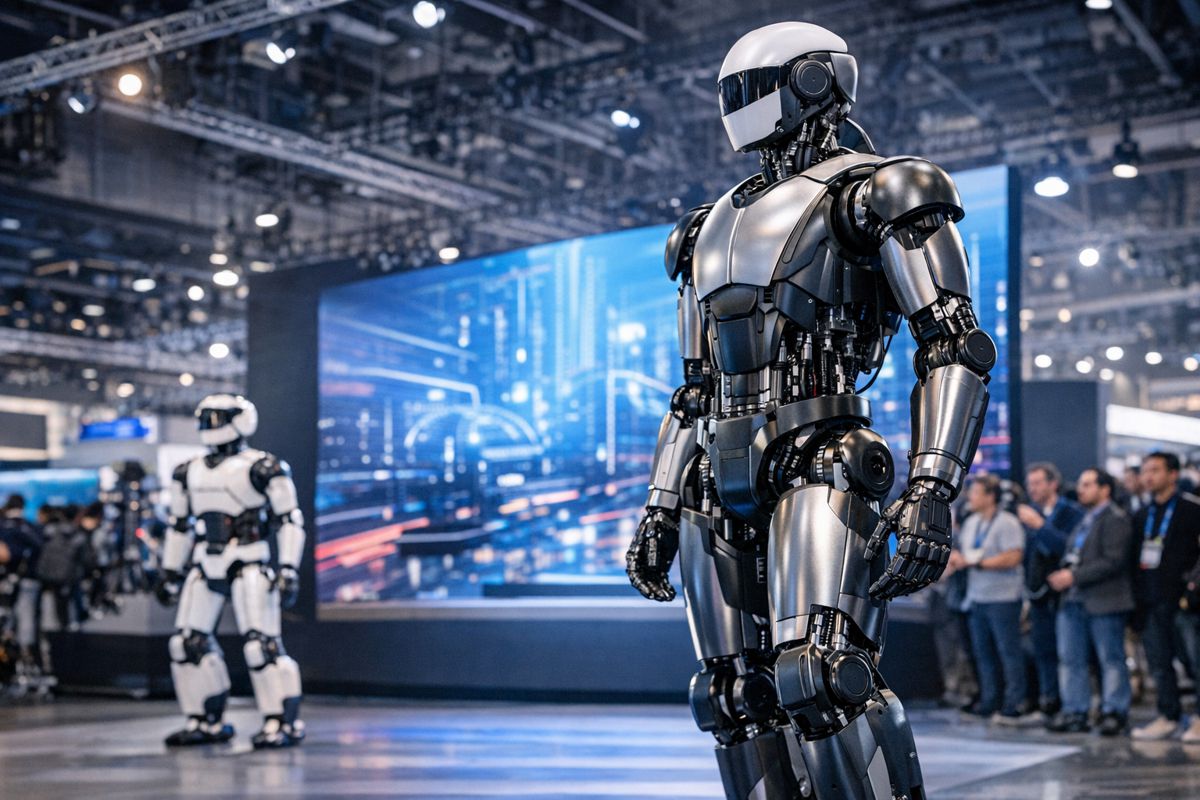
Throughout the event, the ENGINEAI booth attracted sustained attention from developers, integrators, researchers, and media representatives. Live demonstrations of both the PM01 and the T800 offered a clear window into how the platforms perform under real conditions rather than controlled simulations. Observers were able to assess balance, responsiveness, coordination, and control in motion, all of which remain critical hurdles for humanoid robotics.
These demonstrations sparked detailed technical discussions around deployment scenarios, integration pathways, and collaborative development opportunities. Conversations frequently extended beyond hardware specifications into broader system questions, including software architecture, safety frameworks, and long-term scalability. The depth of engagement suggested that industry interest in embodied intelligence has matured, with stakeholders now evaluating robots as potential contributors to workflows rather than experimental investments.
PM01 and the Case for Practical Embodied Agents
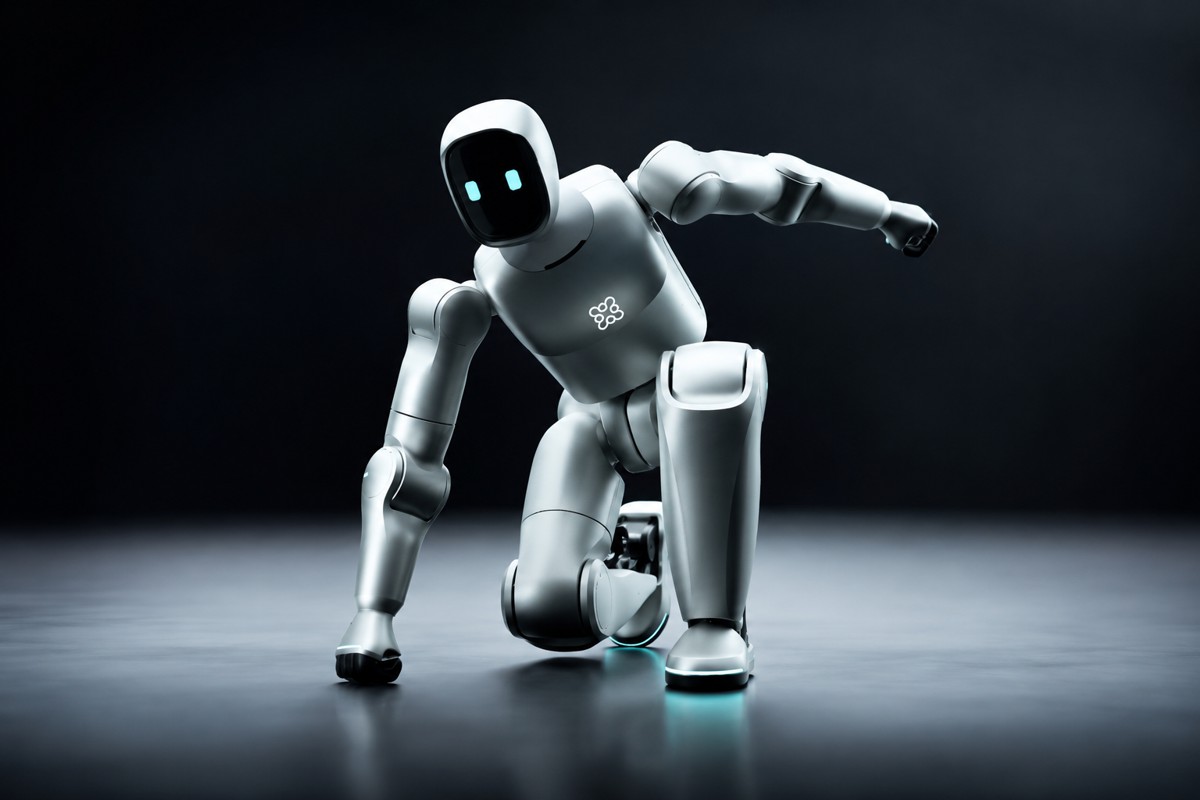
At the centre of ENGINEAI’s applied robotics strategy sits the PM01, a lightweight and highly mobile general-purpose embodied agent designed to operate reliably in public and semi-structured environments. Rather than aiming for maximum size or force, the PM01 prioritises agility, stability, and task-oriented performance. This design philosophy reflects a growing recognition that many near-term robotics applications demand consistency and adaptability more than brute power.
The PM01’s development trajectory has been shaped by real-world use cases, including public transportation environments, guided tours, retail service interactions, and automated patrol or inspection tasks. These scenarios place a premium on safe navigation, repeatable movement, and predictable interaction with people. During CES 2026, attendees repeatedly highlighted the PM01’s stable performance, noting its ability to execute tasks without erratic motion or excessive system complexity.
Scaling Deployment Across Service and Infrastructure Sectors
One of the PM01’s defining strengths lies in its readiness for scaled deployment. Unlike many humanoid prototypes that remain confined to controlled demonstrations, the PM01 has been engineered with operational repetition in mind. Its performance characteristics lend themselves to environments where reliability, uptime, and ease of integration are critical.
As cities and organisations pursue intelligent transformation initiatives, embodied agents such as the PM01 offer a tangible pathway toward automation that complements human roles rather than replacing them outright. From assisting passengers in transit hubs to supporting routine inspection activities, the PM01 demonstrates how embodied intelligence can address specific operational needs while maintaining a human-centred design approach.
ENGINEAI T800 and the Pursuit of Full-Scale Humanoid Capability
While the PM01 underscores practicality, the ENGINEAI T800 represents a broader statement of technical ambition. Making its global debut at CES 2026, the T800 is a full-scale humanoid robot designed as a high-efficiency universal platform for real-world deployment. It serves as a showcase for ENGINEAI’s capabilities across core robotics subsystems and system-level integration.
At the heart of the T800 lies a fully integrated high-torque joint module architecture. Delivering up to 450 N•m of peak torque and 14,000 watts of instantaneous joint peak power, the platform is engineered to handle demanding dynamic scenarios. These capabilities enable the robot to perform movements that closely mirror human biomechanics, an essential requirement for operating effectively in environments designed for people.
High-Degree-of-Freedom Design and Dynamic Performance
The T800’s anthropomorphic mobility is further enhanced through high-degree-of-freedom joint structures in key anatomical areas, including the neck, waist, and hands. This design enables a wide range of expressive and functional motion, supporting both precision tasks and high-dynamic activities. During demonstrations, the robot showcased its ability to transition smoothly between movements, maintaining balance and control even under rapid changes in posture.
In scenarios such as running and martial arts demonstrations, the T800 delivered industry-leading dynamic output and load-handling performance. These capabilities are not merely theatrical. They reflect the underlying control systems and mechanical resilience required for robots to operate safely alongside humans in unpredictable environments. For researchers and engineers in attendance, the T800 offered a compelling glimpse into what next-generation humanoid platforms can achieve when mechanical design and control intelligence are tightly integrated.
System Integration as a Competitive Advantage
Beyond raw specifications, the T800 highlights ENGINEAI’s emphasis on system-level coherence. Modern humanoid robots demand seamless integration across perception, motion planning, control, and power management. Weakness in any one subsystem can compromise overall performance. By presenting a platform where these elements function cohesively, ENGINEAI signalled its readiness to address the complexity inherent in real-world humanoid deployment.
This approach resonated strongly with industry partners evaluating long-term collaboration opportunities. Rather than focusing on isolated components, discussions centred on how the T800 could serve as a foundation for customised applications, research initiatives, and sector-specific solutions. The platform’s openness and scalability emerged as key talking points, particularly for organisations seeking to build upon a stable technological base.
Human-Robot Collaboration Moves Closer to Reality
A recurring theme throughout CES 2026 was the evolving relationship between humans and intelligent machines. ENGINEAI’s demonstrations contributed meaningfully to that conversation by illustrating how embodied intelligence can support collaboration rather than displacement. Both the PM01 and the T800 are designed to operate within human spaces, responding to context and adapting to dynamic conditions.
As industries confront demographic shifts, workforce constraints, and rising service expectations, humanoid robots are increasingly viewed as collaborative tools. Whether assisting in public environments, supporting inspection tasks, or handling physically demanding activities, platforms like those showcased by ENGINEAI point toward a future where robots augment human capabilities while maintaining safety and usability as core design principles.
A Strategic Focus on 2026 and Beyond
Looking ahead, ENGINEAI has signalled its intention to concentrate on core technology development and long-term product strategy throughout 2026. The company’s roadmap prioritises iterative advancement, ensuring that each platform evolves through real-world feedback rather than speculative design cycles. By strengthening its existing product portfolio while refining performance characteristics, ENGINEAI aims to accelerate readiness for broader deployment.
Alignment with global market requirements will play a central role in this next phase. As regulatory frameworks, safety standards, and user expectations continue to evolve, ENGINEAI’s open and scalable approach to embodied intelligence positions it to adapt efficiently. Through continued collaboration with partners and stakeholders, the company seeks to help shape the practical future of human-robot interaction.
Embodied Intelligence as an Enabler of Industrial Progress
The significance of ENGINEAI’s CES 2026 showcase extends beyond individual products. It reflects a broader industry transition toward embodied intelligence as a foundational technology for automation, services, and infrastructure. By grounding innovation in real-world performance and application-driven design, ENGINEAI contributes to a more credible and sustainable robotics ecosystem.
As humanoid platforms move steadily from exhibition halls into everyday environments, the emphasis will increasingly fall on reliability, safety, and value creation. ENGINEAI’s PM01 and T800 demonstrate that the building blocks for this transition are already taking shape. CES 2026 may well be remembered as the moment when embodied intelligence stopped being a promise and started becoming a practical tool for industry and society.