Hyundai Mobis and Boston Dynamics Announce Global Robotics Supply Chain
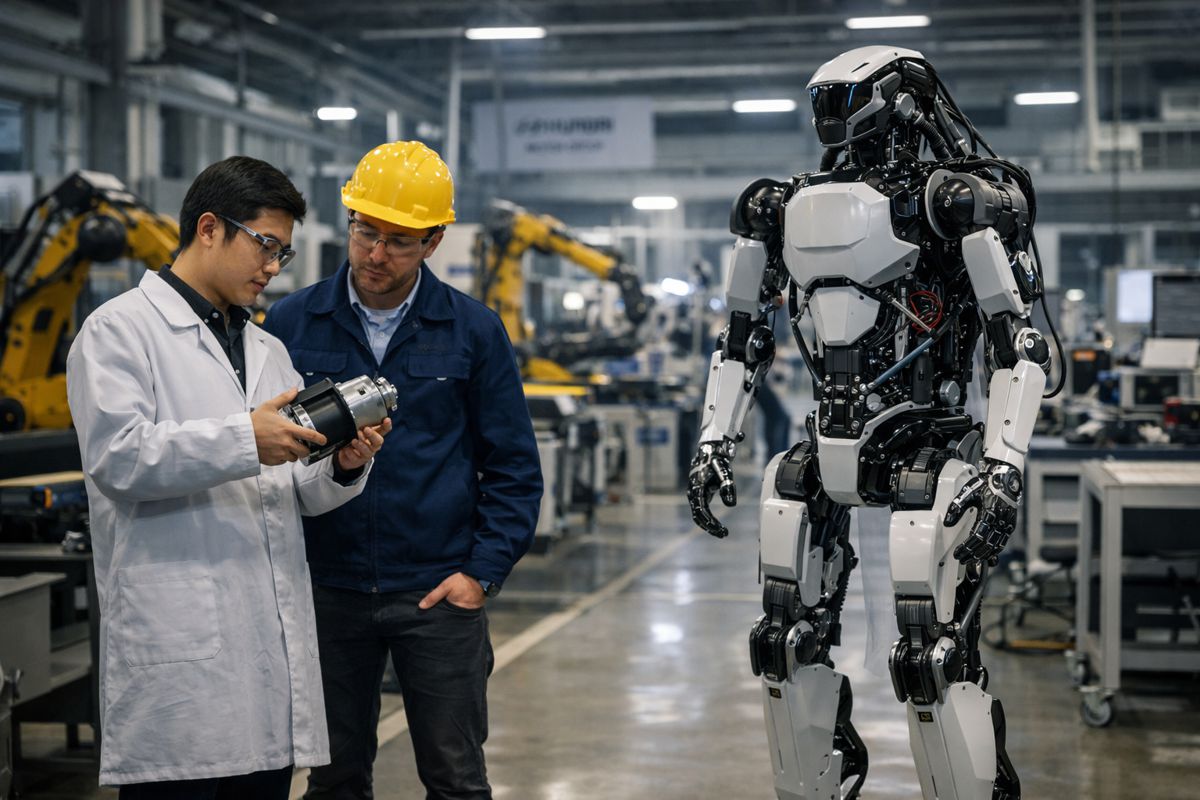
At CES 2026 in Las Vegas, Hyundai Mobis confirmed a strategic collaboration framework with Boston Dynamics that places the company firmly inside the rapidly evolving humanoid robotics supply chain. Under the agreement, Hyundai Mobis will supply actuators for Atlas, Boston Dynamics’s next generation humanoid robot, marking Hyundai Mobis’s first official customer engagement in the global robotics components market.
The announcement carries weight beyond a typical supplier agreement. It reflects a deliberate shift by Hyundai Mobis from its traditional automotive focus toward high value technology domains where precision engineering, scalability, and reliability determine long-term leadership. By aligning with Boston Dynamics, a recognised pioneer in advanced robotics, Hyundai Mobis signals its intention to become a core infrastructure provider within the emerging robotics ecosystem.
Robotics as a Strategic Extension of Automotive Expertise
Hyundai Mobis has spent several years broadening its business portfolio in response to profound changes across mobility, automation, and industrial technology. While the company remains one of the world’s largest automotive suppliers, management has increasingly focused on future facing segments that offer higher margins and long-term resilience. Robotics has emerged as a natural extension of this strategy.
The move is not opportunistic. Actuators, the components Hyundai Mobis will supply for Atlas, sit at the intersection of mechanical engineering, electronics, and software control, areas where the company already operates at scale. In humanoid robots, actuators convert digital commands into precise physical motion, governing balance, dexterity, and responsiveness. Industry estimates suggest actuators account for more than 60 percent of the total material cost of a humanoid robot, making them both technologically critical and commercially decisive.
Why Actuators Matter in Humanoid Robotics
Unlike industrial robots designed for fixed, repetitive tasks, humanoid robots must operate in dynamic, human environments. This demands actuators that combine power density, fine motor control, durability, and energy efficiency. Failures are not merely performance issues but safety risks.
Hyundai Mobis brings to this challenge decades of experience producing safety critical automotive components at global scale. Braking systems, steering assemblies, suspension modules, and advanced driver assistance hardware all require similar levels of reliability, redundancy, and lifecycle validation. That background has positioned the company well to meet Boston Dynamics’s demanding performance and quality benchmarks.
Boston Dynamics is understood to have placed particular value on Hyundai Mobis’s engineering depth, reliability based evaluation frameworks, and its ability to transition rapidly from prototype development to mass production under global standards.
Supporting Hyundai Motor Group’s Robotics Ambitions
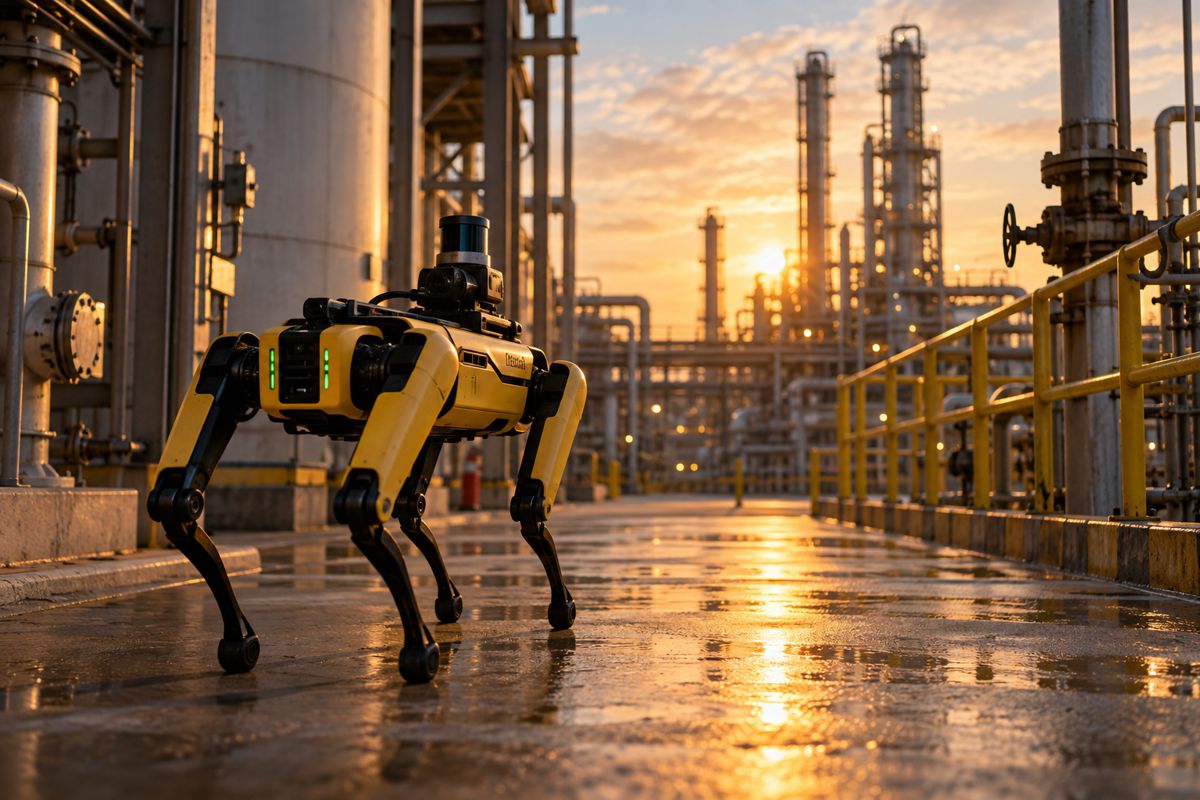
The collaboration also aligns closely with Hyundai Motor Group’s wider robotics investment programme. As part of a 26 billion US dollar investment in the United States, the group has committed to building and deploying tens of thousands of robots over the coming years. Atlas is expected to play a central role in that vision, supporting applications ranging from logistics and manufacturing to inspection and hazardous environment operations.
By integrating Hyundai Mobis into the supply chain at an early stage, the group strengthens its ability to industrialise humanoid robotics at scale. Vertical alignment across design, component manufacturing, and deployment offers cost control advantages while reducing supply chain risk at a time when global demand for robotics components is accelerating.
First Robotics Customer Marks a Portfolio Milestone
Securing Boston Dynamics as its first robotics customer represents a significant milestone for Hyundai Mobis. Entry into a new sector is rarely validated by association alone, but working directly with one of the world’s most advanced robotics developers provides immediate credibility.
For Hyundai Mobis, the agreement establishes a stable demand partner capable of supporting long-term investment in dedicated actuator production lines. The company has indicated plans to build a large scale manufacturing system for robotics actuators while expanding its design and testing capabilities for high performance robotic subsystems.
Se Uk Oh, Vice President and Head of the Robotics Business Innovation Group at Hyundai Mobis, described the significance of the partnership as follows: “Our participation in developing actuators for Boston Dynamics’s next generation humanoid robot Atlas makes a significant step in strengthening the global robotics component ecosystem. Hyundai Mobis will leverage this relationship to accelerate advancements in development, manufacturing, and quality assurance.”
Boston Dynamics Focuses on Scale and Reliability
From Boston Dynamics’s perspective, the collaboration addresses one of the key challenges facing advanced robotics: scalable and cost effective production without compromising performance. While the company has demonstrated extraordinary engineering capabilities, the transition from research led innovation to industrial scale manufacturing requires partners with deep experience in high volume production.
Zack Jackowski, General Manager of Atlas at Boston Dynamics, highlighted this dimension of the agreement: “Actuators play a critical role in enabling humanoid robots to perform physical movements. By working with Hyundai Mobis, a company with proven expertise in the global automotive business, we expect to build a highly reliable component supply chain and accelerate the pace of actuator development. This collaboration allows us to access the well established cost structures and scale potential of the automotive industry.”
The statement underscores a broader industry trend. Robotics developers are increasingly looking to automotive suppliers to bridge the gap between innovation and industrialisation, leveraging decades of experience in cost optimisation, quality control, and global logistics.
Shaping an Emerging Robotics Components Market
The global robotics components market remains fragmented, with no single supplier dominating critical subsystems such as actuators, sensors, and control electronics. This creates both uncertainty and opportunity. Companies able to establish reliable, cost competitive supply systems early stand to define industry standards.
The Hyundai Mobis and Boston Dynamics collaboration positions both companies to influence how humanoid robots are built at scale. Early economies of scale could reduce unit costs, accelerate adoption, and create barriers to entry for later competitors. For Hyundai Mobis, this represents a chance to replicate in robotics what it has already achieved in automotive supply chains.
North American Production and Future Demand
Momentum in the sector continues to build. In August last year, Hyundai Motor Group announced plans to construct a robotics factory with annual capacity of 30,000 units, with the site intended to serve as a North American robotics production hub. As production ramps up, demand for actuators and other high value components is expected to rise sharply.
Hyundai Mobis is projected to play an increasingly central role within this ecosystem, not only as a supplier but as a development partner capable of refining components in parallel with robot design evolution. This co development approach could shorten innovation cycles while improving overall system reliability.
From Automotive Supplier to Robotics Infrastructure Provider
Hyundai Mobis currently ranks as the world’s sixth largest automotive supplier, headquartered in Seoul, Korea. The company’s portfolio spans sensors, sensor fusion within electronic control units, safety control software, electrification components, braking systems, chassis and suspension modules, steering systems, airbags, lighting, and advanced automotive electronics.
Its research and development footprint includes a global headquarters in Korea and four technology centres in the United States, Germany, China, and India. This distributed R and D model supports rapid localisation and collaboration with global partners, an advantage that will likely prove valuable as robotics applications diversify across regions and industries.
Looking Ahead Without Overstatement
Rather than signalling a dramatic departure from automotive, the Boston Dynamics agreement illustrates how Hyundai Mobis is methodically extending its core competencies into adjacent high growth markets. Robotics, particularly humanoid systems, sits at the convergence of mobility, automation, and digital control, all areas where the company already operates with authority.
If successful, the partnership may serve as a blueprint for future collaborations with robotics developers seeking automotive grade reliability and scale. For now, the agreement stands as a measured but meaningful step toward reshaping the global robotics components landscape.