Saudi Arabia’s Solar Supply Chain Takes a Strategic Leap Forward
The formal incorporation of Nextpower Arabia, a joint venture between U.S.-based Nextpower and Riyadh-headquartered Abunayyan Holding, marks a significant moment for the Middle East and North Africa’s renewable energy ecosystem. More than a corporate milestone, the move reflects a deeper structural shift underway across the region, one that places industrial capability, localisation and long-term energy resilience at the heart of solar deployment.
Utility-scale solar is no longer a peripheral technology in the Gulf or wider MENA region. It has become core infrastructure, woven into national development strategies, grid modernisation programmes and industrial diversification agendas. Against that backdrop, the establishment of Nextpower Arabia in Saudi Arabia signals intent not just to build more solar capacity, but to anchor the technologies and supply chains that make such growth sustainable at scale.
Why Local Manufacturing Now Matters More Than Ever
The announcement of a new advanced manufacturing facility in Jeddah is arguably the most consequential element of the joint venture. With a planned production capacity of up to 12 GW per year, the facility is designed to manufacture solar tracking systems, control technologies and yield optimisation solutions for large-scale projects across MENA. In infrastructure terms, that scale is not incremental. It is transformative.
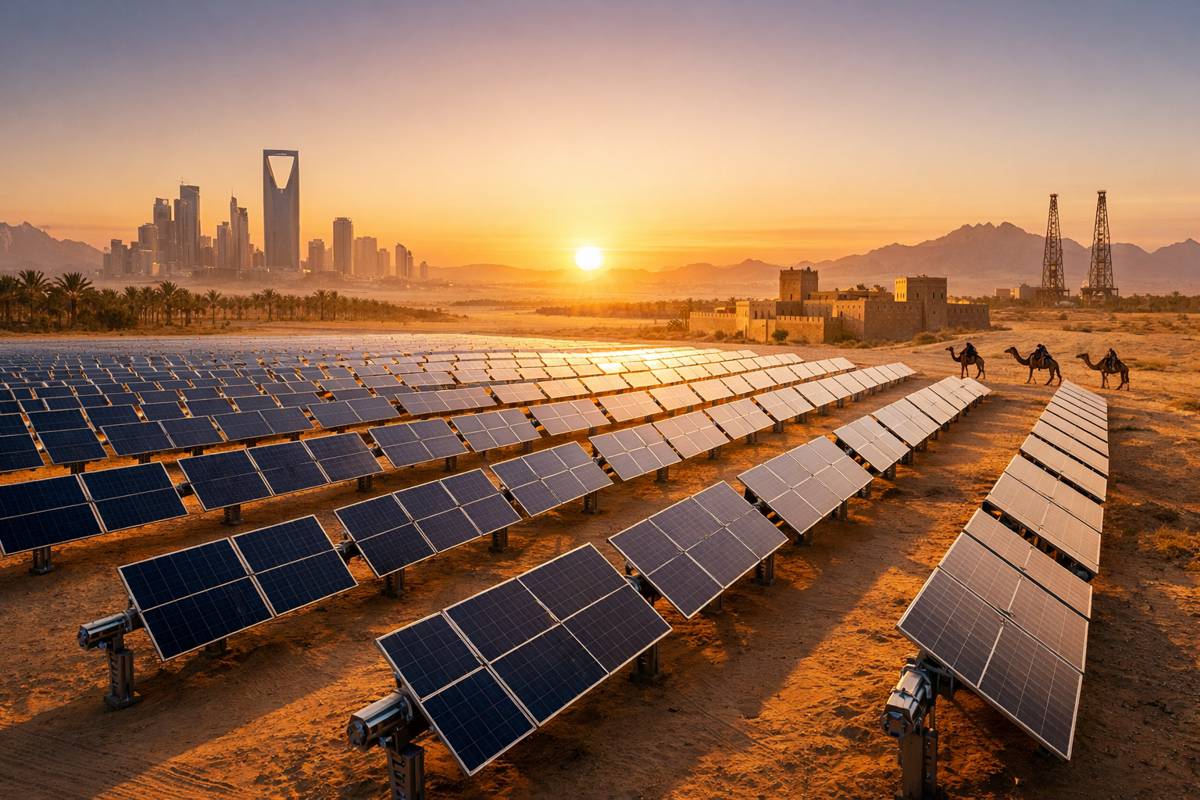
Solar trackers have become a defining technology for utility-scale projects in high-irradiance regions. By enabling panels to follow the sun’s movement, they significantly increase energy yield and improve project economics, particularly in desert environments where land availability is high but efficiency remains paramount. Localising the manufacture of these systems reduces exposure to global supply chain volatility, shortens project timelines and supports cost discipline at a time when developers and governments alike are under pressure to deliver affordable clean power.
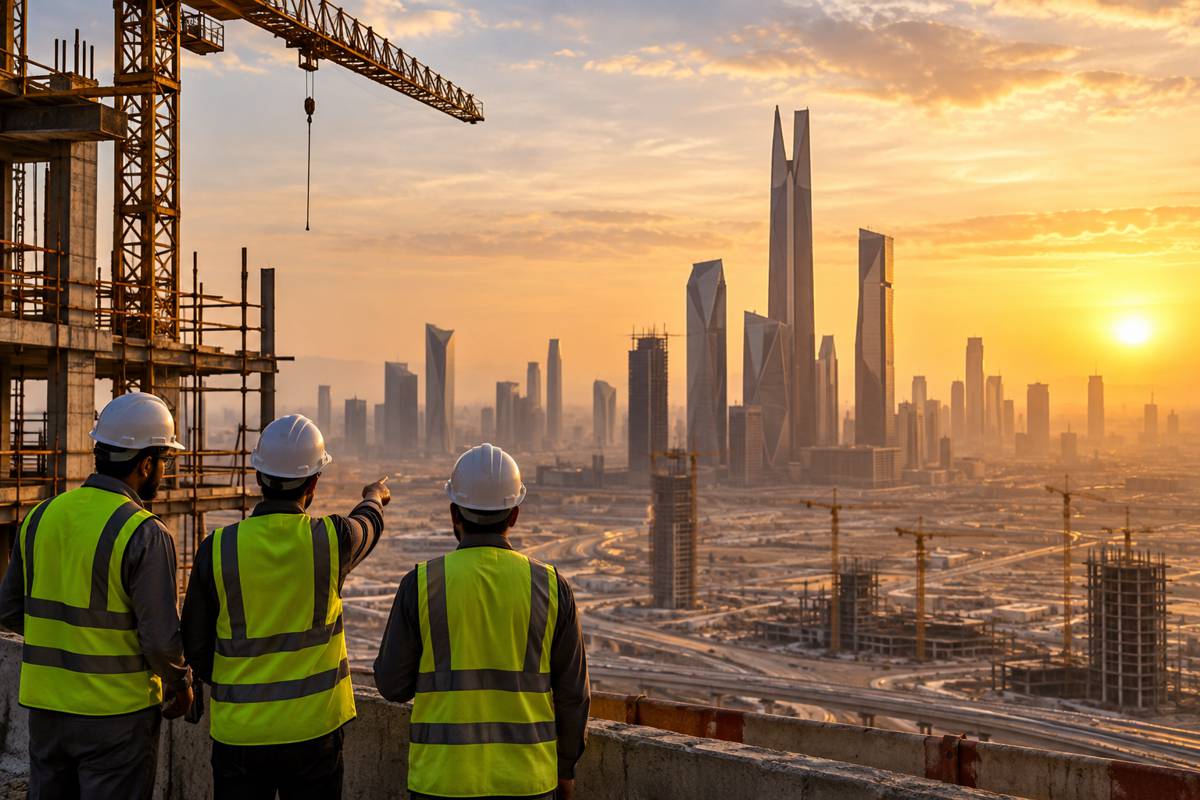
The Jeddah facility, currently under construction on a 42,000 square metre site and scheduled to open in the second quarter of 2026, also reflects a broader recalibration of how infrastructure assets are delivered in the Kingdom. Rather than importing high-value components, Saudi Arabia is positioning itself as a production and export hub for renewable energy technologies, aligned closely with the industrial pillars of Vision 2030.
Industrial Policy Meets Energy Transition
Saudi Arabia’s energy transition is often discussed in terms of gigawatts deployed or headline investment figures. Less visible, but equally important, is the industrial architecture being built alongside generation capacity. Nextpower Arabia’s manufacturing plans speak directly to this agenda, supporting economic diversification while embedding technical know-how within the domestic workforce.
The facility is expected to support up to 2,000 jobs across the wider value chain, with approximately 600 direct roles once operational. These are not short-term construction posts, but long-horizon engineering, manufacturing and technical positions that contribute to skills transfer and industrial maturity. By sourcing core materials such as Saudi-produced steel, the project also reinforces upstream linkages across the Kingdom’s industrial base.
As Turki Al-Amri, Abunayyan Holding CEO and Chairman and CEO of Nextpower Arabia, put it: “Our manufacturing facility represents the first step in our strategic vision to strengthen and localize the solar supply chain for our partners across the MENA region and enhance collaboration to deliver highly efficient and cost-effective clean energy. By sourcing core materials such as Saudi-produced steel through our strategic partners and manufacturing locally, we are supporting economic diversification and industrial growth that is at the foundation of Saudi Vision 2030.”
A Partnership Built on Complementary Strengths
Joint ventures in the energy sector succeed or fail on alignment. In this case, the pairing of Nextpower’s global technology portfolio with Abunayyan Holding’s regional depth appears deliberately structured. Abunayyan brings more than 75 years of experience in developing, operating and privatising critical water and energy infrastructure across Saudi Arabia and the wider MENA region. That institutional knowledge, coupled with long-standing relationships across public and private stakeholders, provides a grounding that few international entrants can replicate alone.
Nextpower, meanwhile, arrives with scale and track record. The company has more than 150 GW of solar trackers either operational or under fulfilment across more than 45 countries. In the Middle East and Africa alone, its technology underpins over 6 GW of projects, including Phase V of the Mohammed Bin Rashid Al Maktoum Solar Park in the UAE and several landmark developments within Saudi Arabia.
Those Saudi projects include the 405 MWp Sakaka Solar Park, the Kingdom’s first utility-scale solar plant, alongside the 1,170 MWp Al Kahfah project, the 449 MWp Tabarjal project and 450 MWp of the Sudair project. Collectively, they offer a practical demonstration of how advanced tracking technology performs under regional climatic conditions.
Technology as Infrastructure, Not Just Hardware
What distinguishes modern solar deployment from earlier waves of renewable build-out is the growing importance of software, control systems and data-driven performance optimisation. Nextpower Arabia’s remit extends beyond steel and mechanical components to include yield management and advanced control solutions, reflecting the sector’s shift towards integrated energy infrastructure.
As grids absorb higher shares of intermittent generation, predictability and controllability become just as important as installed capacity. Tracking systems that integrate real-time data, weather forecasting and grid requirements can smooth output profiles and improve bankability, particularly for projects financed under increasingly sophisticated power purchase agreements.
Dan Shugar, founder and CEO of Nextpower, framed the Saudi expansion in these strategic terms: “Saudi Arabia is a strategic market for Nextpower as we expand our ability to serve customers across the Middle East. The Kingdom is making significant progress in advancing the energy transition, and we’re proud and honored to support these monumental initiatives with proven solar technology and trusted local partnerships.”
Regional Growth Trends Underscore the Timing
The launch of Nextpower Arabia comes as regional solar deployment accelerates sharply. According to the Middle East Solar Industry Association, solar capacity across the Middle East is projected to exceed 180 GW by 2030. Falling technology costs, improved production efficiencies and increasingly assertive government-backed clean energy strategies are driving that momentum.
For developers and policymakers, the question is no longer whether solar will scale, but how reliably and affordably it can be delivered. Local manufacturing capacity, particularly for critical components such as trackers, plays a decisive role in answering that question. It reduces exposure to geopolitical disruption, shipping delays and currency risk, all of which have complicated infrastructure delivery over recent years.
In that context, the decision by Abunayyan Holding and Nextpower to commit approximately $88 million in equity and debt financing over the next two years appears measured rather than speculative. The capital is earmarked not only for bricks and mortar, but for building operational excellence and technical capability that can support sustained growth.
Implications Beyond the Kingdom
While Saudi Arabia is the immediate focal point, the implications of Nextpower Arabia extend across the wider MENA region. As countries from Morocco to Oman pursue their own renewable targets, access to regionally manufactured, climate-optimised solar technology becomes a competitive advantage.
For infrastructure investors, the joint venture offers a clearer line of sight between industrial policy and project delivery. For EPC contractors and utilities, it promises shorter lead times and more resilient supply chains. For policymakers, it demonstrates how energy transition objectives can be aligned with employment, exports and industrial development.
Khalid Abunayyan, Chairman of Abunayyan Holding, captured that broader perspective: “Making energy and water supply readily accessible, sustainable, and affordable is essential to the continued economic and social development of Saudi Arabia and our partners across the region. It is also central to the core values and DNA of Abunayyan Holding.”
Building the Foundations of a Regional Solar Economy
The establishment of Nextpower Arabia is not a headline-grabbing megaproject in its own right. Instead, it represents something more foundational: the slow, deliberate construction of a regional solar economy that is technologically capable, industrially grounded and financially credible.
As utility-scale solar becomes a permanent feature of national energy systems across MENA, the companies that thrive will be those embedded within local ecosystems rather than operating at arm’s length. By combining manufacturing, technology development and regional expertise under one roof, Nextpower Arabia positions itself squarely within that future.
For the global construction and infrastructure sector, the message is clear. The energy transition in the Middle East is no longer just about deploying assets. It is about building industries.