UESI and ASCE’s Expanding Influence on Underground Infrastructure
Across the world’s expanding cities, much of the most critical infrastructure remains hidden from view. Water, wastewater, energy and telecommunications networks are buried beneath streets, rivers and dense urban districts, quietly sustaining economies and daily life. As urban growth accelerates and legacy systems age, the challenge is no longer simply how to build more infrastructure, but how to do so with minimal disruption, greater resilience and improved public safety. That challenge sits at the heart of modern underground construction.
In this context, the recent election of Samuel Ariaratnam as president of the Utility Engineering and Surveying Institute marks a significant moment for the global utilities and pipeline sector. His appointment, alongside his elevation as a UESI Fellow, reflects not only individual achievement but also the growing strategic importance of trenchless and low impact construction methods within national infrastructure policy and international engineering standards.
Ariaratnam’s leadership arrives at a time when governments, asset owners and investors are reassessing how underground infrastructure is planned, delivered and maintained. From climate resilience and urban densification to workforce shortages and public tolerance for disruption, the pressures on buried infrastructure systems have never been greater.
Why Trenchless Technology Now Shapes Infrastructure Strategy
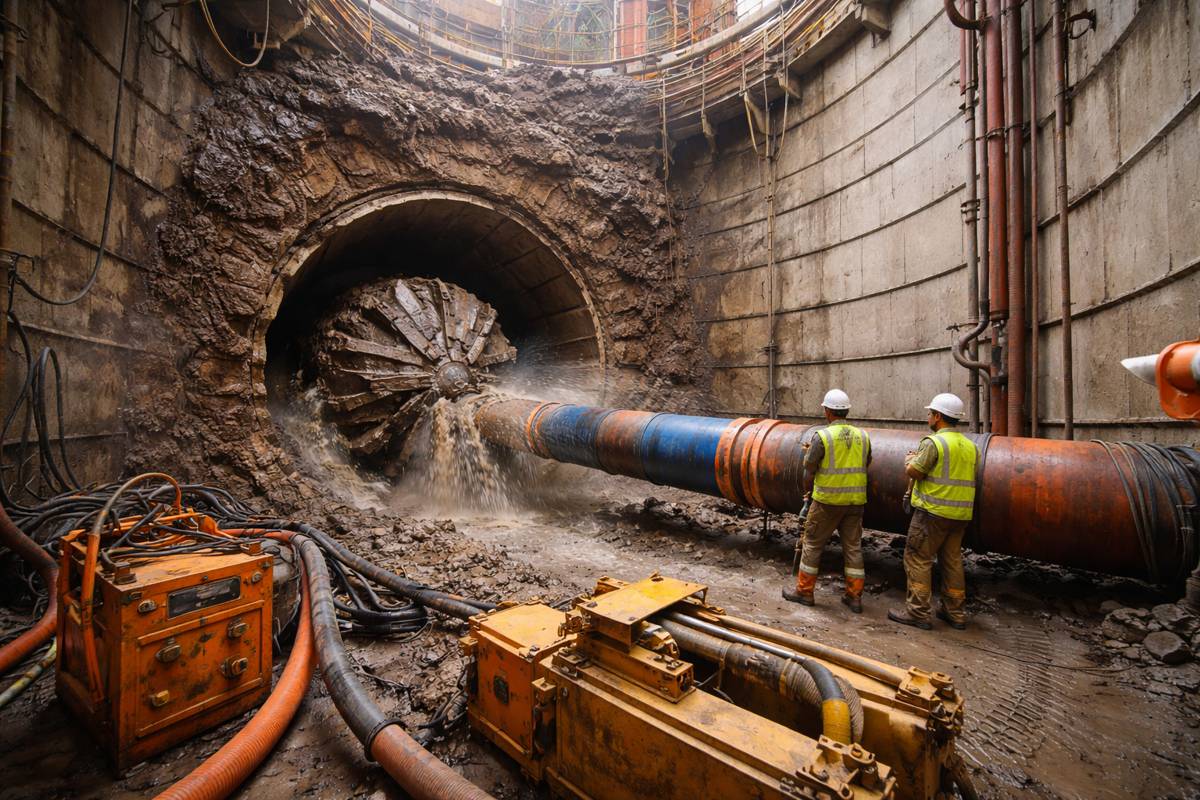
At the centre of Ariaratnam’s career is trenchless technology, a family of construction methods that install, rehabilitate or replace underground utilities without the need for extensive surface excavation. Techniques such as horizontal directional drilling, microtunnelling and pipe bursting have been used for decades, yet their strategic value has increased sharply in recent years.
As cities become denser, conventional open cut excavation often proves socially, economically and politically untenable. Road closures, environmental disturbance and safety risks can quickly outweigh the benefits of traditional approaches. Trenchless methods, by contrast, allow utilities to pass beneath roads, railways, waterways and existing structures while keeping surface activity largely intact.
Ariaratnam has long argued that these methods are not niche solutions but essential tools for modern infrastructure delivery. His research has consistently focused on improving the reliability, monitoring and application of trenchless systems across water, wastewater, oil, gas, power and telecommunications networks. In rapidly urbanising regions, trenchless construction increasingly underpins the ability to expand capacity while maintaining public confidence.
“With increased urban growth around the globe, there is a pressing need to expand our underground utility infrastructure,” he says: “I have been an evangelist for trenchless technology for 30 years and continue to tout the benefits of the technology on a global scale.”
Linking Research, Practice and Public Policy
One of the defining features of Ariaratnam’s influence is his ability to bridge academic research, industry practice and public sector decision making. His body of work includes more than 350 technical papers and reports, alongside five patents and eight textbooks that have helped standardise best practice worldwide.
Among these publications, Horizontal Directional Drilling Good Practices Guidelines, now in its fifth edition and published by the North American Society for Trenchless Technology, has become a reference point for engineers, contractors and regulators alike. Such guidance plays a critical role in reducing risk, improving safety outcomes and ensuring consistent quality across projects.
Beyond publishing, Ariaratnam has served on study committees of the U.S. National Academies and held leadership roles within the International Society for Trenchless Technology and the Pipelines Division of the American Society of Civil Engineers. These positions have allowed him to shape discussions on asset resilience, standards development and workforce readiness at national and international levels.
“Less disruptive technologies, such as trenchless methods, are becoming more commonplace as we work to make our aging utility systems more resilient while prioritising societal and environmental needs,” he says.
UESI’s Expanding Role in a Changing Industry
Founded as the youngest of ASCE’s nine institutes, UESI has grown into a central forum for professionals working in utilities, pipelines and surveying. Its remit spans technical committees, conferences, professional development and the creation of internationally recognised standards.
Under Ariaratnam’s presidency, the institute is positioning itself not merely as a technical body but as a convenor across academia, industry and public agencies. That role is increasingly important as infrastructure challenges become more interdisciplinary, blending engineering with digital monitoring, climate science, urban planning and public engagement.
According to Timothy Becker of the Del E. Webb School of Construction, Ariaratnam’s leadership reflects decades of commitment to the sector. He notes that the recognition acknowledges “global prominence, decades of teaching and research and his outstanding commitment to advancing the utility and pipeline industry.”
Becker adds that UESI is now “poised to reach new heights” by strengthening collaboration across sectors and continuing to drive innovation in underground infrastructure.
Workforce Pressures and the Need for Mentorship
While technology and standards are central to UESI’s mission, workforce development has become an equally urgent priority. Across construction and civil engineering, a significant proportion of experienced professionals are approaching retirement, while enrolment and retention of younger engineers remains uneven in many regions.
Ariaratnam has been vocal about the need to expand and support the next generation of engineers, particularly in specialised fields such as underground construction. UESI’s scholarships, mentoring programmes and conference access initiatives are designed to reduce barriers for students and early career professionals entering the field.
“UESI advocates for students and younger members as we constantly promote building a future workforce,” he says.
One practical example is the institute’s support for undergraduate civil and construction engineering students attending the Pipelines Conference, enabling them to engage directly with industry leaders and applied research.
Education as Infrastructure Investment
Ariaratnam’s academic base at Arizona State University reflects a broader belief that education itself is a form of infrastructure investment. As Sunstate Chair of Construction Management and Engineering within the Del E. Webb School of Construction, he has shaped curricula that align closely with industry needs.
Previously, his work at the University of Alberta followed a similar pattern, integrating applied research with real world engineering challenges. This approach has produced graduates who are comfortable operating at the interface of theory, construction practice and asset management.
For many of his former students, Ariaratnam’s impact extends far beyond the classroom. His mentoring style emphasises independence, critical thinking and professional responsibility rather than prescriptive instruction.
Mentorship in Practice
The career of Jim Geisbush offers a clear illustration of that approach. Now a senior civil reliability engineer responsible for pipeline and tunnel maintenance at the Central Arizona Project, Geisbush first encountered Ariaratnam at the 2012 Pipelines Conference.
Through involvement in UESI committees and doctoral study at ASU, Geisbush developed expertise in construction engineering methods for large diameter water pipeline maintenance. Along the way, Ariaratnam provided guidance without removing responsibility.
“He never spoon fed us,” Geisbush says. “He expected his students to work hard, think our own way and solve our own problems, but he was there to help guide us and give direction.”
This philosophy has produced a growing network of engineers now occupying leadership roles across utilities, consultancies and public agencies.
Leadership Beyond Technical Excellence
For Ram Pendyala, director of ASU’s School of Sustainable Engineering and the Built Environment, Ariaratnam’s election as UESI president reflects more than technical achievement. It signals recognition of sustained service to the profession.
“What has always impressed me about Sam is not only his technical expertise, but his unwavering dedication to serving the profession and mentoring the next generation,” he says. “His election as UESI president is a testament to the respect he has earned through years of generosity, leadership and stewardship of the field.”
Such leadership matters at a time when underground infrastructure faces increasing scrutiny from regulators, communities and financiers. Decisions about how utilities are installed and maintained have implications for safety, environmental performance and long term asset value.
Setting the Agenda for the Next Decade
Looking ahead, UESI’s agenda under Ariaratnam includes deeper collaboration with peer organisations, stronger industry partnerships and greater visibility for innovation. The 2026 Pipelines Conference in Detroit will serve as a focal point, bringing together engineers, researchers and students to share experience and develop future leaders.
More broadly, the institute’s work contributes to a shift in how underground infrastructure is perceived. No longer an afterthought beneath surface assets, buried systems are increasingly recognised as strategic enablers of economic growth and urban resilience.
In that sense, Ariaratnam’s presidency reflects a wider evolution within the construction and infrastructure sectors. As cities seek to build smarter, safer and more sustainable networks, leadership grounded in research, standards and education becomes essential.
His career demonstrates how the invisible infrastructure beneath our feet depends not only on machines and materials, but on people willing to invest decades in improving how society builds and maintains what it cannot see.