Rethinking Screen Media for Today’s Aggregates Operations
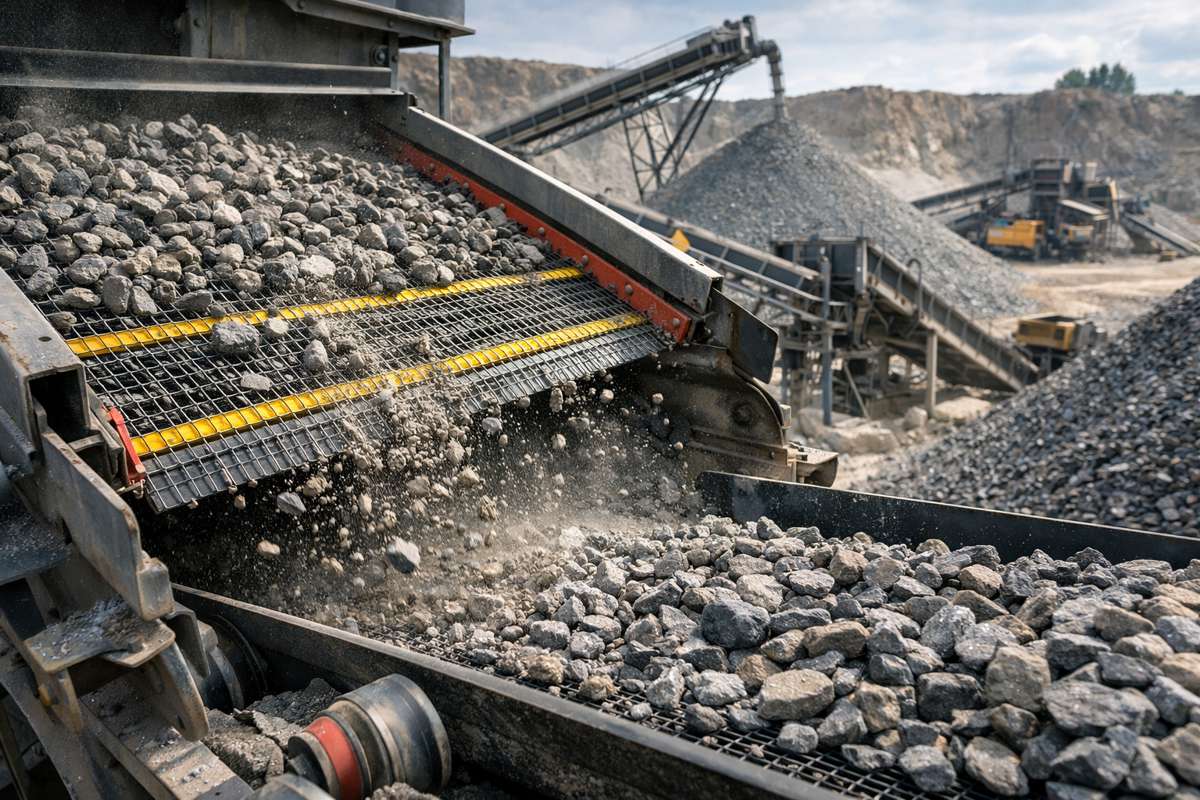
In mineral processing, efficiency is rarely decided by a single machine. It is shaped by the interaction between crushers, conveyors, feeders and, critically, the vibrating screen. While the screen itself often draws attention as the mechanical centrepiece of classification, the screen media installed within it is where performance is either realised or quietly lost.
In this interview, Ian Edwards, Vice President of Global Sales at MAJOR, explains why screen media selection has become a strategic decision for quarry and mine operators. Drawing on decades of field experience across aggregates and mining, Edwards unpacks how different media types influence throughput, maintenance cycles, product quality and overall plant economics.
The conversation moves beyond product categories to focus on operational fit, where small decisions at the deck level can have outsized consequences across an entire processing circuit.
Screen Media as the Hidden Efficiency Lever
Screen media rarely headlines discussions about plant optimisation, yet it sits at a critical junction in the process. Why does it matter so much?
“The vibrating screen is where multiple upstream processes finally converge. Crushing, conveying and feeding all deliver material to the screen, and it is the screen media that decides what moves forward as saleable product and what goes back for reprocessing. If the media underperforms, everything downstream feels it, whether that is reduced throughput, inconsistent gradation or unnecessary recirculation.
“Screen media is often treated as a consumable rather than a performance component. That mindset can be costly. A well matched screen media doesn’t just survive the application, it actively enhances the screening process. When operators choose media purely on upfront price or noise reduction, they risk sacrificing efficiency in ways that are not immediately visible but show up over time in lost tonnes and increased downtime.”
Understanding the Application Before Choosing the Media
What should operators evaluate before deciding on a screen media type?
“The starting point is always the application. Material characteristics matter more than any catalogue specification. Drop height, top size, abrasiveness, moisture content, tonnage and deck position all influence what the media needs to do. A primary scalping deck handling large, abrasive stone has very different requirements from a final sizing deck producing finished aggregate.
“Operators should also look at their existing challenges. Are they fighting pegging or blinding? Are changeouts frequent? Is throughput constrained even though the screen itself is capable of more? Screen media should be selected to solve specific problems rather than simply replacing what was there before. That evaluation often reveals that the limiting factor is not the screen, but how the media interacts with it.”
Synthetic Media and the Trade-Off Between Wear and Capacity
Synthetic media is often chosen for durability and noise reduction. Where does it fit best?
“Rubber and polyurethane certainly have their place. Their wear life can be excellent, and noise reduction is a genuine benefit in certain environments. However, synthetics typically offer less open area than wire-based options. That means material spends longer on the deck, which can reduce throughput and bottom deck capacity.
“Another consideration is how synthetic panels wear. Openings tend to round over time, which can allow out-of-spec material to pass through if inspections are not frequent. Synthetics are also relatively rigid, relying heavily on the screen’s motion rather than contributing to it. With vibration rates often limited to around 800 or 900 cycles per minute, the screen media is not fully exploiting the capability of modern screening equipment.”
Heavy Duty Media for Impact Zones
Where do heavy duty steel and rubber solutions still make sense?
“In high impact zones, durability is non-negotiable. Perforated steel plates and heavy-duty rubber excel where drop heights and large top sizes would quickly destroy lighter media. Steel offers exceptional resistance to impact and abrasion, although its weight can complicate maintenance and reduce open area.
“Rubber provides a quieter alternative and works well with large material, but it can be prone to pegging in certain applications. The key is selective use. Heavy duty media is often most effective when confined to impact points, allowing other decks to prioritise throughput and efficiency. Using it across the entire screen simply because it lasts longer can be a false economy.”
Why Wire Screens Still Matter
Woven wire has been around for decades. Why does it remain relevant?
“Traditional woven wire is cost effective and performs well in many standard applications. Its main limitation is wear life, which leads to frequent changeouts and associated downtime. That reality has driven the development of advanced wire solutions that retain the benefits of wire while addressing its weaknesses.
“Wire-based media remains unmatched for open area and material stratification. When the application demands high capacity and precise separation, wire is often the benchmark against which other media types are measured. The challenge has been extending its service life without sacrificing performance.”
High Vibration Wire Screens and Amplified Performance
High vibration wire screens are often described as a step change rather than an incremental improvement. What makes them different?
“The fundamental difference is how they interact with the screen’s motion. High vibration wire screens use high-strength wires bonded with polyurethane strips. Each wire is held parallel but allowed to vibrate independently within defined opening sizes. That independent movement amplifies the screening action rather than dampening it.
“In practical terms, this can increase throughput by up to 40 percent compared with rigid media. The high-frequency vibration, often between 6,000 and 10,000 cycles per minute, helps material stratify faster and prevents common issues like pegging and blinding. The result is cleaner separation, higher capacity and more consistent product quality.”
Customisation and Fit for Purpose Design
How important is customisation in modern screen media selection?
“It is increasingly important. No two operations are identical, even when processing similar material. Customisation allows screen media to be tailored with thicker wires, double wire configurations or additional polyurethane reinforcement where wear is most severe.
“When screen media is properly fitted and customised, it works in harmony with the vibrating screen rather than fighting it. That alignment allows operators to unlock performance that was already built into their equipment but never fully realised. It also reduces the need for compromises between durability and efficiency.”
Avoiding False Economies in Screen Media Decisions
What mistakes do you see most often in media selection?
“The most common mistake is prioritising a single attribute, such as noise reduction or upfront cost, at the expense of overall performance. Quieter or cheaper media may appear attractive, but if it reduces throughput or increases maintenance, the total cost of ownership quickly rises.
“Screen media is the mechanism that determines whether saleable rock moves forward or returns to the crusher. When it underperforms, the entire circuit pays the price. High vibration wire screens offer a way to avoid those trade-offs by delivering durability, capacity and efficiency together rather than forcing operators to choose one over the others.”
Rethinking Screen Media as a Strategic Asset
How should operators rethink their approach to screen media?
“Screen media should be viewed as a strategic asset rather than a consumable. Its role is not simply to survive the application but to enhance the performance of the entire screening system. When operators align media selection with their production goals, the gains extend well beyond the screen itself.
“In an industry where margins are increasingly tight and sustainability pressures are growing, extracting more value from existing assets matters. Optimising screen media is one of the most practical ways to do that. It doesn’t require new equipment or major capital investment, just a willingness to look closely at how the screen is really working.”