CESAR’s 700,000th System Signals a New Era for Machinery Security
Machinery theft isn’t a headline-grabbing crime in the way that cash robberies or high-profile cyberattacks might be, but across construction, agriculture, and plant hire it’s a relentless, costly drain. When a machine disappears, the impact rarely stops at the price tag of the equipment itself. Projects stall, schedules slip, replacement hire costs spiral, and businesses are left juggling insurance claims, compliance paperwork, and frustrated customers.
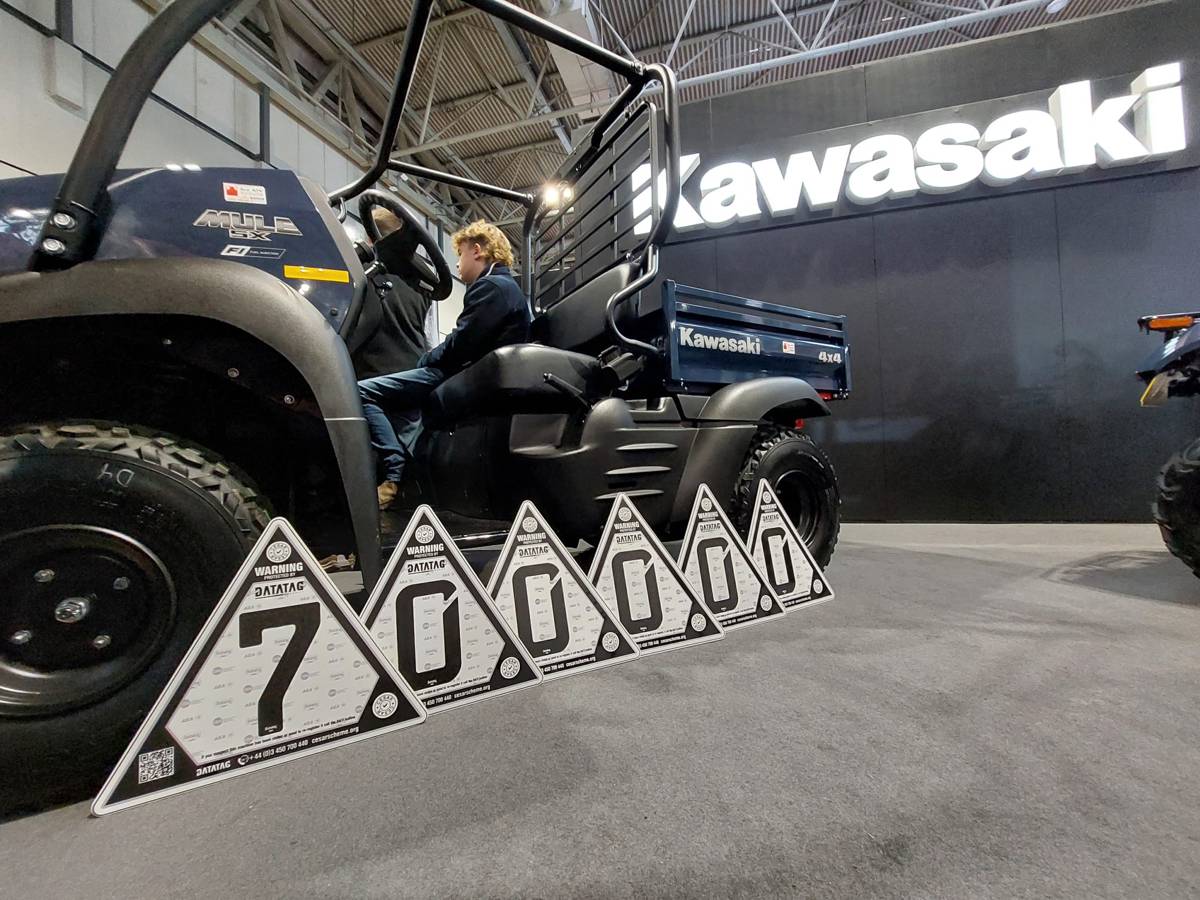
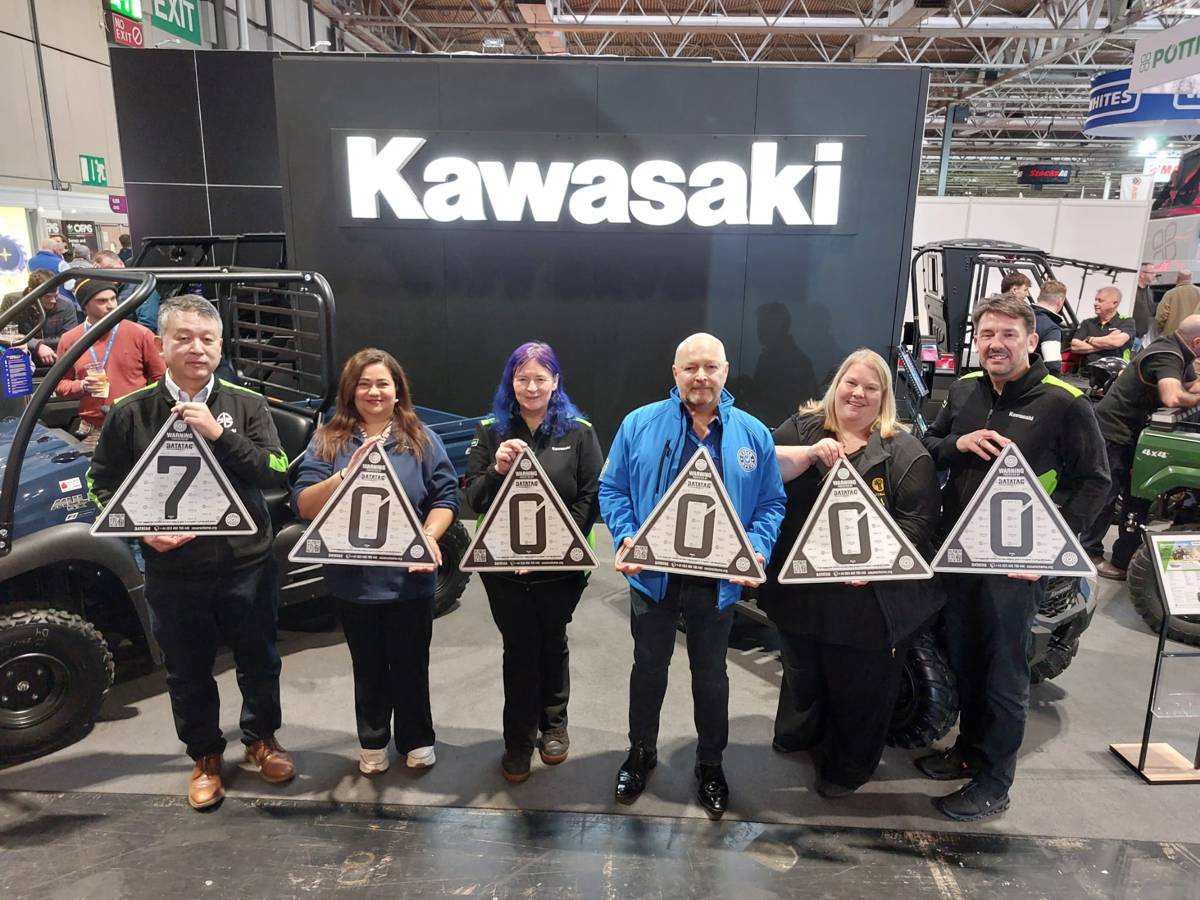
That’s the backdrop to a milestone announced at LAMMA at the NEC in Birmingham on Wednesday 14 January: the CESAR Scheme has confirmed the delivery of its 700,000th system. The manufacturer linked to that landmark unit is Kawasaki, a long-standing supporter of the scheme, and the announcement signals something bigger than a neat statistic. It reflects a sector-wide shift in thinking, where equipment security is increasingly being treated as an essential part of owning and operating machinery, rather than an optional add-on.
For an industry that relies on machines to earn money hour by hour, day by day, a “nice-to-have” approach to theft prevention simply doesn’t cut it anymore. A milestone of this scale suggests that the UK’s machinery ecosystem is maturing, with manufacturers, police and industry bodies moving closer to a shared approach on identity, traceability, and recovery.
From Optional Extra to Industry Baseline
Since launching in 2007, CESAR has grown into the UK’s official security and registration system for construction and agricultural machinery. That official status matters. The UK is a market packed with manufacturers, hire fleets, contractors, subcontractors and farms operating side by side, often across multiple sites. Anything that standardises identification and ownership verification reduces friction when incidents occur.
What’s notable about the 700,000th system milestone is not just the number, but the signal behind it: CESAR is now widely adopted by leading OEMs and fitted to hundreds of thousands of machines. In practical terms, that means security is steadily becoming “baked in” at factory level, rather than being left to owners to organise after delivery, when budgets have already been stretched and the machine is needed on site immediately.
This is where the Kawasaki connection becomes significant. The company already fits CESAR to its machines, and its association with the 700,000th unit is being framed as a continuation of a broader trend among manufacturers to make theft deterrence part of standard specification. The industry knows the uncomfortable truth: thieves don’t discriminate between a machine that’s financed, leased, owned outright, or hired in for a week. If it has value and can be moved, it’s a target.
Why Equipment Identity Now Matters as Much as Performance
The construction and agricultural sectors are right in the middle of a technology transition. Machines are getting smarter, more connected, and more valuable, often loaded with telematics, electronics, sensors, and high-demand components. That’s great for productivity, but it also changes the risk profile.
In the past, theft could be blunt and opportunistic. Today, stolen equipment can be quickly moved, disguised, exported, or dismantled for parts. Organised crime groups understand how to exploit weak points in identification, and in many cases, the lack of a reliable way to prove ownership becomes the thief’s greatest advantage. Once a machine crosses borders or enters secondary markets, recovery becomes far harder.
A robust identity framework shifts the balance. The more difficult it is to remove, alter, or obscure an asset’s identity, the higher the risk for criminals and the less attractive the target becomes. That’s the logic behind equipment marking and registration systems worldwide, and CESAR’s scale suggests it’s become the UK’s most embedded example.
The scheme’s design also reflects a hard-earned lesson from decades of security efforts: no single method is enough. A sticker can be peeled off. A plate can be removed. Even a tracker can be jammed or stripped. What the industry needs is layered security that makes theft harder, resale riskier, and recovery more likely.
How CESAR Works in the Real World
CESAR is powered by Datatag ID Ltd’s multi-layered forensic marking technology. Each CESAR-marked machine is given a permanent, unique identity, recorded on a secure database accessible 24/7 by police and law enforcement. In theory, that sounds simple. In practice, it’s a major operational advantage when time is tight, a machine is missing, and the question becomes: whose is it, really?
The system combines multiple identification elements, including visible ID plates, RFID transponders, Datadots® and forensic DNA. The idea is straightforward: even if one layer is damaged or removed, others remain. This “belt and braces” model is what gives forensic marking its strength, because it turns identification into an evidence-based process rather than a best guess.
It’s also a reminder that theft prevention doesn’t begin when the alarm goes off. It begins months earlier, in the decision to ensure equipment has a traceable identity from day one. That’s precisely why manufacturer adoption matters so much. Factory-fit security closes gaps that can otherwise linger indefinitely.
The Financial Reality Behind the Theft Problem
The UK construction and agricultural sectors have been dealing with equipment theft for as long as machinery has existed, but the scale and sophistication has evolved. Theft continues to cost the UK economy millions each year, and it’s rarely just the direct loss that hurts. Downtime, replacement hire, missed deadlines, contractual disputes and reputational damage can stack up quickly.
In that context, performance statistics become more than marketing points, they become investment logic. According to police and insurance data referenced by the scheme, CESAR-marked machines are four times less likely to be stolen and six times more likely to be recovered than unmarked equipment. Those are the kinds of ratios that influence procurement decisions, fleet policy, and insurer expectations.
For contractors and hire companies, the implications are immediate. If theft becomes less likely, and recovery becomes more likely, the entire risk equation shifts. It can influence everything from security planning to insurance negotiations, and even how businesses justify investing in higher-spec machines. Nobody wants to be the operator paying for advanced equipment only to watch it vanish overnight.
The bigger picture is that asset traceability is becoming part of commercial resilience. In an era where project margins can be tight and delays expensive, resilience is no longer a vague management concept. It’s the difference between delivering a job profitably and taking a hit that lingers for months.
Why Police Support and Port Checks Change the Game
One of the clearest signs of CESAR’s impact is the way it has been integrated into enforcement practice. The scheme is backed by police forces across the UK, with officers trained to identify CESAR-marked machinery both on the roadside and at ports. That detail is more important than it might appear at first glance.
The reality is that theft often becomes harder to stop once a machine has moved beyond its original area. Ports, transport hubs and roadside stops are critical intervention points. A system that enables quick identification and ownership checks can disrupt theft networks, particularly when stolen machinery is being moved for export.
This is also where standardisation matters. When police encounter suspected stolen equipment, speed and clarity are everything. A consistent marking and registration approach reduces the chances of confusion, delays, or lost opportunities to recover assets before they disappear into wider markets.
It’s not that one scheme can eliminate theft. It can’t. But it can shift the balance of probability, making it harder to steal, harder to sell, and easier to recover. And for operators, that’s the practical definition of progress.
Manufacturers Are Choosing Security as a Default
The milestone announcement also highlights a wider list of manufacturers now fitting CESAR before machines leave the factory. The scheme points to adoption by brands including JCB, Kubota, Manitou, John Deere, New Holland and Kawasaki. Across construction and agriculture, this breadth of support suggests the industry has collectively accepted that equipment security is now part of the product baseline.
That’s a cultural change as much as a technical one. For years, security features were often treated like optional trims, things a customer could add if they felt like it. The industry has gradually learned that theft doesn’t target only high-end fleets or high-risk locations. It targets opportunity. Standard-fit security takes opportunity away.
Viki Bell, CEO of the Construction Equipment Association (CEA), which owns the CESAR Scheme, described the significance of the milestone in direct terms: “Reaching 700,000 systems delivered shows how far CESAR is now embedded across construction and agriculture. Manufacturers are choosing to make security standard, and that is having a real effect on theft and recovery. This milestone reflects the collective effort of the industry, the police and our delivery partner, Datatag.”
The emphasis on collective effort is telling. Equipment theft is not a problem any single contractor, manufacturer, or insurer can solve alone. It takes coordination across the ecosystem, and milestones like this suggest that coordination is increasingly real, not just aspirational.
Kevin Howells, Managing Director of Datatag ID Ltd, reinforced the long-term nature of this growth: “Delivering 700,000 systems is the result of long-term commitment from manufacturers and the wider industry. CESAR reduces theft, improves recovery rates and gives police a practical way to identify stolen machinery. That is why it continues to be specified as standard.”
Kawasaki and the Push Towards Compliance-Driven Security
Kawasaki’s role in the 700,000th system announcement is more than symbolic. The company has already demonstrated a clear direction of travel on security, particularly within its utility range.
In 2024, Kawasaki confirmed the adoption of the CESAR system across its utility range, integrating CESAR as standard on all ATV models in anticipation of the Equipment Theft (Prevention) Act 2023. That move effectively brought Datatag-powered CESAR technology to every new Kawasaki ATV, giving owners built-in protection from day one.
This is an important point for the wider construction and infrastructure market. Increasingly, machinery security isn’t just an “industry preference” it’s influenced by legislation, procurement requirements, and duty-of-care expectations. Compliance is becoming part of the equipment lifecycle, and manufacturers that respond early are positioning themselves as partners in that compliance journey.
Craig Watson, Kawasaki’s Sales and Marketing Manager, framed the company’s position in practical terms: “At Kawasaki we know how important our machines are to the people who rely on them every day. Security is not an optional extra – it is part of the product. Our continued commitment to CESAR, and our association with the 700,000th system announced at LAMMA, reflects the value we place on protecting our customers’ equipment and their businesses.”
The language here is telling. When security is treated as “part of the product”, it becomes a design decision, not a sales decision. And when that shift happens at scale, it changes expectations across the whole industry.
What 700,000 Systems Really Means for the Industry
A milestone like this isn’t merely a celebration for the organisations behind CESAR. It’s a marker for the UK machinery market as a whole, showing that security and traceability are now mainstream concerns, not specialist topics.
For contractors, it strengthens the argument that asset identity should be standard practice across fleets, not a patchwork of policies based on site location or machine value. For hire companies, it offers a clearer framework to reduce loss rates and improve recovery outcomes. For insurers, it supports more data-driven risk modelling. And for police, it provides consistent tools to challenge theft networks at key checkpoints.
Most importantly, it tells a simple story: the industry is moving away from reactive responses and towards prevention by design. That’s not just sensible. It’s overdue.
As machines become more sophisticated, more connected, and more valuable, theft will remain a pressure point. But if manufacturers keep treating security as standard, and enforcement continues to integrate identification into everyday checks, the balance will continue to tip away from criminals and back towards legitimate owners.