Leasys and EIB Back EU Zero-Emission Fleets with €600m Finance
Europe’s clean-mobility transition is often discussed in the language of targets, mandates and long-term ambition. But in practice, decarbonising road transport comes down to something far more practical: who can finance the vehicles, deploy them quickly, and keep them in service across multiple markets without creating new bottlenecks.
That’s why the newly announced financing agreement between Leasys and the European Investment Bank (EIB) is important. It isn’t simply another green headline in an already crowded space. It’s a significant, structured investment designed to put thousands of zero-emission vehicles onto European roads through one of the fastest-moving channels available: the leasing and rental sector.
Road transport remains the dominant contributor to transport-related emissions across Europe, accounting for the largest share of transport greenhouse gas emissions. In 2023, it represented 73% of all EU transport GHG emissions, according to the European Environment Agency. That statistic alone explains why policymakers and financiers are increasingly focused on fleet renewal, not just consumer sentiment. This is where financing agreements like this one can shift the dial.
A €600 Million Deal with Immediate Deployment Implications
Leasys, the joint venture between Stellantis and Crédit Agricole Personal Finance & Mobility, has signed a financing agreement with the EIB to support the Pan-European Clean Fleet Transport operation. Under the agreement, the EIB will provide a €300 million credit envelope, matched by an additional €300 million co-investment from Leasys, creating a total funding package of €600 million.
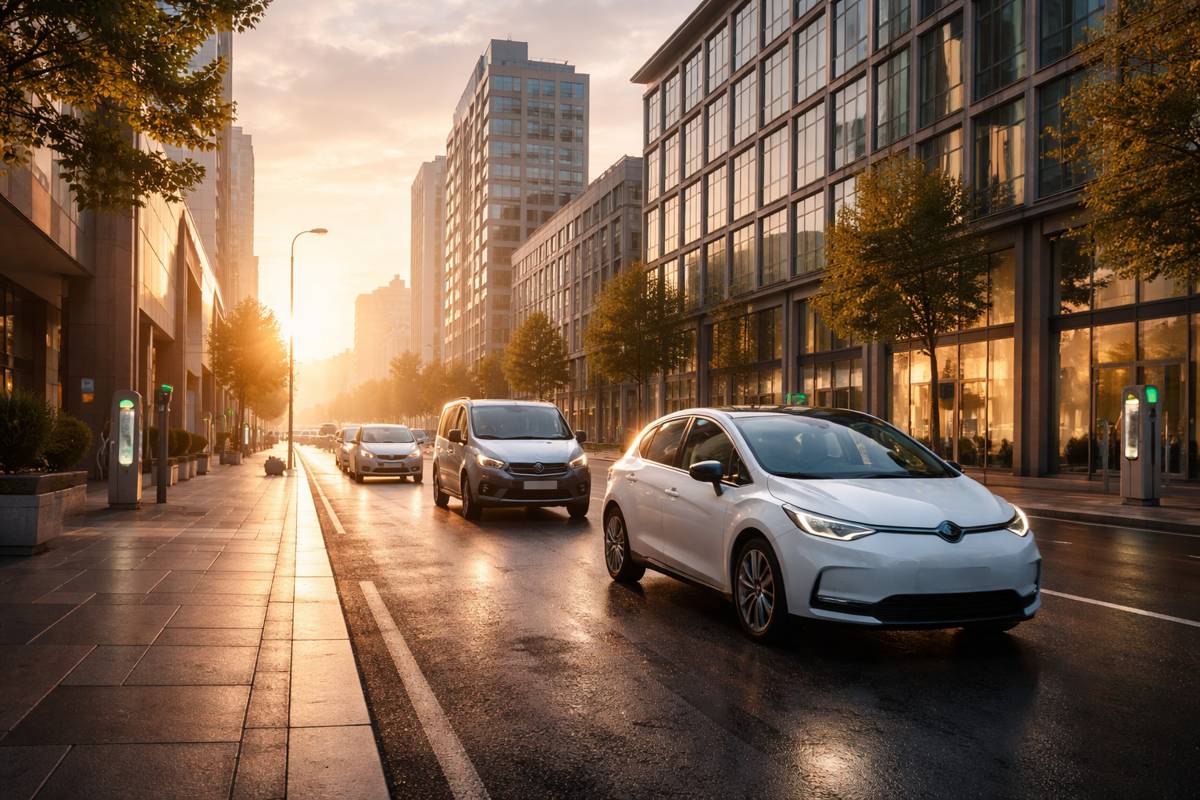
This capital will support the deployment of a fleet of 24,000 zero-emission vehicles across 10 European countries, including Italy, France, Germany, Spain and Portugal. It is positioned as the first initiative between Leasys and the EIB, and it arrives at a time when European fleet operators are being squeezed from both sides: cost pressures on the ground and regulatory expectations on the horizon.
The EU’s policy direction is clear. Under current rules, the fleet-wide CO2 emission target for new cars and vans is set to reach 0 g CO2/km from 2035, effectively requiring 100% reduction in tailpipe emissions for new vehicles. While political debate and industry lobbying will continue, the structural direction of travel is hard to ignore.
In that context, the Leasys-EIB financing package looks less like a discretionary “green project” and more like a pragmatic response to where the market is being pushed.
Why Fleet Leasing Has Become the Shortcut to Electrification
The electrification of Europe’s vehicle parc won’t happen solely through individual buyers swapping keys at dealerships. Fleet operators, leasing providers and long-term rental specialists are increasingly viewed as the real accelerators of adoption, simply because of scale and turnover.
Leasys sits directly in that channel. It is described by Crédit Agricole Personal Finance & Mobility as a European leader in long-term rental, created through a 50-50 joint venture between Crédit Agricole Personal Finance & Mobility and Stellantis, with a managed fleet of more than 870,000 vehicles. Even a modest shift in fleet composition at that scale can create meaningful knock-on effects across supply, servicing, charging partnerships and resale markets.
The EIB’s Vice-President Ambroise Fayolle also framed the strategy in those terms, emphasising how leasing and rental firms can drive the electrification of the wider vehicle fleet because of their ability to refresh stock regularly. He said: “Supporting clean transport is central to the EIB’s climate goals. Rental and leasing companies, which manage millions of vehicles and regularly refresh their fleets, are uniquely positioned to drive the electrification of Europe’s vehicle fleet. Supporting companies like Leasys is a good way to accompany Europe’s transition to a low-carbon economy”.
There’s a straightforward logic here: corporate fleets change faster than national fleets. Leasing fleets cycle vehicles more frequently than privately-owned models. And when those vehicles rotate out, they enter the second-hand market with more predictable history, making EV ownership more accessible to households that aren’t buying new.
This project, therefore, isn’t just about the 24,000 vehicles funded at the top of the chain. It is also about what those vehicles enable further down the line.
The Strategic Value of Pan-European Scale
Europe’s clean transport transition is often undermined by fragmentation. Different countries move at different speeds, incentives vary widely, grid infrastructure is uneven, and fleet operators working across borders face inconsistent charging access and compliance requirements.
By deploying across 10 markets, the Pan-European Clean Fleet Transport operation is designed to push beyond “pilot scale” and into repeatable fleet deployment. The countries named in the announcement include major EV markets such as Germany and France, as well as fast-developing adoption regions such as Spain and Portugal.
For construction and infrastructure stakeholders, this matters in a slightly different way than it does for passenger transport alone. Fleets increasingly represent more than commuter cars. They can include vehicles supporting service networks, urban logistics, field engineering and project delivery, especially in cities tightening access rules and introducing low-emission zones.
In practical terms, the agreement strengthens the proposition that fleet electrification is becoming a procurement decision, not merely an environmental preference. Companies that need predictable mobility costs, simplified operational management and compliance resilience are likely to treat EV fleet access as a business continuity issue over the next few years.
Environmental Benefits, Urban Air Quality, and the Quiet Factor
The project is expected to deliver “significant environmental benefits,” with fleet performance described as substantially above current market averages, contributing to lower emissions, improved air quality and reduced noise levels in urban environments.
For city leaders and urban planners, those details matter as much as CO2 does. The public conversation often centres on carbon, but the political pressure in many European cities is linked to local air pollutants and noise. Fleet electrification reduces tailpipe emissions where people live and work, which is precisely why delivery vehicles, taxis, shared mobility operators and corporate fleets are under increasing scrutiny.
There’s also a less-discussed dimension: operational noise. EVs don’t eliminate all road noise, but they do reduce drivetrain noise at low speeds, which can support quieter early-morning logistics and construction-related site support activity in dense urban areas.
In that sense, projects like this reinforce an important idea: clean transport policy increasingly aligns with liveability policy. And financing is how these ambitions become real assets on the road.
A Push for Wider Market Adoption and Supply Chain Momentum
The announcement also positions the project as supportive of Europe’s clean-mobility value chain, fostering EV adoption and innovation across key markets. That phrase can sound broad, but the economic implications are concrete.
When a leasing provider commits to large-scale deployment, it sends demand signals across multiple segments:
- vehicle manufacturers and delivery pipelines
- charging and energy service partners
- maintenance and fleet management ecosystems
- battery lifecycle services and resale networks
It’s not hard to see why the EIB views this as strategic. Financing fleet renewal can unlock private sector coordination that regulation alone struggles to achieve, particularly in markets where consumers remain cautious on EV pricing, charging access or residual values.
Leasys CEO Andrea Bandinelli explicitly linked the agreement to customer demand across business and private segments. He said: “We are proud to strengthen our collaboration with the EIB through an agreement that accelerates the deployment of a modern, competitive and fully electric fleet across Europe. This financing enables us to respond more effectively to the growing demand for zero-emission mobility from businesses and private drivers across our markets.”
The key point is that demand here is being interpreted as “demand for access” rather than “demand for ownership”. Leasing and rental models can reduce the perceived risk for both corporate and private users, especially as battery technology, charging infrastructure and regulatory expectations continue to evolve.
The Bigger Picture for Europe’s Transport Decarbonisation
Fleet electrification is happening in a period of policy pressure and market uncertainty. The EU’s 2035 trajectory is clear in the legislation, but industry groups and policymakers continue to debate timelines, feasibility and flexibility.
That’s exactly why investment-led projects are so influential. They don’t depend on perfect alignment across every stakeholder. They don’t require every consumer to be an early adopter. Instead, they move capital into assets that can be deployed now, creating momentum while the political debate continues.
From an infrastructure and mobility standpoint, the Leasys-EIB agreement highlights a reality that’s becoming harder to ignore: clean transport isn’t only an engineering challenge. It is a financing challenge, a rollout challenge, and a fleet management challenge. Solving those at scale will likely determine whether Europe meets its climate objectives in road transport, where the emissions share remains stubbornly high.
It’s also a reminder that progress will increasingly be measured in deployed fleets rather than press statements. On that basis, 24,000 zero-emission vehicles backed by €600 million in structured financing is a tangible move, and one with implications that extend well beyond the leasing sector.