Otto Group Builds an AI Control Layer to Orchestrate Robots at Scale
The modern warehouse has become one of the most important proving grounds for industrial automation. Global retail and logistics networks are under constant pressure to move faster, absorb volatility, and keep service levels high even as labour markets tighten and customer expectations harden into “next day or nothing”.
Otto Group’s latest step into intelligent automation is less about adding another robot to the fleet and more about building the operating system that makes thousands of machines work together without chaos.
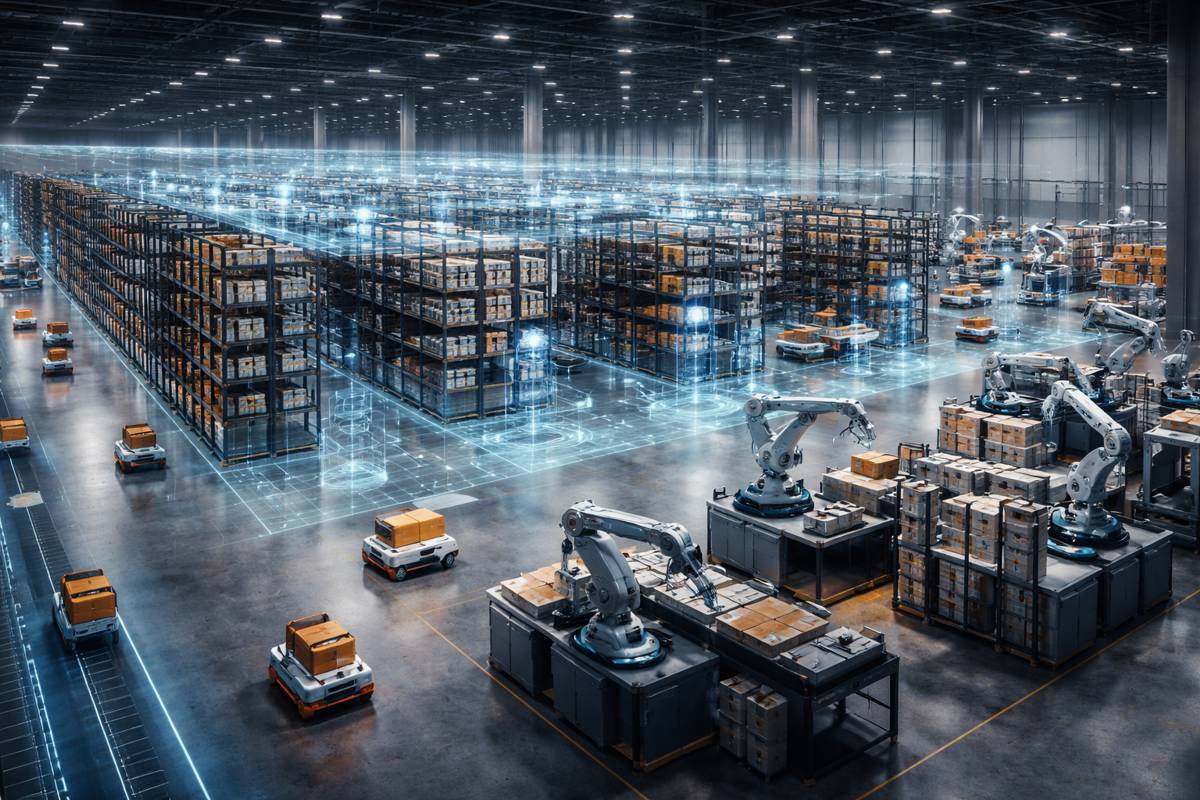
Reply is supporting the global retailer Otto Group in implementing a central, AI-driven virtual control system for intelligent robotic orchestration. Developed as part of a strategic collaboration between Otto Group, Reply, and NVIDIA, the so-called “Robotic Coordination Layer” is designed to train, simulate, and orchestrate autonomous mobile robots alongside stationary warehouse systems. The ambition is clear: reduce friction, accelerate delivery times, and improve operational consistency across complex logistics environments.
Unlike earlier waves of warehouse automation, where companies adopted robotics in isolated pockets, this initiative targets a bigger prize. It aims to connect diverse robotic solutions into a single coordination framework, making it possible to plan, test, optimise and operate logistics facilities as an integrated ecosystem rather than a collection of separate automation islands. In a sector where minutes matter and downtime is brutally expensive, orchestration is becoming the differentiator.
Why Robotic Orchestration Has Become the Next Competitive Battlefield
Warehouse robotics has grown up quickly, but it hasn’t always grown up neatly. Many logistics operators now run a mixture of autonomous mobile robots, fixed automation such as sorters or conveyors, and multiple control systems acquired at different times from different suppliers. Each system may work well on its own, yet collectively they can create bottlenecks, blind spots, and awkward handoffs where one vendor’s “optimal” plan becomes another vendor’s disruption.
That’s why orchestration is increasingly seen as the next layer of advantage. If robots are the muscle, orchestration is the nervous system. It’s what determines whether automation simply exists, or whether it consistently delivers measurable gains in throughput, resilience, and service levels without constant firefighting. The Otto Group initiative reflects a wider industry shift toward integrated control environments where simulation, AI-driven optimisation and real-time operational visibility work together.
The stakes extend far beyond retail fulfilment. The same orchestration principles are increasingly relevant to large construction logistics hubs, equipment distribution centres, major infrastructure supply chains, and industrial service networks. In these environments, it’s not enough to know where machines are. Operators need to understand interactions, predict conflicts, test changes safely, and continuously refine performance without disrupting live operations.
A High-Fidelity Digital Twin as the Core of the System
At the centre of Otto Group’s approach is a high-fidelity digital twin, described as a precise replica of the warehouse environment that accurately represents the positions, movements, and interactions of robotic systems. This matters because the usefulness of a digital twin depends on how faithfully it reflects reality, not on how attractive it looks in a demo. High-fidelity twins can support performance analysis, scenario testing, bottleneck identification, and operational optimisation at a level that traditional dashboards simply can’t match.
Reply’s Roboverse Reply division brings expertise in robotic integration and 3D computing to the project, establishing the digital twin as a unified, data-driven foundation. With that foundation in place, the system can support continuous optimisation and detailed process analysis, helping warehouse operators move from reactive problem-solving toward proactive operational planning.
Digital twin adoption has accelerated across construction and infrastructure in recent years, but warehouse and logistics environments are becoming particularly fertile ground. They are complex, dynamic, and relatively controlled compared to open construction sites, making them ideal for simulation-driven operational models. When done properly, a digital twin can become an operational asset rather than a one-off visualisation.
Connecting Fleet Management and WMS into a Central Control Layer
The “Robotic Coordination Layer”, developed by Otto Group one.o, builds on the digital twin by linking it to essential systems such as robot fleet management solutions and the warehouse management system (WMS). This integration brings the operational reality of the warehouse into a central platform capable of monitoring and managing multiple robotic fleets in one coordinated environment.
In practical terms, that means the system can visualise operations, coordinate robot behaviour, and support decision-making from a single digital layer rather than forcing teams to juggle separate tools. It also enables virtual reconfiguration of warehouse areas, allowing Otto Group to simulate new layouts or new robotic solutions before deploying changes physically. That is a crucial capability in logistics, where major layout changes can be disruptive, and minor configuration errors can cascade into costly downtime.
Simulation-before-deployment is rapidly becoming a best practice for organisations trying to scale automation responsibly. It reduces the risk that a new robot fleet, software update, or workflow adjustment creates instability during peak periods. It also supports faster integration of new robotics systems, giving operators a controlled environment to test interactions and refine performance, rather than learning through live operational mistakes.
Reality Capture with Boston Dynamics Spot Strengthens Precision
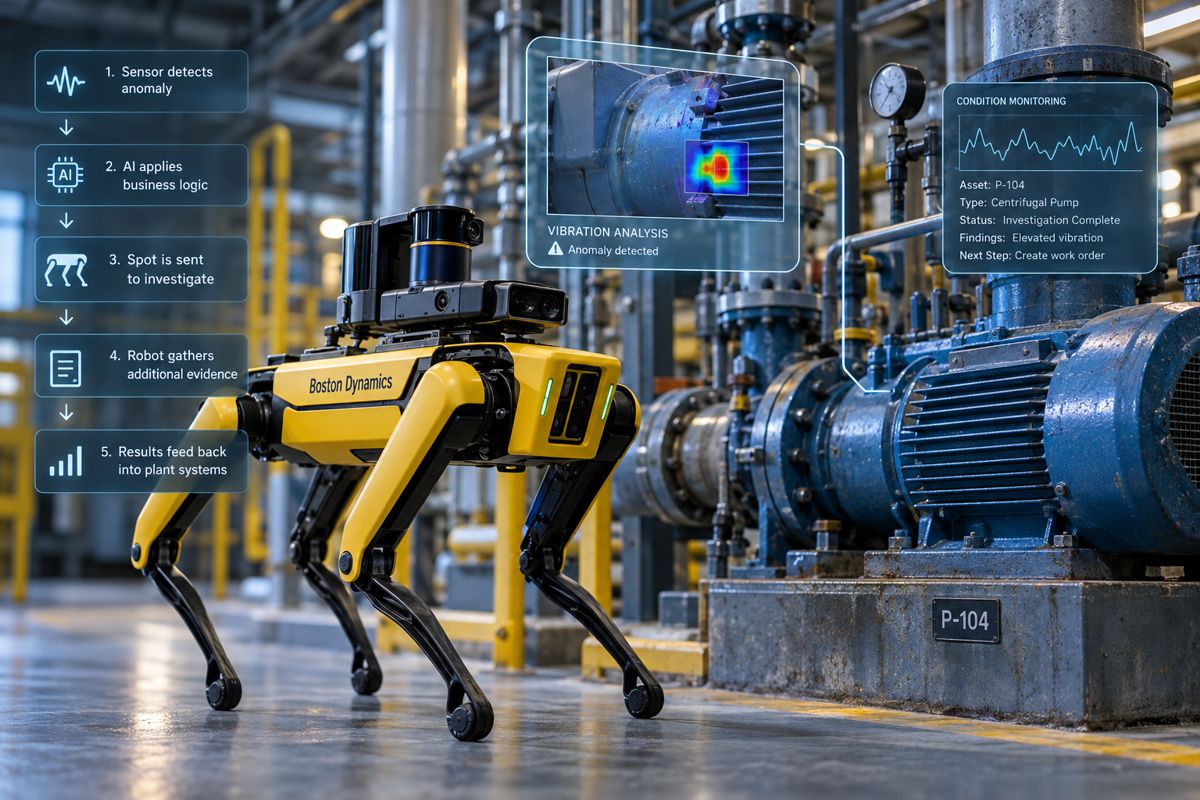
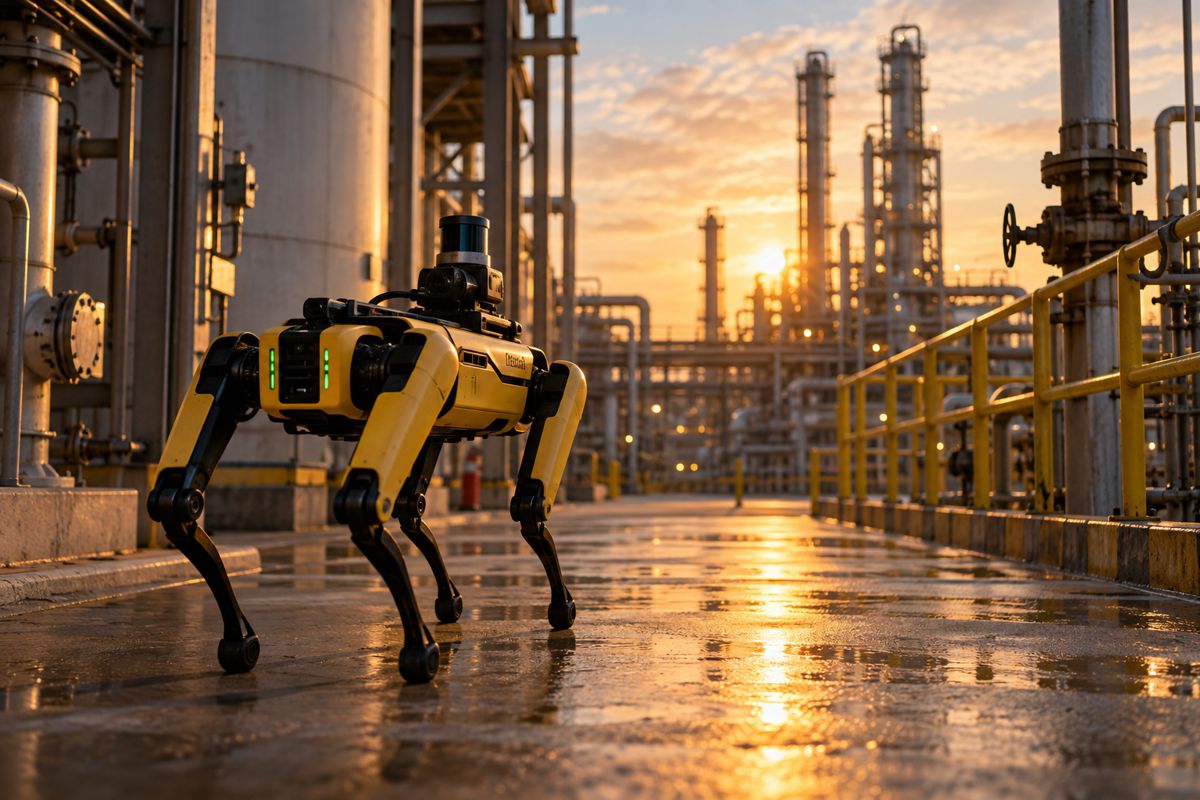
To achieve the precision required for a high-fidelity twin, Roboverse Reply used advanced scanner and camera technology mounted on Boston Dynamics’ mobile robot, Spot. The captured data is processed through a complex post-processing workflow to form the basis for accurate 3D models.
Reality capture is often the unglamorous engineering detail that makes or breaks a digital twin. If the input data is incomplete or outdated, the twin becomes unreliable, and operational teams quickly stop trusting it. Mobile robots like Spot are increasingly used to automate data capture, making it possible to update facility models more frequently and consistently than manual methods. Boston Dynamics itself positions Spot as a tool to automate the collection of facility data to support digital twin creation and maintenance.
While digital twins are sometimes framed as a purely software-driven concept, projects like this highlight the physical layer required to keep virtual models grounded in reality. For sectors like construction, infrastructure maintenance, and industrial operations, where conditions change constantly, automated reality capture is emerging as a key enabling technology.
NVIDIA Omniverse and Isaac Provide the Simulation Backbone
Leveraging NVIDIA’s Omniverse simulation and AI infrastructure, including NVIDIA Isaac, the project is creating a virtual control environment to support accurate KPI computation and data-driven decision-making. The system is designed to enable rapid simulation, training, and deployment of different robot types in complex scenarios.
NVIDIA positions Isaac Sim as a robotics simulation framework built on NVIDIA Omniverse, enabling developers to simulate and test AI-driven robotics solutions in physically based virtual environments. This matters because warehouse orchestration is not only about mapping the environment, but also about understanding physics-based interactions, congestion behaviours, timing, and the operational consequences of small rule changes at scale.
In early 2025, NVIDIA also introduced “Mega”, described as an Omniverse Blueprint intended to help develop, test and optimise physical AI and robot fleets at scale within digital twins before deployment. Otto Group’s project aligns closely with that broader industry direction, where simulation becomes a standard tool for continuous improvement rather than a specialist activity used only for initial system design.
From Pilot Site to Global Blueprint for Otto Group’s Logistics Network
The pilot is launching at the Hermes Fulfilment logistics centre in Löhne, Germany, and is intended to serve as a blueprint for additional Otto Group locations worldwide. Hermes Fulfilment is part of the Hermes Group, which in turn is part of the Otto Group, operating fulfilment and returns logistics services for Otto Group retail companies.
The choice of Hermes Fulfilment is strategically logical. Fulfilment centres are among the most operationally complex environments in retail, combining high SKU variety, variable order profiles, returns management, and intense peak-season volatility. A coordination layer that performs well here could potentially unlock value across a wider network of logistics sites, especially for companies aiming to standardise orchestration capabilities across multiple facilities.
It is also a reminder that warehouse automation is moving beyond incremental improvements. The endgame is not simply “more robots”, but a connected, scalable environment where automation can be deployed and adapted quickly, while maintaining reliability and service quality.
Executive Perspectives on Scaling Robotics Beyond Single Fleets
Reply has positioned the project as part of a broader shift toward intelligent coordination, where interoperability and collaborative behaviour across different robotic fleets becomes central. Kai Uwe Ernst, Executive Partner at Reply, explained: “Creating a digital twin is more than just mapping a space – it’s about enabling intelligent orchestration at scale. By combining NVIDIA’s cutting-edge technologies with our expertise in AI and robotics, we’re laying the foundation for a new standard in robotic coordination. This system will allow different robotic fleets to communicate and collaborate seamlessly, unlocking new levels of efficiency and adaptability in logistics operations.”
From Otto Group’s perspective, the initiative builds on several years of work implementing AI and robotics in logistics. Kay Schiebur, Member of the Executive Board, Services, Otto Group, commented: “More than three years ago we embarked on a journey to deploy AI and robotics in the field of logistics. Our experiences to date have shown the huge potential for improving efficiency and service. With NVIDIA and Reply, we are now ready to take intelligent automation to the next level. This partnership will provide the fundamental structure – a truly innovative way for our robots to communicate – allowing us to quickly scale up robotic solutions in our complex operations, strengthening our leadership in responsible business, especially here in Europe. We are always striving to improve our performance and ensure our future viability.”
Together, these statements underline the real objective: scalable orchestration. In other words, Otto Group isn’t simply investing in a new automation project. It is investing in a coordination framework that could make future automation deployments faster, less risky, and more consistent across multiple sites.
What This Signals for Construction, Infrastructure and Industrial Operations
While the pilot is firmly rooted in retail fulfilment, the implications extend into the wider industrial world. Construction and infrastructure sectors are increasingly confronted with similar coordination challenges: multi-vendor automation, distributed fleets, and the need to model complex physical environments. The difference is that construction sites are less controlled and change far more rapidly, making digital twin fidelity and continuous updates even more critical.
However, the same core insight holds. Real value comes not from individual machines, but from systems that can coordinate actions across equipment, people, and processes. The logistics sector is simply moving faster because the commercial pressure is immediate and measurable. The lessons learned in warehouses are likely to flow into industrial yards, transport depots, ports, and large infrastructure supply chain operations.
There is also a strategic European dimension. Otto Group is positioning orchestration as part of its long-term viability and responsible business leadership. In Europe, where energy costs, labour constraints, and regulatory expectations often create tighter operational margins, scalable efficiency is not only a profit lever but a resilience strategy.
A Blueprint for the Next Era of Physical AI in Warehousing
This initiative with Otto Group and NVIDIA underscores Roboverse Reply’s role as an implementation partner for AI-powered robotics and Physical AI in logistics. It also reflects a broader industry pivot: organisations are now building digital and AI frameworks designed to manage continuous complexity rather than seeking one-off automation wins.
As the pilot progresses at Hermes Fulfilment in Löhne, the bigger story will be whether orchestration can deliver the kind of repeatable, scalable results that justify rolling it out across multiple locations. If successful, Otto Group’s “Robotic Coordination Layer” could become a model for how major operators coordinate mixed robot fleets, validate new solutions virtually, and move from fragmented automation deployments to fully connected warehouse ecosystems.
For the global construction, infrastructure and industrial technology ecosystem, the message is simple enough. The next wave of automation isn’t just about smarter machines. It’s about smarter coordination, and the digital twins and simulation platforms that make it possible to operate at scale without losing control.