VINCI Expands New Zealand Footprint with Fletcher Construction Acquisition
VINCI Construction’s agreement to acquire Fletcher Construction is more than another overseas deal on a balance sheet. It’s a clear signal that New Zealand’s infrastructure market has shifted into a new phase, one where scale, delivery capability and technical breadth matter more than ever. Subject to regulatory approval, the acquisition is expected to be completed in 2026, and it positions VINCI to compete at the sharp end of a market that’s increasingly defined by complex transport upgrades, resilience spending, and fast-moving investment into renewable energy infrastructure.
Fletcher Construction is no minor bolt-on. Founded in 1909 and employing around 2,300 people, the business generates annual revenue of about €630 million (NZ$1.3 billion). Its operational reach spans hydraulic engineering, ports, airports, marine works, rail, and roads, with an expanding role in renewables. In a country where infrastructure is tightly tied to economic productivity and regional connectivity, that sort of capability isn’t simply useful, it’s strategic.
Why New Zealand’s Infrastructure Market Has Become a Global Prize
New Zealand may be geographically distant from the traditional centres of civil engineering capital, but it sits at an intersection of priorities shaping infrastructure globally: resilience to climate risk, upgrades to ageing networks, and the ongoing push to modernise transport corridors that underpin trade and mobility. The country’s infrastructure portfolio is no longer just about expanding capacity. Increasingly, it’s about strengthening what already exists, protecting it from disruption, and building assets that can withstand both environmental pressure and political scrutiny.
For international contractors, New Zealand is also a market where long-term credibility counts. Projects are scrutinised closely, procurement tends to reward proven delivery, and the operational environment demands local experience. That’s one reason why established domestic capability remains valuable, even when global groups arrive with deeper pockets and wider technical resources. This deal effectively combines both.
Fletcher Construction’s Real Value Isn’t Just Revenue
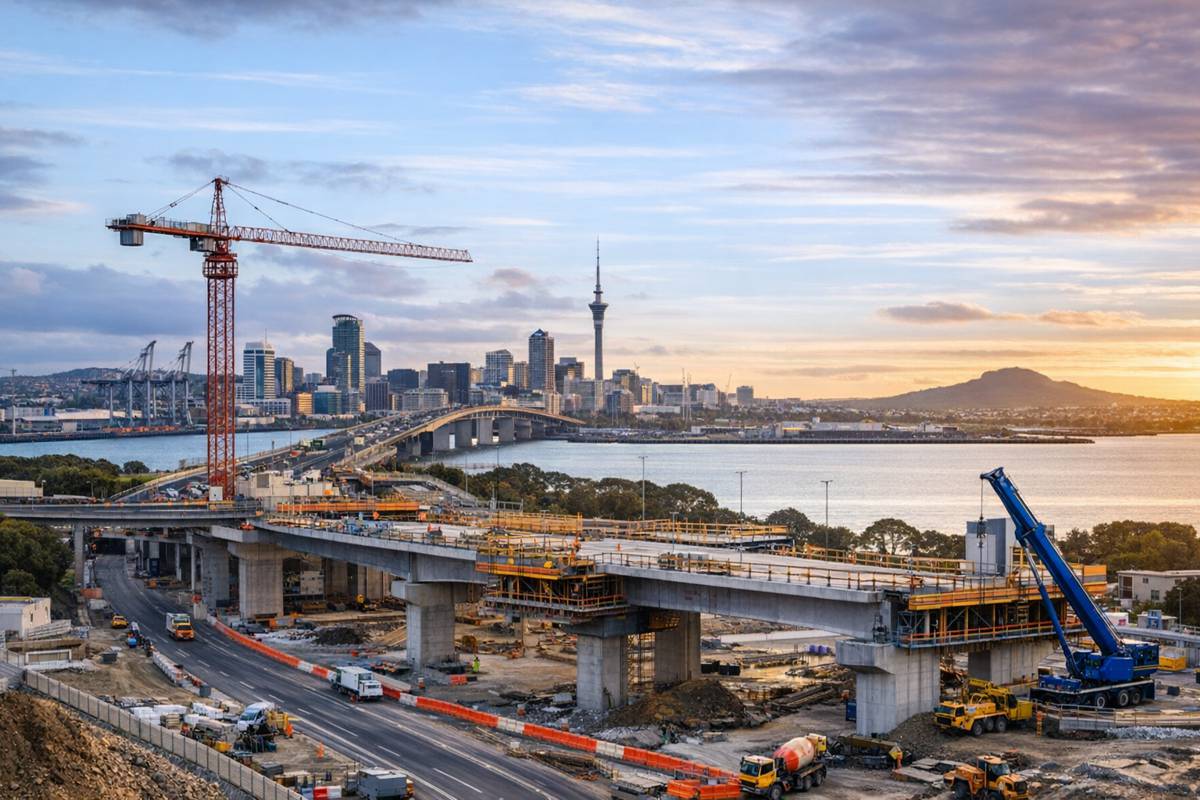
Fletcher Construction has worked across many of the sectors that governments tend to prioritise when infrastructure becomes national policy rather than just capital expenditure. Ports and maritime assets enable trade. Road and rail projects keep cities moving and supply chains functioning. Airports shape tourism and freight connectivity. Meanwhile, hydraulic works and resilience-related construction increasingly sit at the centre of climate adaptation planning.
This breadth matters because modern infrastructure programmes rarely sit neatly in one category. A road project might involve bridgeworks, drainage, coastal resilience, and environmental constraints all in one corridor. Rail upgrades often touch electrification, earthworks, complex foundations, and works in highly constrained urban environments. A contractor that can tackle multiple disciplines reduces interface risk, and in today’s market, that’s worth real money.
VINCI’s Calculated Step Change in Delivery Capacity
VINCI Construction already has a presence in New Zealand, and the group reported revenue of over €900 million in the country in 2024. The acquisition of Fletcher Construction builds on that base, adding scale and local depth that would be difficult to replicate organically at speed.
Crucially, VINCI has framed the acquisition alongside HEB Construction, suggesting a deliberate strategy to widen operational coverage, from major project delivery through to broader infrastructure capability. The message is straightforward: the group wants to be positioned not merely as a participant, but as a major player in a market described as dynamic and growing.
This isn’t just expansion for expansion’s sake. New Zealand’s infrastructure pipeline increasingly demands contractors that can carry risk responsibly, support modern delivery models, and integrate planning, delivery and long-term asset performance expectations. Large multinational groups often have the systems, governance and balance-sheet strength that public clients prefer when projects become politically sensitive and financially exposed.
A Deal Timed for the Next Wave of Investment
The transaction is subject to regulatory approval and is expected to close in 2026. That timeline matters. It reflects the reality that infrastructure markets don’t change overnight, but procurement pipelines do move in waves. Deals like this are rarely about yesterday’s work. They’re about being in position for the next cycle of projects, with the right footprint and capability before contracts start being awarded.
It also gives VINCI time to prepare for integration at a pace that reduces disruption, something construction businesses can’t afford to mishandle. Unlike many industries, a messy integration in contracting doesn’t just cause internal friction; it can surface on live sites, in delivery performance, and in relationships with public and private clients.
Consolidation is Back
Across global infrastructure markets, consolidation has quietly returned as a defining trend. Clients want dependable delivery partners. Projects have become larger, more multi-disciplinary, and more exposed to public scrutiny. Labour availability is tighter, and supply chains still carry uncertainty. In that environment, scale isn’t just about winning bigger contracts. It’s about delivering them consistently without being knocked off course by cost spikes, programme disruption, or capacity constraints.
Fletcher Construction arrives in VINCI’s orbit at a time when international contractors are increasingly selective about where they deploy capital and capability. New Zealand’s market, while smaller than North America or Europe, offers stability, high-quality projects, and the potential for long-term programme work rather than purely one-off contracts. For investors, that combination often looks better than it sounds at first glance.
Renewables and Infrastructure Are Now Entangled
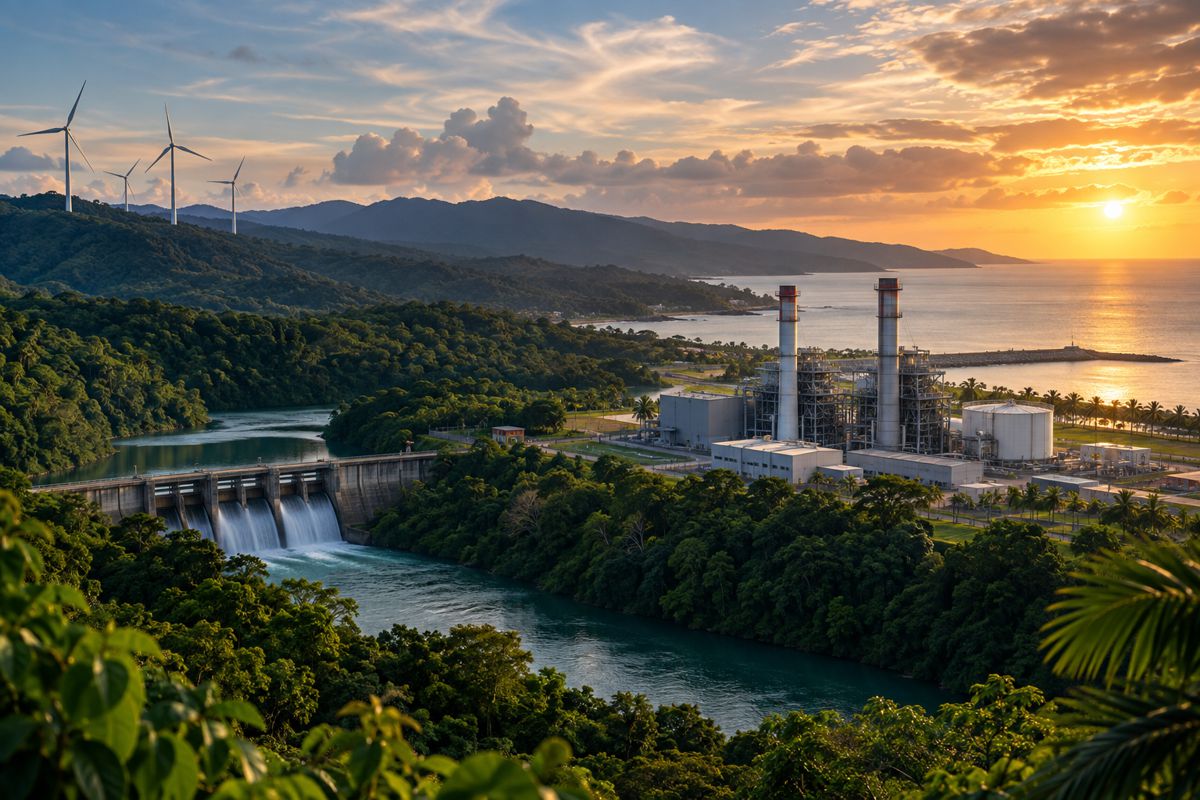
One of the more telling details in the deal narrative is Fletcher Construction’s “growing volume of activity” in renewable energy-related work. That line reflects a broader shift occurring worldwide. Renewable energy isn’t a standalone sector anymore. It’s becoming deeply linked to civil infrastructure delivery, because grid upgrades, access roads, port improvements for turbine components, and logistics infrastructure all sit inside the transition.
In practical terms, renewable energy construction needs contractors comfortable working in remote environments, managing heavy transport logistics, and operating to complex environmental and community constraints. These are conditions New Zealand knows well. The blend of traditional civil engineering expertise with renewable-focused delivery experience makes Fletcher Construction a relevant asset in a market where energy transition goals increasingly shape infrastructure priorities.
What This Means for Clients, Projects and Competition
For New Zealand clients, the most immediate change may be competitive intensity at the top tier of procurement. A larger VINCI platform could increase bid strength on complex projects, particularly those requiring multi-sector capability across transport, marine, and heavy civil works. That can be positive if it drives innovation and delivery certainty, but it can also reshape competitive balance, particularly for domestic firms that thrive in niche delivery spaces.
For project owners, there’s also an opportunity: global contractors bring not just capital strength, but process maturity. That can support better programme controls, tighter risk management, and stronger delivery governance, assuming integration is handled sensibly and local expertise is respected. The “strong home” narrative frequently used in divestment deals only holds true if the local capability remains intact and empowered rather than diluted.
VINCI’s Long Game in the Pacific
VINCI is already positioned globally as a major concessions, energy solutions and construction group, employing 285,000 people in more than 120 countries. That scale provides a level of optionality: where some contractors rely heavily on a single geography or project type, VINCI can balance activity across regions and sectors, potentially smoothing volatility and supporting long-term presence.
In New Zealand, the acquisition reads like part of a longer plan, one built around becoming a consistent delivery partner across the country’s most demanding civil programmes. With HEB Construction already in the fold and Fletcher Construction now expected to follow, VINCI is building a portfolio that can address everything from day-to-day network works to large-scale, high-profile infrastructure delivery.