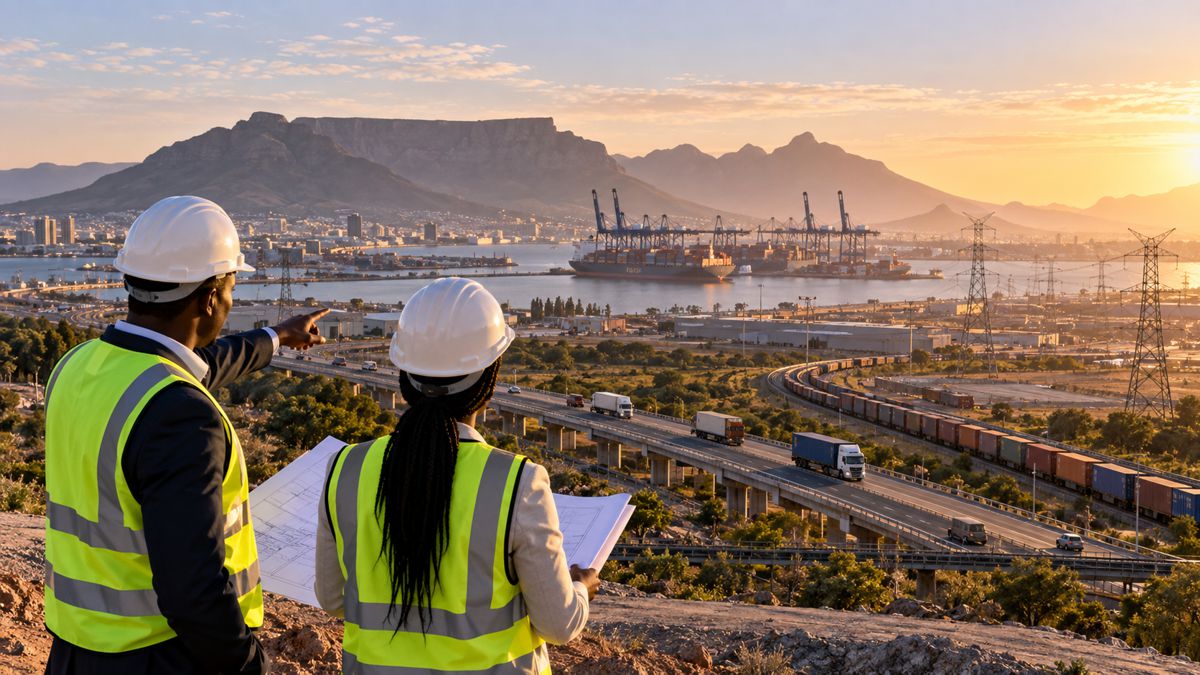
Mining and Quarrying Return to the Centre of Global Strategy
For much of the past three decades, mining and quarrying sat in an awkward position in the public imagination. Essential, yes, but often treated as background activity, somewhere between a commodity business and a legacy sector that policymakers preferred not to talk about too loudly. The world could enjoy new infrastructure, cheap consumer goods, and rapid urbanisation while assuming the raw materials would always be there, quietly extracted and shipped across oceans on schedule. That era is ending.
Across boardrooms, ministries, infrastructure agencies, and defence planning units, the same realisation is settling in: minerals and construction materials are strategic assets again. In the 2020s, governments aren’t simply worrying about demand growth. They’re worrying about who controls supply, who can process it, who can secure it during disruption, and whether new infrastructure targets are even deliverable without turning the extractives sector into a national priority.
Mining is now closely tied to energy transition targets, industrial competitiveness, and military readiness. Quarrying and aggregates, once viewed as purely local industries, are increasingly being framed as national resilience issues due to the sheer scale required for roads, bridges, rail, ports, flood defences, and housing. Even the materials that rarely make headlines, sand, crushed stone, cement feedstocks, bitumen, and industrial minerals, are being pulled into the same conversation as lithium, rare earths, copper, and graphite.
The key point isn’t that demand has risen. It’s that demand has become politically non-negotiable. Modern infrastructure, decarbonisation programmes, and supply chain “friend-shoring” strategies all presume vast and reliable volumes of raw materials, delivered on time, produced responsibly, and in many cases processed domestically. Meanwhile, the world’s recent shocks have made it painfully obvious how fragile those assumptions were.
The most telling sign of the shift is the policy language. The European Union’s Critical Raw Materials Act (CRM Act) is explicitly designed to secure and diversify supply for key materials used in strategic sectors such as renewable energy, digital technologies, and defence. That’s not a subtle change. It’s a public statement that market forces alone aren’t being trusted to deliver the inputs for Europe’s future economy.
This new strategic framing is not a brief cycle, a temporary response to a war, or a knee-jerk reaction to price volatility. It is a long-term reset. And for construction professionals, investors, and policymakers, it brings uncomfortable questions: Where will the next decade’s material come from? Who pays for new capacity? Who carries the permitting risk? How do projects avoid local opposition? And what happens when infrastructure plans collide with reality on the ground?
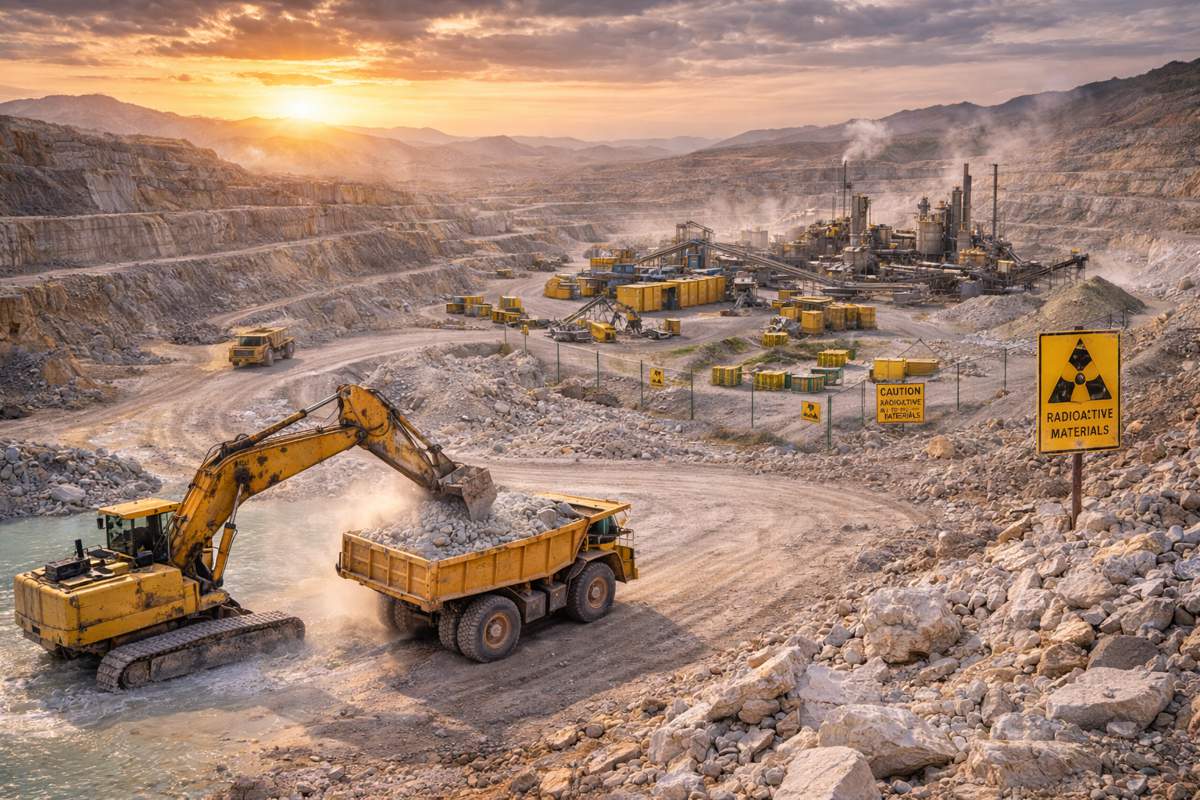
Strategic Minerals Now Sit at the Heart of National Power
A country’s access to raw materials has always shaped its economic strength. What has changed is the breadth of sectors now dependent on mineral supply, and the degree to which those sectors define national security and competitiveness.
In previous decades, strategic minerals were typically discussed in the context of defence supply chains or specialised industrial manufacturing. Today, the list of industries considered “strategic” has expanded dramatically. Clean energy systems, electric vehicles, battery storage, digital infrastructure, semiconductors, and high-performance manufacturing all rely on mineral inputs that are geographically concentrated and politically exposed.
The International Energy Agency’s Global Critical Minerals Outlook has been one of the clearest signals of this shift. The IEA tracks the minerals essential for energy transition technologies, including copper, lithium, nickel, cobalt, graphite, and rare earth elements. This isn’t niche demand; it is large-scale industrial demand driven by government policy and private capital flowing into electrification.
That intersection of policy and investment is exactly what makes minerals strategic again. For governments, clean energy targets have become political commitments, not just environmental aspirations. Failure to deliver grid upgrades, renewables rollouts, and electrified transport will be viewed as a failure of national planning and economic credibility. For companies, the ability to secure long-term material supply is increasingly a competitive differentiator, especially in industries where project timelines span years and cost inflation can wipe out margins.
The IEA’s market review for 2023 showed that demand growth remained robust across multiple critical minerals, with lithium demand rising by 30% and demand for nickel, cobalt and graphite expanding by 8-10%. What matters here is not simply that demand is growing. It is growing in ways that compress supply chains and make dependency more visible. When multiple global industries are pulling on the same materials simultaneously, supply constraints become systemic.
Put bluntly, minerals now behave like strategic infrastructure. Their availability determines whether other infrastructure can be built.
There is also an uncomfortable geopolitical dimension. Concentration of production and processing creates leverage, and global supply chains are increasingly being treated as economic pressure points. The EU’s CRM Act is part of a wider trend of governments actively managing dependency exposure. One doesn’t need to read between the lines: it is about resilience in a world where trade is no longer assumed to be frictionless.
Reuters reporting on the EU’s strategic materials push has highlighted the operationalisation of that strategy, including lists of projects designed to strengthen domestic capacity across extraction, processing, and recycling. Even the permitting timelines being discussed are effectively a recognition that old approval processes do not fit the urgency of current industrial policy.
For mining firms, this represents both opportunity and scrutiny. Opportunity, because governments are clearly signalling demand certainty and strategic relevance. Scrutiny, because strategic industries are inevitably subject to national expectations, public oversight, and political risk. Investors should not confuse “strategic” with “easy”.
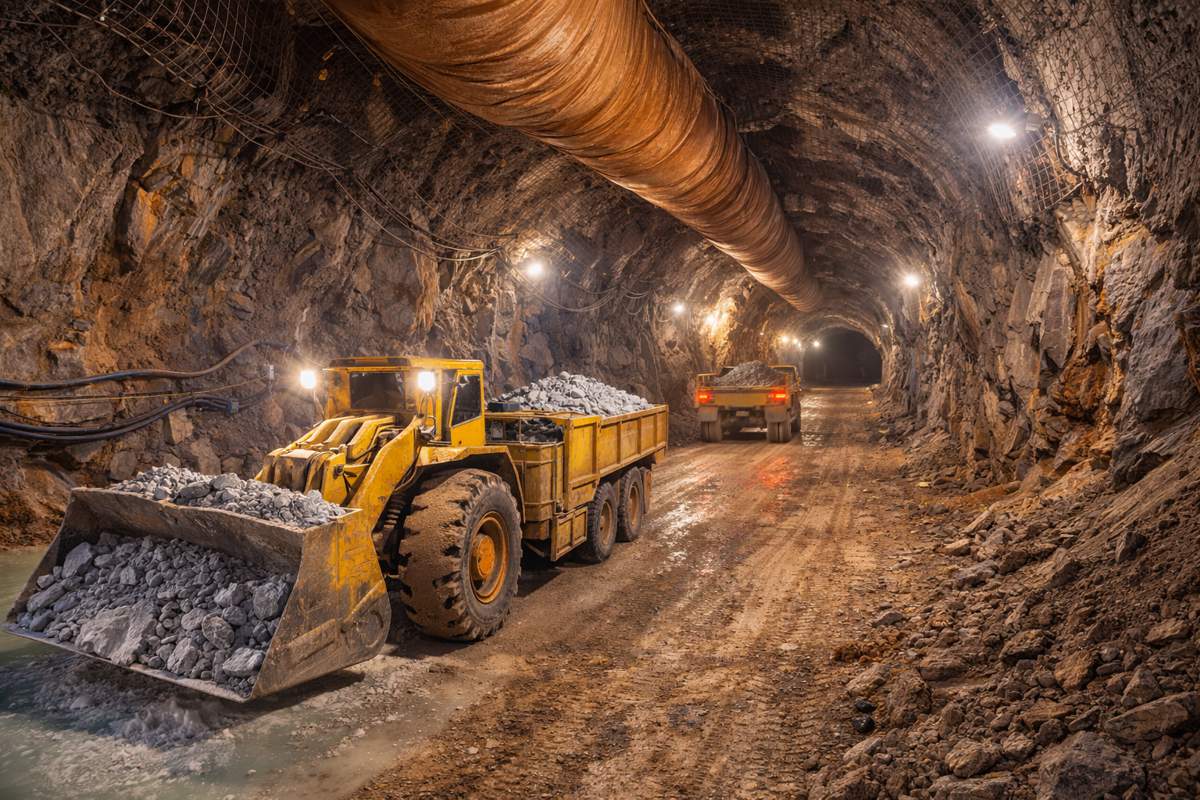
The Construction Industry’s Strategic Blind Spot
Critical minerals dominate headlines, but the construction economy runs on something far more fundamental: bulk materials. The modern built environment is essentially a conversion machine turning aggregates, cementitious materials, asphalt, steel, and glass into functional assets. In that chain, aggregates are the quiet cornerstone.
Construction aggregates are rarely treated as strategic at the national level, largely because they are produced domestically in many countries and have traditionally been seen as a local market. But the scale required for large infrastructure programmes makes them strategic in practice, even if not yet in law.
The USGS Mineral Commodity Summaries consistently reveal how economically significant nonfuel minerals are, including crushed stone, construction sand and gravel, cement, and industrial minerals. It is not glamorous data, but it is foundational. These are the materials that enable everything else.
One detail from the USGS construction sand and gravel commodity summary illustrates the reality of usage patterns. In the United States, an estimated 42% of construction sand and gravel is used as portland cement concrete aggregates, 20% for road base and coverings, and 9% for asphaltic concrete aggregate and other bituminous mixtures. In other words, the strategic infrastructure economy is physically dominated by material flows that most policy debates ignore.
That matters because infrastructure plans are often made in abstract terms: kilometres of road, bridges replaced, rail networks modernised, ports expanded, housing built. Those plans translate into billions of tonnes of material that must come from somewhere, be processed locally, and be transported cheaply. When supply is tight, the constraint is not “availability” in the geological sense. It is permitting, land access, logistics, local opposition, and the capacity of quarries to meet consistent volume requirements without triggering public backlash.
In parts of Europe, North America, and rapidly urbanising regions, construction materials are increasingly constrained by land-use planning, environmental compliance requirements, and the politics of local development. Quarries are hard to open, harder to expand, and rarely welcomed as neighbours. That creates a strategic tension: societies want infrastructure upgrades, but often oppose the enabling industries that provide the raw materials.
Transport economics add another layer. Aggregates are high-volume, low-margin materials. Hauling them over long distances quickly becomes unviable, pushing projects to depend on local supply. When local quarries shut down or fail to expand capacity, the impact is immediate: project costs rise, schedules slip, and governments face uncomfortable choices between relaxing regulation, importing more materials, or scaling down ambitions.
This is where mining and quarrying merge into a broader strategic narrative. It is not only about global mineral supply chains. It is about whether national infrastructure programmes can realistically be delivered using current planning frameworks.
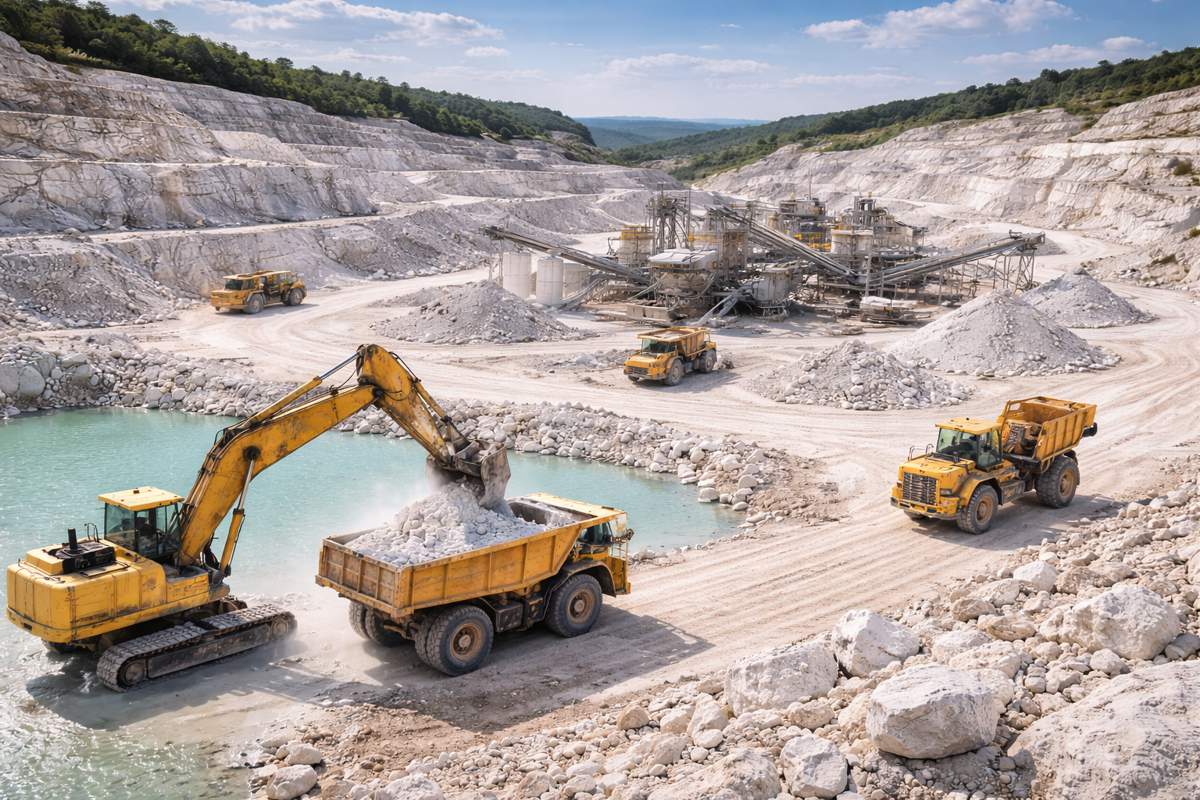
The Energy Transition Has Become a Minerals Transition
The world’s decarbonisation agenda depends on building new infrastructure at a scale rarely seen outside wartime mobilisation. Renewable generation, grid expansions, charging networks, rail electrification, battery manufacturing, and energy storage all require mineral-intensive materials.
The World Bank has been explicit on this point. Its work on the mineral intensity of the clean energy transition warns that clean energy technologies will drive major growth in demand for minerals such as graphite, lithium and cobalt, and estimates that over 3 billion tons of minerals and metals will be needed for deploying wind, solar, geothermal power, and energy storage required for a below 2°C future.
That figure is not a casual statistic. It is a signal that the energy transition cannot be delivered by policy targets alone. It requires extraction, processing, transport, and manufacturing capacity, plus social licence to operate. Without that, decarbonisation becomes a spreadsheet exercise disconnected from real-world supply chains.
Meanwhile, the IEA’s longer-term outlook shows why copper, in particular, is becoming the backbone mineral of the modern economy. In the IEA Net Zero Emissions scenario, demand for copper rises significantly by 2040, with strong growth also expected for nickel, cobalt, rare earth elements, graphite and lithium. Investors have long understood copper’s industrial role, but what is changing now is the depth of policy-driven demand. Electrification multiplies copper usage across grids, motors, charging systems, and transmission networks.
And crucially, mining supply doesn’t turn on like a tap. New projects require capital, permitting, community engagement, technical development, and years of lead time. That creates an unavoidable mismatch between political timelines and industrial timelines. Governments can announce major decarbonisation programmes quickly. The extractive sector cannot match that pace without structural changes to permitting, financing, and risk allocation.
This is why mining is being reclassified as strategic. It is no longer viewed as simply a source of revenue or export income. It has become an enabler of national energy systems and industrial transformation.
Of course, that reclassification comes with complications. Transition mineral projects face opposition for environmental impacts, land use, water consumption, and community disruption. Some of that opposition is justified and necessary, especially in regions where extraction has historically caused harm. Yet the strategic reality remains: if societies want low-carbon infrastructure and electrified transport, they must confront the material consequences of building it.
The simplest way to describe the situation is this: the energy transition is not only a technology transition. It is a materials transition, and mining is the upstream gatekeeper.
Geopolitics Has Turned Raw Materials Into Leverage
The modern global economy is built on interdependence, but geopolitical tensions are pushing governments to prioritise resilience over efficiency. That shift has direct consequences for mining and quarrying.
During periods of stable global trade, supply chains were optimised for cost. Materials flowed from the lowest-cost producer to global users, and the risks were assumed to be manageable. The past few years have punctured that belief. Trade disruptions, pandemic-era shocks, and war-driven energy price volatility have reminded policymakers that global logistics and commodity markets are not immune to political events.
This is why the language of “self-sufficiency” has returned, though often softened into phrases like “de-risking” or “diversification.” The European Commission’s Critical Raw Materials Act is a prime example. It is designed to ensure access to a secure and sustainable supply of critical raw materials, explicitly linked to strategic sectors and Europe’s climate and digital objectives.
That framing is not unique to Europe. It reflects a broader global shift in industrial policy: raw materials are being treated as part of national security, and supply chains are being seen as geopolitical vulnerabilities.
Reuters reporting on EU strategic metals projects shows this policy being translated into project pipelines and processing capacity plans, with domestic targets and faster permitting intentions. Whether these targets can be achieved remains uncertain, but the political message is clear: dependency is now an unacceptable risk.
In the construction and infrastructure sector, this geopolitical turn matters in several ways. First, critical mineral constraints can affect equipment supply chains, from batteries for electric construction machinery to electronics for digital construction tools and automated plant systems. Second, raw material volatility can affect core materials such as steel, cement, and bitumen, particularly when energy costs rise. Third, governments increasingly want infrastructure projects to support domestic industrial capacity, not just deliver assets.
This creates a more complicated environment for contractors and developers. Procurement priorities can change. Local content rules can tighten. Financing can come with strategic conditions. Investors may see new incentives for domestic extraction and processing, but also higher regulatory and political risk.
In other words, the sector is entering a phase where mineral supply is not merely a commercial issue. It is increasingly a diplomatic and security issue.
National Self-Sufficiency Meets the Reality of Permitting and Social Licence
The renewed strategic status of mining and quarrying has triggered a predictable response: calls for more domestic extraction, more local processing, and faster approvals. On paper, it sounds like common sense. In practice, it is anything but straightforward.
Domestic extraction is constrained by more than geology. It is constrained by land access, environmental regulations, community opposition, legal challenges, labour availability, and infrastructure constraints. In many developed economies, opening a new quarry or mine is a slow, contentious process. Expanding an existing operation can be nearly as difficult.
This is where national strategy collides with local politics. Communities often support infrastructure investment but resist extractive operations near their homes. Environmental groups may support renewable energy, but oppose new mines needed for the minerals that make renewables possible. Governments face political pressure to “secure supply” while also protecting ecosystems and public health.
The CRM Act, for example, aims to increase resilience by strengthening capacity along the value chain, reducing dependencies, and promoting sustainability and circularity. That combination is important. It suggests the EU recognises that “more mining” cannot be the only answer. It must be paired with recycling, substitution, and supply chain optimisation.
However, recycling and substitution, while important, are not immediate solutions at the scale required. Recycling depends on existing stock of material in circulation and on collection infrastructure. Many critical minerals are embedded in products that have long lifecycles, such as vehicles and power equipment, meaning recycling volumes will ramp up slowly.
The consequence is a strategic dilemma. The world needs new supply, but opening new supply is politically difficult. The outcome is likely to be a messy middle: governments will push for faster approvals, but still face resistance; companies will invest, but demand higher returns for risk; and infrastructure programmes will operate under persistent cost pressure.
For construction professionals, this matters because materials risk will increasingly influence project feasibility. It’s not only about inflation. It’s about whether inputs are available when needed. This will shape contract structures, risk-sharing models, and procurement strategies. Projects may need more flexible design approaches that can adjust to material availability. That, in turn, raises the importance of digital tools, BIM integration, and data-driven planning.
Mining and quarrying are strategic again partly because they have become unavoidable. They sit upstream of the entire physical economy.
Supply Chain Security Is Now an Investor Question
The old commodity investment thesis assumed that markets would respond to price signals. Demand rises, prices rise, supply increases, equilibrium returns. But the strategic reset has changed the investment environment.
Supply chain security is now part of corporate governance and long-term risk management. Industrial companies are increasingly aware that material supply disruptions can halt production lines, delay project delivery, or expose them to political pressure. This has prompted a wave of long-term offtake agreements, upstream investments, and more serious procurement planning.
For investors, mining and quarrying are no longer simply cyclical plays. They are becoming structural enablers of the next era of infrastructure and industrial transformation. That doesn’t mean risk has disappeared. Quite the opposite. Strategic industries tend to attract policy intervention, price controls, export restrictions, and regulatory shifts.
Still, the demand outlook is hard to ignore. The World Bank’s analysis of mineral intensity suggests that clean energy deployment will drive significant growth in mineral production requirements, with large increases in minerals such as graphite, lithium and cobalt. Meanwhile, IEA projections underline how central copper, lithium, graphite, and rare earths will become under aggressive decarbonisation scenarios.
The construction materials sector also has an investment angle that is often overlooked. Aggregates, cement, and industrial minerals are deeply tied to domestic infrastructure and housing programmes. While they lack the headline appeal of critical minerals, they offer exposure to long-term infrastructure spending cycles. In countries where public works spending is rising and housing shortages are politically urgent, the steady demand for construction materials can be structurally supported, although it remains vulnerable to local regulation and environmental restrictions.
There is also a broader strategic investment narrative: governments are increasingly willing to subsidise or support domestic production of strategically important materials, either through direct funding, loan guarantees, or procurement commitments. Reuters reporting on EU projects and financing initiatives highlights how public institutions are being drawn into the investment landscape.
In short, mining is no longer an isolated sector. It is a foundation of industrial policy. That changes the risk calculus, but it also creates new demand certainty.
Infrastructure Spending Has Outpaced Material Planning
One of the most uncomfortable truths in modern infrastructure policy is that governments often announce infrastructure programmes without adequate planning for material supply.
The political attraction is clear. Infrastructure spending creates jobs, improves public services, and offers visible progress. But the planning failures become obvious during delivery: budgets blow out, timelines slip, and supply shortages trigger cost inflation.
A major reason is that infrastructure planning often treats materials as an input that can be sourced later. Yet material supply has long lead times, especially for aggregates, cement, steel, and critical minerals. Quarrying capacity cannot be expanded instantly. Cement plants take years to permit and build. Mining projects can take a decade from discovery to production in some jurisdictions.
This is where the strategic nature of quarrying becomes clearer. If a government announces a ten-year programme of road expansion, railway upgrades, flood resilience investments, and housing construction, that implicitly commits the nation to a corresponding programme of quarry output expansion, cement capacity utilisation, and logistics planning.
But that alignment rarely happens. Instead, construction supply chains are expected to “cope,” often with limited labour and equipment availability. The outcome is predictable: higher costs, strained contractors, and frustrated policymakers.
There is a wider global context here. Many countries are trying to modernise ageing infrastructure while also building new low-carbon systems. That means double demand: maintaining old assets and constructing new ones. At the same time, climate adaptation is pushing additional material requirements, from coastal protection and stormwater infrastructure to wildfire resilience projects.
Mining and quarrying are becoming strategic again partly because they are being forced into visibility. They were previously taken for granted. Now, the consequences of neglect are showing up in project delivery failures, political disputes, and budget overruns.
The implication is straightforward, infrastructure strategy now needs to include materials strategy. Contractors, suppliers, and investors will benefit from understanding not just where projects are planned, but whether material supply is realistically positioned to support them.
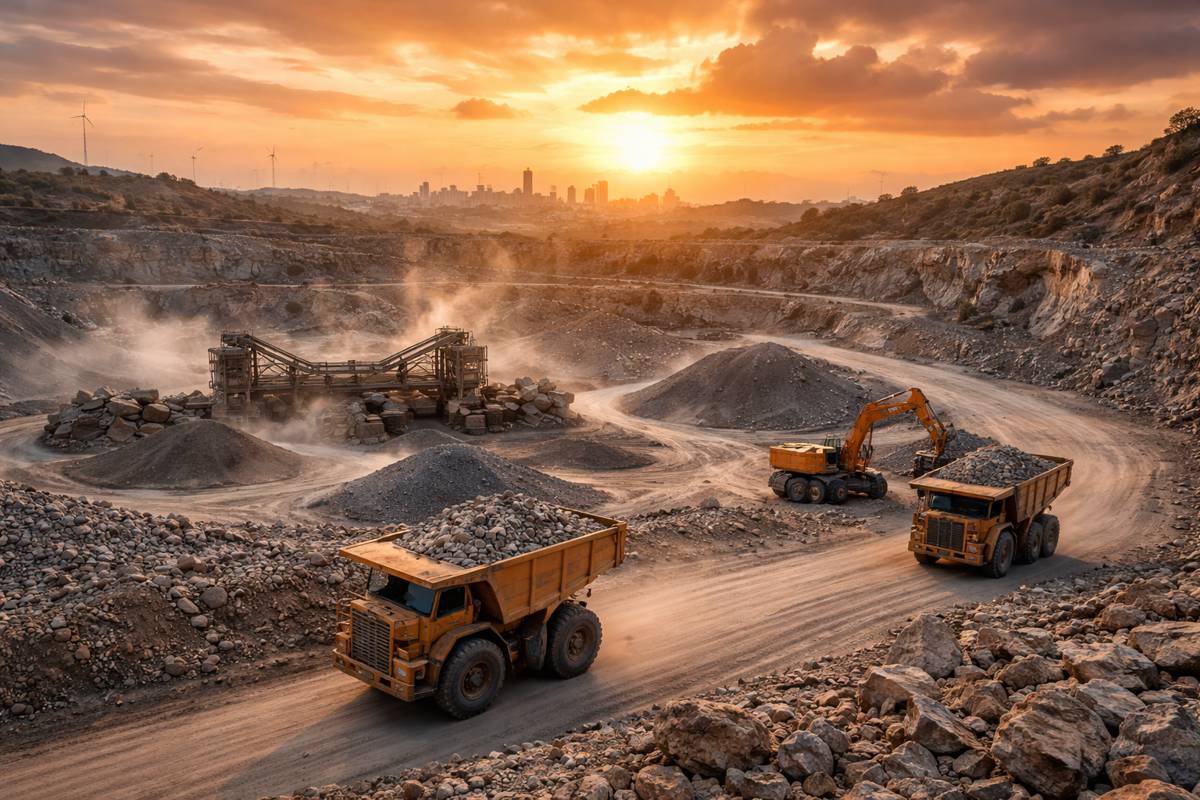
China, Processing Power, and the Global Reality of Dependency
No discussion of strategic minerals can avoid the processing question.
The world does not simply depend on where minerals are mined. It depends on where they are refined, processed, and converted into usable industrial inputs. This is where geopolitical concentration becomes more consequential. Even if raw material extraction is diversified, processing bottlenecks can maintain dependency exposure.
For critical minerals such as rare earth elements, graphite, and battery materials, processing and refining capacity has historically clustered in a small number of countries. That concentration is now being viewed as a strategic vulnerability, particularly in Europe and North America.
The EU’s policy responses are a recognition of this problem. The CRM Act is designed to strengthen capacity along all stages of the value chain, not just extraction. This is a fundamental point: extraction alone does not deliver industrial security. Processing and manufacturing capacity are equally important.
This matters for construction and infrastructure because processing capacity influences equipment supply chains, electronic components, and the price stability of industrial inputs. The push for electrified construction equipment, digital jobsite technologies, and automated plant systems will only intensify dependency on processed mineral supply chains.
For investors, processing is also where value is captured. Mining provides feedstock, but processing often determines margins and strategic leverage. Governments trying to “re-shore” material security will likely target processing investments, potentially offering incentives but also increasing regulatory oversight.
It is worth noting that this strategic turn does not automatically mean a mass return to domestic mining in every country. Some jurisdictions will pursue diversification through international partnerships, long-term contracts, and strategic stockpiles rather than domestic extraction. Others may focus on recycling and substitution. The strategic shift is not a single playbook. It is a global trend with local variations.
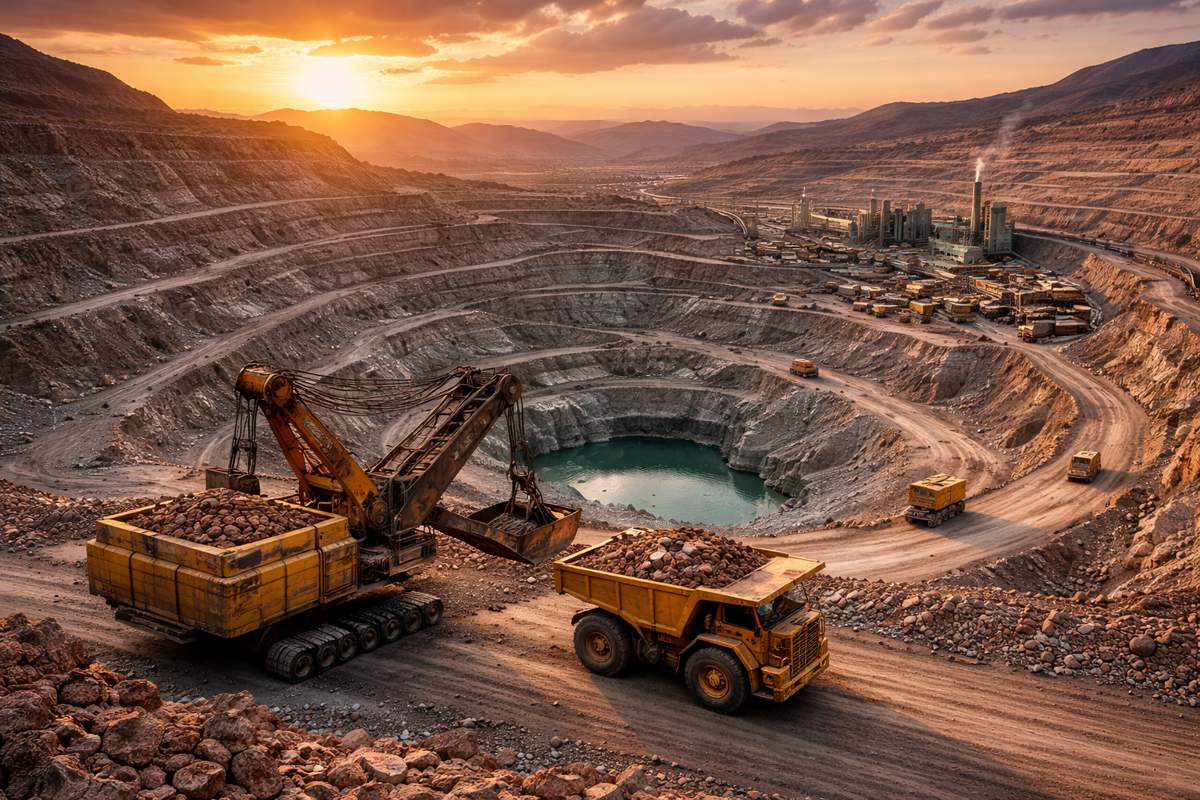
Circular Economy and Recycling
In many policy discussions, recycling is presented as the clean solution to mineral demand growth. The logic is appealing: recover valuable materials from end-of-life products, reduce reliance on new mining, and shrink environmental impacts.
Recycling will be crucial, and the EU’s CRM Act explicitly includes circularity as a pillar of resilience. But the practical constraints are often understated.
Recycling depends on existing stocks of materials embedded in products. For many transition minerals, the largest volumes are still being deployed now and will remain in use for years or decades. The scrap supply does not instantly expand to meet demand. It expands slowly, following product lifecycles.
There are also technical challenges. Some materials are difficult to separate economically. Others are dispersed in small quantities across multiple components. Recycling infrastructure requires investment, and collection systems must be built to recover products at end of life.
For construction, circularity plays out differently. Aggregates and concrete can be recycled, but quality requirements, contamination issues, and logistics costs influence viability. Recycled aggregates have an important role in reducing demand for virgin material, particularly in urban environments where demolition waste is abundant. However, major new infrastructure projects often require consistent high-quality inputs, and virgin material remains essential.
In practice, strategic material security will require a combination of new extraction, better processing, targeted recycling, and smarter consumption patterns. The idea that recycling alone can eliminate mining is not supported by current demand projections.
The World Bank’s mineral intensity work also emphasises that technology improvements and recycling could affect demand trajectories, but the overall scale of required minerals remains vast.
A rational strategy treats recycling as a major contributor over time, not a substitute for near-term supply.
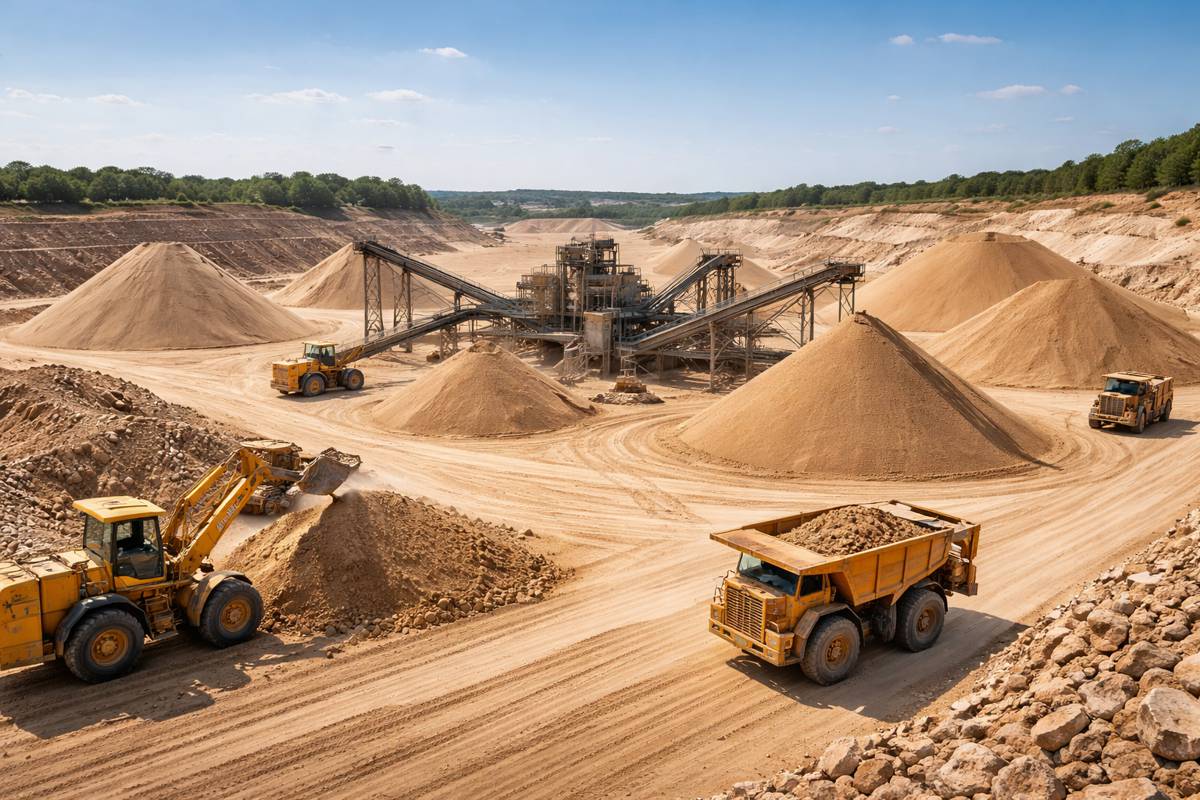
Environmental and Social Performance Will Decide Which Projects Survive
The renewed strategic status of mining and quarrying does not grant the sector a free pass. If anything, it increases scrutiny.
Strategic industries become more politically visible. That visibility attracts higher expectations around environmental standards, community engagement, labour practices, and long-term land stewardship. Mining projects that fail to secure social licence will struggle, regardless of national policy support.
This is especially true in democratic societies where permitting decisions can be challenged in court or blocked by local opposition. But it also applies globally as ESG requirements spread through supply chains and financing frameworks. Investors increasingly demand credible environmental performance, not just production volume.
At the same time, the construction and infrastructure sector faces its own sustainability pressures. Cement and steel remain major sources of emissions. Aggregates extraction impacts landscapes and ecosystems. Asphalt production is energy intensive. Modern infrastructure strategy must navigate these trade-offs, and the sector is under pressure to decarbonise without stalling delivery.
This is where mining and quarrying’s strategic reset becomes more complex. Governments want secure domestic supply, but they also want lower environmental impact. Companies face pressure to meet both requirements, often while operating in politically sensitive environments.
The likely result is that innovation will become a competitive necessity. Electrified mining equipment, low-emission haulage, automation, digital monitoring, improved water management, and better tailings stewardship will increasingly be viewed not as optional upgrades, but as conditions for continued operation.
The strategic era may therefore accelerate the sector’s technological evolution, particularly in regions where policy support is tied to sustainability performance.
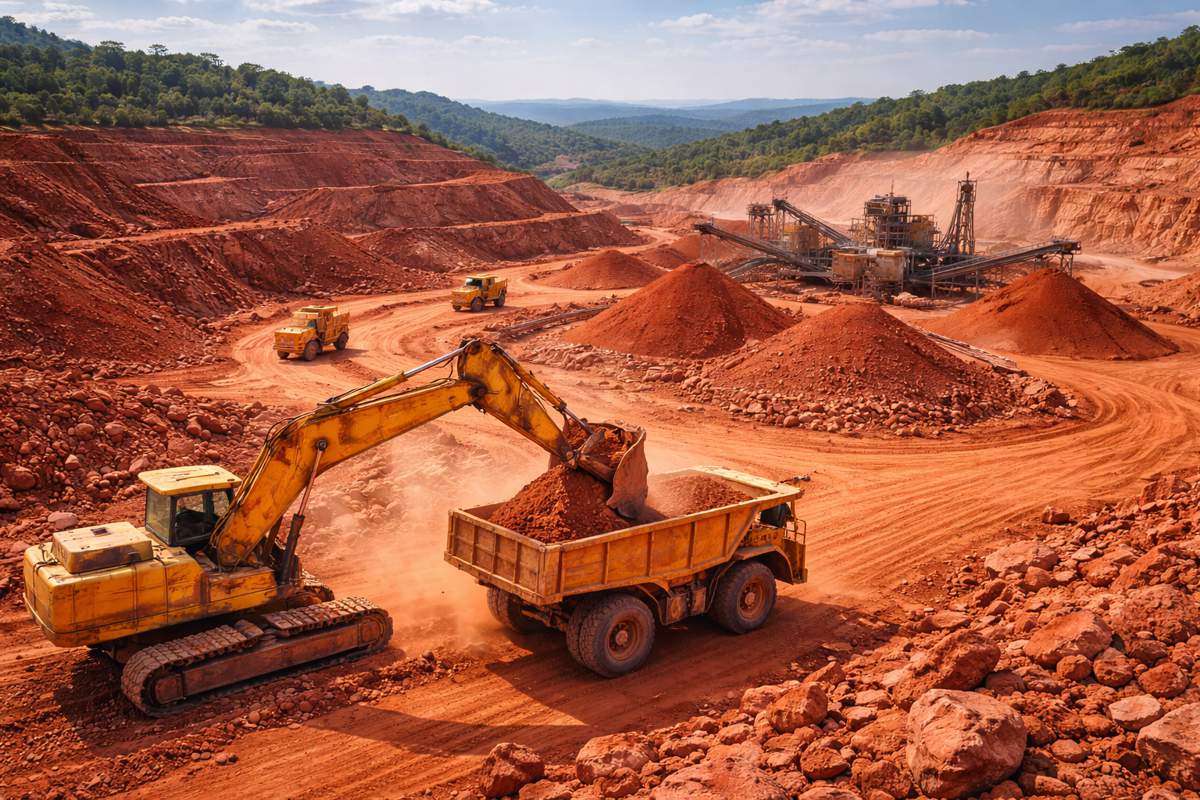
Digital Planning and Materials Intelligence Will Become Infrastructure Essentials
Infrastructure delivery is entering a phase where materials risk must be managed proactively, not reactively. That shift will require better data, better forecasting, and more transparent supply chain visibility.
In construction, this aligns with the wider push towards digital delivery models. BIM, digital twins, asset management platforms, and predictive analytics have often been positioned as productivity tools. Increasingly, they will become risk management tools for materials and supply continuity.
Material volatility can derail projects. Long lead times can break schedules. Logistics bottlenecks can inflate costs. Digital tools can help forecast demand, optimise procurement, and coordinate deliveries across complex programmes.
Mining and quarrying itself is also being reshaped by digital adoption. Automated drilling, real-time monitoring, AI-assisted exploration, and remote operations are changing the economics of extraction. This has implications for safety, workforce planning, and productivity. But it also has geopolitical implications: countries with stronger digital mining ecosystems may be able to develop resources faster and more efficiently.
For policymakers, materials intelligence should become part of national infrastructure planning. That means mapping domestic resources, identifying supply vulnerabilities, building processing capacity where feasible, and aligning infrastructure rollouts with realistic material availability.
The sector can no longer afford a planning model where infrastructure is designed first and materials are sourced later. In a strategic era, materials must be planned as deliberately as roads, bridges, and rail corridors.
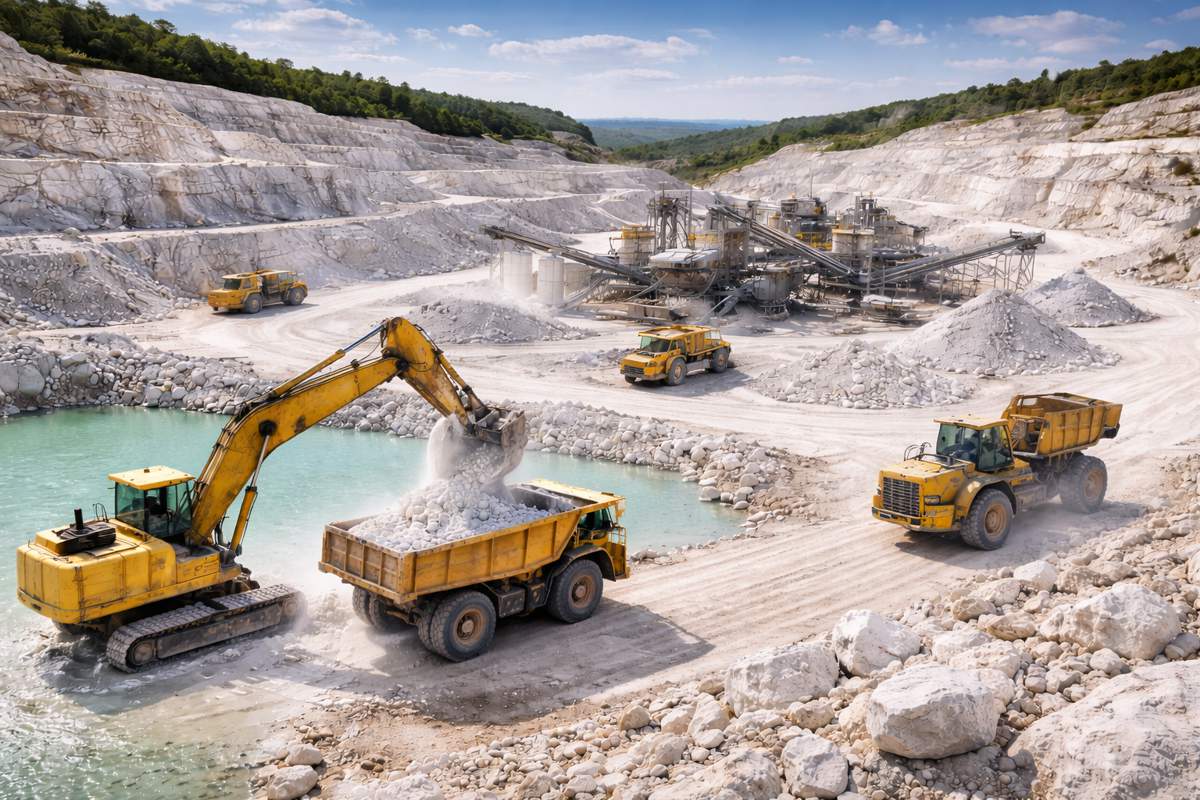
A New Industrial Reality Built From Rock, Ore, and Political Will
Mining and quarrying are becoming strategic industries again because the modern world has rediscovered its dependence on physical materials. There is no clean energy transition without minerals. There is no infrastructure renewal without aggregates. There is no industrial competitiveness without secure access to the inputs that manufacturing and construction require.
The past decade has exposed the fragility of global supply chains and the dangers of over-concentration in processing capacity. Policymakers have responded by shifting from market optimism to strategic intervention. The EU’s Critical Raw Materials Act and related project pipelines are part of that pattern, aimed at securing supply and strengthening resilience in the face of growing vulnerability.
At the same time, the scale of materials required for decarbonisation is immense. The World Bank’s mineral intensity work highlights the vast quantities needed for deploying clean energy and storage technologies, and the IEA continues to track strong growth in demand across key critical minerals.
The construction industry sits at the centre of this story, even when it isn’t explicitly named. Infrastructure programmes are ultimately material programmes. Without long-term planning for aggregates, cement, steel, and critical minerals, ambitious projects become fragile promises.
The strategic return of mining and quarrying does not mean a return to old ways. The next era will be shaped by tougher environmental expectations, community engagement requirements, and technology-driven productivity demands. It will also be shaped by geopolitics, with countries increasingly treating material supply as a form of national leverage and resilience.
For construction professionals, investors, and policymakers, the message is plain enough. The world is entering an age where the upstream industries matter again, and where the rockface is linked directly to national strategy. Mining and quarrying are no longer the backdrop to progress. They are the ground beneath it.