Cat Signals a Strategic Shift in Hauling with the 707 Wide Body Truck
Across mining, quarrying and large-scale earthmoving operations, hauling efficiency often decides whether a project runs smoothly or slowly bleeds margin. Wide body trucks sit at the centre of that equation, particularly in regions where infrastructure investment is accelerating but operational conditions remain punishing.
The Cat 707 wide body truck marks a meaningful expansion of Caterpillar’s hauling portfolio, not just as a new machine, but as a signal of how global OEMs are responding to the realities of emerging and fast-developing markets.
Developed for regions operating under U.S. EPA Tier 3 and equivalent emissions standards, the Cat 707 is aimed squarely at Africa, the Middle East, Asia Pacific, South America, Southeast Asia and Eurasia. These markets share common challenges: demanding duty cycles, variable fuel quality, harsh environments and an overriding need for uptime. In that sense, the Cat 707 is less about technological novelty and more about industrial pragmatism, longevity and lifecycle value.
A Purpose-Built Wide Body Platform for Global Operations
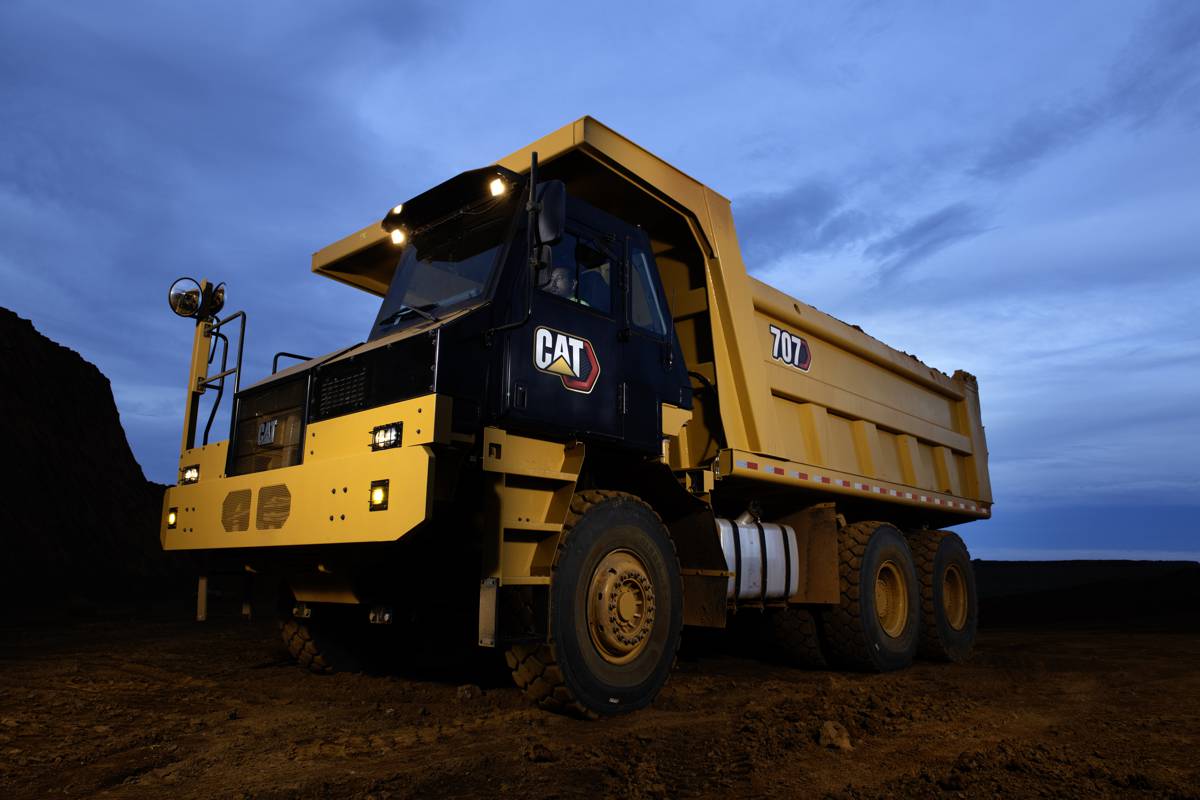
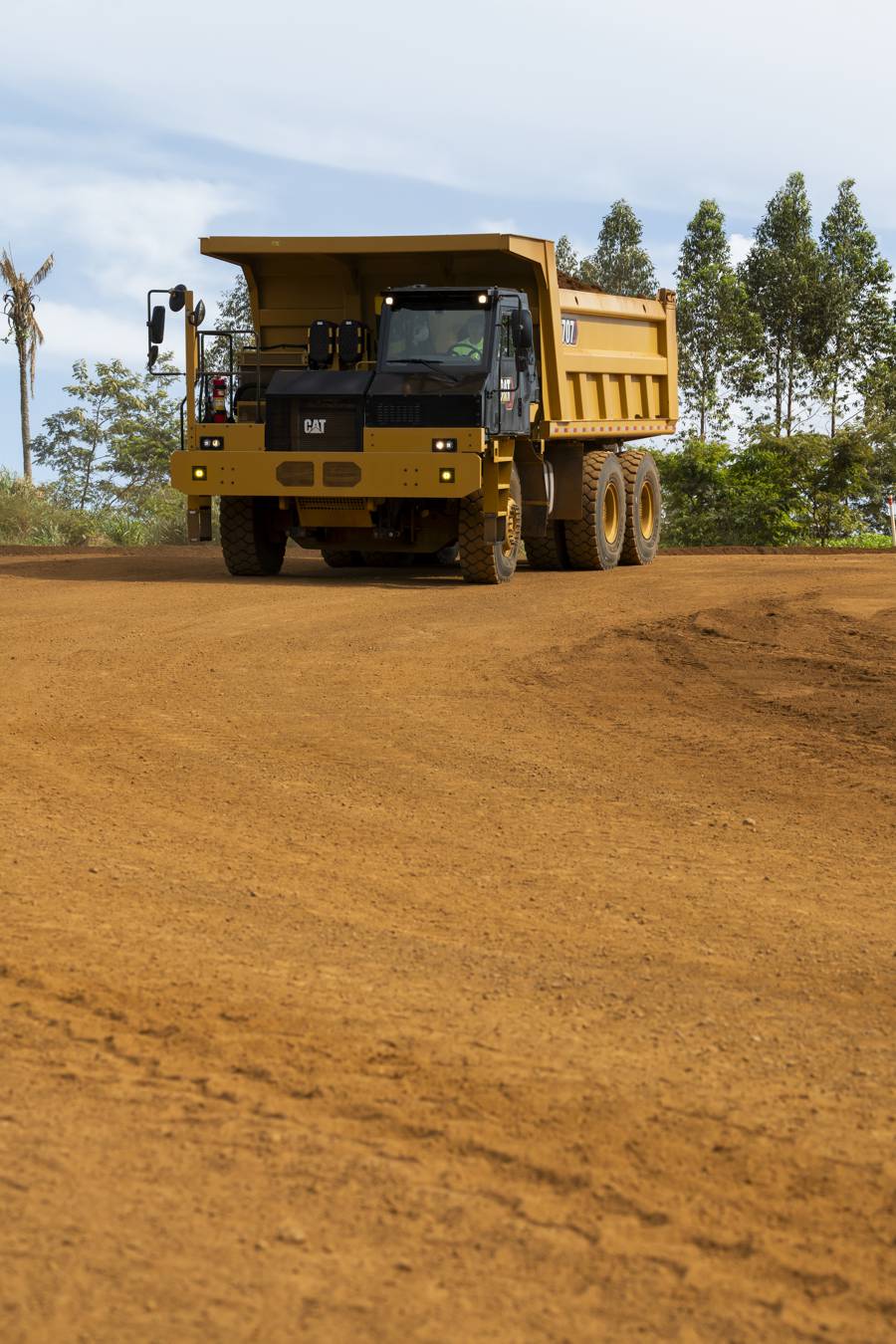
The Cat 707 enters service as a 66-tonne class wide body truck, positioned to handle the material volumes typical of open-pit mining, quarrying and major infrastructure projects. Rather than adapting an existing design, the platform has been engineered as part of a new product family, broadening Caterpillar’s hauling systems range in a deliberate and structured way.
At its core is a fully integrated Cat powertrain, combining a Cat C13 engine, Cat automatic transmission and proprietary Cat axles. This integrated approach matters in markets where component compatibility, service familiarity and parts availability directly influence machine availability. By controlling the entire driveline, Caterpillar reduces the risk of mismatched systems and simplifies long-term maintenance planning.
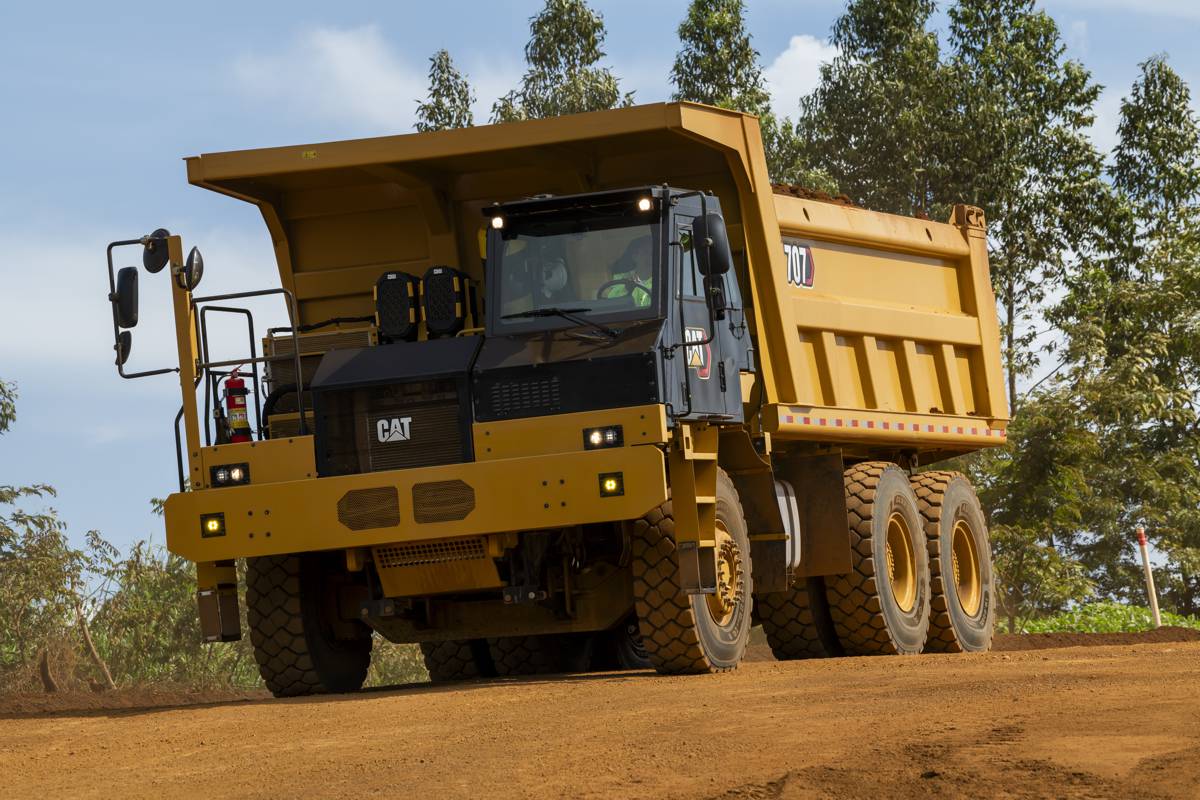
The truck is offered with 40 or 42 cubic metre body options, along with standard or heavy-duty configurations. This flexibility allows fleet managers to tailor the truck to specific materials and site conditions, whether hauling blasted rock in a quarry or overburden in a mining operation. In practical terms, that adaptability supports better payload matching and helps avoid the inefficiencies that come from running over- or under-specified equipment.
Engine Options That Reflect Regulatory and Operational Reality
Powering the Cat 707 is a choice of two C13 engine configurations, each aligned to different regulatory environments. For regions requiring China Nonroad Stage IV compliance, the truck can be specified with the 400 kW Cat C13B. Alternatively, the 358 kW Cat C13 meets emissions equivalent to U.S. EPA Tier 3 standards, a regulatory baseline still common across many developing economies.
Both engines are fitted with a high-rated engine brake as standard, recognising the importance of controlled downhill performance in loaded conditions. When combined with the six-speed automatic transmission, operators benefit from consistent power delivery and predictable response, even on variable haul roads.
An optional integrated hydraulic retarder further enhances braking and speed control, particularly on long downhill hauls. Together with the engine brake and service braking system, the Cat 707 provides three distinct levels of braking and retardation. This layered approach is designed to improve safety, reduce brake wear and support faster, more confident cycle times.
Built for Rebuild, Not Just for First Life
One of the more telling aspects of the Cat 707’s design philosophy is its emphasis on rebuildability. Rather than treating rebuilds as an afterthought, the truck has been engineered from the outset to support a second lifecycle, extending its productive life well beyond the initial service period.
This approach reflects a broader shift in capital equipment strategy. In many regions targeted by the Cat 707, access to capital is constrained and fleet renewal cycles are longer. Machines that can be economically rebuilt offer a compelling advantage, allowing operators to extract more value from their initial investment without sacrificing reliability.
As Angel Gonzalez, Global Product Specialist at Caterpillar, explained: “With its foundation of reliable operation and a cost-effective rebuild option, the new 707 wide body has been engineered, manufactured and field-tested using the latest technologies to ensure the truck is ready for work. This is the first Cat wide body truck model in a new product family that broadens the Cat hauling systems portfolio.”
That emphasis on mechanical availability and long-term durability aligns closely with Caterpillar’s established rebuild programmes, which are widely used in mining and heavy construction to manage lifecycle costs.
Matching Productivity Across the Jobsite
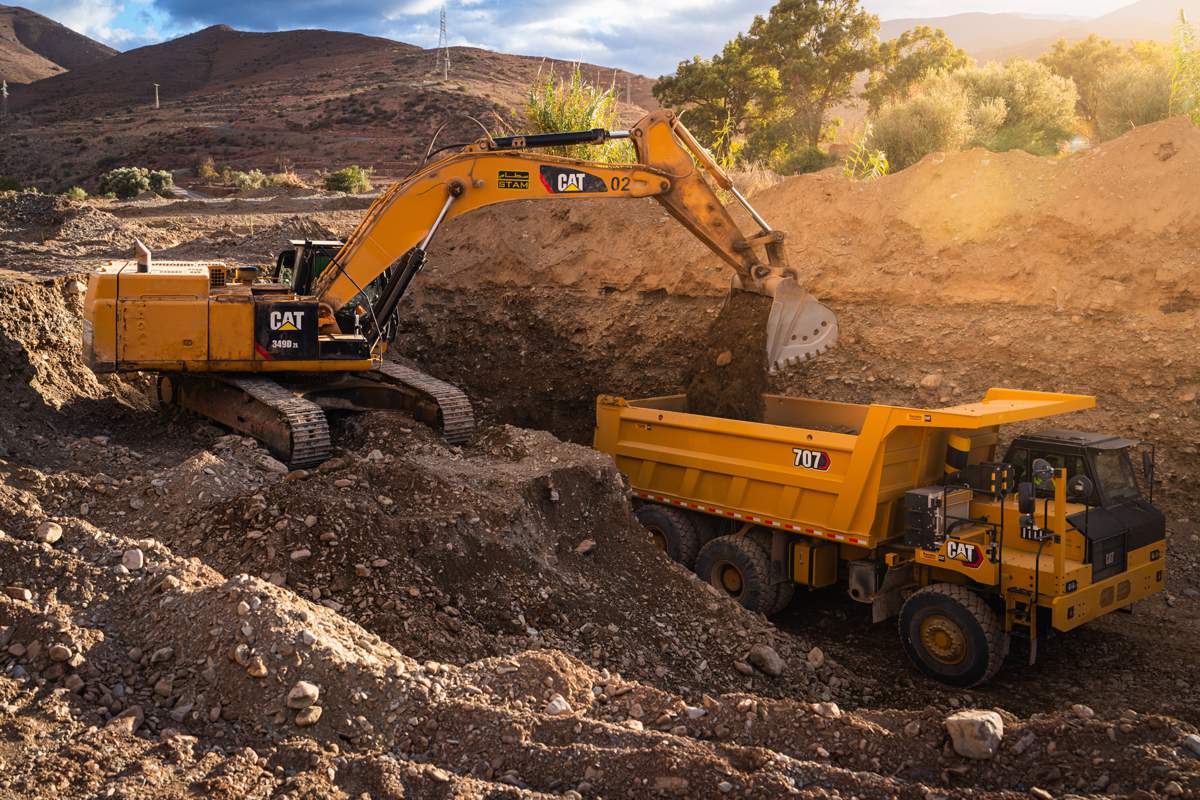
Hauling productivity does not exist in isolation. The efficiency of a wide body truck is tightly linked to how well it integrates with the rest of the loading fleet. The Cat 707 has been designed to pair effectively with Cat wheel loaders such as the 986, 988 and 988 XE, as well as Cat excavators including the 350, 374 and 395.
These pass matches are significant because they reduce idle time at the loading face, balance cycle times and improve overall material movement efficiency. In large-scale operations, small gains in cycle consistency can translate into substantial productivity improvements over the life of a project.
From a systems perspective, this compatibility reinforces Caterpillar’s strategy of offering complete, integrated site solutions rather than isolated machines. For contractors and mine operators, that integration can simplify fleet planning, operator training and maintenance support.
Operator Environment Designed for Practical Use
Operator comfort and safety remain critical factors in productivity, particularly on long shifts in demanding environments. The Cat 707 features a left-side operator seat as standard, improving visibility and alignment with loading operations. An optional right-side instructor seat supports training and skills transfer, an important consideration in regions where experienced operators may be in short supply.
The cab is mounted using a robust four-point system, helping to isolate the operator from vibration. Protection is provided by a standard falling object protective structure, with an optional rollover protective structure available depending on site requirements. These features reflect the realities of working in active mining and quarrying environments, where overhead hazards and uneven terrain are part of daily operations.
Visibility and manoeuvrability are further supported by an available reversing camera, while automatic shifting and straightforward gear selection reduce operator workload. The hoist system, capable of 20-second raise and lower cycle times, helps maintain fast dumping cycles without compromising control.
Lifecycle Efficiency Through Design and Support
Beyond initial performance, the Cat 707 has been engineered with lifecycle efficiency firmly in mind. The integrated powertrain is mounted to a reinforced chassis, providing a durable foundation capable of withstanding repeated heavy-duty cycles.
Grouped service points simplify routine maintenance, reducing downtime and labour costs. A ground-level engine shut-off switch enhances safety by allowing the engine to be stopped quickly during servicing or in an emergency. Parts commonality with other Cat machines, including shared use of the C13 engine, CX31RT transmission and common cab components, further reduces inventory complexity and operating costs.
Lighting is handled by LED systems designed for longer service life, lower power consumption and improved resistance to vibration and moisture. These seemingly modest details can have a meaningful impact on reliability and maintenance frequency, particularly in remote or high-utilisation sites.
When combined with Caterpillar Customer Value Agreements, the design supports a structured approach to maintenance and lifecycle management. CVAs provide scheduled servicing, parts availability and support planning, helping operators maximise uptime across both the initial service life and subsequent rebuild phase.
Why the Cat 707 Matters to the Global Infrastructure Ecosystem
The significance of the Cat 707 extends beyond its specifications. It reflects how major equipment manufacturers are aligning product development with the economic and operational realities of global construction and resource markets.
As infrastructure investment accelerates across Africa, Asia and South America, demand for reliable, high-capacity hauling solutions continues to grow. At the same time, operators face pressure to manage costs, extend asset life and maintain productivity in challenging environments. Equipment that prioritises durability, rebuildability and system integration is increasingly favoured over short-term performance gains.
In that context, the Cat 707 represents a pragmatic response to market demand. It reinforces Caterpillar’s long-standing focus on lifecycle value while expanding its presence in the wide body truck segment. For contractors, miners and infrastructure developers operating under Tier 3 and equivalent emissions standards, it offers a hauling platform designed to deliver steady, predictable performance over the long haul.
Availability and Regional Focus
The Cat 707 is available in select regions operating under U.S. EPA Tier 3 equivalent and China Nonroad Stage IV emissions standards, including Africa, the Middle East, Asia Pacific, South America, Southeast Asia and Eurasia. Availability varies by market, with regional Cat dealers providing guidance on specifications, lead times and support options.
By targeting these regions with a purpose-built wide body truck, Caterpillar is reinforcing its commitment to supporting infrastructure development where it is most urgently needed. In doing so, the Cat 707 becomes not just another machine in the catalogue, but a strategic tool for enabling large-scale projects across the developing world.