Materials Research Powering Industrial Resilience
For the global construction, infrastructure and industrial technology sectors, materials performance is rarely a background issue. It dictates asset lifespans, operating efficiency, maintenance cycles and, ultimately, commercial competitiveness. In energy-intensive industries such as steelmaking, petrochemicals and advanced manufacturing, the difference between success and failure often comes down to how materials behave under relentless heat and mechanical stress.
Against that backdrop, the long-running collaboration between Oak Ridge National Laboratory and Duraloy Technologies offers a compelling case study in how public-private partnerships can translate fundamental science into durable industrial advantage. Spanning more than three decades, the relationship has reshaped Duraloy’s business trajectory while demonstrating how sustained investment in materials research underpins resilience across global infrastructure supply chains.
A Near-Collapse That Forced a Strategic Rethink
When Duraloy changed ownership in 1994, the company was on the brink. Financial pressures were compounded by reliance on outdated alloy systems that struggled to meet the rising thermal and durability demands of modern industrial furnaces. Survival required more than cost-cutting or incremental upgrades. It demanded a fundamental rethink of the company’s technological foundation.
The leadership team, including Vice President Roman Pankiw, recognised early on that in-house resources alone would not be enough. Advanced alloy development is capital-intensive, slow and technically complex, particularly for small and mid-sized manufacturers. Access to world-class metallurgical expertise became a strategic necessity rather than a luxury.
ORNL, with decades of leadership in high-temperature materials, emerged as a natural partner. The laboratory’s track record in nickel-based alloys, aluminides and other materials designed for extreme environments had already influenced aerospace, energy generation and heavy manufacturing. Crucially, ORNL had also built a reputation for moving discoveries beyond the lab bench and into commercial deployment.
Why High-Temperature Alloys Matter to Infrastructure
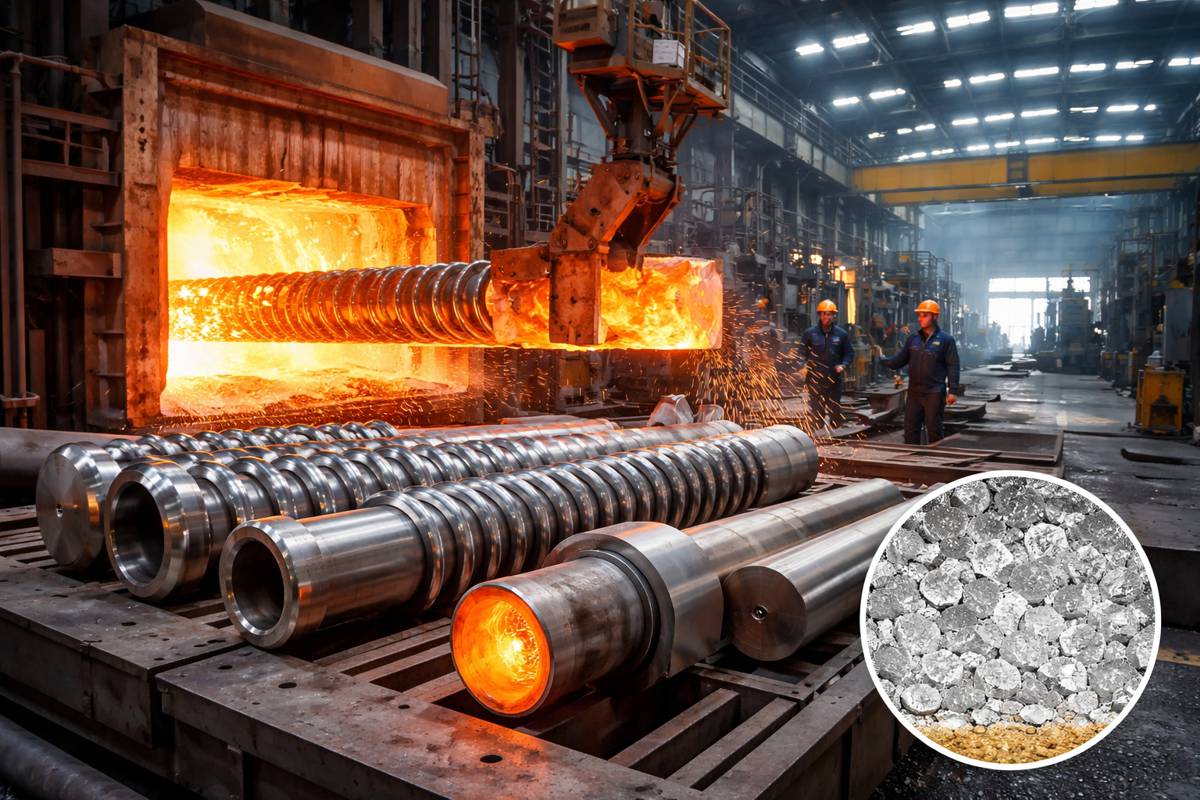
In steel mills and heat treatment facilities, components are routinely exposed to temperatures that push conventional alloys to their limits. Furnace rolls, retorts and supports can warp, oxidise or creep under prolonged heat, damaging processed materials and forcing costly shutdowns.
From an infrastructure perspective, these failures ripple outward. Downtime disrupts supply chains. Energy inefficiency raises operating costs and emissions. Premature component replacement increases material waste. As global infrastructure investment accelerates and decarbonisation pressures mount, materials that can tolerate higher temperatures while maintaining structural integrity are no longer niche innovations. They are strategic enablers.
This is where ORNL’s work on nickel aluminides entered the picture. Pankiw had become aware of a cast nickel aluminide alloy known as IC-221M through technical trade publications in the mid-1990s. Designed for industrial heat treatment applications, the alloy offered a fundamentally different approach to high-temperature performance.
From Laboratory Insight to Mill-Floor Reality
IC-221M stood out because of its chemistry and behaviour. Composed primarily of nickel with around 13 percent aluminium, it belonged to a class of ordered intermetallic materials rather than traditional nickel-chromium-iron alloys. At elevated temperatures, it formed a stable aluminium oxide layer on its surface, providing inherent oxidation resistance.
For steel producers, this translated into tangible operational benefits. Components made from IC-221M were far less prone to deformation, reducing the risk of surface defects in steel products. Maintenance intervals extended dramatically. Plants that had previously shut down every couple of weeks to refurbish worn parts could operate continuously for far longer periods.
After initial discussions in 1995, Duraloy and ORNL embarked on a collaborative process of refinement and testing. The real proof arrived in the early 2000s, when IC-221M demonstrated consistent performance in demanding steel mill environments. Operators were able to increase furnace temperatures safely, improving throughput and energy efficiency at the same time.
The impact was not merely technical. Reduced downtime meant lower operating costs. Improved product quality strengthened customer relationships. Over time, IC-221M helped reposition Duraloy from a struggling supplier into a materials innovator with defensible intellectual property.
Building a Platform for Long-Term Growth
Although IC-221M’s peak adoption occurred in the early 2000s, its broader significance lies in what followed. The alloy became a learning platform, generating insights into aluminium-forming behaviour, oxidation resistance and high-temperature strength that informed subsequent generations of materials.
One direct outcome was the development of advanced alloys such as TMA6350, now widely deployed in chemical processing environments. These materials extended the same core principles into more aggressive settings, including ethylene cracking furnaces and powder metal production, where conventional alloys degrade rapidly.
As a result, Duraloy expanded beyond its traditional steel industry base into petrochemical processing, aerospace components, heat treatment systems and titanium forming applications. Its alloys are now used in spiral retorts, furnace rolls, high-temperature supports and forming dies, reflecting a diversification driven by materials performance rather than market opportunism.
“Our business has grown exponentially because of these developments,” Pankiw said.
The growth also mirrors broader industrial trends. As chemical plants, refineries and advanced manufacturing facilities push for higher efficiency and lower emissions, materials that enable hotter, cleaner and longer-lasting processes become strategic assets rather than interchangeable commodities.
A Collaboration Model That Goes Beyond Licensing
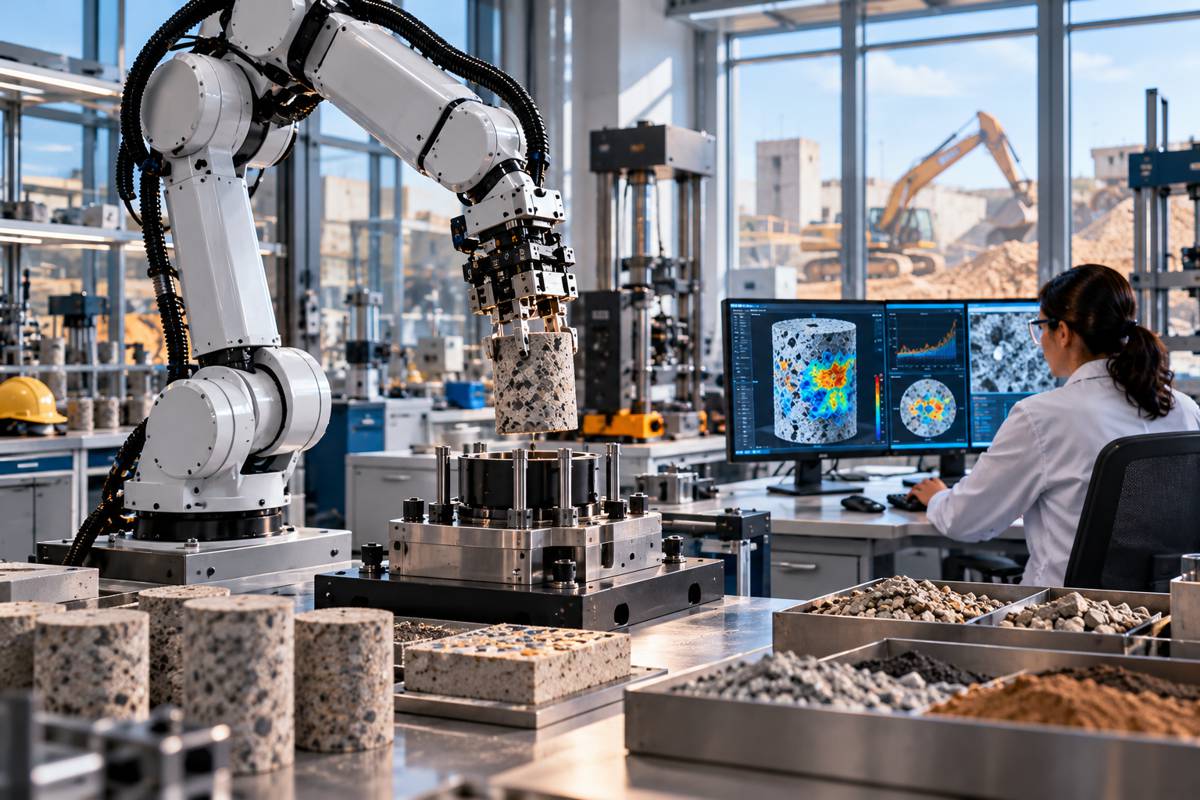
What distinguishes the ORNL-Duraloy relationship is its longevity and depth. Rather than a one-off technology transfer, the partnership evolved into a sustained collaboration characterised by frequent communication and shared problem-solving. Researchers and engineers worked together to bridge the often-difficult gap between laboratory discovery and scalable manufacturing.
Over nearly 30 years, the collaboration has brought multiple alloy systems to market, including H-series materials and alumina-forming austenitic alloys developed with support from the US Department of Energy. Each iteration built on previous knowledge, reinforcing a feedback loop between fundamental research and industrial application.
This approach reflects a broader truth about infrastructure innovation. Breakthroughs rarely emerge fully formed. They require iterative development, real-world testing and close engagement between scientists, manufacturers and end users. Public research institutions play a critical role by absorbing early-stage risk that private firms cannot always justify on their balance sheets.
Competing in a Globalised Materials Market
Despite its success, Duraloy’s journey has not been without challenges. As advanced alloys move from niche to mainstream adoption, global competition intensifies. Manufacturers in regions with heavy state support can exert downward pressure on prices, forcing companies to balance cost reduction with performance integrity.
ORNL continues to support Duraloy in this environment by helping identify lower-cost formulations and production techniques that preserve high-temperature efficiency. This ongoing collaboration underscores another often-overlooked benefit of public-private partnerships: resilience against volatile global markets.
From an infrastructure policy perspective, the implications are significant. Domestic materials innovation reduces dependence on foreign suppliers, strengthens industrial ecosystems and supports long-term economic security. In sectors critical to energy, transport and manufacturing infrastructure, these considerations increasingly intersect with national strategy.
Recognition and Lessons for the Wider Industry
The effectiveness of the ORNL-Duraloy partnership has not gone unnoticed. It was recognised with a Federal Laboratory Consortium Excellence in Technology Transfer Award, highlighting its success in moving publicly funded research into commercial impact.
For companies considering similar collaborations, Pankiw points to the importance of openness and continuity. Strong relationships with laboratory researchers, coupled with early involvement of end users in pilot projects, can accelerate adoption and de-risk innovation.
“It all starts with the material,” he said. “But it’s the partnership that turns the material into impact.”
That insight resonates far beyond metallurgy. As the construction and infrastructure sectors confront decarbonisation, digitalisation and supply-chain uncertainty, the ability to convert scientific capability into deployable solutions will define the next generation of industrial leaders.
Sustained Research as an Infrastructure Enabler
ORNL is managed by UT-Battelle for the US Department of Energy’s Office of Science, the largest supporter of basic research in the physical sciences in the United States. While such institutional details often sit at the margins of industry discussions, their relevance becomes clear in cases like this.
Without long-term public investment in materials science, alloys such as IC-221M would never have progressed beyond theoretical promise. Without an industrial partner willing to commit to scale-up and market deployment, that promise would have remained academic.
For global infrastructure stakeholders, the lesson is straightforward. Durable bridges, efficient plants and resilient transport systems are built not only from concrete and steel, but from the invisible scaffolding of research partnerships that turn materials science into real-world performance.