Ouster Expands Its Physical AI Platform with the Acquisition of StereoLabs
The global construction, infrastructure and industrial automation sectors are entering a phase where autonomy is no longer a laboratory concept but a commercial and operational requirement. From automated plant and machinery to intelligent transport systems and safety-critical infrastructure, decision-makers are increasingly demanding perception systems that can reliably interpret complex, dynamic physical environments.
Today the acquisition of StereoLabs by Ouster marks a strategic inflection point that extends well beyond a simple technology bolt-on.
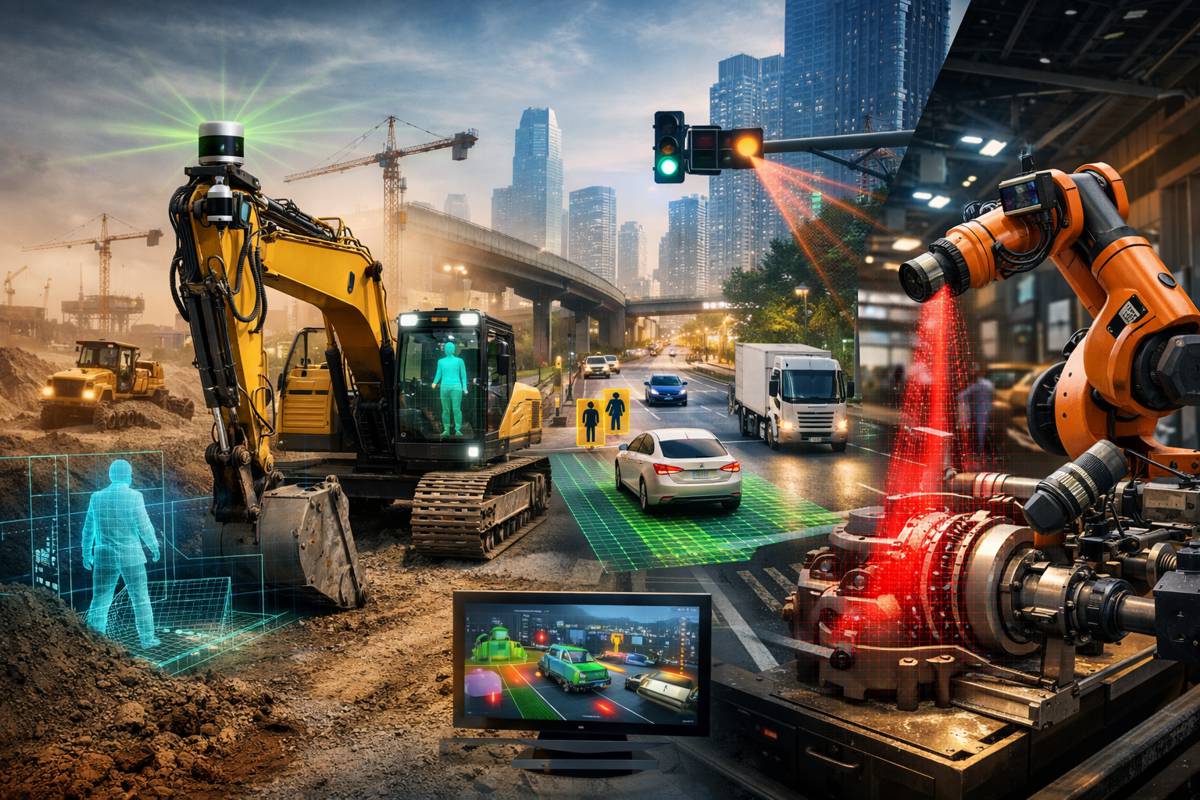
Completed on February 4, 2026, the transaction positions Ouster to deliver what it describes as the first unified sensing and perception platform purpose-built for Physical AI. By bringing together high-performance digital lidar, stereo vision cameras, AI compute, sensor fusion pipelines and perception software under a single architecture, the deal responds to a shift that is already underway across construction sites, logistics hubs, ports, roads and factories. Automation is evolving into Physical AI, where machines must not only follow instructions but continuously sense, interpret, learn and act within the real world.
For infrastructure owners, contractors, equipment manufacturers and policymakers, the significance lies in what this convergence enables. Reliable perception is now a prerequisite for safer autonomous machinery, more resilient transport networks and smarter infrastructure assets. Fragmented sensor stacks have long slowed adoption. A unified platform changes that equation.
Why Sensor Fusion Has Become a Commercial Imperative
In industrial environments, relying on a single sensing modality has proved insufficient. Cameras offer rich contextual information but struggle with depth accuracy and performance in low-light or adverse weather. Lidar excels at precise ranging and spatial awareness yet lacks semantic understanding on its own. The next generation of autonomous systems demands both, working in concert.
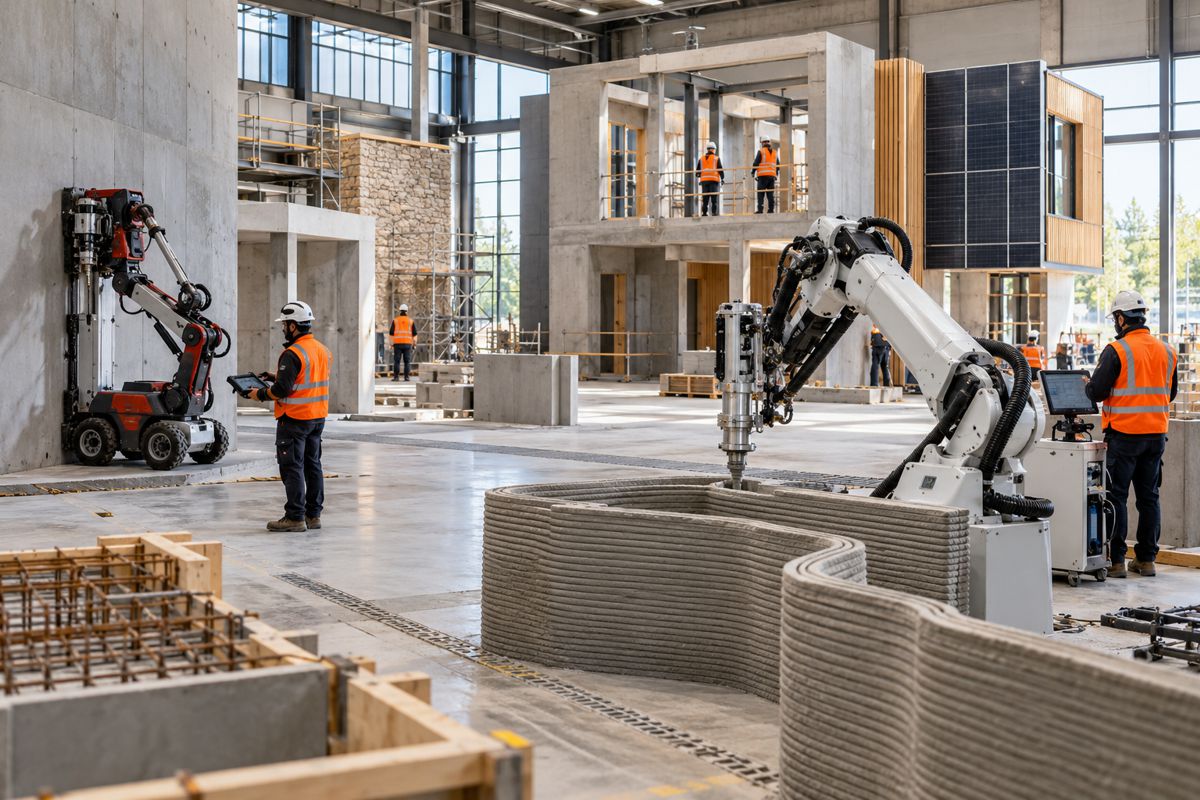
That requirement is particularly acute in construction and infrastructure, where environments are unstructured, constantly changing and often hazardous. Autonomous earthmoving equipment, robotic inspection systems and intelligent traffic management platforms must detect objects, understand their context and respond in real time. Sensor fusion is no longer an optimisation. It is the foundation for safe, scalable autonomy.
The acquisition reflects this reality. StereoLabs has built its reputation on high-quality 3D vision and perception software, with more than 90,000 ZED stereo cameras shipped to over 10,000 customers since its founding in 2010. Its technology is already embedded in industrial-grade robotics, inspection platforms and smart infrastructure deployments. By integrating that capability with Ouster’s digital lidar portfolio, the combined platform directly addresses the core perception challenges that have constrained deployment at scale.
From Automation to Physical AI Across Infrastructure
The language of Physical AI is increasingly shaping how technology vendors frame the next phase of autonomy. Unlike rule-based automation, Physical AI systems continuously adapt to their environment, learning from sensor data and refining their behaviour over time. In infrastructure contexts, that translates into machines and systems that can operate safely alongside people, respond to unpredictable conditions and support long-term asset management.
This shift has tangible implications. Autonomous construction equipment must navigate mixed traffic on work sites. Intelligent transport systems must detect incidents, vulnerable road users and evolving congestion patterns. Industrial robots must manipulate objects with precision while maintaining safety. Each use case depends on perception systems that combine spatial accuracy with contextual awareness.
By consolidating lidar, vision and AI perception within a single platform, Ouster is seeking to reduce the engineering burden that has historically fallen on system integrators and end users. Instead of stitching together disparate sensors, calibration tools and software stacks, customers can access synchronised and calibrated data out of the box. For an industry grappling with skills shortages and cost pressures, that simplification matters.
A Platform Strategy with Infrastructure Scale in Mind
Platform strategies are not new in industrial technology, but they are becoming more relevant as projects scale across regions and asset lifecycles stretch into decades. Infrastructure investors and public authorities increasingly favour solutions that reduce integration risk and offer long-term supportability.
The combined Ouster-StereoLabs platform aligns with those priorities. High-density stereo camera data complements the range and accuracy of digital lidar, improving object detection, navigation and safety functions. At the same time, shared investments in AI training and perception models allow software capabilities to evolve without wholesale hardware changes.
That matters for smart infrastructure deployments, where retrofitting and lifecycle upgrades are common. A unified sensing and perception stack can be deployed today and refined over time as AI models mature, reducing the risk of technological obsolescence.
Leadership Continuity and Developer Ecosystem Stability
Technology acquisitions often falter when integration disrupts product roadmaps or alienates developer communities. In this case, continuity has been positioned as a core principle. StereoLabs will operate as a wholly owned subsidiary, with co-founders Cecile Schmollgruber, Edwin Azzam and Olivier Braun continuing to lead the business.
This stability is particularly relevant given StereoLabs’ active developer ecosystem. Thousands of developers rely on its perception software to build industrial and infrastructure solutions. Maintaining trust with that community is essential if the combined platform is to gain traction beyond early adopters.
StereoLabs CEO Cecile Schmollgruber captured the strategic logic succinctly when she said: “The future of autonomy isn’t about choosing between vision or lidar, it’s about unifying them. By combining StereoLabs’ AI vision with Ouster’s digital lidar, we are creating the world’s most capable perception platform to directly address customers’ primary sensor fusion requirements and enable machines to sense, think, act, and learn in the physical world.”
The emphasis on unification rather than replacement reflects a pragmatic understanding of industrial reality. Customers do not want to discard existing investments. They want systems that work together more effectively.
Financial Signals and Market Confidence
Beyond technology, the transaction sends a financial signal to the market. StereoLabs generated approximately $16 million in unaudited revenue in 2025 and operates as a high-growth, EBITDA-positive business. For Ouster, adding a profitable software-driven business strengthens its financial position and supports its stated path to profitability.
The acquisition was completed using a mix of approximately $35 million in cash and 1.8 million shares, with 0.7 million shares subject to a four-year release period. The structure reflects a balance between immediate integration and long-term alignment, particularly as StereoLabs’ results are consolidated into Ouster’s financial statements from the first quarter of fiscal 2026.
From an investor perspective, the move broadens Ouster’s total addressable market across robotics, industrial automation and smart infrastructure. It also diversifies revenue streams, combining hardware, software and AI models within a single commercial offering.
Implications for Construction, Transport and Smart Cities
For the construction sector, unified perception platforms could accelerate the deployment of autonomous and semi-autonomous machinery, improving safety and productivity on complex sites. Equipment manufacturers are under pressure to deliver smarter machines without passing excessive integration costs onto contractors. A single-source perception stack reduces development time and risk.
In transport infrastructure, the implications are equally significant. Intelligent traffic systems, roadside monitoring and autonomous maintenance platforms all depend on accurate, reliable perception. Combining lidar and vision improves detection of vulnerable road users, temporary hazards and changing site conditions, supporting safer and more adaptive networks.
Smart cities sit at the intersection of these trends. As urban environments become denser and more complex, perception systems must operate across lighting conditions, weather patterns and diverse modes of transport. A unified platform capable of scaling across use cases offers city authorities and operators a more coherent foundation for long-term digital infrastructure strategies.
Software, AI Models and the Long View
One of the less visible but more consequential aspects of the acquisition lies in software and AI model development. Training perception models requires vast, diverse datasets and sustained investment. By pooling resources, Ouster and StereoLabs can accelerate development while improving robustness across environments.
This approach aligns with broader industry trends, where perception performance increasingly differentiates platforms. Hardware alone is no longer enough. The ability to update, retrain and deploy AI models over time determines whether systems remain viable as conditions change.
Ouster CEO Angus Pacala framed the acquisition in those terms when he said: “This acquisition builds on Ouster’s momentum and positions us as the foundational end-to-end sensing and perception platform for Physical AI. StereoLabs is a world-class perception company recognized for its market-leading stereo cameras and AI vision software, making it a natural fit for Ouster’s next stage of growth. With seamless sensor fusion, we are addressing the unprecedented pull for both lidar and vision as industries transition from simple automation towards Physical AI. Together, we offer a unified platform that simplifies and accelerates customer development, harnesses combined investments in AI training and models, brings thousands of new customers into the Ouster ecosystem, and cements our leadership as we enable real-world autonomy across industries.”
The reference to “real-world autonomy” is telling. Infrastructure systems do not operate in controlled environments. They demand resilience, redundancy and continuous learning.
A Broader Signal to the Infrastructure Technology Market
Stepping back, the acquisition reflects a broader consolidation trend within the sensing and perception market. As Physical AI moves closer to deployment at infrastructure scale, customers are gravitating towards integrated platforms with clear roadmaps and commercial stability.
For policymakers and public-sector stakeholders, this trend has implications for procurement and regulation. Unified platforms can simplify certification and safety assurance, provided transparency and interoperability are maintained. At the same time, consolidation raises questions about market concentration and long-term dependency, underscoring the need for open standards and competitive ecosystems.
What is clear is that perception is no longer a niche component. It sits at the heart of how future infrastructure will be designed, built and operated. The Ouster-StereoLabs combination is a concrete response to that reality.