EVS Saudi Arabia 2026 Strengthens the Kingdoms Electric Mobility Ambitions
Saudi Arabia’s push towards electrified transport is gathering pace, and EVS Saudi Arabia 2026 arrives at a pivotal moment. Returning for its second edition at the Jeddah International Exhibition & Conference Center, the event builds on a debut that signalled a clear shift in the Kingdom’s mobility narrative. What began as a new exhibition in 2025 has quickly evolved into a strategic platform aligned with Vision 2030 and the country’s wider economic diversification agenda.
For construction professionals, infrastructure investors and policymakers, the relevance is obvious. Electric mobility is no longer a niche automotive story. It is an infrastructure story, an energy transition story and, increasingly, a supply chain story. EVS Saudi Arabia has positioned itself squarely at that intersection.
Why Electric Mobility Matters to Infrastructure
Saudi Arabia’s Vision 2030 strategy sets out to diversify the economy, reduce dependence on oil revenues and develop high value sectors including advanced manufacturing, renewable energy and smart infrastructure. Transport electrification is central to that ambition. According to the International Energy Agency, global electric vehicle sales surpassed 14 million units in 2023, accounting for around 18 percent of total car sales worldwide. That trajectory is reshaping grid planning, charging networks, urban design and industrial policy across continents.
In the Gulf region, governments are increasingly investing in charging infrastructure, incentives and regulatory frameworks to stimulate EV uptake. For Saudi Arabia, electrification dovetails with significant renewable energy investments and giga projects that are embedding smart mobility concepts from the outset. Events such as EVS Saudi therefore function as more than product showcases. They serve as convergence points where infrastructure planning, technology deployment and capital allocation meet face to face.
A Defining First Edition in 2025
The inaugural EVS Saudi, held in Riyadh from 4 to 6 May 2025, attracted more than 8,500 visitors from across the GCC, Europe, the United States and Asia. Over 100 exhibitors participated, and more than 300 VIPs, senior executives and policymakers attended. For a first edition, those figures were telling. They reflected not only curiosity, but tangible commercial interest in Saudi Arabia’s emerging e mobility ecosystem.
More than 70 industry experts contributed to over 25 conferences and technical sessions. Topics ranged from battery technology and charging networks to artificial intelligence in transport and green logistics. That breadth of discussion matters. Electrification is not simply about replacing an internal combustion engine with a battery. It demands coordinated thinking across energy generation, distribution, digital infrastructure and fleet management.
On the exhibition floor, brands including Lucid Motors, Lotus Cars, Kia, MINI, Zeekr, Jetour, GMC, Tesla and Volvo Cars showcased vehicles and concepts that highlight how performance, sustainability and digital integration are converging. For local distributors, charging providers and fleet operators, the opportunity to engage directly with global OEMs provided a practical route to partnership discussions.
Building a National Charging Backbone
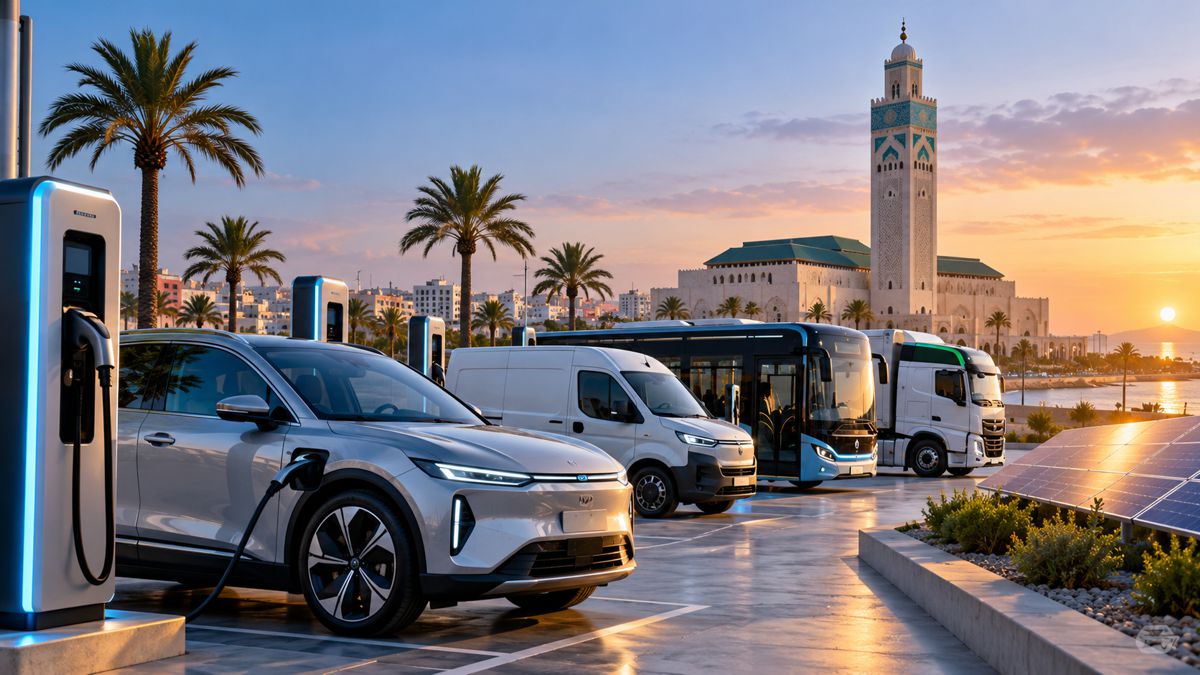
One of the most critical enablers of EV adoption is charging infrastructure. Without visible, reliable networks, consumer confidence falters and fleet electrification slows. In Saudi Arabia, the rollout of public fast charging has been gaining momentum, with organisations such as EVIQ playing a prominent role.
EVIQ’s participation in EVS Saudi underscores the event’s alignment with real world infrastructure deployment. Fast charging hubs, grid connections and location planning are construction intensive undertakings. They require coordination between utilities, transport authorities, contractors and technology suppliers. For the construction sector, that translates into new packages of work spanning civil engineering, electrical installation and digital systems integration.
The presence of the Transport General Authority further highlights regulatory alignment. National authorities are not simply endorsing the event. They are actively shaping the framework within which charging networks, fleet standards and mobility services will operate. That regulatory clarity is essential for investors weighing long term commitments in a capital intensive sector.
Jeddah as a Regional Mobility Hub
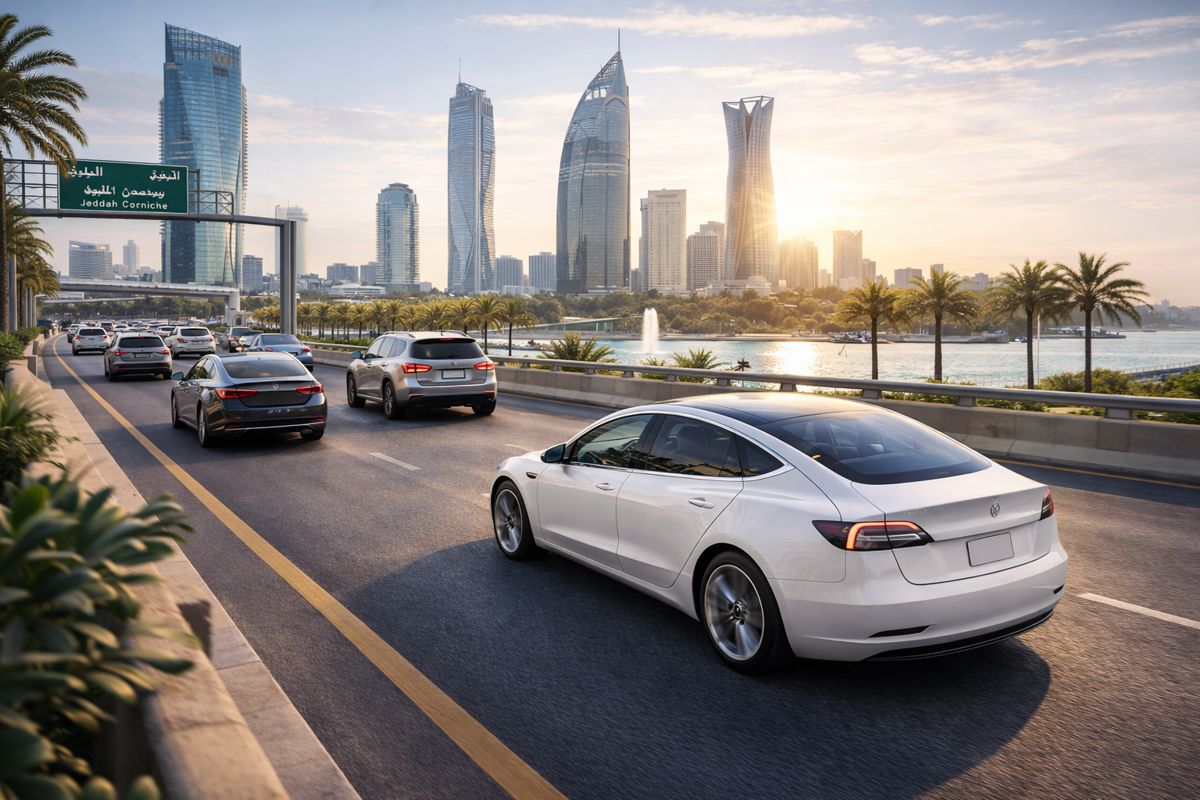
The decision to host the second edition in Jeddah reflects strategic positioning. As a major port city on the Red Sea and a commercial gateway, Jeddah occupies a central role in trade and logistics. Electrifying urban transport and freight corridors in such a city has implications far beyond private car ownership. It touches last mile delivery, port operations and tourism mobility.
By returning at larger scale in 2026, EVS Saudi aims to deepen international participation and broaden its exhibition footprint. Organisers have indicated that the event will expand representation from OEMs and solution providers across batteries, charging systems and smart mobility platforms. For international companies, Jeddah offers a gateway into one of the fastest growing markets in the region, backed by significant public investment and institutional support.
The involvement of bodies such as the Jeddah Chamber of Commerce and Industry and the Saudi Business Council strengthens that commercial bridge. Trade facilitation, market access guidance and local partnership development are often decisive factors in whether foreign direct investment materialises or stalls.
Innovation, Localisation and Talent Development
Saudi Arabia’s mobility transition is not limited to importing vehicles and installing chargers. It is increasingly focused on localisation and knowledge transfer. Initiatives such as Wadi Jeddah and EVINEX by King Abdulaziz University illustrate a deliberate effort to connect academic research, startup incubation and industrial deployment.
That approach mirrors broader global trends. Countries seeking to capture value from the EV transition are investing in domestic battery assembly, component manufacturing and software development. For Saudi Arabia, aligning universities, research institutions and private capital around electrification creates opportunities for high value job creation and skills development.
Events like EVS Saudi provide a platform where those ecosystems intersect. Researchers can meet industry partners. Startups can pitch to investors. International OEMs can explore joint ventures or localisation strategies. In a sector characterised by rapid technological change, such cross pollination accelerates learning curves and reduces duplication of effort.
From Exhibition to Strategic Marketplace
Perhaps the most significant shift from 2025 to 2026 is conceptual. EVS Saudi is positioning itself less as a traditional trade fair and more as a strategic marketplace and knowledge platform. That distinction matters. The global events industry is increasingly judged not by footfall alone, but by the quality of outcomes generated.
For Saudi Arabia, the stakes are high. Electric mobility intersects with renewable energy deployment, smart city development and industrial diversification. Aligning innovation with Vision 2030 priorities requires consistent dialogue between policymakers, financiers and technology providers. A credible annual platform provides continuity and a reference point for measuring progress.
Extensive regional and international media coverage has already amplified the event’s profile. As discussions around supply chain resilience, battery raw materials and grid integration intensify globally, Saudi Arabia’s positioning as both investor and market gives it leverage. EVS Saudi becomes a stage on which that evolving narrative is articulated.
Shaping the Kingdom’s Mobility Future
By uniting regulators, infrastructure developers, OEMs, research institutions and investors, EVS Saudi Arabia 2026 reflects a broader transformation underway in the Kingdom. Electrification is being woven into national development plans rather than treated as a standalone environmental initiative. That integrated perspective increases the likelihood of coherent policy, stable investment conditions and scalable infrastructure delivery.
For construction firms, the message is clear. Charging hubs, grid upgrades, logistics depots and smart transport corridors represent tangible project pipelines. For investors, regulatory backing and institutional participation reduce uncertainty. For technology providers, the Kingdom offers scale and ambition.
EVS Saudi Arabia 2026 is therefore not simply returning to a new city. It is embedding itself as a recurring node in Saudi Arabia’s industrial and infrastructure transformation. As global competition in electric mobility intensifies, platforms that connect policy with practice and innovation with capital will shape who captures long term value. In Jeddah, that conversation is set to continue, with the Kingdom firmly positioning itself as a regional hub and an increasingly influential player in the global mobility transition.