Cooperative Driving Automation Moves from Concept to Reality
Rush hour congestion has long been treated as an unfortunate side effect of urban growth. Yet for transport planners, energy strategists and infrastructure investors, it represents something far more tangible: lost productivity, unnecessary fuel burn and avoidable emissions. In the United States alone, the Texas A&M Transportation Institute estimates that congestion costs drivers billions of hours and gallons of fuel each year, translating into tens of billions of dollars in economic losses.
Researchers at the Oak Ridge National Laboratory are pushing cooperative driving automation from academic theory into applied infrastructure strategy. Working through the U.S. Department of Energy’s National Transportation Research Center, ORNL is part of a multi-laboratory collaboration designed to align connected vehicles, traffic control systems and digital modelling into a coordinated mobility ecosystem. The ambition is straightforward, even if the engineering is anything but: reduce bottlenecks, cut energy waste and make road networks more predictable.
Reframing Automation As An Infrastructure Challenge
For years, public discussion around automated mobility has centred on fully autonomous vehicles. That narrative, while compelling, overlooks a crucial dimension. Infrastructure matters. Sensors, signal controllers and roadside communications shape traffic behaviour just as decisively as driver inputs.
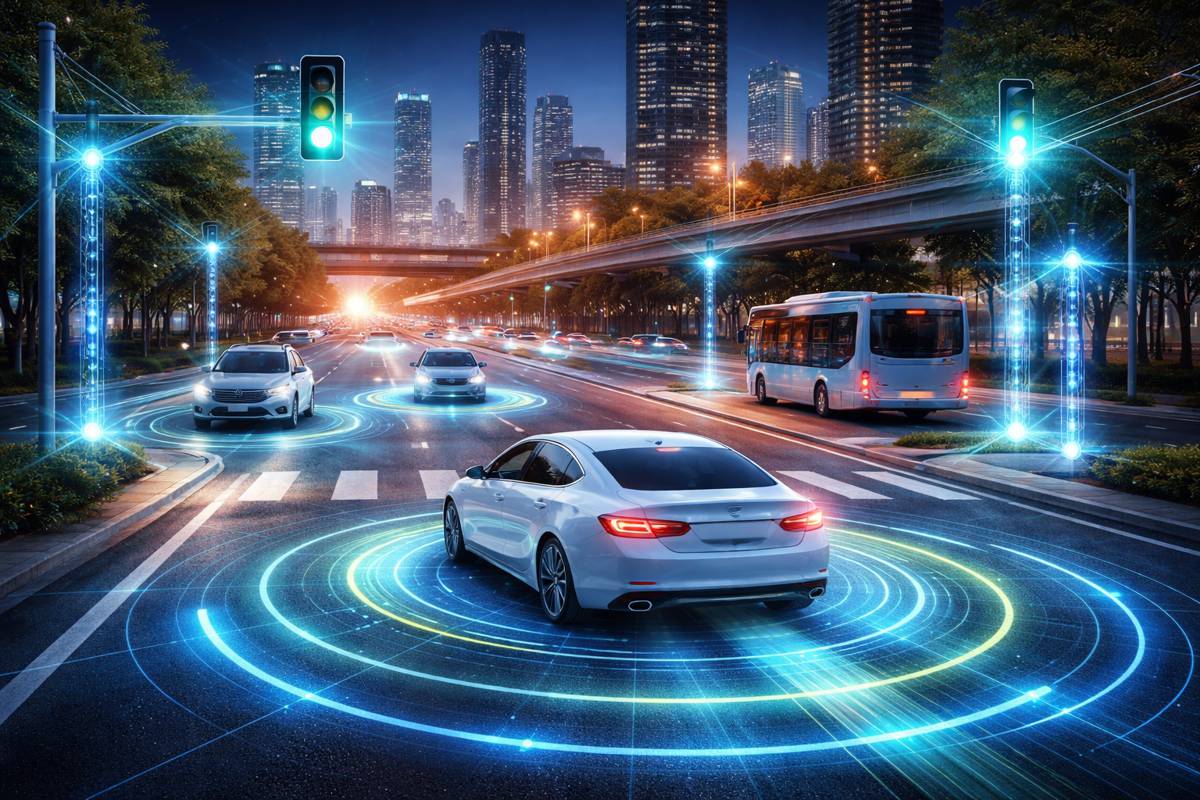
Adian Cook, ORNL’s lead researcher on the project, captured this broader perspective: “Autonomous driving often brings to mind self-driving vehicles,” he said, “but there’s also a significant infrastructure piece, such as intelligent signal control or cooperative infrastructure. For example, traffic lights can have optimized signals that may also interact directly with connected vehicles to keep traffic moving along.”
That shift in emphasis is significant. Rather than waiting for universal fleet automation, cooperative driving automation, known as CDA, seeks incremental gains by enabling vehicles and infrastructure to exchange data in real time. Traffic signals can anticipate arrivals, merging lanes can be managed proactively and vehicles can adjust speed smoothly before congestion forms. In effect, the road network becomes an active participant rather than a passive surface.
Digital Twins And The CAVE Lab Advantage
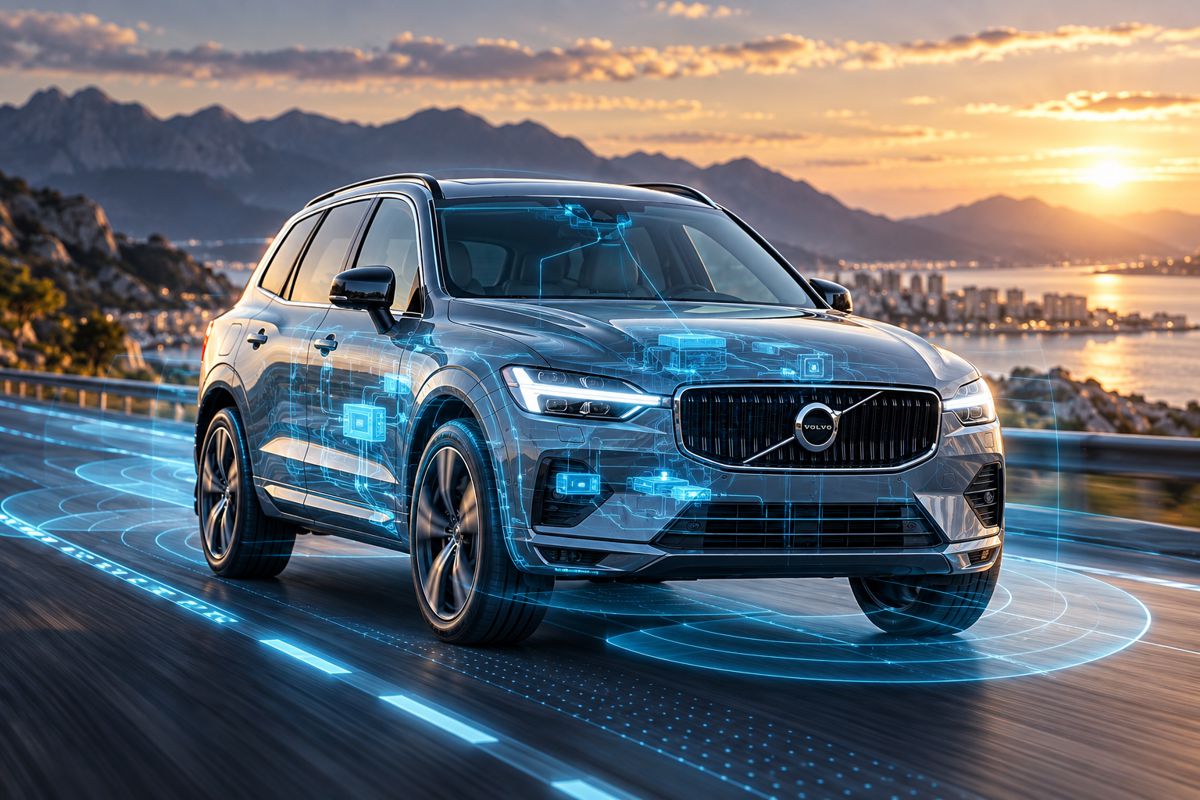
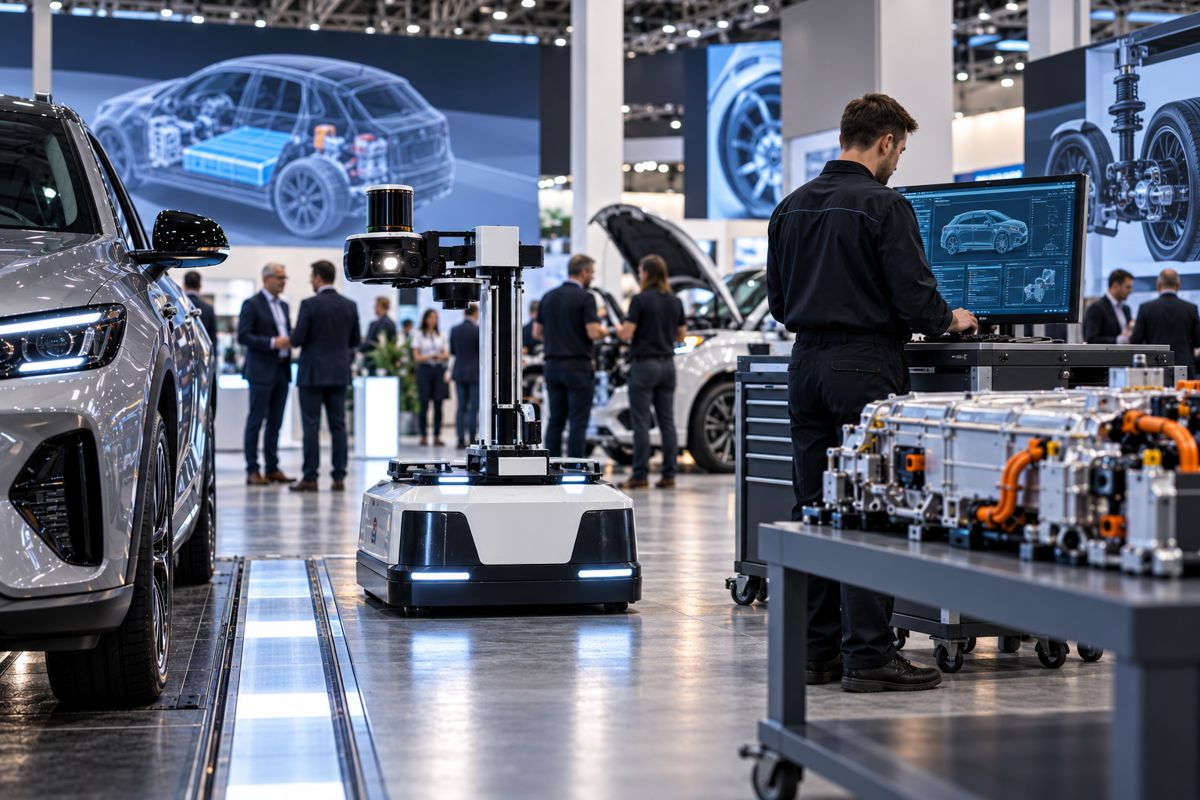
One of ORNL’s distinguishing capabilities lies in its Connected and Automated Vehicle Environment Laboratory, widely known as the CAVE lab. This immersive research facility enables scientists to integrate physical vehicles into virtual traffic environments. Instead of relying solely on simulation or controlled track testing, researchers can blend both worlds.
The approach creates what transport engineers call a digital twin. A physical vehicle responds to simulated traffic flows, infrastructure signals and environmental conditions that mirror real-world complexity. It is here that ORNL pairs the CAVE lab with its Real-Sim anything-in-the-loop platform, allowing vehicle hardware, sensors and control systems to interact directly with synthetic yet highly realistic traffic scenarios.
For infrastructure professionals, that integration matters. It allows researchers to evaluate how signal timing, ramp metering or cooperative merging algorithms perform before any concrete is poured or roadside unit installed. In a sector where deployment mistakes are costly and politically sensitive, such pre-implementation validation offers a compelling risk reduction tool.
Cooperative Merging And The Anatomy Of A Bottleneck
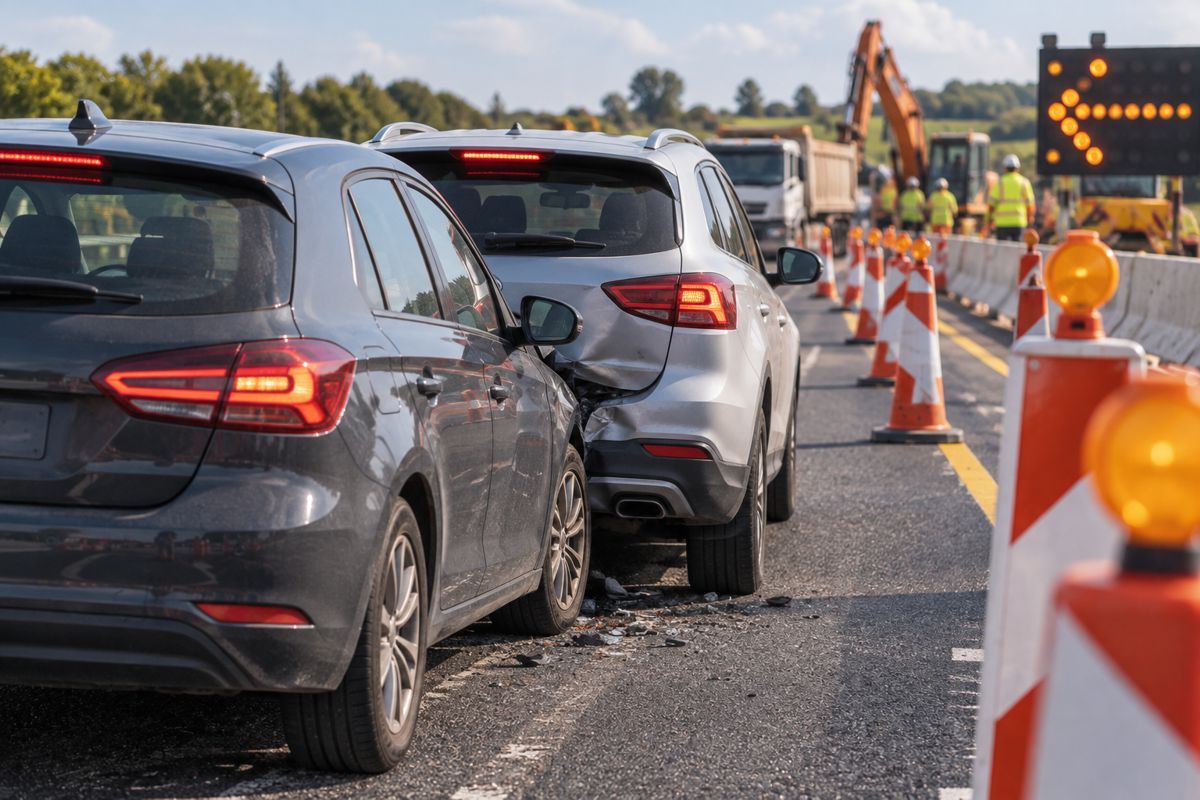
Among the most disruptive traffic phenomena is the merge point. Whether at motorway on-ramps or lane reductions, human behaviour introduces unpredictability. Sudden braking, aggressive acceleration and hesitant lane changes ripple backwards, creating stop-start waves that persist long after the initial disruption.
Cook highlighted the issue plainly: “When looking at merging, you get these weird bottlenecks because people are braking and making sudden moves that disrupt the flow,” he said. “With CDA, infrastructure can coordinate with vehicles and traffic patterns to keep everything moving smoothly.”
ORNL focused specifically on cooperative merging algorithms, using its CAVE lab and Real-Sim XIL platform to test how coordinated vehicle responses could smooth these disturbances. By synchronising speed adjustments before vehicles converge, the system reduces abrupt decelerations and mitigates shockwave congestion.
From an energy perspective, the implications are considerable. Stop-start traffic increases fuel consumption and emissions due to inefficient acceleration cycles. Studies published in Transportation Research journals consistently show that smoother flow reduces fuel burn and particulate emissions, even without changes in vehicle powertrains. In short, operational optimisation complements electrification and alternative fuels rather than competing with them.
A National Laboratory Network With Complementary Roles
This initiative was not confined to a single institution. ORNL collaborated with Argonne National Laboratory, Lawrence Berkeley National Laboratory and the National Laboratory of the Rockies, each contributing expertise aligned to specific mobility challenges.
Argonne led car-following studies using an XIL framework and conducted live demonstrations on controlled roadways. That work examined how vehicles maintain optimal headways when cooperative signals are available. Berkeley Lab advanced modelling and field-test integration through digital twin and vehicle-in-the-loop evaluations, quantifying impacts on traffic flow and energy consumption. The National Laboratory of the Rockies developed a scalable cellular vehicle-to-everything co-simulation framework, assessing communication performance and estimating fuel savings from coordinated operations such as platooning.
This division of labour reflects a pragmatic reality. No single laboratory holds all the capabilities required to transform national mobility systems. Cook underscored the value of coordinated effort: “We met regularly and delivered as a team,” he said. “You can get a lot more done with the same amount of time when each group focuses on what it does the best.”
Energy Efficiency As A Strategic Driver
While congestion relief is visible and politically resonant, energy optimisation remains central to the Department of Energy’s interest in CDA. Every unnecessary braking event translates into wasted kinetic energy. Every minute of idling consumes fuel without delivering mobility value.
Cook was explicit about the objective: “If you’re getting through intersections quicker and there’s less idle time, you’re burning less fuel,” he said. “Our goal in this project is to optimize energy and overall traffic efficiency.”
External research reinforces that link. The International Energy Agency has noted that operational efficiency improvements in transport can deliver immediate emissions reductions while fleet electrification scales up. Cooperative traffic systems, when widely adopted, could contribute to lower aggregate fuel demand without requiring wholesale vehicle replacement.
For policymakers balancing decarbonisation targets with fiscal constraints, that incremental pathway is attractive. Infrastructure upgrades to enable vehicle-to-infrastructure communication may offer faster returns than waiting for full autonomy or complete electrification.
Recognition And Momentum
The collaborative team’s efforts were formally recognised with the U.S. Department of Energy’s Vehicle Technologies Office Team Award for Outstanding Collaboration, presented at the 2025 VTO Annual Merit Review in Arlington, Virginia. The award acknowledged inter-laboratory cooperation in advancing the understanding and implementation of cooperative driving automation.
Such recognition is more than ceremonial. It signals institutional endorsement at a time when federal funding priorities increasingly scrutinise measurable outcomes. By demonstrating both technical progress and effective collaboration, the project strengthens the case for continued investment in intelligent transportation systems.
Implications For The Construction And Infrastructure Sector
For construction contractors, transport authorities and infrastructure investors, the message is clear. Road networks are evolving into data-driven systems. Signal cabinets may soon house communication modules capable of interacting with thousands of vehicles daily. Motorway upgrades will likely incorporate roadside units and edge computing capabilities alongside traditional civil works.
Designers and contractors must therefore anticipate integration challenges. Power supply, fibre connectivity, cybersecurity safeguards and maintenance regimes become as critical as asphalt thickness or bridge clearances. In effect, digital infrastructure is embedding itself within physical infrastructure.
Internationally, cities in Europe and Asia are experimenting with similar connected vehicle ecosystems. The European Union’s Cooperative Intelligent Transport Systems platform and various urban digital twin initiatives demonstrate that the United States is not alone in pursuing this trajectory. For global construction firms, harmonising standards and ensuring interoperability across jurisdictions will be an emerging competitive advantage.
From Frustration To Functionality
Rush-hour congestion may never disappear entirely. Population growth and urbanisation ensure that demand will continue to strain capacity. Yet cooperative driving automation offers a pragmatic pathway to incremental improvement. By coordinating vehicles and infrastructure rather than isolating them, the technology addresses one of transport’s most persistent inefficiencies.
ORNL’s work, supported by its national laboratory partners, illustrates how digital modelling, vehicle-in-the-loop testing and communication frameworks can converge into practical solutions. It is not a distant vision of driverless utopia but a measured, infrastructure-centred evolution.
For the construction and infrastructure community, that evolution signals opportunity. Smarter signals, connected corridors and digitally validated upgrades could redefine how road projects are conceived and delivered. And if smoother commutes follow, so much the better.