Ambi Robotics Opens Its Physical AI Platform to Industrial Partners
In the race to industrialise artificial intelligence, software alone is no longer enough. The real frontier lies in what many now call Physical AI, systems that can perceive, reason and act reliably in the messy, unpredictable world of factories, depots and infrastructure networks. It is into this arena that Ambi Robotics has stepped with the launch of its AI Skill Suite, powered by AmbiOS, a move that signals a shift from building robots to licensing production-hardened intelligence.
For the global construction, logistics and industrial technology ecosystem, the significance is not simply another robotics announcement. It represents an attempt to decouple advanced AI capabilities from specific hardware platforms and make them licensable across third-party robotic systems. If successful, this model could accelerate automation in sectors that have long struggled to deploy robotics at scale, from distribution centres and manufacturing lines to infrastructure maintenance and inspection.
Industrial Reliability
Robotics has never suffered from a shortage of impressive demonstrations. What it has lacked is dependable performance under commercial pressure. As Jeff Mahler, Co-founder and CTO of Ambi Robotics, puts it: “The hardest challenge in robotics is not demonstrating intelligence in a lab, but enabling robots to rapidly adapt to economically-valuable work with industrial reliability.”
That distinction matters. According to the International Federation of Robotics, global industrial robot installations reached record levels in recent years, yet adoption remains concentrated in highly structured environments such as automotive manufacturing. In contrast, logistics, construction supply chains and parcel handling operate in dynamic, high-variability conditions where object types, packaging formats and layouts constantly change.
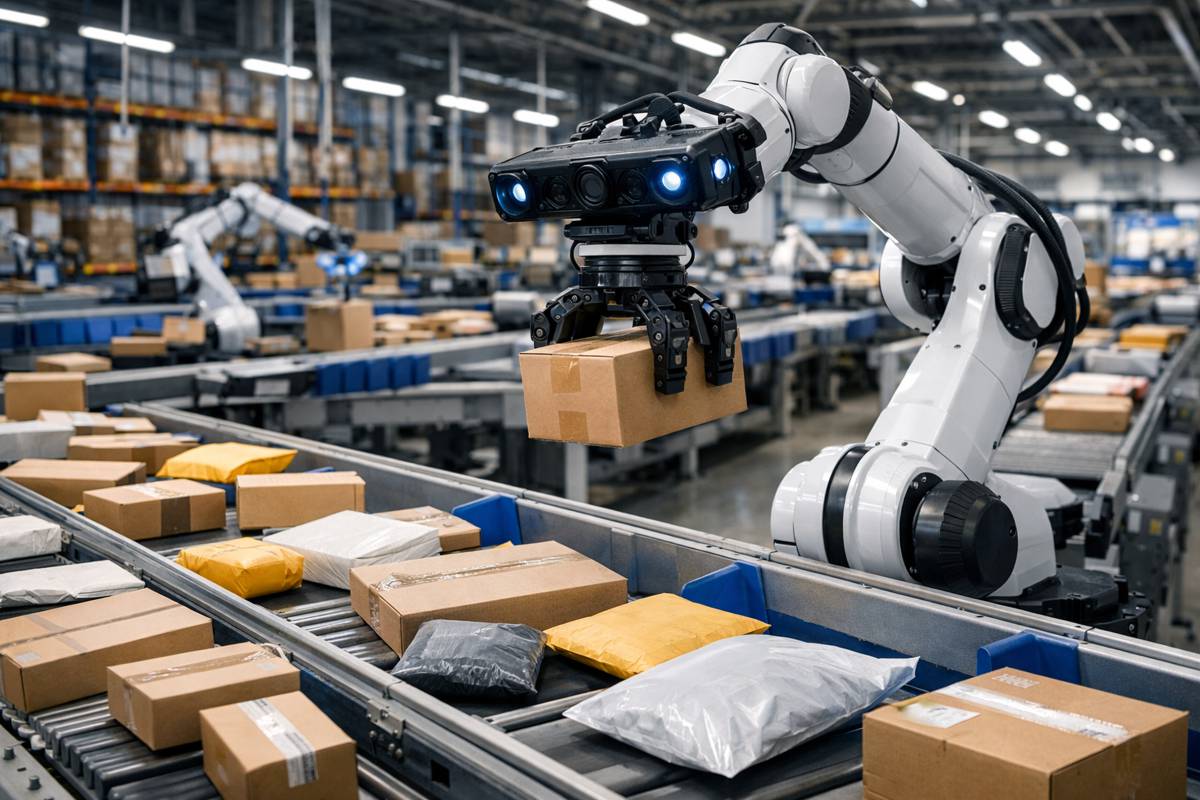
By deploying hundreds of robots into live production settings, Ambi Robotics has focused on refining performance in precisely these unstructured environments. The company reports more than 250,000 production hours and over 150 million consumer packages processed across its installed fleet. In industrial terms, that scale of telemetry is not a vanity metric. It is the raw material for improving perception models, motion planning and failure recovery in real-world conditions.
AmbiOS and the Separation of Intelligence from Hardware
At the centre of this strategy is AmbiOS, described as the company’s operating system for Physical AI. In practical terms, it is a software stack designed to connect robotic hardware to broader operational infrastructure, including safety systems, monitoring tools and customer workflows.
The architectural choice to isolate hardware complexity is particularly relevant for infrastructure operators and automation providers. By abstracting the underlying mechanical configuration, AmbiOS enables the AI Skill Suite to function across varying robotic form factors. That means perception and manipulation capabilities developed in one context can be applied to different arms, grippers or platforms without rebuilding the intelligence layer from scratch.
This separation echoes broader trends in industrial software. Just as cloud platforms decoupled applications from on-premise servers, robotics operating systems are beginning to decouple intelligence from mechanical assemblies. For industries facing labour shortages and rising operational costs, that flexibility can shorten deployment cycles and reduce integration risk.
AI Skill Suite and the Rise of Production Hardened Applications
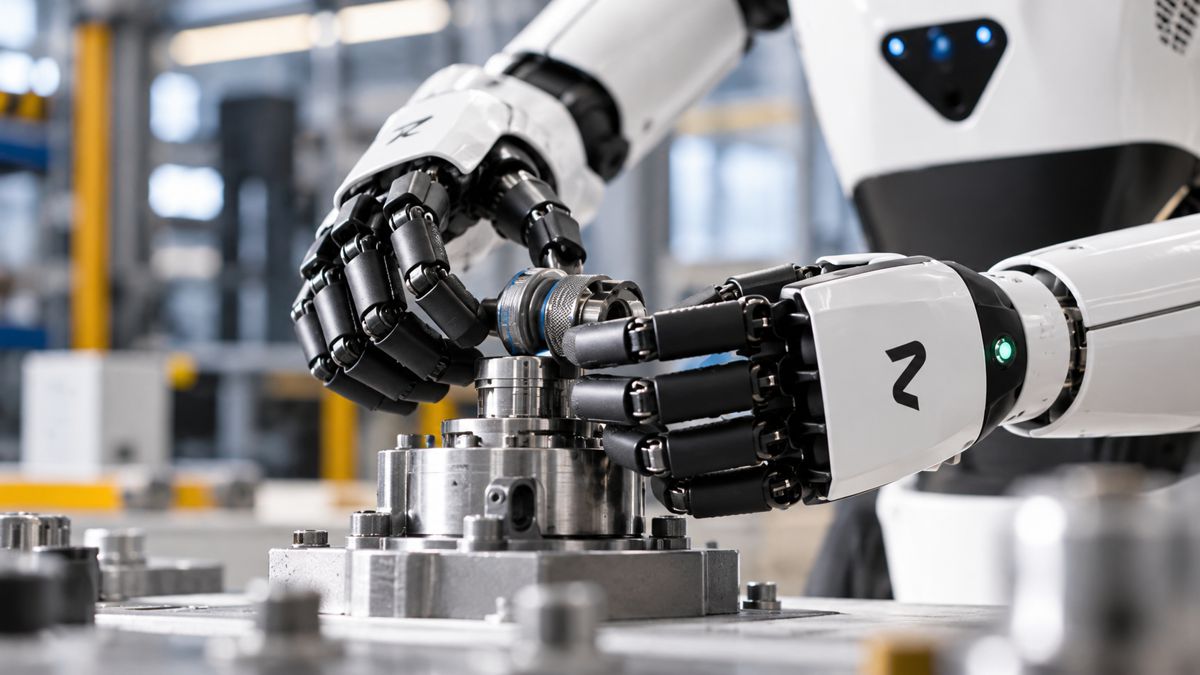
The AI Skill Suite itself is positioned as a growing library of licensable 3D AI applications. Among the capabilities highlighted are Item Intelligence, Inspection, Dexterous Picking and Precision Placement. These are not abstract research concepts. They correspond directly to tasks found in parcel hubs, fulfilment centres, manufacturing facilities and, increasingly, modular construction logistics.
Powering these applications is PRIME-1, Ambi Robotics’ vertically integrated AI foundation model. The company states that PRIME-1 leverages advanced 3D reasoning and achieves over 99.9 percent uptime in production environments. For operators managing high throughput systems, uptime is not a marketing flourish. Every fraction of a percentage point can translate into substantial financial impact over millions of handled items.
The emphasis on production telemetry is also aligned with wider AI industry developments. Foundation models in language and vision have demonstrated that scale of data is critical to generalisation. In robotics, however, collecting high quality physical interaction data is far more complex and expensive than scraping text from the internet. A repository built from hundreds of thousands of operational hours therefore represents a strategic asset.
Building a Data Flywheel Across National Infrastructure
Ambi Robotics describes its growth as an AmbiOS flywheel, where data from a nationwide installed fleet continuously improves underlying models. According to the company, its systems have operated within enterprise ecosystems responsible for moving 90 percent of United States parcel volume and 95 percent of active commercial SKUs to every ZIP code nationwide.
Jim Liefer, CEO of Ambi Robotics, frames the significance this way: “Ambi Robotics has built the path to general robot intelligence by hardening AmbiOS within the world’s most demanding logistics and ecommerce networks.” He adds: “By launching the AI Skill Suite, we are allowing our partners to leverage this unrivaled repository of real-world operational data to accelerate the deployment of reliable, commercial-scale Physical AI.”
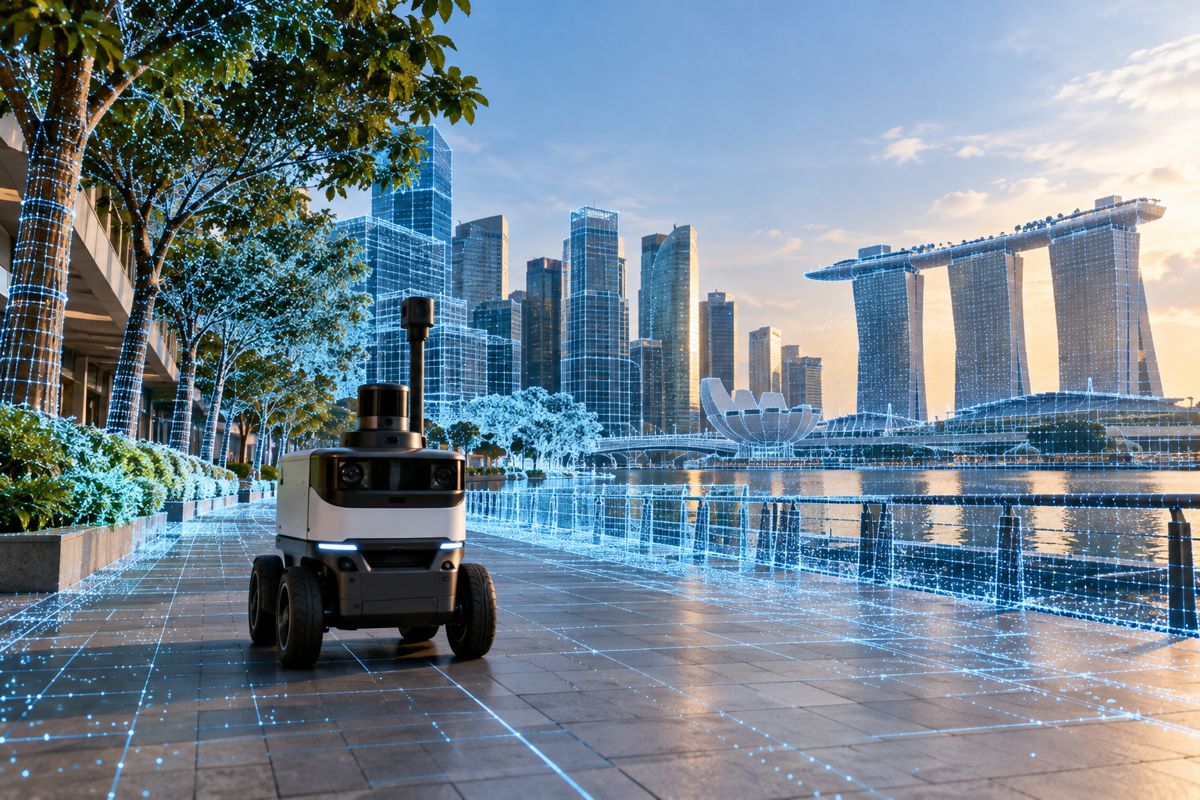
For construction and infrastructure professionals, the relevance lies in the analogy. Logistics networks are among the most demanding distributed systems in operation today. If AI can be validated across such complexity, the same architectural principles can be applied to materials handling on major projects, automated inspection of components, or even maintenance robotics in transport hubs.
Accelerating Product Development Through Platform Reuse
One tangible outcome of the AmbiOS approach is faster product iteration. The company reports that AmbiStack reached the market three times faster than its earlier flagship solution, AmbiSort, by leveraging the existing AmbiOS Skill Suite.
Speed to market is not merely a competitive metric. In infrastructure and industrial automation, technology cycles are shortening. Investors and policymakers are increasingly focused on productivity gains driven by digitalisation and automation. Platforms that allow capabilities to be reused and recombined can respond more quickly to shifting operational requirements.
This modularity could prove attractive to established automation providers seeking to enhance existing hardware portfolios with advanced AI perception and manipulation without developing everything in-house. The licensing model opens a path for collaboration rather than direct hardware competition.
Implications for Construction and Industrial Ecosystems
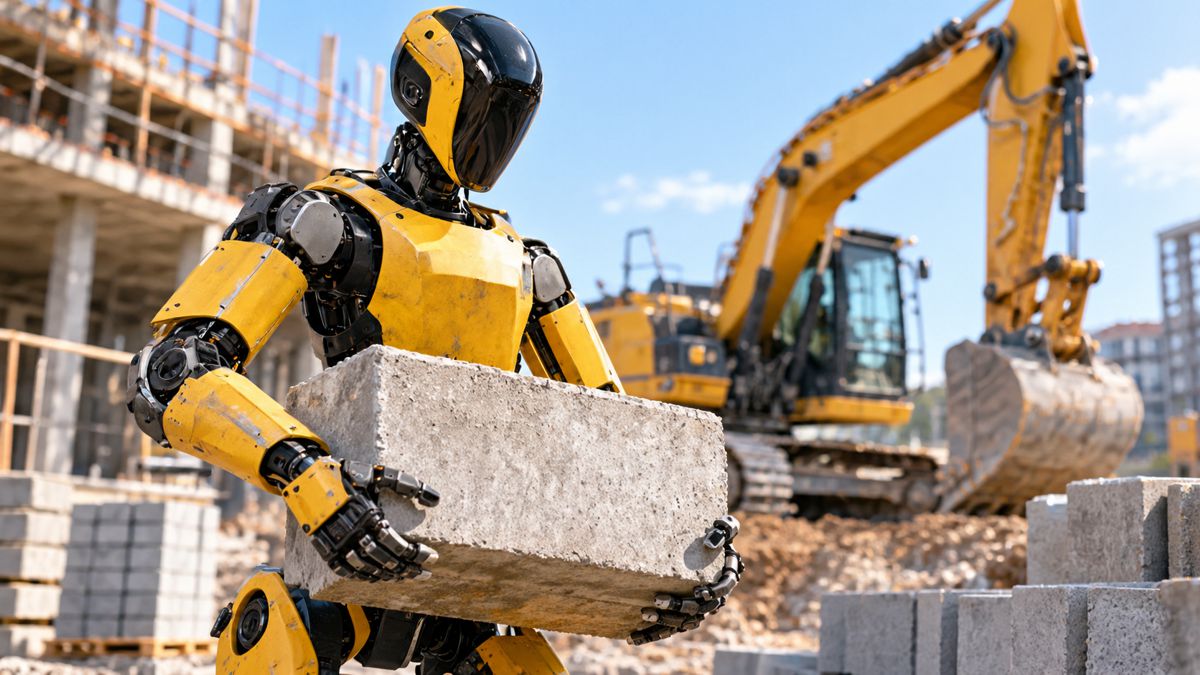
Although Ambi Robotics’ current deployments centre on logistics and ecommerce, the broader implications extend well beyond parcel sorting. Construction supply chains, for example, are characterised by fragmented materials flows, variable packaging formats and just-in-time delivery constraints. Automated picking, inspection and placement could streamline off-site manufacturing, modular assembly and large-scale warehousing of building components.
Moreover, infrastructure asset management increasingly relies on robotic inspection systems to assess bridges, tunnels and transport facilities. AI skills capable of advanced 3D reasoning and precision manipulation can support more autonomous inspection platforms, reducing risk to human workers and improving data quality.
The World Economic Forum has repeatedly highlighted automation and AI as key levers for improving productivity in construction, a sector that has historically lagged manufacturing. By offering licensable AI capabilities validated at commercial scale, Ambi Robotics is contributing to the ecosystem of tools that could close that gap.
Looking Towards Half a Million Production Hours
By the end of 2026, Ambi Robotics projects that its nationwide production fleet will surpass 500,000 hours of real-world commercial operations. That equates to more than 57 years of cumulative runtime across diverse physical environments. In AI training terms, such a dataset is formidable.
Each additional hour of operation expands the training corpus for perception and manipulation models. It also increases exposure to edge cases, damaged packages, unusual shapes, shifting lighting conditions and mechanical wear. In robotics, edge cases are where systems either prove their robustness or fail.
For investors and industrial partners, the trajectory suggests that data accumulation is becoming a competitive moat. As more skills are standardised within the AI Skill Suite, partners can access capabilities refined through large-scale deployment without bearing the full cost of early experimentation.
A Platform Approach to Commercial Scale Robotics
The launch of the AI Skill Suite powered by AmbiOS reflects a maturing robotics sector. Instead of selling isolated machines, companies are beginning to package intelligence as a platform, licensable and adaptable across hardware ecosystems. That shift mirrors the evolution seen in cloud computing and enterprise software over the past two decades.
For construction professionals, infrastructure operators and policymakers, the message is clear. Physical AI is moving from pilot projects to commercially validated systems with measurable uptime and scalable deployment models. As labour markets tighten and operational complexity grows, the ability to integrate production-hardened AI into diverse robotic platforms could shape the next phase of industrial automation.
In that sense, Ambi Robotics’ announcement is less about a new product and more about an inflection point. The conversation is no longer whether robots can perform complex tasks in controlled settings. It is about how quickly reliable Physical AI can be integrated into the backbone of global infrastructure and industry.