Europe Backs Battery Intelligence as TWAICE Secures Major EIB Funding
Europe’s energy transition hinges on more than wind turbines and solar panels. It rests, increasingly, on the intelligence that governs how stored energy is monitored, optimised and safeguarded. Munich-based analytics specialist TWAICE has now secured €24 million in long-term venture debt financing from the European Investment Bank, backed by the InvestEU programme.
For the construction, infrastructure and transport sectors, this is not simply another funding round. It signals Europe’s determination to strengthen its digital capabilities around battery energy storage systems and electric mobility. As grid operators, renewable developers and fleet owners scale rapidly, the question is no longer whether batteries are needed, but how intelligently they are managed over decades of service.
Scaling Battery Storage Without Scaling Risk
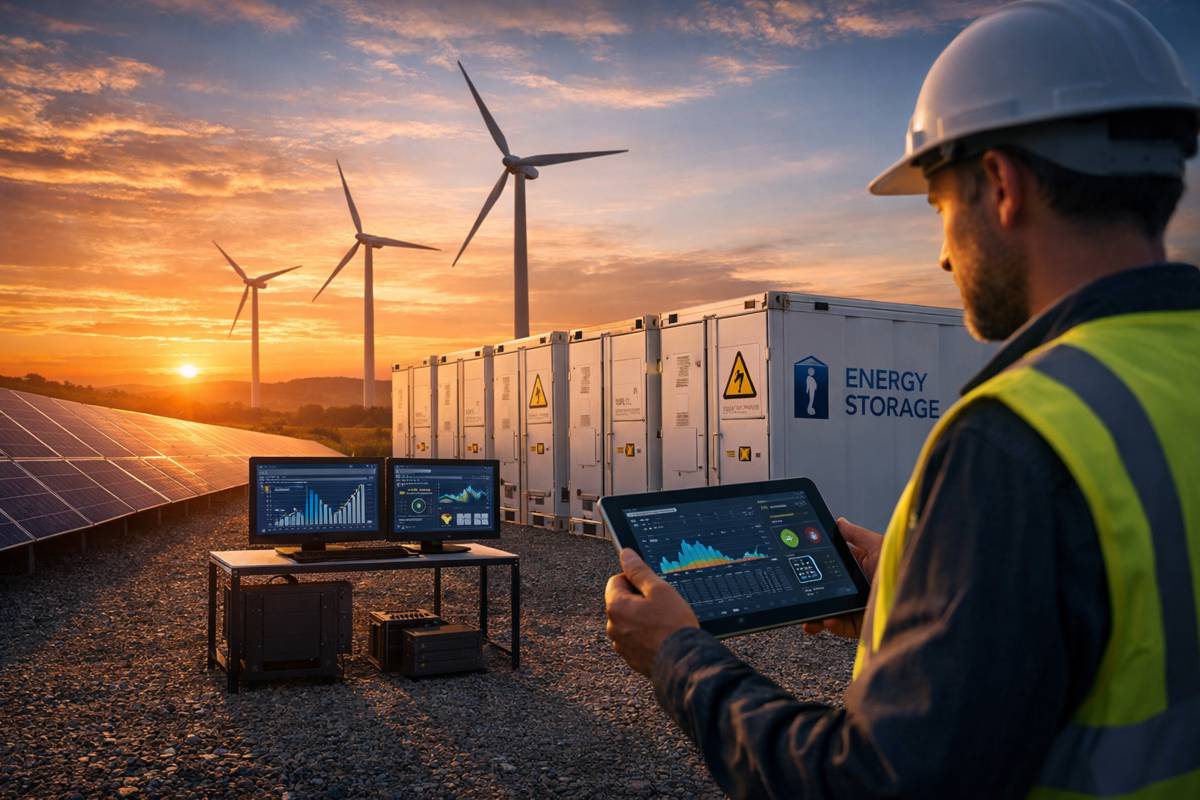
Battery energy storage systems have moved from pilot projects to core grid infrastructure. According to the International Energy Agency, global battery storage capacity has been expanding at record pace in recent years, driven by falling cell costs and the rapid build-out of renewables. As solar and wind penetration rises, storage has become essential to stabilise frequency, manage peak demand and defer costly grid upgrades.
Yet growth brings complexity. Operating a handful of battery assets is one thing. Managing dozens or hundreds across multiple sites, grid conditions and market regimes is quite another. Asset managers must protect safety, availability and financial returns while handling larger fleets with limited operational teams. In practice, that means avoiding thermal incidents, detecting degradation early and ensuring performance warranties are not eroded by unnoticed faults.
TWAICE positions its analytics platform squarely in that operational gap. By combining real-time monitoring with historical performance data, the company provides predictive insights into battery health and degradation. Rather than reacting to alarms after performance drops or faults emerge, operators can identify trends before they escalate into downtime or safety events.
The company’s own survey of battery energy storage professionals underlines the scale of the challenge. According to its BESS Pros Survey, 45 percent of operators experience unexpected on-site issues at least monthly. For grid-scale infrastructure, such frequency is hardly trivial. Each incident can mean lost revenue, emergency site visits and reputational risk.
Predictive Analytics as Critical Infrastructure
Predictive analytics is not a buzzword in this context; it is becoming operational necessity. By learning from vast volumes of real-time and historical data, analytics platforms can anticipate degradation patterns, optimise dispatch strategies and extend asset lifetimes. For infrastructure investors, that translates directly into improved total cost of ownership and more predictable returns.
Across its customer deployments, TWAICE reports an average five percent improvement in recoverable energy and an 80 to 90 percent reduction in analyst time per asset through automated reporting and workflows. In large portfolios, those gains compound quickly. A modest percentage uplift in energy recovery, applied across multi-megawatt installations operating daily in energy markets, can materially influence project economics.
From a policy perspective, this is where the EIB’s backing becomes strategically significant. As European Investment Bank Vice President Nicola Beer put it: “Batteries sit at the heart of Europe’s clean energy future – powering electric mobility, stabilising grids with renewable energy and making our energy systems more resilient. By backing TWAICE, we are not only reinforcing Europe’s technological leadership in advanced battery analytics, we are also supporting innovation that enables smarter, more efficient use of clean energy across the economy. This investment is part of the EIB’s wider commitment to accelerate breakthrough technologies that drive decarbonisation, strengthen energy independence and help scale high-performing battery solutions in Europe and worldwide.”
In short, analytics is no longer an optional add-on. It is a digital layer of critical infrastructure.
Venture Debt and the European Innovation Agenda
The €24 million financing comes in the form of long-term venture debt, a structure increasingly used by the European Investment Bank to support high-growth technology companies without diluting equity excessively. Backed by InvestEU, the instrument aims to accelerate commercially viable innovations that align with European strategic priorities.
Energy independence and decarbonisation sit firmly at the top of that list. Europe’s response to recent energy shocks has underscored the need to localise not just generation, but also digital competence in grid management and storage optimisation. Supporting homegrown analytics platforms strengthens technological sovereignty while enabling domestic operators to compete globally.
For TWAICE, the financing is intended to accelerate product development and expand customer deployments internationally. As electrification drives rapid growth across both stationary storage and electric vehicle markets, demand for advanced battery expertise continues to rise. The company’s battery energy storage systems business nearly tripled in 2025, reflecting market appetite for operations-grade solutions.
Dr Stephan Rohr, Co-CEO of TWAICE, described the rationale succinctly: “This long-term financing from the European Investment Bank helps us accelerate the growth we’re already seeing in our business. As storage operators scale their fleets, they need operations that scale with them. Built on deep battery expertise, we help teams improve performance and profitability while reducing manual effort.”
For infrastructure investors and EPC contractors, that scaling argument will resonate. Building assets is capital intensive; operating them efficiently over twenty years is where value is protected.
From Reactive Troubleshooting to Proactive Operations
Historically, many storage projects have relied on reactive maintenance models. When performance dips or alarms trigger, engineers investigate. While workable at small scale, this approach becomes untenable across diversified portfolios and multiple jurisdictions.
Analytics platforms shift the paradigm. By flagging early indicators of imbalance, thermal stress or accelerated degradation, they enable targeted interventions before failures occur. Automated reporting and workflow tools reduce manual data wrangling, allowing technical teams to focus on optimisation rather than firefighting.
This operational evolution mirrors trends in other infrastructure domains. Predictive maintenance is already well established in rail, aviation and heavy industry. Applying similar data-driven approaches to battery energy storage is a logical progression, particularly as these assets become integral to grid reliability.
Importantly, analytics also supports contractual and regulatory compliance. Warranty management, performance guarantees and safety standards demand robust documentation. Automated data collection and analysis can simplify audits and strengthen risk management frameworks, a point not lost on insurers and financiers.
Bridging Stationary Storage and Electric Mobility
While much attention centres on grid-scale battery energy storage systems, TWAICE’s expertise extends into electric mobility. Through its Battery Experts business unit, the company collaborates with battery manufacturers and electric vehicle OEMs on cell-level analysis, pack optimisation and in-life performance improvement.
That cross-sector perspective matters. Insights gained from stationary storage fleets can inform electric vehicle battery design, and vice versa. Both domains grapple with degradation, thermal management and lifetime optimisation. As Europe pushes ahead with ambitious EV adoption targets, advanced battery analytics will play an increasingly central role.
For transport infrastructure planners, the convergence of grid storage and electric mobility is already visible. Charging hubs, depot electrification and vehicle-to-grid services blur traditional boundaries between power and transport sectors. Ensuring that battery assets perform reliably under diverse load profiles is essential to maintaining public confidence in electrified systems.
By embedding analytics at both cell and system levels, companies like TWAICE contribute to that reliability ecosystem. The more predictable battery performance becomes, the easier it is to plan charging infrastructure, manage peak demand and integrate distributed energy resources.
A Digital Layer for a Decarbonised Economy
Founded in 2018, TWAICE has grown alongside Europe’s accelerating energy transition. Its trajectory reflects a broader truth: decarbonisation is as much about data as it is about hardware. Wind turbines, solar farms and battery containers are visible symbols of change. Less visible, but equally vital, are the algorithms and analytical models that ensure these assets operate safely and profitably.
The European Investment Bank’s financing underscores recognition at policy level that digital innovation underpins infrastructure resilience. Supporting advanced analytics strengthens Europe’s capacity to deploy clean energy assets at scale without compromising reliability.
For construction professionals, investors and policymakers reading the signals, the message is clear. The future grid will be decentralised, electrified and data-driven. Those who can harness predictive insights to optimise battery fleets will hold a competitive edge.
As electrification continues to gather pace, the margin for operational inefficiency shrinks. In that environment, battery intelligence is not a luxury. It is foundational to delivering the resilient, low-carbon infrastructure Europe is striving to build.