Daimler Truck Strengthens Distribution Across Middle East And Africa
In a region where infrastructure pipelines stretch from giga projects in the Gulf to rapidly expanding transport corridors across Sub Saharan Africa, distribution networks are no longer a back office function. They are, in many respects, the commercial engine of the heavy vehicle industry. A
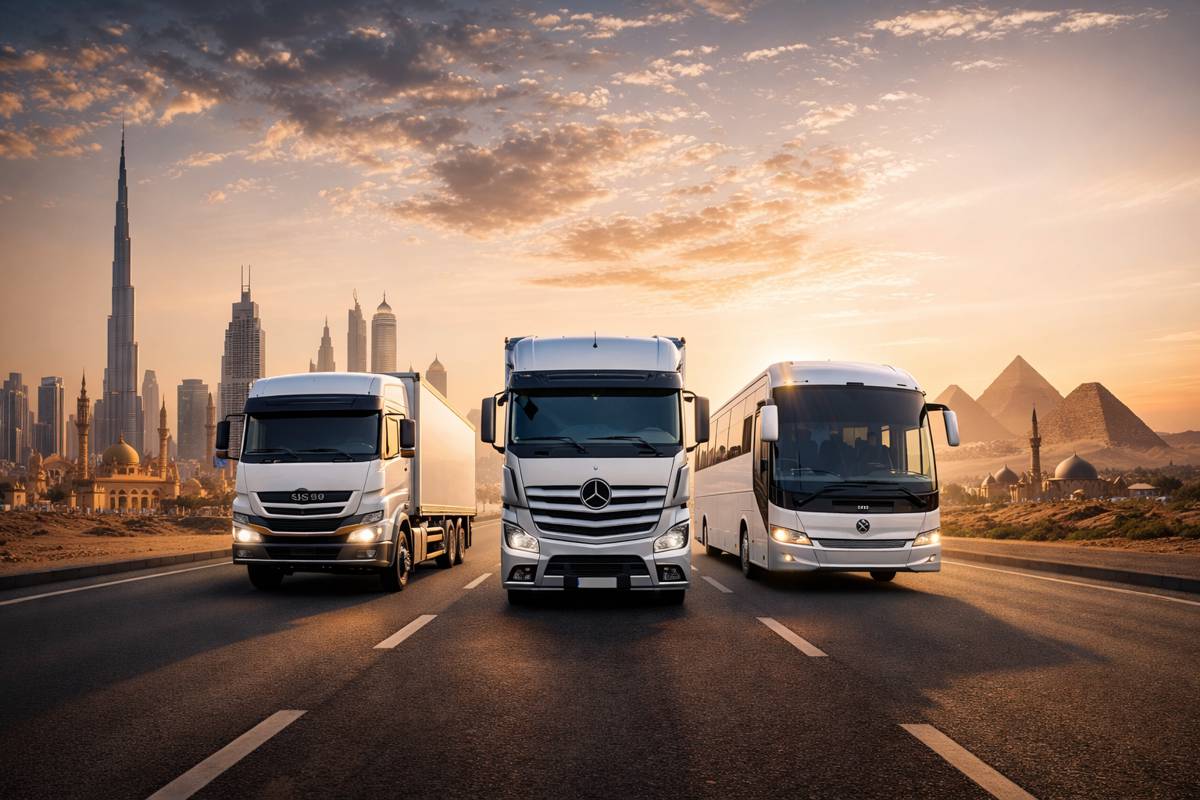
Daimler Truck Middle East Africa convened more than 70 General Distributors in Dubai for its EliteClass Awards Ceremony 2025, an event designed not merely to hand out trophies but to underline how performance at distributor level shapes the wider construction, transport and industrial ecosystem.
The EliteClass programme evaluates distributor performance across 19 categories, covering the full operational spectrum of Mercedes-Benz Trucks, Daimler Buses, and FUSO Trucks & Bus. The categories span sales execution, aftersales capability, parts performance, financial discipline and market development. In other words, this is not a sales contest dressed up as a gala dinner. It is a structured assessment of how well distributors translate global OEM strategy into local operational results.
For construction professionals and fleet operators, that distinction matters. In emerging and high growth markets, uptime, technical support and supply chain resilience often determine whether infrastructure projects remain on schedule. Distributor performance is therefore tightly linked to national development targets and private sector productivity.
Why Distribution Networks Matter More Than Ever
The Middle East and Africa are experiencing sustained investment in logistics corridors, industrial clusters and urban expansion. According to data from the World Bank and regional development banks, infrastructure investment across Sub Saharan Africa alone is estimated to require over $100 billion annually to meet demand. Meanwhile, the Gulf Cooperation Council continues to channel billions into transport, ports and construction under long term diversification strategies.
Heavy trucks and buses sit at the heart of that transformation. They move aggregates to job sites, connect cities with worker transport, and sustain mining, oil and gas and agricultural supply chains. Yet hardware alone is not enough. Vehicles must be supported by reliable maintenance networks, trained technicians, parts availability and financing structures adapted to local markets.
That is precisely where distributor excellence becomes commercially decisive. A high performing distributor ensures:
- Faster vehicle delivery cycles
- Reduced downtime through effective aftersales
- Skilled technical support aligned with OEM standards
- Stronger residual values and lifecycle management
In volatile markets, these factors can determine market share and long term brand perception. EliteClass, therefore, functions as both recognition and internal benchmarking.
Recognition Rooted In Measurable Performance
The 2025 ceremony marked a continuation of a programme that evaluates measurable outcomes across 19 performance categories. Rather than focusing on a single metric, the structure reflects the interconnected nature of commercial vehicle operations. Sales without aftersales capacity, for instance, can undermine customer trust. Similarly, parts availability without technical competence does little to improve uptime.
Addressing the audience, Michael Dietz, President and CEO of Daimler Truck Middle East Africa, framed the awards in partnership terms: “EliteClass is about recognizing the real impact our partners create in their markets. The results we celebrate today reflect strong execution, responsibility, and a shared focus on sustainable success. These outstanding achievements underline the strength of our partnership across the region.”
The emphasis on execution and responsibility is notable. As regulatory requirements tighten and sustainability targets become embedded in national transport policies, distributors are increasingly expected to align with environmental and compliance standards. Performance is no longer measured purely in units sold but in operational robustness and long term viability.
A Tiered Approach To Distributor Of The Year
For 2025, the programme expanded its General Distributor of the Year recognition into three levels: Bronze, Silver and Gold. This tiered structure reflects varying degrees of performance excellence across markets of different scale and maturity. It also introduces a more nuanced competitive framework within the network.
In the Mercedes-Benz Trucks category, the awards recognised:
- Bronze: Zawawi Trading Company, Oman
- Silver: Gargash Enterprises, United Arab Emirates
- Gold: Emirates Motor Company, United Arab Emirates
For Mercedes-Benz Buses, the honours went to:
- Bronze: CFAO Mobility Kenya, Kenya
- Silver: Manufacturing Commercial Vehicles S.A.E., Egypt
- Gold: Juffali and Brothers for Industrial Products Co. Ltd., Kingdom of Saudi Arabia
In the FUSO Trucks & Bus segment, recognition included:
- Bronze: Alesayi Trading Company, Kingdom of Saudi Arabia
- Silver: Motor Vehicle Trading Company, Jordan
- Gold: Al Habtoor Motors, United Arab Emirates
While the awards are celebratory, the commercial implications run deeper. Each of these distributors operates in markets with distinct regulatory frameworks, financing models and infrastructure priorities. Achieving top tier recognition suggests consistent alignment with OEM standards under varied economic conditions.
Linking Distributor Performance To Infrastructure Delivery
From a policy perspective, strong distribution networks contribute to national productivity. According to research by the International Transport Forum, freight transport efficiency is directly correlated with GDP growth in emerging markets. Fleet reliability reduces supply chain friction, while structured maintenance regimes extend asset life and improve safety outcomes.
In large scale construction environments, the impact is immediate. Delays in parts supply or inadequate technical support can halt concrete pours, interrupt earthworks or slow logistics on multi billion pound projects. By contrast, distributors that maintain strong inventory management and technician training pipelines help contractors maintain continuity.
Moreover, in markets where informal maintenance practices remain common, structured distributor networks raise technical standards. That shift enhances vehicle safety, lowers emissions through proper servicing and strengthens compliance with evolving transport regulations.
Commercial Vehicles And The Sustainability Equation
Another layer to consider is sustainability. As global OEMs accelerate development of lower emission and alternative powertrain solutions, regional distributors must be equipped to support new technologies. This includes technician training for advanced diagnostics, parts stocking for complex systems and infrastructure readiness for electrified or hybrid platforms where applicable.
The Middle East and parts of Africa are at different stages of this transition. While electric heavy trucks remain limited in deployment compared to Europe or China, regulatory momentum is building. The UAE and Saudi Arabia, for example, have both outlined sustainability targets under broader economic visions.
Distributor competence will play a decisive role in how smoothly these transitions occur. Recognising high performing partners through programmes such as EliteClass signals readiness to handle evolving technical demands.
Partnership As A Competitive Advantage
In fragmented markets, partnership between OEM and distributor often determines brand resilience. Political shifts, currency volatility and supply chain disruptions can test even the most established operations. A tightly integrated network, however, can adapt more rapidly.
The presence of more than 70 General Distributors at the Dubai ceremony illustrates the geographic breadth of the network. Such gatherings are not merely ceremonial. They enable benchmarking, knowledge exchange and strategic alignment across territories.
For investors observing the commercial vehicle sector, distributor strength can serve as a proxy indicator of market health. Strong performance across multiple categories suggests disciplined financial management, robust customer relationships and effective operational controls.
The Broader Signal To The Market
EliteClass Awards 2025 ultimately reinforce a broader message: performance driven growth in the heavy vehicle sector depends as much on local execution as on global engineering. Trucks and buses are capital assets embedded in national infrastructure strategies. Their reliability, lifecycle cost and operational support influence project economics across construction, mining, logistics and public transport.
In recognising distributors across Mercedes-Benz Trucks, Daimler Buses and FUSO Trucks & Bus, Daimler Truck Middle East Africa has highlighted the often underappreciated role of local partners in delivering that value.
For contractors, fleet operators and policymakers across the region, the takeaway is clear. Strong distributor ecosystems underpin industrial progress. When execution, responsibility and partnership align, the ripple effects extend far beyond the showroom floor.