Natural Capital Moves into the Core of Infrastructure Investment in Africa
For decades, climate and biodiversity were treated as ethical considerations that sat somewhere outside mainstream investment analysis. That era has ended. Across global capital markets, environmental stability is now being priced as a material economic factor, and infrastructure investors are adjusting their risk models accordingly.
The shift has not been driven by ideology but by balance sheets. Flooding, drought and ecosystem collapse increasingly disrupt transport corridors, water networks and urban expansion. When roads wash away, ports lose hinterland connectivity or cities face water shortages, asset values decline quickly. Investors have begun recognising that environmental resilience is not a reputational issue but a determinant of long term returns.
The numbers explain the urgency. The United Nations Environment Programme estimates a biodiversity finance gap approaching USD 942 billion annually by 2030. Current global investment in nature stands near USD 200 billion per year, and only around USD 35 billion comes from private capital. For infrastructure investors accustomed to measuring lifecycle costs over 30 or 50 years, that gap represents systemic exposure rather than environmental advocacy.
Nature As Economic Infrastructure
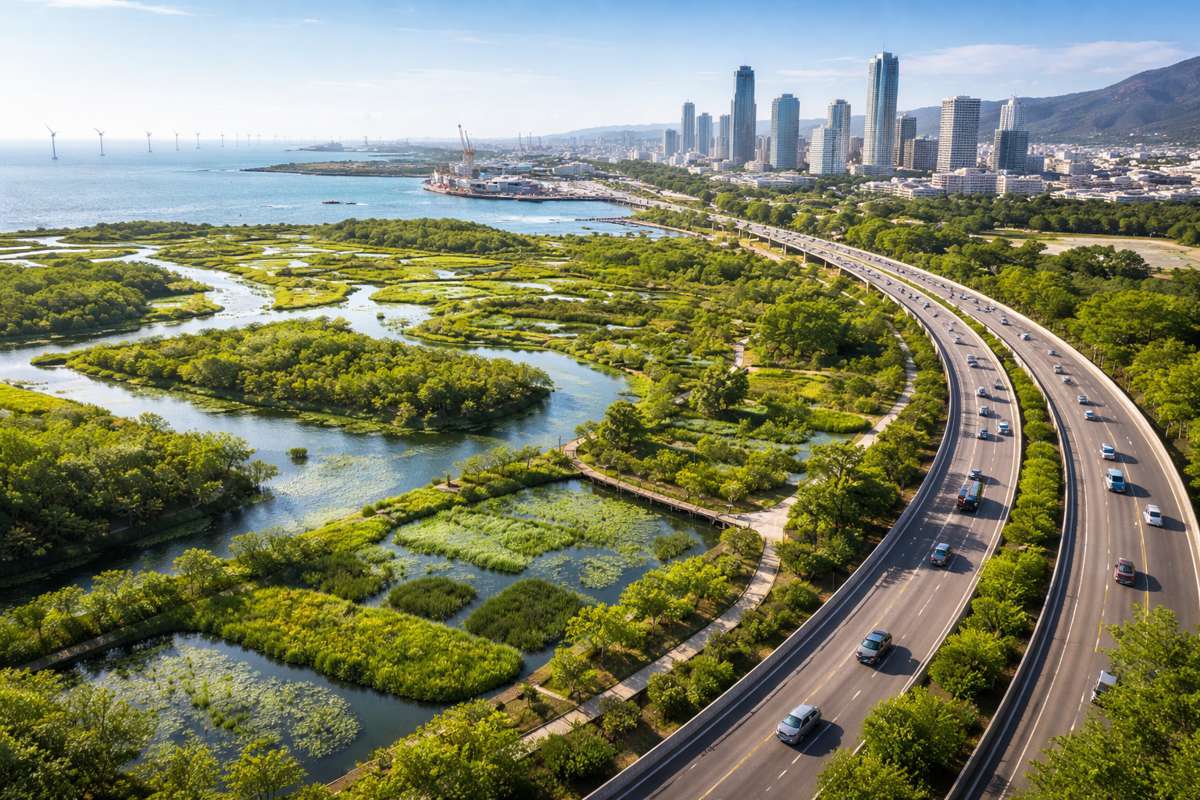
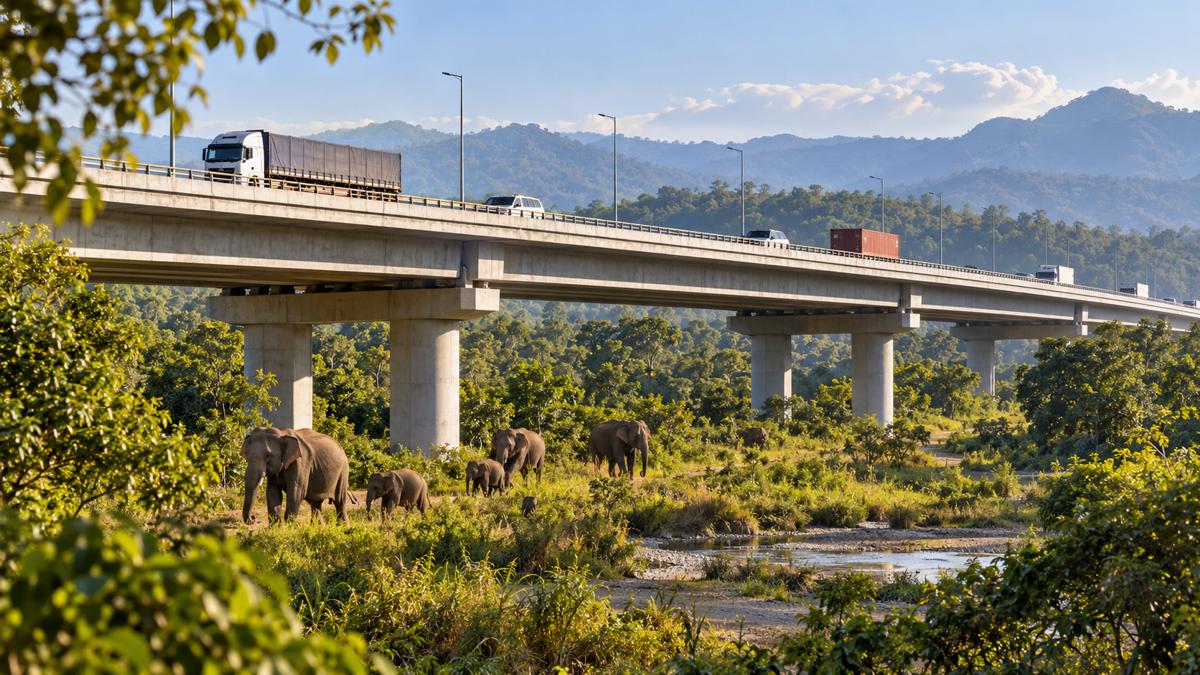
Natural systems function as invisible infrastructure. Wetlands regulate floodwater, forests stabilise soils, and coastal ecosystems protect ports and logistics zones from storm surges. When they fail, built infrastructure must compensate, usually at far higher cost.
This economic dependency is especially visible in emerging markets. Across many African economies, natural capital accounts for between 30 percent and 50 percent of national wealth. In practical terms, rivers, watersheds and ecosystems often carry greater economic weight than factories or buildings.
South Africa provides a clear illustration. Healthy ecosystems contribute more than R275 billion, roughly USD 14 billion, each year, equivalent to at least 7 percent of national GDP. Those contributions underpin agriculture, water supply and tourism, but they also protect transport networks and settlements from damage. Remove the ecological foundation and public infrastructure budgets begin absorbing costs previously handled by nature.
Recent events reinforce the point. Flooding in Kruger National Park and ongoing water stress in the Western Cape have translated directly into economic losses, disrupted tourism and strained municipal finances. Infrastructure investors now view such incidents not as anomalies but as indicators of asset vulnerability.
The Emergence Of Environmental Asset Classes
Capital markets rarely move without creating tradable instruments, and environmental risk is no exception. Carbon credits were the first step. Now a broader spectrum of financial products is emerging around climate adaptation and biodiversity.
Private finance for nature has grown rapidly, expanding from USD 9.4 billion to more than USD 100 billion in recent years. If current trends continue, projections suggest the market could approach USD 1.45 trillion by 2030. The growth reflects institutional investors seeking diversification and long duration assets that correlate with resilience rather than commodity cycles.
Several financial mechanisms are moving into the mainstream:
- Carbon markets linked to industrial emissions reduction
- Biodiversity and wildlife bonds tied to conservation performance
- Blue bonds supporting marine ecosystems and coastal infrastructure
- Debt for nature swaps restructuring sovereign liabilities
- Performance linked finance connected to resilience metrics
These instruments blur the traditional boundary between environmental policy and infrastructure funding. Investors no longer see environmental protection as a cost centre. Instead, it becomes a stabilising component of national balance sheets.
Why Infrastructure Investors Are Paying Attention
Infrastructure assets depend heavily on predictability. Roads, ports and power systems rely on stable operating conditions to maintain availability and service levels. Climate variability undermines that stability.
Insurance markets have already responded. Premiums for assets exposed to flood or wildfire risk have risen sharply in many regions, while coverage has become harder to obtain. As insurers reprice exposure, financiers follow. A project that once appeared bankable can become financially unviable when resilience costs are properly calculated.
Nature based solutions are increasingly viewed as cost efficient engineering measures rather than environmental gestures. Restoring mangroves may protect coastal transport corridors more cheaply than building concrete sea walls. Rehabilitating watersheds can stabilise hydropower generation more effectively than constructing new reservoirs.
For investors, the implication is straightforward. Financing ecosystems can be equivalent to financing infrastructure performance.
Africa As A Testbed For Integrated Finance
Africa sits at the centre of this transition because economic development and environmental stability remain closely intertwined. Many countries depend on rainfall patterns, soil health and water availability to sustain economic growth. That dependence makes environmental degradation a macroeconomic risk rather than a sectoral issue.
The continent therefore offers a proving ground for blended finance models linking conservation with development. Investors seeking scalable resilience assets are increasingly examining projects that combine energy transition, water security and biodiversity protection.
The approach also reflects geopolitical realities. Supply chains for minerals, agriculture and energy rely heavily on African regions. Stability of those supply chains depends on environmental conditions. When ecosystems fail, global markets feel the impact.
Harsen Nyambe, Director of Sustainable Environment and Blue Economy at the African Union Commission, framed the issue directly: “The escalating impact of climate change in Africa calls for the global community and private sector to recognise that a climate-resilient Africa is essential for global stability, prosperity, and shared security. Investing in Africa’s adaptation and mitigation projects is not an act of generosity; it is an investment in our common future.”
The statement reflects a broader investment logic rather than a political appeal. Infrastructure investors understand that regional instability ultimately translates into market volatility.
Turning Environmental Value Into Bankable Projects
The remaining challenge lies in translating ecological value into revenue streams that investors can model. Markets require predictable returns, yet environmental benefits often appear diffuse or long term.
New financing frameworks aim to bridge that gap. Performance based finance links payments to measurable environmental outcomes such as improved water retention or reduced flood damage. Carbon markets monetise avoided emissions, while biodiversity credits reward habitat restoration.
These structures convert ecological services into quantifiable financial flows. Once measurable, they can be securitised, insured and traded, making them compatible with institutional investment mandates.
The Role Of The Africa’s Green Economy Summit
The growing integration of climate and infrastructure finance forms the backdrop to Africa’s Green Economy Summit 2026 in Cape Town. The event opens with the Climate, Carbon and Nature Financing Academy on 24 February, followed by the main summit from 25 to 27 February.
Rather than focusing solely on policy discussion, the academy concentrates on structuring investable projects. Participants will examine carbon markets, green and blue bonds, wildlife bonds and debt for nature swaps as mechanisms capable of scaling capital flows into resilience infrastructure.
The timing matters. By foregrounding these themes at the start of the year, the summit signals that environmental finance is no longer a specialist niche. It is becoming part of mainstream infrastructure capital allocation.
A Structural Change In Global Investment
The convergence of carbon, biodiversity and infrastructure finance represents a structural change rather than a temporary trend. Investors increasingly recognise that long term returns depend on stable ecological systems.
As markets integrate environmental performance into valuation models, infrastructure design itself is evolving. Projects now incorporate watershed management, habitat restoration and climate adaptation from the earliest planning stages. Engineers and financiers are beginning to operate within the same resilience framework.
The financial industry tends to follow risk signals slowly and then all at once. Climate and biodiversity risks have now reached the threshold where they influence capital allocation decisions globally. Infrastructure, once treated as purely physical, is being redefined to include the natural systems that sustain it.