Smarter Air Quality Modelling Reshapes Urban Transport Policy
Air pollution is no longer just a public health discussion. It is now an infrastructure problem that sits squarely at the intersection of transport planning, construction policy and urban investment. Across the European Union, ambient air pollution remains the leading environmental cause of premature death, responsible for roughly 400,000 deaths annually. The scale alone places it alongside major economic risks rather than purely environmental concerns.
For planners, contractors and policymakers, the implications are direct. Polluted air damages productivity, increases healthcare costs, restricts development approvals and increasingly dictates funding eligibility. Major infrastructure programmes are now routinely assessed not only on mobility and capacity, but also on emissions performance. The EU’s zero pollution vision for 2050 formalises this shift, turning air quality into a measurable deliverable rather than a political aspiration.
The legal backbone of this transition is the Ambient Air Quality Directive, which obliges cities to monitor, report and improve local pollution levels. Compliance increasingly influences transport investment decisions, particularly in dense metropolitan areas where population exposure is highest. In other words, if a project worsens air quality, it risks not being built at all.
From Monitoring Stations to Predictive Environmental Intelligence
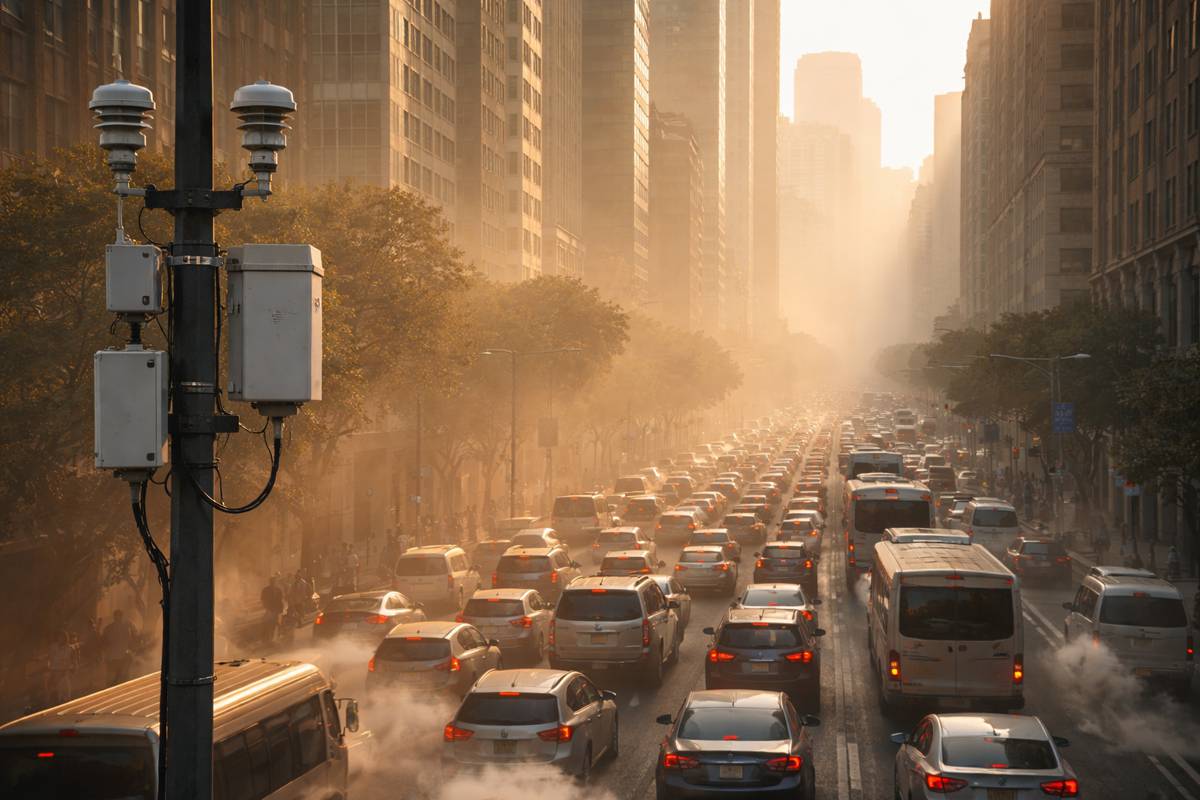
Traditionally, cities relied on monitoring stations to measure pollution. These networks provided reliable historical data but struggled to explain why pollution occurs or how to fix it. A sensor can tell authorities pollution exceeded limits, yet it cannot separate whether the cause was vehicles, domestic heating, weather conditions or urban geometry.
This limitation has pushed environmental management toward hybrid modelling systems that combine measurement data with atmospheric simulation. Instead of only recording concentrations, authorities can now model dispersion, chemistry and source attribution across time and space. That matters because infrastructure interventions depend on knowing the source. A low emission zone targets vehicles, while heating retrofits target buildings. Choose wrongly and expensive policy fails.
Researchers in Warsaw explored this exact challenge. The city represents a typical Central and Eastern European pollution profile, where traffic emissions coexist with residential heating still reliant on fossil fuels, including coal. Understanding how these sources interact within dense urban environments became central to designing workable mitigation strategies.
The Street Canyon Problem Engineers Cannot Ignore
Urban streets lined with continuous buildings create what engineers call a street canyon effect. Instead of dispersing, pollutants become trapped between façades, forming localised microclimates. Concentrations can vary dramatically over only a few metres, meaning a nearby monitoring station may not reflect pedestrian exposure accurately.
For infrastructure planners, this matters more than it first appears. Road widening, building height regulations and junction design can either ventilate pollution or trap it. The difference determines whether a project improves public health or unintentionally worsens it despite reducing congestion.
Another overlooked factor is road dust resuspension. Vehicles do not only emit exhaust gases. They also lift previously deposited particles back into the air. Braking systems, tyre wear and road surface conditions all contribute to particulate matter levels even when engines are cleaner. This explains why electric vehicles alone cannot eliminate urban particulate pollution.
The Warsaw study integrated both street canyon effects and resuspension into its modelling framework. That move represents a shift from emission measurement toward exposure modelling, which better reflects real human conditions in urban corridors.
Combining European and Canadian Atmospheric Science
To achieve this, researchers combined two established models. The Belgian developed ATMO Street model was used to simulate street level dispersion, while the Canadian derived GEM AQ atmospheric chemistry model simulated airborne reactions and regional transport of pollutants. The result was a multi scale system capable of linking neighbourhood traffic to citywide air chemistry.
The outputs were validated against nine monitoring stations across Warsaw, including one located directly beside traffic and eight background stations representing broader urban conditions. This allowed differentiation between citywide pollution and transport specific exposure.
The findings were notable. Including street canyon effects and road dust resuspension significantly improved modelling accuracy. Predictions for fine particulate matter PM2.5 improved by 34 percent and coarse particulate matter PM10 by 55 percent compared with previous modelling approaches.
More importantly for policymakers, the attribution changed. At the traffic monitoring station, transport accounted for 41 percent of PM2.5 and 42 percent of PM10. Compared to earlier modelling methods, that represented increases of 188 percent and 63 percent respectively in estimated traffic contribution. Vehicles were also responsible for 84 percent of nitrogen dioxide emissions at that location.
In practical terms, older models underestimated the role of traffic in certain urban environments. That means previous mitigation strategies may have been misdirected.
Implications for Urban Transport Investment
For construction and transport professionals, the real impact lies in decision making. Air quality modelling increasingly determines project approval, financing and public acceptance. If modelling understates transport emissions, cities risk building infrastructure that later requires costly retrofits or operational restrictions.
More accurate attribution allows targeted intervention:
- redesigning junction layouts to improve airflow
- adjusting building set backs along transport corridors
- prioritising street cleaning to reduce resuspension
- selecting pavement materials that minimise particle lift
- optimising traffic flow rather than only reducing vehicle numbers
These are engineering decisions rather than purely regulatory ones. The shift effectively turns air quality into a design parameter similar to drainage or structural load.
Monitoring Networks and the Future of Compliance
The revised Ambient Air Quality Directive requires high quality urban monitoring networks across EU cities. However, measurement alone is insufficient. The Warsaw research demonstrates that sensor networks become far more valuable when integrated into predictive modelling frameworks.
Cities expanding low cost sensor deployments now generate large datasets but often lack interpretation tools. Hybrid models bridge that gap by transforming raw measurements into actionable intelligence. Authorities can test policies virtually before implementing them physically, reducing both cost and political risk.
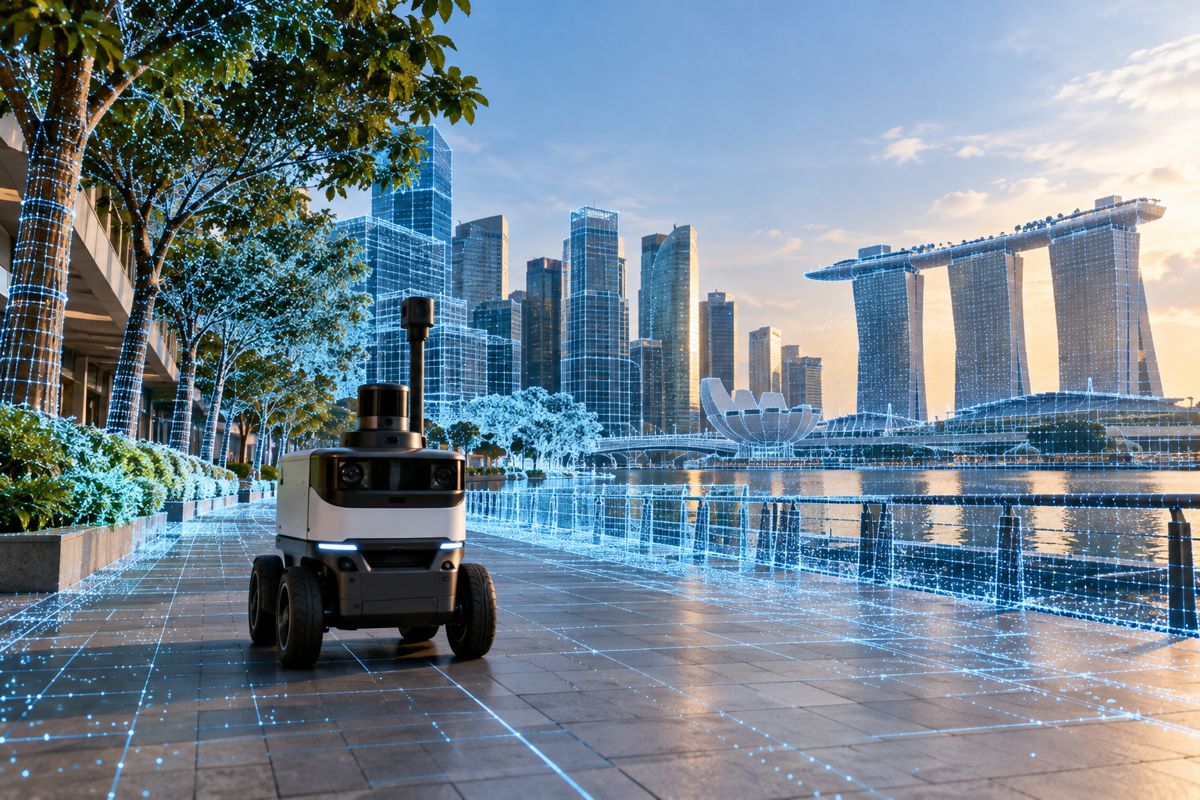
The study also highlights limitations. Results depend on modelling assumptions and validation relied on only one traffic monitoring station. Researchers acknowledge the need for denser networks and further model combinations. Even so, the direction is clear: air quality management is moving toward digital environmental twins of cities.
Reframing Air Pollution as Infrastructure Performance
What emerges is a broader industry trend. Air quality is no longer just environmental compliance. It is becoming a performance indicator for transport systems and urban design. Cities that manage it well unlock funding, accelerate planning approval and attract investment. Those that do not face legal and economic penalties.
For Central and Eastern Europe in particular, where residential heating and transport both contribute significantly, accurate source separation is critical. Policies targeting only heating or only vehicles risk underperforming. Integrated planning becomes unavoidable.
The Warsaw modelling study strengthens the case that future infrastructure projects will require environmental simulation alongside traffic simulation. Just as digital twins transformed asset management, environmental twins are likely to shape planning decisions in the coming decade.
The practical takeaway is simple. Understanding pollution precisely changes how cities build roads, design streets and manage mobility. Better data does not just describe reality. It reshapes infrastructure itself.