Ritchie Bros Orlando Sale Highlights Global Fleet Expansion Plans
Every year, the global construction and heavy equipment sector looks for signals that reveal how the next twelve months might unfold. Commodity prices, project pipelines and interest rates all play their part, but secondary equipment markets often provide the clearest early read. When contractors buy used iron, they’re voting with real capital rather than forecasts.
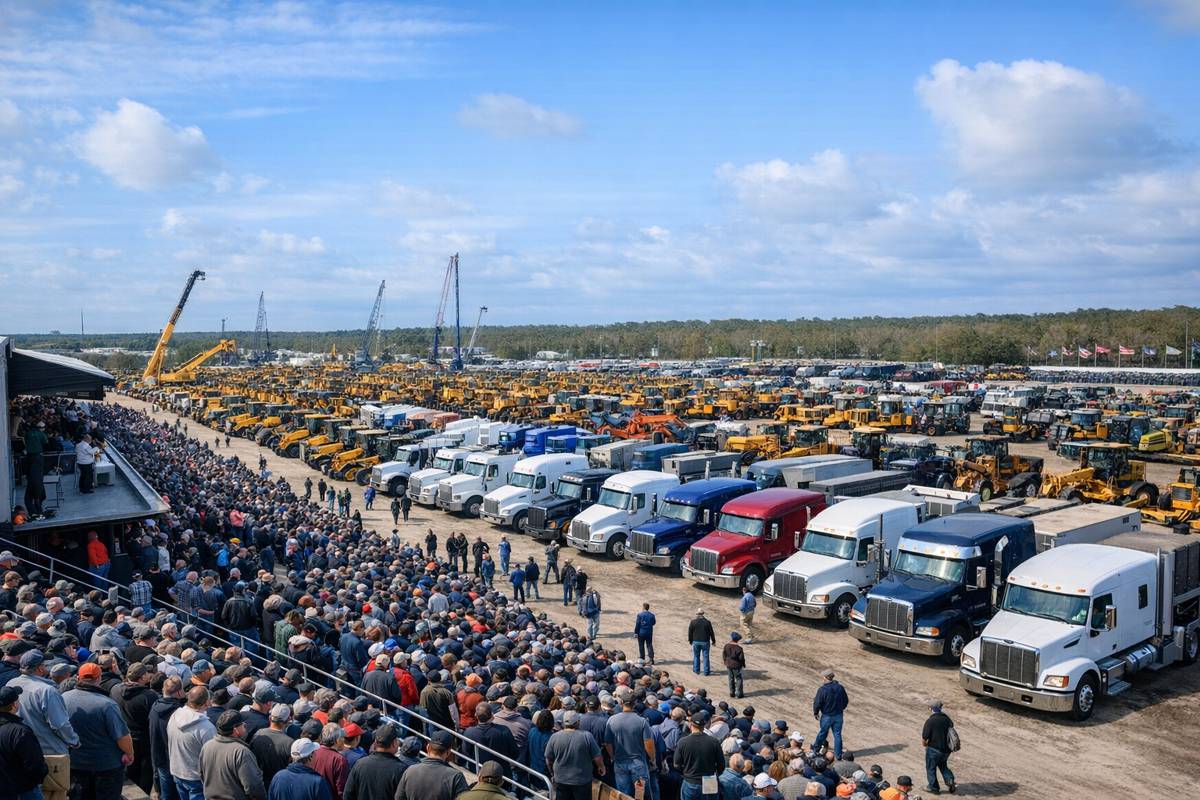
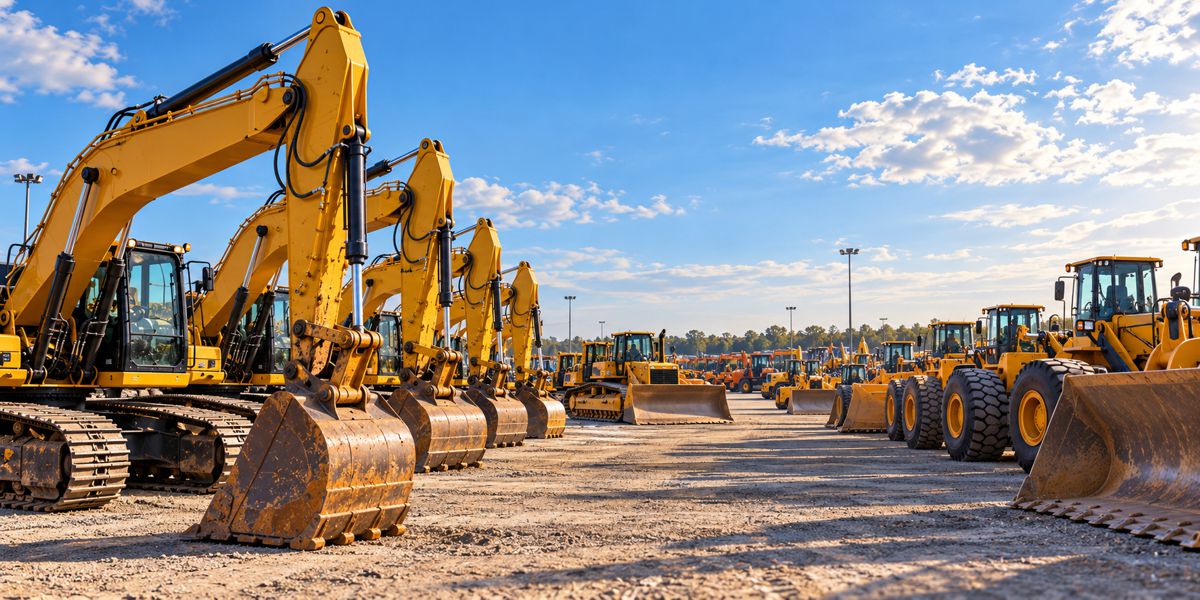
The Ritchie Bros. premier auction in February, in Orlando, has again emerged as one of the industry’s most reliable indicators. More than US$265 million in gross transaction value changed hands over five days, with over 14,500 machines, trucks and vehicles sold across construction, transport, agriculture and energy sectors. Participation reached more than 19,500 bidders from over 80 countries, reflecting a genuinely global marketplace rather than a regional clearance event.
The significance lies not in spectacle but in liquidity. A market capable of absorbing that volume in a single week suggests contractors are preparing to deploy equipment rather than delay investment. For infrastructure investors and project planners, that matters. Equipment demand typically leads construction output by several months, making large auctions an unusually practical economic signal.
Why Secondary Markets Matter to Infrastructure Delivery
Primary equipment sales tell a story about manufacturers. Secondary markets tell a story about projects. Contractors rarely expand fleets unless they foresee work, and they often favour used equipment early in a cycle to manage risk. The Orlando results therefore carry implications well beyond asset trading.
Globally, infrastructure pipelines remain strong. The International Monetary Fund and World Bank have both highlighted public investment as a central economic stabiliser, while transport agencies across North America, Europe and Asia continue to accelerate road and logistics programmes. Used equipment purchasing fits neatly into that environment because it shortens mobilisation time and reduces capital exposure.
When thousands of machines move simultaneously, pricing transparency improves. That transparency allows contractors to cost bids more accurately. In turn, lenders gain confidence in collateral valuations, and insurers adjust risk models. The auction effectively acts as a real time valuation index for physical infrastructure capacity.
Jake Lawson, President and Head of Ritchie Bros. North America Sales, summarised the scale: “Orlando continues to deliver scale and visibility that no other event in our industry can match,”
His remark highlights something often overlooked. Auctions are not merely sales events. They are price discovery mechanisms underpinning financing decisions across construction and transport sectors.
Domestic Demand Still Dominates but Global Buyers Are Watching
Approximately 86 percent of assets were purchased by buyers within the United States, with Floridian companies alone accounting for 39 percent. That domestic concentration signals strong local construction activity, particularly in road expansion, logistics hubs and urban development programmes currently underway across the state.
Yet the remaining 14 percent purchased internationally carries equal importance. Buyers from countries including Vietnam, Saudi Arabia and Australia participated, indicating that global contractors continue to treat North American auctions as sourcing hubs. In regions experiencing rapid development, importing used equipment can accelerate project starts without waiting for new manufacturing capacity.
Cross border equipment flows have grown steadily over the past decade. According to industry trade associations and shipping brokers, used heavy equipment exports now represent a substantial portion of global machinery circulation, particularly into emerging infrastructure markets. Auctions capable of coordinating financing and shipping in one transaction remove logistical friction that previously slowed international procurement.
Lawson acknowledged the combined physical and digital reach: “We appreciate the customers who participated onsite and online, along with the creators who helped extend visibility beyond the yard,”
The statement underscores a broader trend. Equipment trading has shifted from local yards to integrated global marketplaces combining finance, logistics and data visibility.
Digital Auctions Become Operational Infrastructure
The Orlando event blended onsite bidding, online participation and timed auction formats. That hybrid approach reflects a permanent change in how heavy equipment is traded. Over the past five years, accelerated by pandemic era restrictions, contractors became comfortable committing capital without physically standing beside the machine.
This shift has wider implications for infrastructure delivery. Digital procurement shortens project lead times because equipment can be sourced globally within days. It also allows contractors to optimise fleets geographically rather than locally. Idle machines in one continent can now move quickly to another where demand exists.
The auction also introduced a creator focused engagement day, signalling how industrial markets are adapting communication strategies. While not traditionally associated with heavy industry, broader visibility improves market transparency. The more participants understand pricing trends, the more efficiently capital flows through construction supply chains.
From a policy perspective, that transparency supports public procurement. Governments increasingly rely on accurate equipment valuation when estimating project budgets. Large scale auction data therefore feeds indirectly into national infrastructure planning.
Equipment Diversity Reflects Sector Momentum
The range of assets sold covered construction plant, transport fleets, agricultural machinery and energy sector equipment. Such diversity matters because it indicates multi sector activity rather than a single industry spike.
Construction equipment sales suggest active building programmes. Truck and transport purchases indicate freight demand expectations. Agricultural machinery movement points to stable food production investment, while energy equipment signals ongoing resource development. When all categories move together, it typically reflects broad economic confidence rather than isolated demand.
Historically, multi category auctions have preceded periods of sustained infrastructure output. Contractors acquire equipment in anticipation of contracts already awarded or expected to mobilise. As a result, the February trading activity could influence project execution timelines across the year.
The return of traditional live ramp bidding for one day, alongside modern digital formats, also highlighted the sector’s transitional nature. Legacy practices remain trusted for high value assets, while online systems provide scale and accessibility. The combination suggests the industry is not abandoning established methods but integrating them into a wider transactional ecosystem.
Financing and Logistics as Part of the Marketplace
One notable feature was the integration of financing and shipping services alongside the asset transactions. Historically, equipment auctions ended at the hammer fall, leaving buyers to arrange payment and transport independently. Modern marketplaces bundle these processes together.
That evolution affects project economics. Faster financing approval allows contractors to deploy equipment almost immediately, reducing idle capital. Coordinated shipping simplifies international procurement, particularly for developing regions lacking strong dealer networks.
For investors evaluating infrastructure contractors, access to liquidity often determines competitiveness. Companies able to secure machines quickly can mobilise faster and bid more aggressively. Auction marketplaces therefore influence contractor performance beyond simple purchasing.
From a macroeconomic viewpoint, efficient secondary markets reduce overall construction costs. Lower equipment acquisition expenses translate into lower project bids, benefiting public infrastructure budgets and private developments alike.
Reading the Market Signals for 2026
Early year auctions frequently serve as leading indicators for capital expenditure cycles. Strong participation, high transaction value and international engagement collectively suggest contractors expect steady workload through the coming construction season.
Several macro factors align with that interpretation. Governments continue prioritising transport resilience, energy transition infrastructure and urban expansion. At the same time, manufacturers face long production lead times, making used equipment a practical bridge between demand and supply.
The Orlando results therefore point to cautious confidence rather than exuberance. Buyers are investing, but often through secondary markets that balance capacity growth with financial prudence. Such behaviour typically accompanies sustained but measured expansion in infrastructure output.
For policymakers, the message is equally relevant. A liquid equipment market implies readiness among contractors to execute funded projects. Delays in procurement policy or permitting could therefore become the limiting factor rather than construction capacity.
The Role of Auctions in the Modern Construction Ecosystem
Large scale auctions now sit at the intersection of construction economics, digital commerce and logistics networks. They provide valuation benchmarks, enable fleet mobility and support project financing models. In effect, they function as operational infrastructure supporting physical infrastructure.
As supply chains continue to globalise, the ability to redeploy machinery efficiently will grow in importance. Whether responding to disaster reconstruction, energy projects or transport expansion, contractors increasingly rely on international asset circulation rather than local inventory.
Events like Orlando illustrate that the heavy equipment sector has moved beyond regional trading yards into coordinated marketplaces. The week’s transactions were not merely a sale but a snapshot of global construction readiness.