Kolkata Port Opens Strategic PPP Gateway for India’s Bulk Liquid Trade
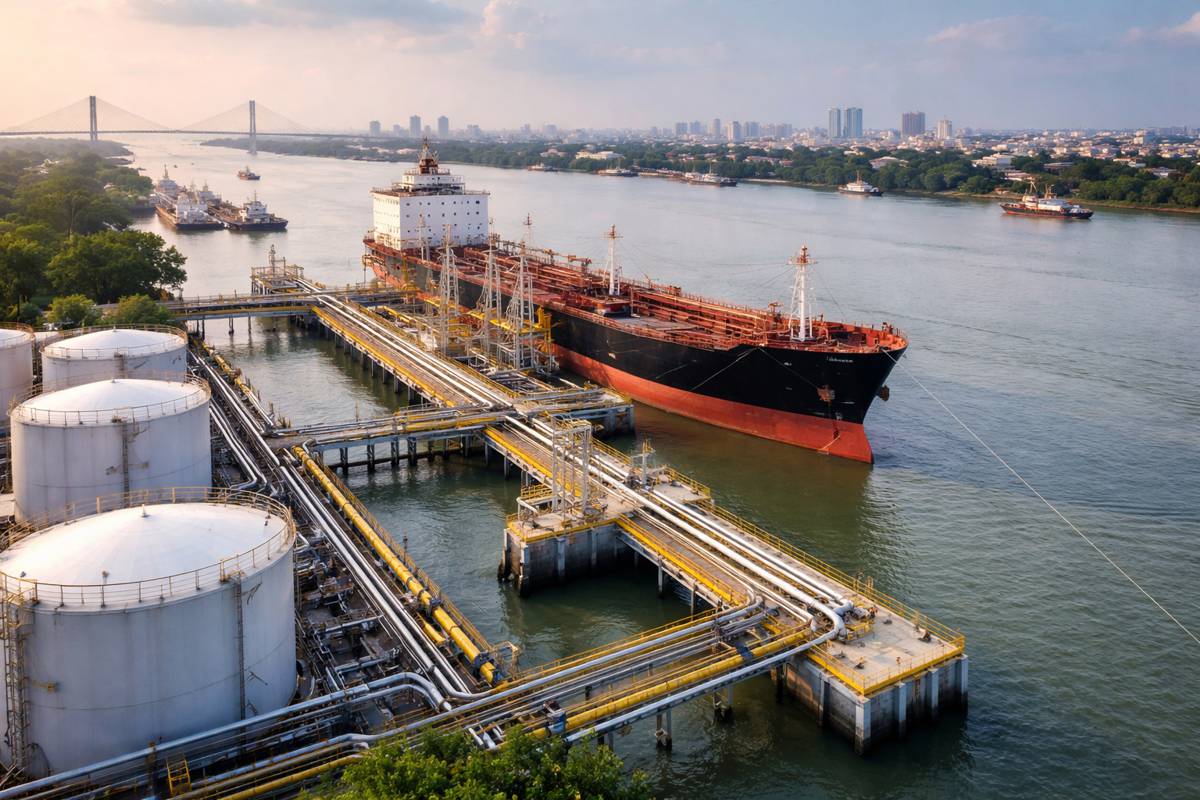
At first glance, a Request for Qualification cum Proposal issued by Syama Prasad Mookerjee Port, Kolkata might appear routine. Ports publish such notices frequently, and many pass with little attention beyond specialised bidders. Yet this particular call, seeking private project finance to develop a liquid cargo jetty, sits at the intersection of several major trends reshaping global infrastructure: energy transition logistics, port modernisation in emerging economies, and India’s accelerating adoption of Public Private Partnership models.
Syama Prasad Mookerjee Port, historically known as Kolkata Port, is India’s oldest operating port complex. Unlike deep sea coastal ports developed in recent decades, it functions as a riverine gateway along the Hooghly River, serving eastern and north eastern India as well as neighbouring landlocked regions such as Nepal and Bhutan. Because of its geography, capacity expansion cannot rely simply on dredging and reclamation. Infrastructure must be targeted, specialised and commercially viable.
The proposed liquid cargo jetty therefore matters less for its physical scale and more for what it signals: India is steadily converting legacy public infrastructure into market driven logistics platforms while maintaining state ownership of strategic assets.
Why Liquid Cargo Infrastructure Is Suddenly Critical
India’s liquid bulk cargo demand has changed dramatically over the past decade. Traditionally dominated by crude oil and petroleum products, the mix now includes chemicals, LPG, edible oils, biofuels and industrial feedstocks required for manufacturing growth.
Eastern India in particular has witnessed expanding refinery capacity, fertiliser plants and chemical processing zones across West Bengal, Odisha and Jharkhand. The region is also increasingly tied into Southeast Asian trade routes. That creates a need not just for throughput volume but for specialised berthing capable of handling segregated hazardous and non hazardous liquids safely.
Modern liquid terminals require far more than a berth and pipelines. They must integrate:
- vapour recovery systems
- segregated tank farm connectivity
- spill containment infrastructure
- automated metering
- safety monitoring and emergency shutdown systems
Older public port facilities often struggle to justify such capital intensive upgrades through tariff revenue alone. Private operators, by contrast, can align investment directly with cargo contracts.
The Kolkata tender reflects that global pattern. Rather than funding expansion through public budgets, the port authority seeks a concessionaire to finance, build, operate and maintain the jetty under a PPP framework.
India’s Shift Toward Concession Based Port Development
Over the past two decades, India has quietly transformed its maritime sector through concession agreements. Major ports once operated entirely by government dock labour boards have gradually opened cargo handling, terminals and specialised berths to private participation.
This strategy accelerated after the Sagarmala Programme launched in 2015, aimed at reducing logistics costs by improving port efficiency and connectivity. According to India’s Ministry of Ports, Shipping and Waterways, PPP projects now account for a significant share of cargo handling capacity across major ports.
The reasoning is straightforward. Government retains land and regulatory authority while private developers bring capital, technical expertise and operational discipline. For cargo specific facilities such as container terminals, LNG berths or chemical jetties, concession structures also align incentives. Revenue depends directly on throughput.
The Kolkata liquid cargo project fits neatly into this framework. The port is not privatising ownership but outsourcing performance risk. If cargo volumes rise, both parties benefit. If they fall, taxpayers are shielded from capital exposure.
Strategic Geography Makes Kolkata Unique
Unlike many Indian ports located on open coastlines, Kolkata sits deep inland along a tidal river channel prone to sedimentation. Navigation requires constant dredging and specialised pilotage. That constraint limits vessel size but provides a different advantage: direct hinterland access.
Cargo discharged at Kolkata bypasses the coastal trucking corridors required at many deep sea ports. Instead, it feeds directly into rail and river networks serving densely populated industrial belts. For liquid cargo in particular, shorter inland transport distances significantly reduce cost and risk.
The planned jetty therefore supports more than maritime trade. It strengthens inland supply chains for fuel distribution, fertiliser imports and chemical manufacturing across eastern India. It also helps decongest Haldia Dock Complex, the seaward component of the same port system, which currently handles a large portion of bulk liquids.
From an infrastructure planning perspective, such distributed capacity reduces vulnerability. When one facility faces weather or channel restrictions, cargo can shift within the port ecosystem rather than divert hundreds of kilometres along the coast.
The Role of PPP in Managing Environmental and Safety Risk
Liquid bulk terminals carry environmental consequences far exceeding general cargo facilities. Accidental spills can affect river ecosystems, fisheries and drinking water sources. Public authorities often lack the resources to maintain continuous monitoring at modern standards.
Private concessionaires typically deploy advanced automation and sensor networks because operational downtime directly impacts revenue. Technologies now common in modern terminals include:
- real time leak detection
- digital flow metering linked to billing
- automated emergency isolation valves
- drone inspection of pipelines and manifolds
- integrated safety control rooms
Global evidence suggests that when properly regulated, concession based terminals can achieve higher compliance standards because operators must meet contractual performance indicators.
For Kolkata, located near densely populated urban areas, that distinction is critical. The PPP structure shifts day to day operational responsibility to a technically specialised entity while the port authority enforces regulatory oversight.
Economic Implications Beyond the Port Gate
Infrastructure investors increasingly evaluate ports not just as transport nodes but as industrial catalysts. Liquid cargo facilities often precede industrial cluster development because industries require assured feedstock supply before committing capital.
Eastern India is positioning itself as a manufacturing alternative within Asia’s shifting supply chains. The availability of specialised chemical and petroleum handling infrastructure supports downstream sectors such as plastics, pharmaceuticals and fertilisers.
The jetty project therefore becomes part of a broader economic development equation. It enhances reliability of raw material imports and export logistics, encouraging private industry investment in the surrounding region.
For policymakers, PPP projects like this function as low risk economic multipliers. Government funding remains limited while private capital builds the enabling infrastructure required for industrial growth.
Global Investors Watching India’s Maritime Policy
International infrastructure funds have increasingly entered India’s transport sector, attracted by long term concession revenues and expanding trade volumes. Ports in particular offer predictable cash flows when backed by cargo contracts.
However, investor confidence depends heavily on regulatory stability and transparent bidding processes. Request for Qualification cum Proposal frameworks aim to pre screen capable bidders before financial offers, reducing execution risk.
The Kolkata tender signals continued adherence to internationally recognisable concession structures. That matters because global capital markets compare opportunities across Asia, the Middle East and Africa. A consistent framework improves India’s competitiveness in attracting private infrastructure finance.
With energy markets diversifying and chemical trade expanding, liquid cargo terminals are among the most attractive port assets globally. A successful concession award here could attract experienced operators already active in LNG, petrochemical and storage infrastructure.
Engineering Challenges Unique to Riverine Ports
Constructing a jetty along a tidal river differs substantially from coastal marine construction. Sedimentation rates, shifting channels and variable water levels demand adaptive structural design.
Engineers must account for:
- strong tidal currents
- scouring around piles
- fluctuating berth depths
- limited construction windows during monsoon seasons
Design life considerations also differ because maintenance access may be restricted by navigation schedules. Modern river jetties therefore often incorporate modular fender systems and corrosion resistant materials to reduce intervention frequency.
These technical complexities reinforce the logic of PPP delivery. Specialist marine contractors operating long term concessions can design for lifecycle performance rather than lowest upfront cost, a persistent challenge in publicly funded infrastructure.
A Step Toward Modern Port Governance
India’s infrastructure development increasingly balances public ownership with private efficiency. The Kolkata liquid cargo jetty tender represents that philosophy in practice.
Rather than embarking on a large flagship megaproject, authorities are incrementally upgrading functional capacity aligned to market demand. Each specialised facility expands capability without burdening public finances.
This approach reflects a broader shift in global infrastructure planning. Modernisation is no longer solely about scale. It is about targeted performance improvements, digital monitoring, safety compliance and financial sustainability.
For the construction and infrastructure sector, projects like this often generate more lasting impact than headline investments. They reshape operational standards, attract private capital and integrate legacy infrastructure into contemporary logistics networks.
Eastern India’s industrial growth, regional trade connectivity and environmental safety standards will all be influenced by the outcome of this relatively modest tender. In that sense, the jetty is not merely a berth. It is part of a structural transition in how emerging economies build and manage transport infrastructure.