Financing the Future of Global Infrastructure
Infrastructure has rarely lacked for demand. Roads still need widening, bridges still need strengthening, ports still need dredging, power grids still need modernising, and water systems still need keeping one step ahead of growth. What’s changed, in the bluntest terms, is that the defining constraint of this decade isn’t engineering know-how, project ambition, or even political interest. It’s capital, specifically the price of it, the patience for it, and the willingness to take the risks that come with building long-lived assets in a jumpy world. Public balance sheets are under strain and debt loads are historically high, forcing treasuries to triage priorities rather than simply add new ones.
That shortage of investable, well-structured capital shows up as an “infrastructure funding gap” in almost every major forecast, even when the methodologies differ. The Global Infrastructure Hub methodology, discussed in a World Bank Group blog, put global infrastructure investment needs at about $94 trillion through 2040, with a shortfall of $18 trillion against current spending trends.
A more recent assessment from McKinsey & Company estimates a cumulative $106 trillion in investment through 2040 across seven infrastructure “verticals”, ranging from transport and power to digital and social infrastructure. Different totals, same signal: the pipeline is vast and the industry’s bottleneck is funding, not imagination.

Capital Is the Defining Constraint of This Decade
Under the helmet and hi-vis, the infrastructure ecosystem runs on an old rhythm: stable long-term assets are financed with stable long-term money. The catch is that, over the last few years, “stable” has been an increasingly expensive word. Fundraising for private infrastructure has slowed since the start of 2023, with elevated interest rates widely cited as a drag on both fundraising and deal-making. That’s not a tidy, abstract financial headline. It quickly filters down to the site gate as tender prices, availability of project finance, and the size of contingency pots change in real time, especially where revenue models are less robust or regulatory frameworks wobble.
The most revealing evidence is often in the split between primary and secondary markets. Global private investment in infrastructure projects in primary markets rose in 2023, while secondary market activity slowed amid higher interest rates. In other words, new-build activity kept moving, but buying and refinancing existing assets became harder, which matters because recycled capital is meant to help fund the next wave of projects.
Adding another complication, the same analysis notes that infrastructure delivery costs rose in the meantime, around 10% above inflation, which is the sort of detail that leaves financiers insisting on higher returns while clients insist on lower prices.
The Infrastructure Funding Gap in Numbers
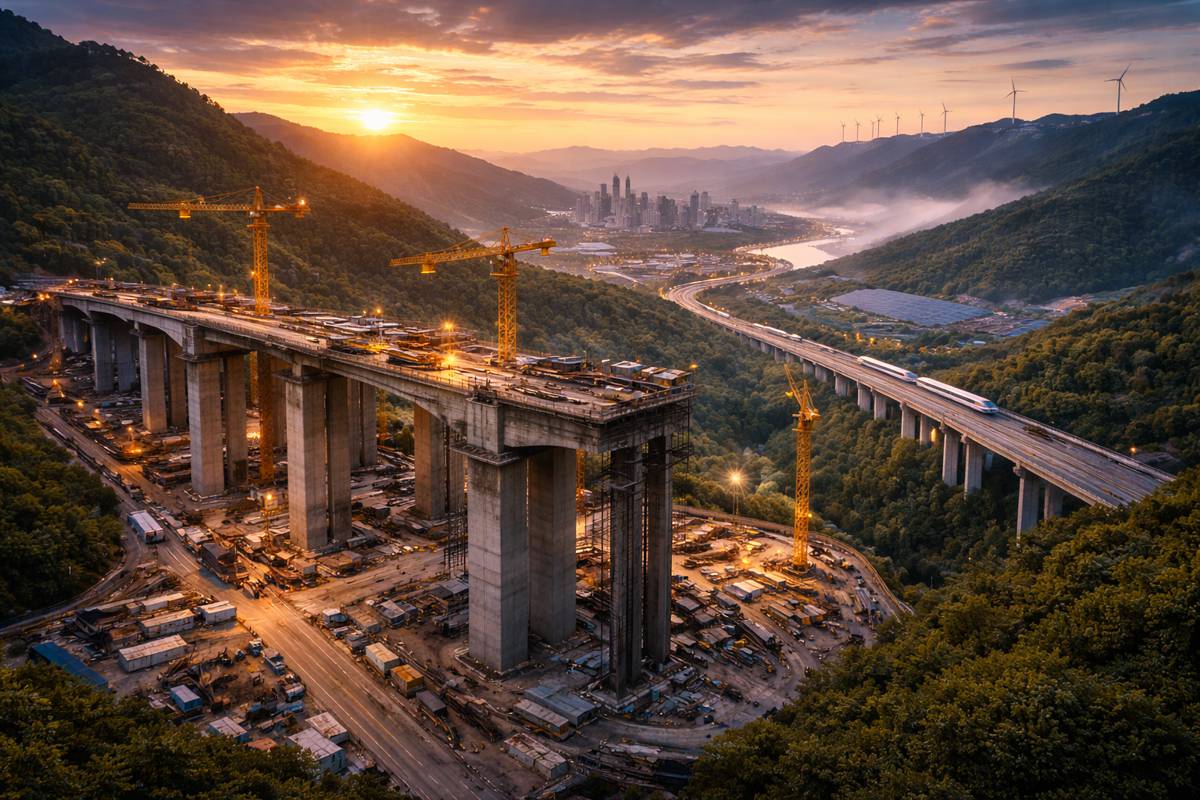
The infrastructure funding gap is regularly quoted in eye-watering totals because the needs are multi-decade and multi-sector. The Global Infrastructure Hub outlook, as summarised by the World Bank blog, frames it in a way contractors and policymakers can use: $94 trillion is the projected investment needed through 2040 to keep pace with economic and demographic change, rising to $97 trillion if universal access to water, sanitation, and electricity goals are added.
The same analysis puts the “shortfall” against current trends at $18 trillion, and estimates that meeting the gap and the relevant access goals would require global infrastructure spending to rise from roughly 3% of global GDP to about 3.7%.
Where the numbers become commercially real is in sector detail. The World Bank blog notes that the majority of the global investment gap sits in roads and electricity, including an estimated $8 trillion gap in roads and $2.9 trillion in electricity. That’s a direct read-across to civil contractors, materials suppliers, and equipment manufacturers because roads and grids are high-volume, repeatable construction programmes once they’re funded and permitted.
Meanwhile, McKinsey’s estimate that transport and logistics alone could account for $36 trillion of cumulative investment through 2040 illustrates how large the transport pipeline remains even as “infrastructure” expands to include digital and service layers.
The Emerging Market Divide
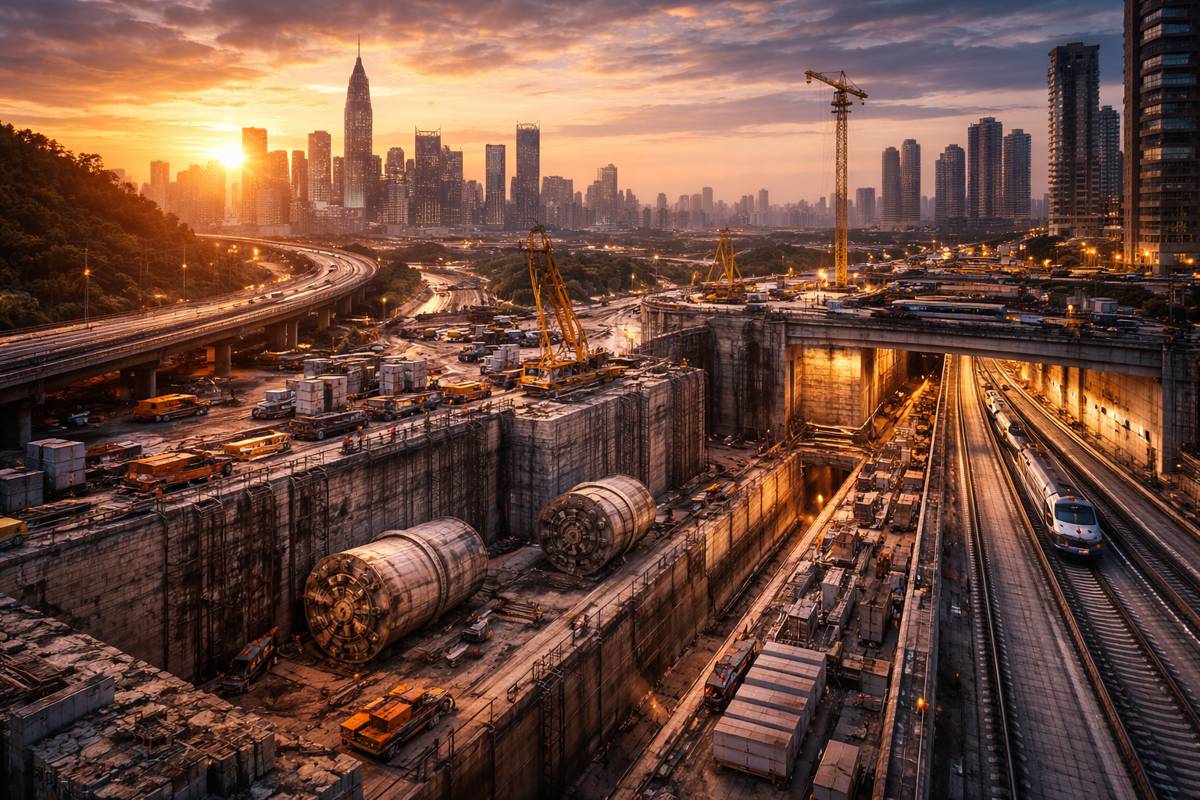
The global gap matters everywhere, but the financing story splits sharply between higher-income markets and low- and middle-income ones. A World Bank and Global Infrastructure Hub analysis of private investment indicates that, in 2023, private investment in infrastructure projects in primary markets rose by 15% in high-income countries but fell by 2% in low- and middle-income countries. It adds that investment levels in low- and middle-income countries remained below 2019 levels and represented under a quarter of total global investment. That disparity isn’t a footnote. It is the gap, because project demand is often most acute where urbanisation, energy access and basic services are still scaling.
Looking specifically at low- and middle-income countries, a World Bank analysis of the Private Participation in Infrastructure (PPI) report found that private infrastructure investment totalled $86 billion in 2023, a 5% decline from 2022, even as the number of countries and projects receiving investment increased.
That creates a familiar pattern: lots of activity, not enough volume, and plenty of fragmented deals without the scale to transform national networks. Overlaid on top is a cost-of-capital problem that policy forums increasingly state plainly. A UNFCCC text on a new collective quantified goal on climate finance, for instance, points to barriers faced by developing countries including high costs of capital, limited fiscal space and unsustainable debt levels.
Political risk is the other stubborn divider. It is the invisible line item in every financing model, and it’s often the reason deals never make it out of committee. When the World Bank Group set out a plan to consolidate and scale its guarantee platform with an ambition to reach $20 billion a year by 2030, it was framed explicitly as a way to unlock private investment in riskier markets.
Mark Carney, speaking in that context, was unusually direct: “And the private sector just can’t manage that on its own.” For construction markets, this is the difference between a tender pipeline that looks plausible on paper and one that actually turns into notice-to-proceed contracts.
Developed Markets Still Face a Renewal Crunch
It’s tempting to treat the infrastructure funding gap as an emerging market story, but the data repeatedly points to a more awkward reality. The World Bank blog summarising the Global Infrastructure Hub outlook lists the United States as having the largest forecast investment gap at $3.8 trillion, ahead of China and others in that specific forecast.
Meanwhile, McKinsey’s regional breakdown expects roughly $13 trillion of investment in Europe through 2040, much of it tied to renewal of ageing assets and the demands of decarbonisation and digitisation. Even in wealthy markets, infrastructure is not a “nice to have”. It is the substrate of competitiveness, and it ages whether budgets approve it or not.
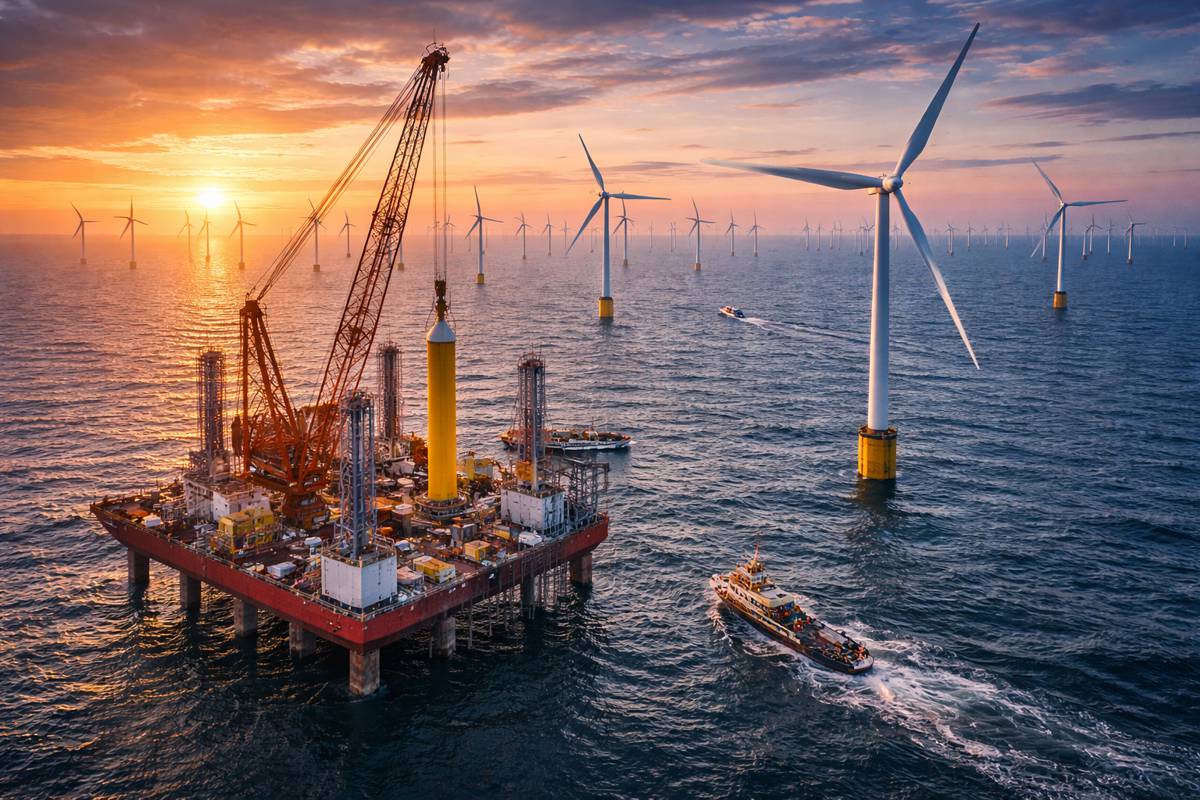
The renewal crunch is now colliding with a new class of demand, particularly around electric grids, storage, and the physical footprint of digital growth. The International Energy Agency has highlighted that investment in electricity generation has risen sharply since 2015, but grid spending has not kept pace, reaching around $400 billion a year in the assessment cited in its World Energy Outlook executive summary.
The IEA has also warned, in early 2026 commentary, that meeting rising electricity demand requires annual investment in grids to rise by 50% by 2030. Separately, reporting has described how surging AI-related investment plans risk running into power infrastructure bottlenecks, making grid upgrades and generation capacity a hard constraint on industrial and digital investment. For construction firms, that’s less about Silicon Valley drama and more about multi-year procurement programmes for substations, transmission, and energy storage enabling works.
Climate Transition Funding Is Now Infrastructure Finance
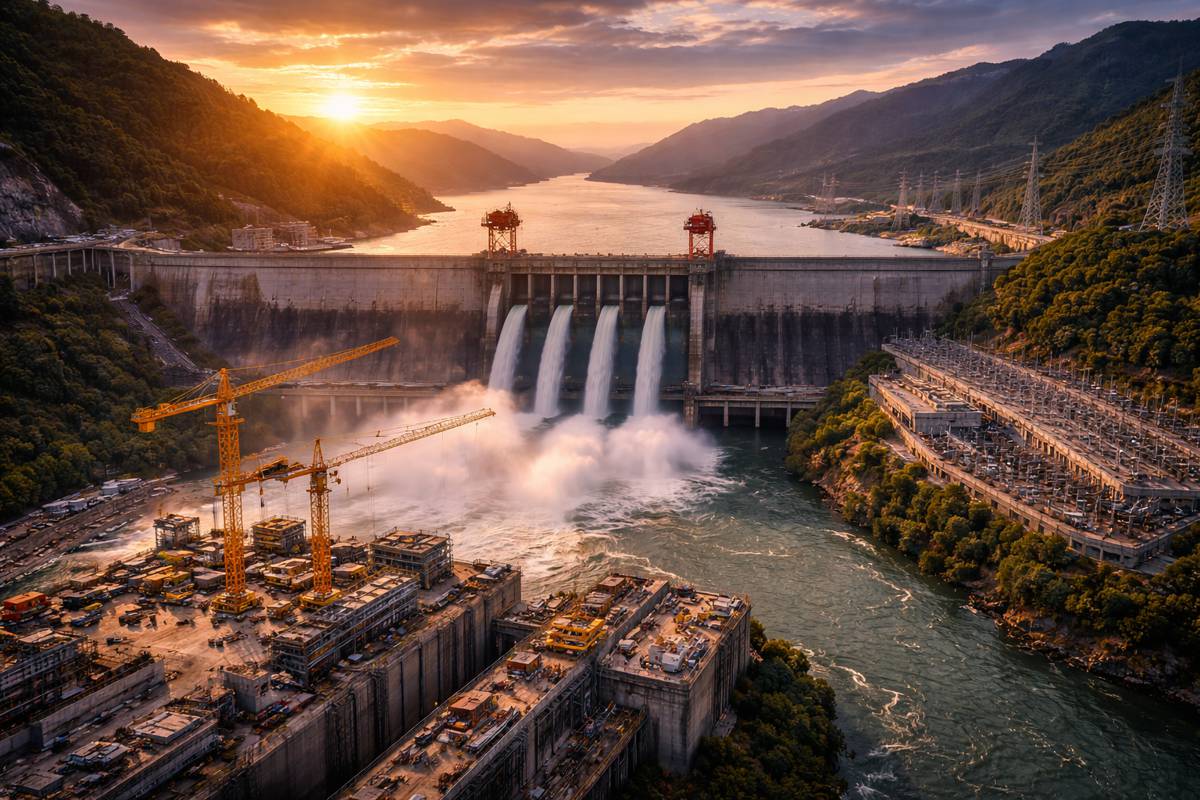
The climate transition has turned infrastructure finance into something closer to a portfolio problem than a single pipeline of roads and bridges. The Organisation for Economic Co-operation and Development has cited OECD, World Bank and UN Environment analysis estimating that annual infrastructure investment of USD 6.9 trillion will be necessary by 2030 to align infrastructure investment with the Sustainable Development Goals and the Paris Agreement. In energy terms, the IEA has estimated that capital flows to the energy sector are set to rise to USD 3.3 trillion in 2025, with roughly USD 2.2 trillion going to “clean” categories such as renewables, grids and storage, and efficiency. Yet it also notes that investment is not yet on track to deliver agreed renewable and efficiency goals, including the need to double annual renewable power investment.
Resilience and adaptation, often treated as the poor cousin of mitigation, are increasingly where the capital tension bites. The UNFCCC text referenced above highlights that costed needs reported in developing country NDCs are estimated at USD 5.1–6.8 trillion up to 2030 (USD 455–584 billion per year), and that adaptation finance needs are estimated at USD 215–387 billion annually up to 2030. The OECD’s climate-resilient infrastructure messaging adds a second pressure point: disaster-related economic losses have risen sharply over recent decades, and developing countries face higher exposure and financing costs.
The industry is being asked to build more, build smarter, and take on more uncertain physical risk, while the finance community insists on tighter risk pricing. Mathias Cormann, quoted in the OECD release, captured what “unlocking” private capital actually requires: “Unlocking private investments in climate resilience will require long-term project planning, reducing regulatory barriers, effective risk-sharing arrangements”

Multilateral Development Banks and Guarantees Move to Centre Stage
In a world where public budgets are constrained and private money is choosy, multilateral development banks have become less like supplementary funders and more like system architects. A World Bank statement on MDB coordination noted that reforms since mid-2024 had increased additional lending headroom over the next decade by more than $250 billion, reaching a total of over $650 billion. That kind of “headroom” is not a rhetorical flourish. It’s balance-sheet capacity that can translate into project funding, co-financing structures, and the sort of policy support that turns an ambitious national infrastructure plan into a pipeline investors take seriously.
Guarantees sit at the sharp end of that strategy because they target the specific risks that make investors hesitate. Reuters reporting on the World Bank Group’s guarantee reforms described an ambition to triple annual guarantees to $20 billion by 2030, consolidating guarantee functions into a single platform and simplifying products so clients can access them more easily. The same reporting describes guarantees covering credit enhancements and political and commercial risks such as breach of contract and currency restrictions. For infrastructure finance, this is one of the few levers that can materially change the risk-return arithmetic in emerging markets without pretending risk has vanished. It also signals a broader shift: instead of trying to replace private capital, multilateral institutions are increasingly trying to make private capital deployable.

Pension, Sovereign and Private Capital Reshape Project Pipelines
For all the talk of “trillions”, one of the most practical realities is that the world already has vast pools of long-term savings. The question is how much of it can be channelled into infrastructure at the right price and with the right safeguards. OECD data indicates that pension and retirement assets in its surveyed space reached a record USD 69.8 trillion at end-2024. The OECD has long noted that pension funds are increasingly looking at infrastructure investment, but the market is still uneven across jurisdictions and products. Even modest shifts in allocation, multiplied across such a large asset base, can move markets, which helps explain why governments have been pushing for pension capital to engage more directly with national infrastructure programmes.
Sovereign investors are also leaning harder into “hard assets”, particularly where domestic infrastructure is entangled with economic resilience. International Forum of Sovereign Wealth Funds reporting on sovereign wealth fund activity describes a decisive pivot in 2024, with infrastructure and real estate comprising 61% of investments, and significant flows into digital infrastructure such as data centres and telecommunications. Private infrastructure capital has grown in parallel: McKinsey reports that private infrastructure assets under management rose from about $500 billion in 2016 to $1.5 trillion in 2024. Yet private capital is also reshaping what gets built. World Bank and GI Hub analysis finds renewables and transport have dominated private investment for years, with green investment accounting for a record 62% of total private investment and debt financing comprising 78% of total investment in 2023. Preqin’s reporting, meanwhile, notes that telecoms’ share of deal value reached 30% by Q3 2024, explicitly linked to data centre demand expectations. The message for project sponsors is blunt: if they want funding, they increasingly have to structure projects that look investable to global pools of capital, not merely urgent to national planners.
What the Capital Gap Means for Contractors, Plant and Competitiveness
For construction markets, the infrastructure funding gap behaves like a throttle. When the throttle is open, contractors build backlogs, suppliers balance capacity expansion, and equipment fleets turn faster. When it’s closed, even “approved” megaprojects can stall for lack of bankable structure. The sector mix matters here because the biggest gaps are where the biggest delivery programmes sit. With roads and electricity taking a large share of the investment gap in the Global Infrastructure Hub outlook, the commercial implications are immediate for highways contractors, civil engineers, and the firms that supply aggregates, asphalt, steel and electrical components. But capital constraints also sharpen the industry’s most persistent weakness: megaproject delivery risk. Research by Bent Flyvbjerg and colleagues, widely cited in transport planning literature, found average cost escalation of around 20% for roads and significantly higher for rail and fixed links, reinforcing why financiers insist on contingencies, risk transfers and conservative demand assumptions. Where capital is scarce or expensive, those delivery risks become deal-breakers faster.
Equipment demand follows the same logic. In its 2024 annual report segment highlights, Caterpillar states that its Construction Industries segment primarily supports customers using machinery in infrastructure and building construction applications. That is a useful reminder that the infrastructure funding gap is not simply a policy challenge. It feeds directly into machine utilisation, replacement cycles and the viability of new manufacturing investment across the supply chain. Ultimately, it feeds into national competitiveness too. World Bank research summaries note that infrastructure investment affects growth through supply and demand channels, reducing costs and increasing competitiveness by improving mobility of people and goods and supporting production. For readers tracking project finance and procurement trends, Highways.Today has explored adjacent themes in depth, including institutional capital and digital finance trends, PPP structuring, early-stage renewable project financing, AI’s role in finance, and the mechanics of project finance. Those threads converge on one practical takeaway for construction professionals and policymakers: the infrastructure pipeline of the late decade will be built by those who can close the capital stack cleanly, not only those who can design the asset.