Securing the Future of Aluminium Production in Queensland
The agreement to secure the long-term future of the Boyne aluminium smelter marks a significant intervention in Australia’s industrial landscape. Aluminium smelting remains one of the most energy-intensive manufacturing processes in the world, and without access to competitively priced electricity, operations often become unviable.
The decision by Rio Tinto, alongside both state and federal governments, to commit substantial funding and policy backing signals a clear intent to preserve domestic heavy industry.
Located at Boyne Island near Gladstone, the Boyne Smelters Limited facility has been a cornerstone of Australia’s aluminium production since 1982. Its importance extends well beyond output volumes. The smelter is part of a tightly integrated industrial ecosystem that includes bauxite mining in Weipa and alumina refining at the nearby Queensland Alumina Limited facility. Such vertically integrated supply chains are increasingly rare globally, particularly in advanced economies where energy costs and environmental constraints have driven closures.
Briefing
- A landmark agreement between Rio Tinto, the Queensland Government and the Commonwealth Government commits A$2 billion to secure the long-term future of the Boyne aluminium smelter.
- The deal underpins continued aluminium production in Gladstone beyond 2029, extending operations to at least 2040.
- Renewable energy procurement exceeding 2.8GW, alongside storage capacity, positions the smelter for lower-cost, lower-emissions power.
- The partnership reinforces one of the world’s few fully integrated aluminium supply chains, from bauxite mining to finished metal.
- More than 4,500 direct jobs and thousands of indirect roles across Queensland are supported by the agreement.
- The initiative aligns with Australia’s broader industrial strategy to strengthen domestic manufacturing and energy transition capabilities.
Energy Transition Meets Industrial Reality
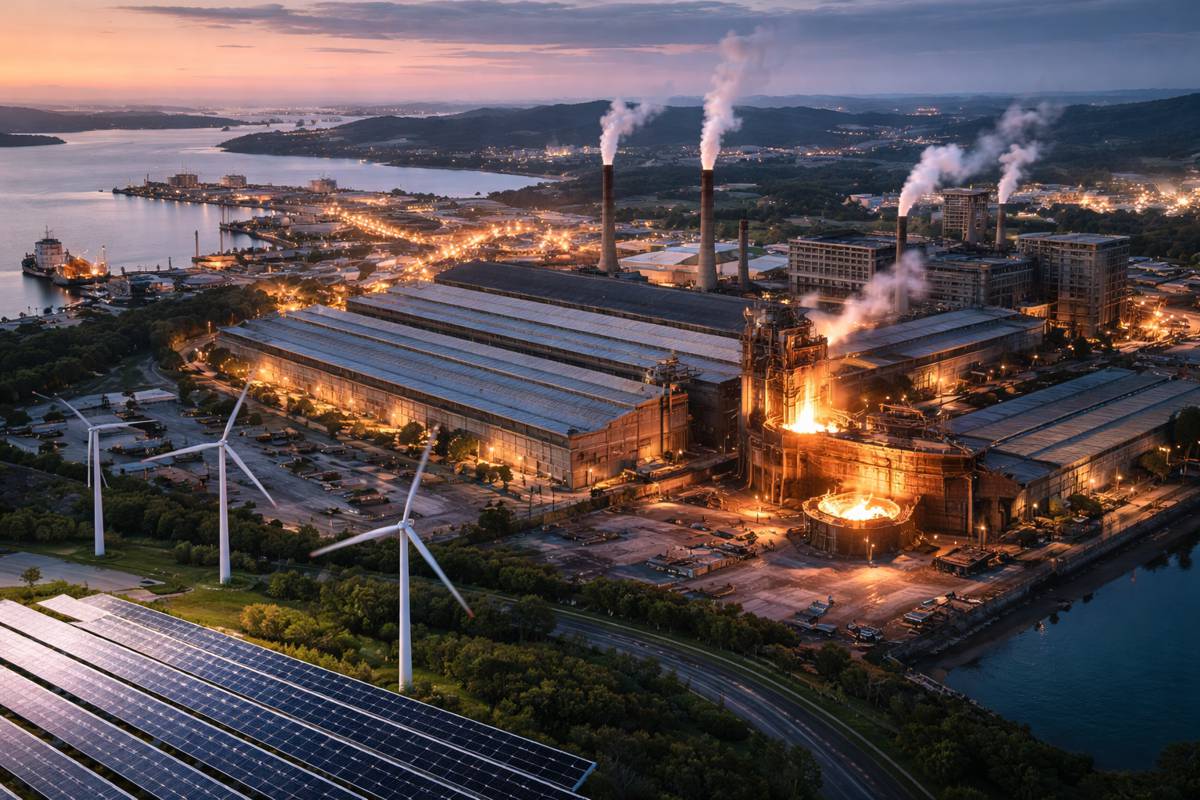
At the heart of the agreement lies the challenge of energy transformation. Aluminium smelting requires continuous, high-load electricity supply, traditionally provided by coal-fired generation. As energy markets shift and fossil fuel costs rise, maintaining competitiveness demands a new approach. The partnership seeks to address this by combining public investment with long-term renewable energy procurement.
Rio Tinto has already committed to power purchase agreements that underpin approximately A$7.5 billion in renewable energy and storage developments across Queensland. These agreements provide financial certainty for developers while ensuring the smelter gains access to large-scale solar and wind generation. The addition of a 40% offtake from the Lower Wonga solar and battery hybrid project further strengthens this position, contributing both generation capacity and storage resilience.
Globally, the aluminium sector is undergoing a similar transition. According to the International Energy Agency, electricity accounts for around 70% of aluminium production costs, and decarbonising that energy supply is critical to reducing emissions. Countries such as Canada and Norway have leveraged hydropower to maintain low-carbon aluminium industries, while regions reliant on fossil fuels face increasing pressure to adapt. Queensland’s approach reflects an effort to replicate that competitiveness using solar and wind resources.
Public Investment and Policy Direction
The A$2 billion investment from the Queensland and Commonwealth Governments, spread over a decade to 2040, forms part of a broader industrial policy framework aimed at strengthening domestic manufacturing. The initiative aligns with the Federal Government’s Future Made in Australia strategy, which seeks to anchor key industries within the national economy while supporting the transition to cleaner energy systems.
From a policy perspective, the agreement highlights a growing willingness by governments to intervene directly in industrial energy markets. Rather than leaving heavy industry exposed to volatile electricity prices, the partnership effectively shares risk between the public and private sectors. This model has parallels in other jurisdictions, where governments have supported strategic industries through energy subsidies, infrastructure investment or long-term supply agreements.
Such interventions are not without debate. Critics often point to the cost to taxpayers and the potential distortion of markets. However, proponents argue that maintaining domestic production capacity for critical materials such as aluminium carries long-term economic and strategic value. Aluminium is widely used in transport, construction, renewable energy systems and defence applications, making it a material of increasing importance in the global energy transition.
Economic Impact and Regional Stability
The economic footprint of Rio Tinto’s aluminium operations in Queensland is substantial. More than 4,500 people are directly employed across the company’s integrated supply chain, with thousands more jobs supported indirectly through contractors, suppliers and local businesses. In Gladstone alone, over 3,000 roles are linked to these operations, including approximately 1,000 positions at the Boyne smelter itself.
Regional economies such as Central Queensland are particularly sensitive to the fortunes of large industrial employers. The continuation of smelting operations through to at least 2040 provides a degree of stability that is often lacking in resource-dependent regions. It also supports ongoing investment in local infrastructure, skills development and community services.
Beyond employment, the smelter contributes to export revenues and industrial output. Aluminium remains one of Australia’s key export commodities, and maintaining production capacity ensures the country retains a foothold in global markets. As demand for lightweight materials grows in sectors such as electric vehicles, renewable energy infrastructure and construction, securing supply chains becomes increasingly important.
Preserving an Integrated Aluminium Value Chain
One of the most notable aspects of the agreement is its role in preserving a fully integrated aluminium value chain within a single state. From bauxite extraction in Weipa to alumina refining and final smelting in Gladstone, Queensland hosts a complete production pathway that few regions can match.
This integration offers both economic and operational advantages. Transport costs are reduced, supply chains are simplified and production can be more tightly coordinated. It also enhances resilience, allowing the system to operate with fewer external dependencies. In an era of geopolitical uncertainty and supply chain disruptions, such integration carries increasing value.
Jérôme Pécresse, Chief Executive of Rio Tinto Aluminium & Lithium, highlighted this point, stating: “This transformative partnership with the Queensland and Australian governments will ensure Boyne Smelter remains internationally competitive, strengthens the Australian aluminium sector for the future and supports the transformation and decarbonisation of the Queensland energy system.”
His comments reflect a broader industry trend, where competitiveness is no longer defined solely by cost, but also by emissions intensity and supply chain security.
Scaling Renewable Capacity for Heavy Industry
The scale of renewable energy procurement associated with the agreement is notable. With more than 2.8GW of contracted renewable capacity and over 600MW of storage, Rio Tinto is effectively building a dedicated energy portfolio to support its operations. This level of commitment places the company among the leading industrial buyers of renewable energy globally.
The integration of battery storage is particularly important for smelting operations, which require uninterrupted power. While solar and wind generation are inherently variable, storage systems help smooth fluctuations and maintain consistent supply. Advances in battery technology and grid management are making such configurations increasingly viable for heavy industry.
From a broader infrastructure perspective, these investments contribute to the development of Queensland’s energy network. New generation and storage assets enhance grid capacity, improve reliability and support the wider transition away from fossil fuels. In effect, industrial demand is helping to accelerate the deployment of renewable infrastructure that benefits the entire system.
Positioning Australia in a Changing Global Market
The global aluminium market is undergoing significant change, driven by decarbonisation, shifting trade dynamics and evolving demand patterns. Producers that can offer low-emissions aluminium are likely to gain a competitive edge, particularly as industries such as automotive and construction seek to reduce their carbon footprints.
Australia’s approach, as demonstrated by the Boyne smelter agreement, suggests a strategy focused on maintaining domestic production while adapting to new energy realities. By leveraging abundant renewable resources, the country aims to position itself as a supplier of lower-carbon aluminium to international markets.
At the same time, competition remains intense. Regions with access to low-cost hydropower or state-backed energy systems continue to dominate parts of the market. Ensuring long-term competitiveness will require ongoing investment, innovation and policy support.
A Long-Term Industrial Commitment
The agreement to secure the future of the Boyne aluminium smelter represents more than a single project. It reflects a broader commitment to sustaining heavy industry in a changing economic and environmental landscape. By aligning government policy, private investment and energy infrastructure, the partnership offers a model for how energy-intensive sectors might navigate the transition ahead.
For construction professionals, investors and policymakers, the implications are clear. Materials such as aluminium will remain central to infrastructure development, and ensuring reliable, competitive supply chains will be essential. The Gladstone agreement demonstrates that with coordinated action, it is possible to balance industrial continuity with the demands of decarbonisation.