China’s High Speed Sweeping Revolution Reshapes Highway Maintenance
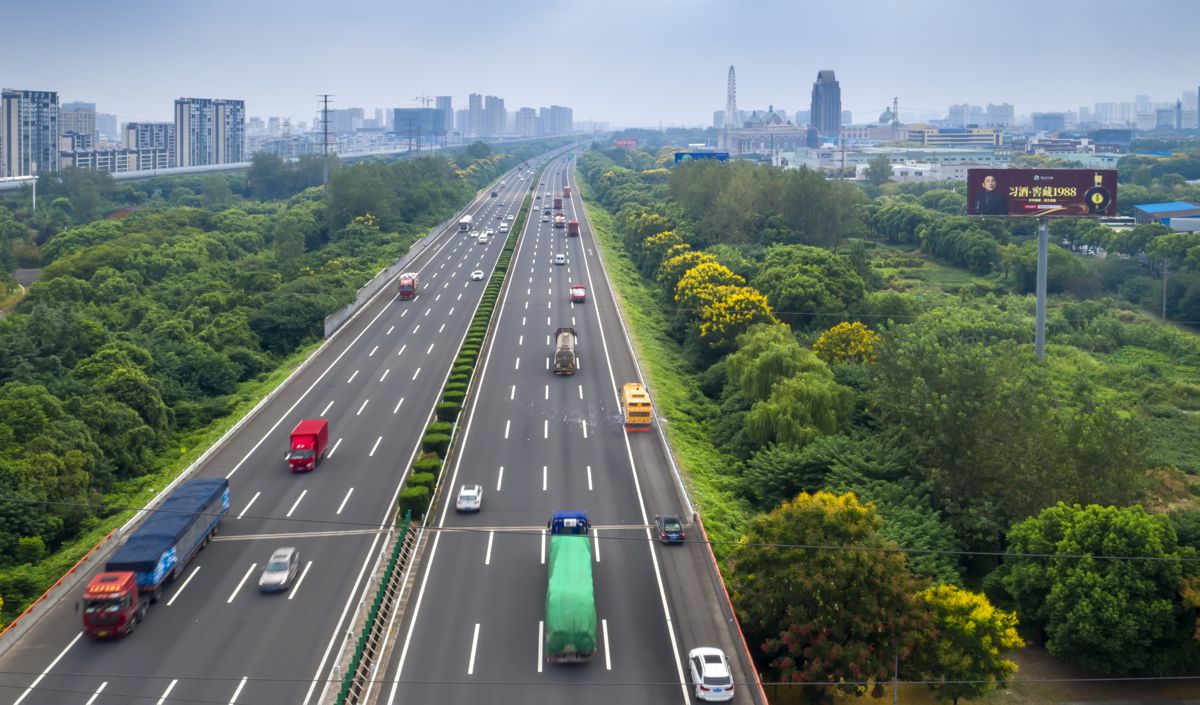
China’s expressway network, now extending beyond 180,000 kilometres, has reached a level of maturity where maintenance is no longer a background function but a frontline priority. Keeping such an expansive system safe, efficient and visually acceptable demands a step change in how routine operations are delivered. For years, road cleaning sat firmly in the category of labour intensive, slow moving and disruptive work, often carried out under conditions that exposed crews to unnecessary risk while frustrating road users.
That legacy approach is now being overtaken by a new operational model built around high speed, intelligent sweeping systems capable of working at traffic speeds. What once required lane closures, traffic management and extended working windows is increasingly being handled within the natural flow of traffic. The shift is not simply about faster machines. It represents a broader transformation in how highway authorities approach safety, environmental performance and network availability.
Across provinces such as Zhejiang, Jiangsu and Guangdong, as well as dense urban environments like Shanghai, these systems are already embedded in daily operations. Their growing adoption reflects a wider push within China’s infrastructure sector towards automation, data driven maintenance and reduced lifecycle costs. The implications stretch far beyond cleaning. They signal a redefinition of what efficient road maintenance looks like in a modern transport network.
Briefing
- High speed sweepers operating at 60 km/h enable cleaning without lane closures, improving traffic flow and safety
- Efficiency gains are substantial, with some tasks completed up to 100 times faster than manual methods
- Advanced suction, dust suppression and intelligent control systems underpin the technology
- Standardised operating models ensure scalable deployment across large highway networks
- Adoption is expanding rapidly, supported by electrification, data integration and policy alignment
Transforming Safety and Network Availability
The most immediate and measurable benefit of high-speed sweeping lies in safety. Traditional road cleaning methods often required partial or full lane closures, exposing workers to live traffic and increasing the likelihood of secondary accidents. Globally, work zone incidents remain a persistent concern, with traffic disruptions frequently linked to elevated collision risks on high-speed corridors.
By contrast, sweepers capable of operating at 60 km/h integrate seamlessly with traffic flow. There is no need for extensive traffic management or prolonged lane restrictions. In practice, this reduces congestion, minimises driver frustration and lowers the probability of rear end collisions. Data from deployments in Shanghai indicate a noticeable reduction in such incidents following the introduction of high-speed sweeping operations.
Equally important is the reduction in operational exposure for maintenance crews. Fewer personnel are required on the carriageway, and those involved operate within a controlled, mechanised environment. It is a shift that aligns with broader industry efforts to remove workers from high-risk roadside activities wherever possible. In that sense, high speed sweeping is not just a productivity tool. It is part of a wider safety strategy that prioritises risk elimination over risk management.
Efficiency Gains That Redefine Maintenance Economics
Efficiency improvements are perhaps the most striking aspect of this technological shift. Traditional manual cleaning methods typically achieve speeds of around 2 km/h, while conventional mechanical sweepers operate at approximately 15 km/h. At those rates, maintaining long stretches of highway becomes a time consuming and resource intensive task.
High speed sweepers fundamentally alter that equation. Operating at 60 km/h, they can cover between 150 and 200 kilometres in a single day. In practical terms, a task that once required hundreds of labour hours can now be completed in a matter of hours. For example, cleaning a 180-kilometre median strip, which previously demanded around 480 hours of manual work, can be completed in roughly five hours using high speed equipment.
These gains translate directly into cost efficiencies. Reduced labour requirements, shorter operation windows and lower disruption related costs all contribute to a more sustainable maintenance model. For highway operators managing extensive networks, the cumulative financial impact is considerable. Over time, the ability to maintain higher standards with fewer resources becomes a defining advantage.
Engineering Innovation Behind the Technology
At the heart of this transformation lies a series of engineering breakthroughs that enable effective cleaning at high speeds. One of the most critical components is the high-performance suction system. Traditional sweepers often struggle to maintain consistent debris collection at elevated speeds, leading to incomplete cleaning and material loss.
Modern systems address this through multi stage suction assemblies designed to maintain stable vacuum performance even at highway speeds. Combined with optimised airflow dynamics, these systems ensure that debris is captured efficiently without compromising operational speed. It is a delicate balance, and one that required significant advances in both mechanical design and fluid dynamics.
Complementing the suction system is a composite cleaning mechanism that integrates multiple brushes and collection components into a single coordinated operation. With extended reach capabilities of up to 75 centimetres, these systems can cover the full width of a lane, including edges and hard to reach areas such as guardrail bases. The result is comprehensive cleaning in a single pass, reducing the need for repeat operations.
The IKOM MAX60 as a Reference Platform
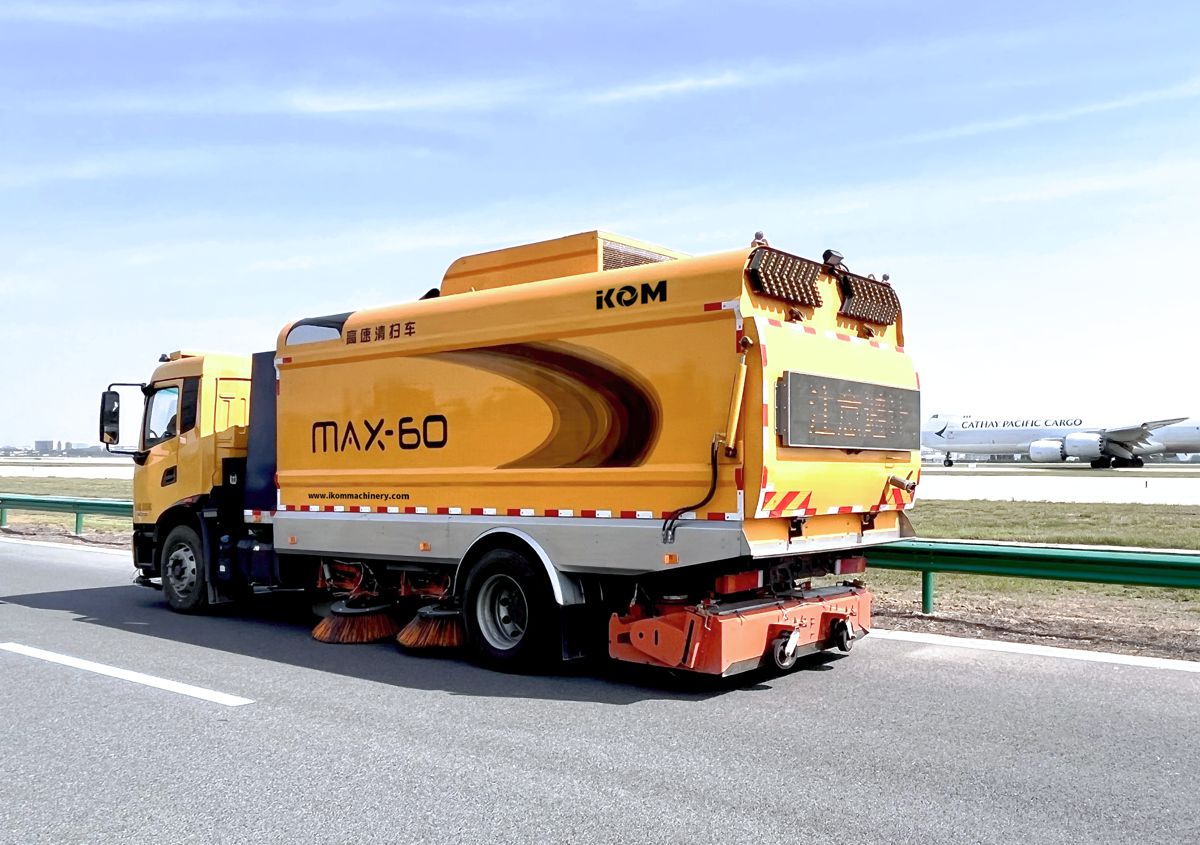
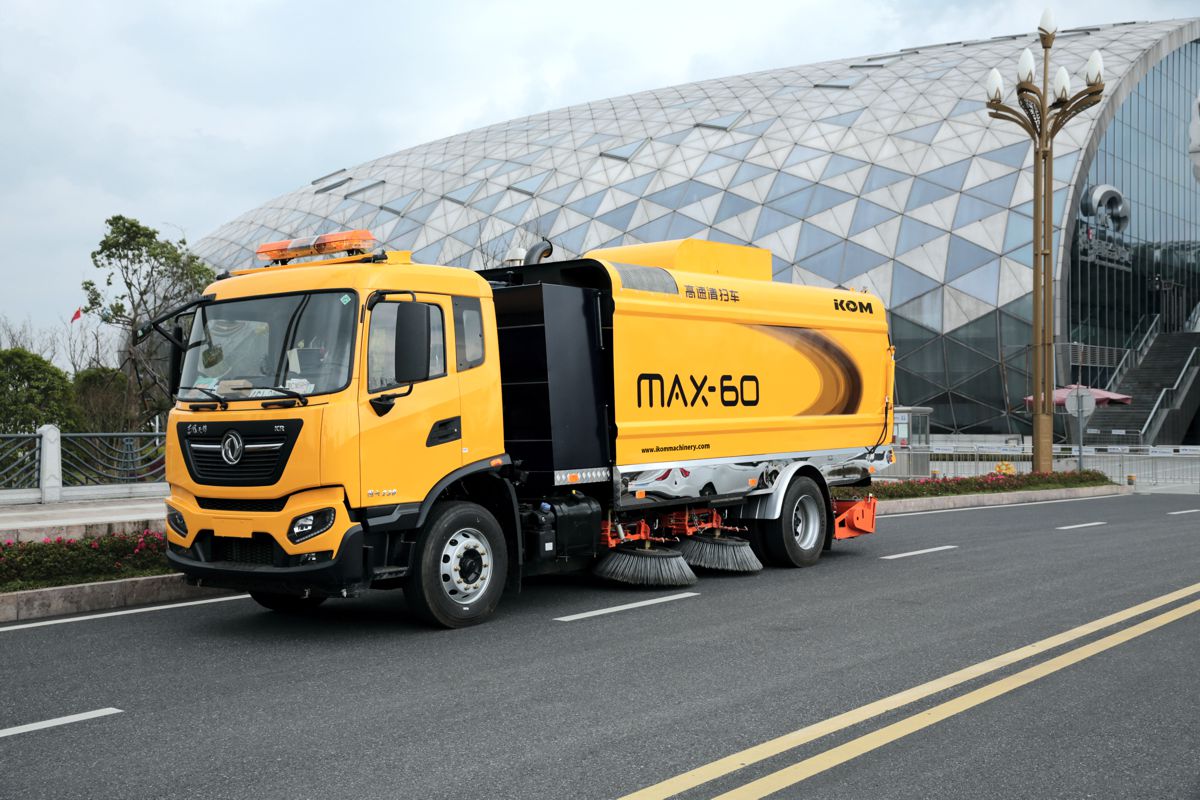
Within this evolving landscape, the IKOM-MAX60 high speed sweeper has emerged as a representative example of how these technologies are being applied in practice. Designed specifically for highway environments, the machine operates at speeds of up to 60 km/h, aligning with live traffic conditions and enabling cleaning without lane closures.
Its configuration reflects the broader technological direction of the sector. The unit integrates a multi stage suction system capable of maintaining consistent debris collection at high speed, combined with a composite brush arrangement that allows full lane coverage in a single pass. This includes extended reach capability for verge areas and guardrail bases, reducing the need for secondary cleaning operations.
Dust control is handled through a linked system of high pressure spraying and negative pressure collection, supporting low emission operation in line with tightening environmental standards. In parallel, onboard intelligent controls, including GPS positioning, dynamic load matching and safety warning systems, help operators maintain consistent performance across varying road conditions.
Rather than functioning as a standalone piece of equipment, the MAX60 is typically deployed as part of a coordinated operational unit, supported by escort vehicles and integrated into standardised maintenance protocols. Its role illustrates how equipment, process and data are increasingly being combined into a unified maintenance model.
Environmental Performance Moves to the Fore
Environmental considerations are increasingly shaping infrastructure policy worldwide, and road maintenance is no exception. Traditional dry sweeping methods often generate significant dust, contributing to air quality issues and posing health risks to both workers and nearby communities.
High speed sweepers incorporate advanced dust suppression systems that combine water spraying, negative pressure collection and multi stage filtration. These systems can achieve dust reduction rates exceeding 90 percent, effectively eliminating visible dust emissions during operation. This is particularly important in urban areas and enclosed environments such as tunnels, where air quality is a critical concern.
The move towards cleaner operation aligns with global trends in sustainable infrastructure. Many countries are tightening regulations on particulate emissions and promoting low impact maintenance practices. By addressing both operational efficiency and environmental performance, high speed sweeping technology positions itself as a viable solution for meeting these evolving standards.
Standardisation Enables Scalable Deployment
One of the defining features of China’s approach is the development of standardised operational frameworks. Rather than treating high speed sweeping as an isolated innovation, authorities have integrated it into a broader system of protocols covering equipment allocation, operating speeds, maintenance frequency and safety procedures.
On major routes such as the Zhejiang Shanghai Hangzhou Ningbo corridor, these standards dictate everything from the number of sweepers deployed per kilometre to the use of escort vehicles and warning systems. Typically, each operational unit includes a high-speed sweeper supported by two warning vehicles and a small team of operators. Safety protocols ensure that warning vehicles maintain a distance of 50 to 100 metres ahead of the sweeping unit, providing clear visual and electronic alerts to approaching drivers.
This structured approach allows for consistent performance across different regions and traffic conditions. It also facilitates training, maintenance planning and performance monitoring. For countries looking to replicate similar systems, the existence of a well-defined operational model reduces the barriers to adoption and accelerates implementation.
Real World Applications Across Diverse Environments
The versatility of high-speed sweeping technology is evident in its application across a range of challenging environments. On heavily trafficked expressways such as the Shaoxing Ningbo section, with daily volumes approaching 80,000 vehicles, the technology has enabled continuous cleaning without disrupting traffic flow. This is particularly valuable during peak travel periods, when maintaining network capacity is essential.
In Jiangsu, the adoption of similar systems has proven effective during the Spring Festival travel rush, one of the busiest periods in the world’s transport calendar. By eliminating the need for lane closures, operators have been able to maintain both cleanliness and traffic efficiency under extreme demand conditions.
The technology has also demonstrated its value in more specialised settings. In the Qinling tunnel network in Shaanxi, high speed sweepers have addressed the unique challenges of enclosed environments, improving both road surface conditions and air quality. Meanwhile, at Shanghai Pudong International Airport, the same principles have been applied to apron and taxiway cleaning, where maintaining operational continuity is critical to flight schedules.
Data and Intelligence Shape the Next Phase
Looking ahead, the integration of data and intelligent systems is set to further enhance the capabilities of highway maintenance operations. By combining real time traffic data, weather information and road condition monitoring, operators can optimise cleaning schedules and routes with greater precision.
This data driven approach enables dynamic adjustment of maintenance activities, ensuring that resources are deployed where they are needed most. It also supports predictive maintenance strategies, allowing potential issues to be identified and addressed before they escalate. In a network as vast as China’s, such capabilities are essential for maintaining consistent service levels.
At the same time, advancements in automation are opening the door to semi-autonomous and fully autonomous sweeping systems. While still in the early stages, these developments could further reduce labour requirements and enhance safety by removing human operators from the most hazardous environments.
Electrification and Integrated Maintenance Systems
Another significant trend is the transition towards electric and hybrid power systems. As governments worldwide push for lower emissions across all sectors, road maintenance equipment is following suit. Electric sweepers offer reduced noise, lower operating costs and zero tailpipe emissions, making them particularly suitable for urban and environmentally sensitive areas.
In parallel, there is a growing move towards multifunctional maintenance vehicles capable of performing a range of tasks beyond sweeping. These include inspection, emergency response, snow removal and even fire suppression. By consolidating multiple functions into a single platform, operators can improve asset utilisation and reduce overall fleet size.
This integrated approach reflects a broader shift towards holistic infrastructure management, where different maintenance activities are coordinated within a unified system. It is a model that promises greater efficiency and resilience, particularly as networks continue to expand and become more complex.
A Model with Global Relevance
China’s experience with high-speed intelligent sweeping offers valuable lessons for the global infrastructure sector. As highway networks in other regions age and expand, the challenges of maintaining them efficiently and safely are becoming increasingly apparent. Labour shortages, rising costs and stricter environmental regulations are placing additional pressure on traditional maintenance models.
By demonstrating that high speed, lane free cleaning is both technically feasible and economically viable, China has provided a practical example of how these challenges can be addressed. The combination of advanced equipment, standardised operations and data driven management creates a framework that can be adapted to different contexts and requirements.
For policymakers and investors, the implications are clear. Investment in intelligent maintenance technologies is not merely a matter of operational improvement. It is a strategic decision that can enhance network performance, reduce long term costs and support broader sustainability goals. As such, high speed sweeping is likely to play an increasingly prominent role in the future of global highway management.