BYD Targets UK Commercial Fleets with Electric Dolphin Cargo e-Van Debut
The steady electrification of transport has already reshaped passenger mobility across Europe, yet the commercial vehicle sector has lagged behind, constrained by cost, range anxiety and operational compromises. That gap is now narrowing. BYD is stepping directly into the UK light commercial vehicle market with a product that signals a different approach to fleet electrification, one grounded in adaptation rather than reinvention.
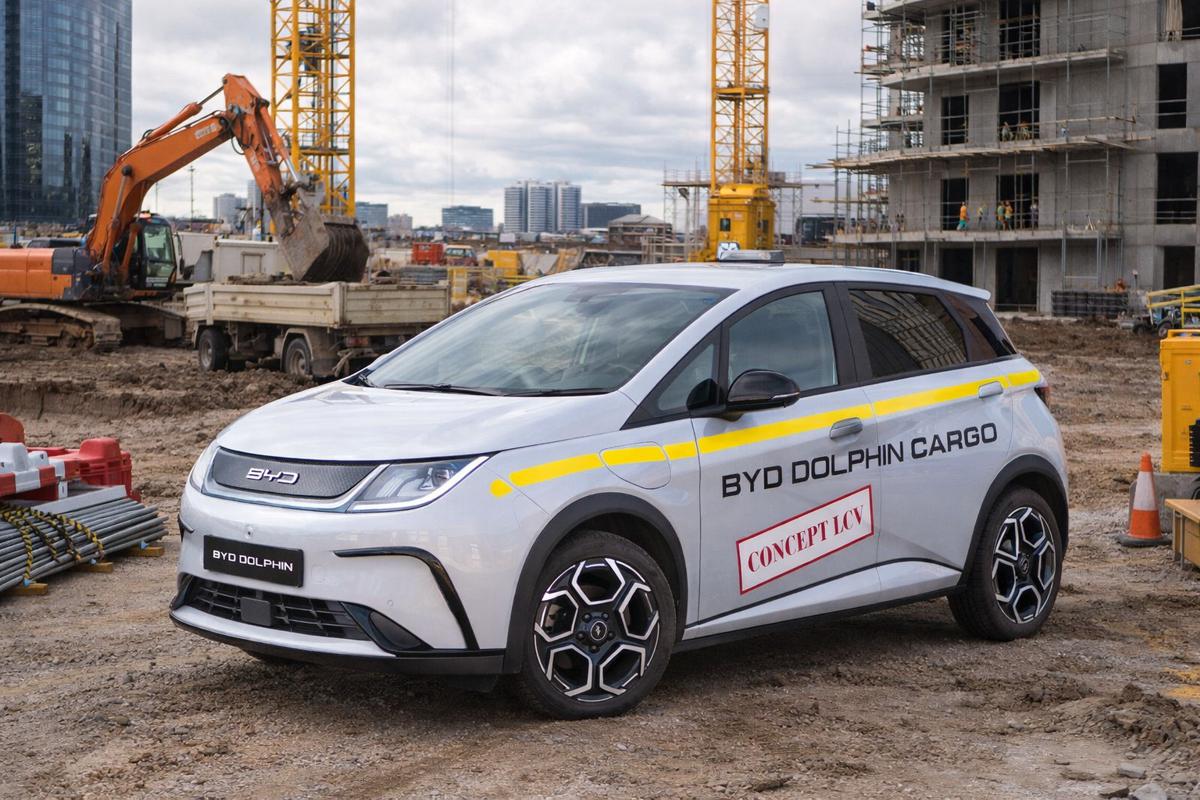
At the Commercial Vehicle Show 2026 in Birmingham’s National Exhibition Centre, the company will unveil the DOLPHIN Cargo e-Van, a compact electric van derived from its established passenger car platform. The timing is deliberate. With tightening emissions regulations across the UK and Europe, and urban logistics under increasing scrutiny, fleet operators are actively reassessing their vehicle strategies.
Rather than launching a purpose-built van platform from scratch, BYD has opted to convert its existing BYD Dolphin into a commercial offering. It is a pragmatic move, one that reflects both the maturity of its electric architecture and a growing recognition that flexibility and cost efficiency often outweigh ground-up design in early-stage market entry.
Briefing
- BYD is entering the UK LCV market with the DOLPHIN Cargo e-Van, debuting at the Commercial Vehicle Show 2026
- The vehicle is based on the existing BYD Dolphin hatchback, adapted for commercial use
- It offers over 1,000 litres of load space and a city range of up to 347 miles (WLTP)
- The launch reflects wider industry pressure to decarbonise urban delivery fleets
- Partnerships with companies such as Mediafleet and Modul-System highlight its fleet-ready positioning
A Strategic Entry into a Competitive Segment
The UK light commercial vehicle sector is fiercely competitive, dominated by established manufacturers with decades of fleet relationships. Yet it is also undergoing rapid change. Government policy, including zero-emission vehicle mandates and clean air zones in cities such as London and Birmingham, is accelerating the transition away from diesel.
BYD’s entry comes at a moment when fleet operators are not just evaluating electric options but actively deploying them. According to industry data from organisations such as the Society of Motor Manufacturers and Traders, electric van registrations have been rising steadily, though still represent a minority of total LCV sales. The opportunity lies in bridging that gap between interest and adoption.
By leveraging an existing passenger vehicle platform, BYD reduces both development time and cost, allowing it to price competitively while maintaining a proven technological base. This approach could prove attractive to smaller fleet operators and urban delivery services that do not require large vans but need reliable, efficient electric transport.
Engineering a Hatchback into a Working Van
Transforming a compact hatchback into a functional commercial vehicle is not a trivial exercise. The DOLPHIN Cargo e-Van achieves its load capacity of over 1,000 litres through a straightforward but effective redesign. The rear seats have been removed, replaced by a reinforced cargo area featuring a solid bulkhead and a re-engineered floor.
This configuration creates a flat, usable loading space while maintaining the structural integrity and safety standards expected of a modern vehicle. It also aligns with a growing trend in last-mile logistics, where smaller, more agile vehicles are preferred over traditional vans for urban deliveries.
The inclusion of a lightweight racking solution from Modul-System further reinforces its intended use case. Rather than presenting a concept vehicle, BYD is showcasing a ready-to-deploy tool for tradespeople, service engineers and delivery operators. That distinction matters. Fleet buyers tend to favour solutions that can be integrated immediately, without additional modification or downtime.
Range and Real-World Usability
Range remains one of the most scrutinised metrics in electric commercial vehicles. The DOLPHIN Cargo e-Van offers a combined WLTP range of 265 miles, extending to as much as 347 miles in urban driving conditions. For city-based operations, where stop-start traffic and regenerative braking play to the strengths of electric drivetrains, this is a meaningful figure.
It places the vehicle within a practical operating window for a wide range of use cases, from parcel delivery to maintenance services. More importantly, it reduces the need for mid-day charging, which remains a logistical challenge for many fleet operators.
BYD’s expertise in battery technology underpins this capability. The company’s vertically integrated approach, encompassing battery production, power electronics and vehicle manufacturing, has allowed it to refine efficiency across the entire system. Innovations such as its Blade Battery have been widely noted for their safety and energy density, contributing to improved range without excessive cost increases.
Fleet Integration and Visual Identity
The decision to partner with Mediafleet for the vehicle’s presentation is more than a cosmetic choice. Vehicle graphics play a significant role in commercial fleet operations, serving both branding and operational functions. By showcasing a fully liveried vehicle, BYD is addressing a practical consideration often overlooked in early-stage product launches.
For many businesses, a van is not just a mode of transport but a mobile advertisement. Ensuring compatibility with fleet graphics, racking systems and other aftermarket solutions is essential for market acceptance. The presence of BYD’s corporate fleet representatives at the event further signals its intention to engage directly with fleet customers rather than relying solely on dealership networks.
The Broader Push Towards Net Zero Logistics
The 2026 Commercial Vehicle Show has positioned itself as a platform for decarbonisation, reflecting a wider shift across the transport and logistics sectors. Electrification is no longer a niche consideration. It is becoming a central pillar of infrastructure planning, particularly in urban environments.
Cities across Europe are tightening emissions standards, while corporate sustainability targets are pushing companies to reduce their carbon footprints. In this context, vehicles like the DOLPHIN Cargo e-Van are not simply new products. They are part of a broader transition in how goods and services are delivered.
The compact van segment, in particular, is expected to see significant growth. As e-commerce continues to expand, the demand for efficient last-mile delivery solutions is increasing. Smaller electric vans offer a way to navigate congested urban areas while meeting regulatory requirements and reducing operating costs.
BYD’s Expanding Footprint in Europe
BYD’s move into the UK commercial vehicle market builds on its growing presence in Europe. Headquartered regionally in the Netherlands, the company has been steadily expanding its operations, supported by a global network that spans more than 100 countries and regions.
Its decision to cease the production of fossil-fuelled vehicles and focus entirely on new energy vehicles has set it apart from many competitors. This strategic clarity has allowed it to concentrate resources on electric and hybrid technologies, accelerating development cycles and scaling production.
In the UK, BYD has already gained traction in the passenger car market, with over 21,000 registrations recorded in the first quarter of 2026. Entering the commercial sector is a logical next step, particularly as fleet electrification becomes a priority for both public and private organisations.
Practical Innovation Over Reinvention
There is a tendency in the automotive industry to frame new products as revolutionary. In reality, progress often comes through incremental, practical improvements. The DOLPHIN Cargo e-Van fits firmly into that category.
By adapting an existing platform, focusing on real-world usability and aligning with current market needs, BYD is taking a measured approach to expansion. It is not attempting to redefine the commercial vehicle segment overnight. Instead, it is offering an alternative that addresses specific gaps in the market.
For construction professionals, infrastructure planners and policymakers, this kind of development is worth noting. The transition to electric transport will not be driven solely by flagship vehicles or large-scale infrastructure projects. It will also depend on smaller, adaptable solutions that can be deployed quickly and effectively.
As the UK continues its push towards net zero, the success of such vehicles will depend on their ability to deliver consistent performance, integrate seamlessly into existing operations and provide a clear economic case for adoption. BYD’s latest offering suggests that the industry is moving closer to that balance.