Specialist Formwork Supports Landmark Hydropower Infrastructure Upgrade
Across Europe, ageing hydropower assets are undergoing extensive modernisation programmes as operators seek to extend operational life, improve efficiency and strengthen renewable energy generation without constructing entirely new facilities. While turbines, generators and control systems often attract the headlines, the civil engineering works that support these upgrades frequently determine whether projects succeed on time and within budget.
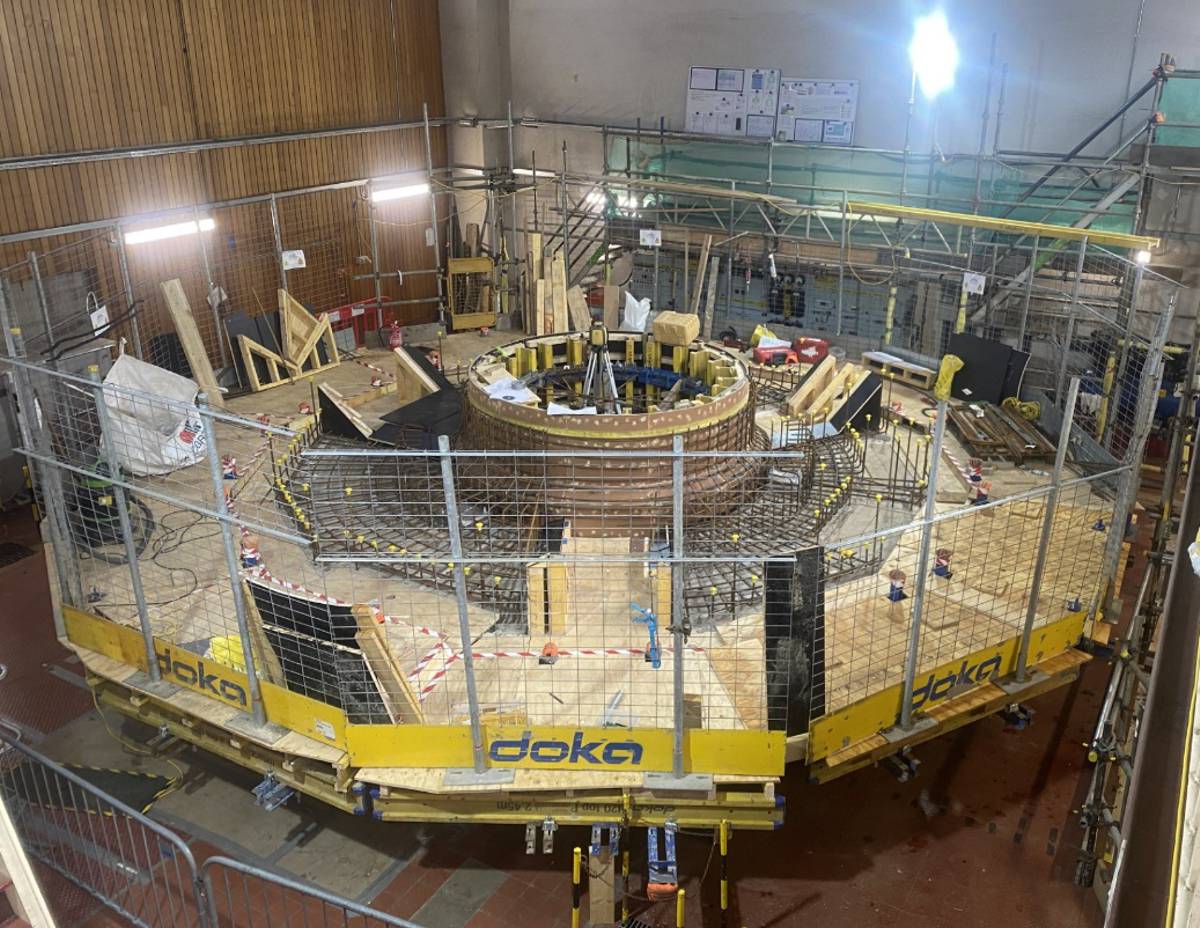
A recent refurbishment project at Lochay Hydro Power Station in Perthshire, Scotland, highlights the critical role of advanced formwork engineering in complex infrastructure environments. As part of a £70 million upgrade programme led by SSE Renewables, contractors were tasked with constructing a highly specialised concrete plinth to support a new 27 MW hydroelectric generator. The structure had to be installed within an operational power station, integrated seamlessly into existing concrete works, and delivered with exceptional dimensional accuracy.
For the project team, this was far more than a routine concrete pour. The new generator foundation would become a critical structural component responsible for supporting heavy mechanical equipment while maintaining precise alignment requirements essential to long-term operational performance. Any deviation could have introduced delays, additional costs, or challenges during equipment installation.
Briefing
- Lochay Hydro Power Station is undergoing a £70 million refurbishment programme to modernise generation equipment.
- A new 27 MW hydro generator required construction of a complex 12-sided reinforced concrete plinth.
- The structure had to integrate precisely with existing concrete inside a live operational facility.
- Doka developed a bespoke formwork solution using Radius Top 50 formwork, 3D modelling and custom-manufactured connection components.
- The project achieved millimetre-level accuracy while remaining within a 12-week construction programme.
Hydropower Modernisation Continues Across Europe
Hydropower remains one of the world’s most important renewable energy sources. According to the International Hydropower Association, hydroelectric generation contributes more renewable electricity globally than any other renewable technology and plays a vital role in balancing increasingly variable wind and solar generation.
Many European hydropower stations were originally constructed decades ago and continue to provide reliable generation today. Rather than replacing these assets entirely, operators are investing in refurbishment programmes that improve efficiency, enhance reliability and increase generating capacity while preserving existing civil infrastructure.
Lochay Hydro Power Station forms part of this broader trend. Producing approximately 170 GWh of renewable electricity annually, the facility represents an important component of Scotland’s clean energy portfolio. The current upgrade programme involves replacing major internal generating equipment with more modern technology designed to increase operational efficiency and improve long-term performance.
While turbine replacement often receives the greatest attention, achieving the required performance gains depends equally upon the supporting civil structures. Generator foundations must transfer significant loads, resist vibration and maintain exact positioning throughout decades of operation. Consequently, even relatively compact concrete structures demand extraordinary engineering precision.
A Small Structure with Significant Engineering Complexity
The plinth itself may appear modest when compared with dams, tunnels or powerhouse buildings. Standing approximately 1.5 metres high, featuring a 1.5 metre internal radius and measuring six metres in diameter, the structure occupies a relatively small footprint within the facility. Yet its geometric complexity presented considerable construction challenges.
Designed as a twelve-sided corbelled structure incorporating multiple angles and transitions, the plinth had to interface accurately with existing concrete elements already present within the station. Working inside an operational power generation facility further restricted available construction space and limited opportunities for adjustment during installation.
These constraints ruled out many conventional formwork approaches. Standard systems often rely on repetitive geometries and regular dimensions. By contrast, this project required a highly customised solution capable of accommodating complex angles while maintaining strict tolerances across the entire structure.
Generator foundations occupy a particularly demanding category of civil engineering. Precision directly influences equipment alignment, load transfer characteristics and long-term operational stability. Even minor dimensional inaccuracies can create difficulties during installation of mechanical components or affect performance over the asset’s service life.
Digital Engineering Moves from Design Office to Construction Site
One of the defining characteristics of modern infrastructure delivery is the increasing integration of digital design methodologies with construction operations. The Lochay project demonstrates how three-dimensional modelling and manufacturing technologies are reshaping specialist concrete construction.
To develop the formwork solution, engineers created a detailed three-dimensional digital model of the proposed plinth. This virtual representation enabled precise calculation of radii, connection points and angular relationships throughout the structure. Rather than relying solely on traditional drafting methods, the team could visualise and refine the geometry before fabrication commenced.
Digital workflows have become increasingly important across infrastructure projects because they reduce uncertainty before work reaches site. Potential conflicts can be identified earlier, fabrication accuracy can be improved and construction teams receive more comprehensive assembly information.
For refurbishment projects, these benefits become even more significant. Existing structures rarely conform perfectly to original drawings, particularly after decades of operation. Detailed digital modelling allows engineers to account for existing conditions and develop solutions that fit accurately within real-world constraints.
Custom Formwork Delivers the Required Geometry
To achieve the desired shape, Doka utilised its Radius Top 50 timber beam formwork system as the foundation of the solution. The adaptability of the system enabled fabrication of components tailored specifically to the project’s unusual geometry.
A particularly important innovation involved development of a bespoke connecting plate designed to establish a WS10 formwork ring manufactured to the exact angles required by the design. This custom component enabled construction teams to reproduce the intended geometry without introducing modifications during assembly.
In specialist concrete construction, reducing site-based alterations provides several advantages. Accuracy improves because fabrication occurs under controlled conditions. Material waste decreases because components are manufactured to precise dimensions. Construction schedules become more predictable because teams spend less time making adjustments in the field.
The project also benefited from detailed manufacturing drawings and assembly documentation derived directly from the digital design process. This information guided installation teams throughout construction, helping ensure the finished structure matched design intent as closely as possible.
Combining Offsite Preparation with Onsite Flexibility
Modern infrastructure projects increasingly employ hybrid delivery approaches that blend offsite manufacturing with controlled onsite adaptation. The Lochay project adopted precisely this strategy.
Formwork elements were prepared and partially assembled away from the construction site before being delivered for final installation. This approach reduced onsite fabrication requirements while preserving sufficient flexibility to accommodate existing conditions within the power station.
The balance between prefabrication and adaptability is particularly important in refurbishment environments. Complete factory assembly may not always account for variations encountered in older structures, while entirely site-based fabrication can introduce inefficiencies and inconsistencies.
By undertaking precision cutting and preparation offsite while retaining the ability to make final alignment adjustments during installation, the project team achieved both accuracy and practicality. The result was a solution capable of integrating new construction seamlessly with existing infrastructure.
The strategy also supported programme efficiency. According to project information supplied by Doka, the formwork system’s assembly characteristics contributed to reduced cycle times and assisted completion of the works within the agreed twelve-week schedule.
Precision That Supports Long-Term Performance
Infrastructure projects often judge success by visible outcomes such as opening dates, energy output or traffic capacity. Yet many of the most important achievements occur at a far more granular level.
At Lochay Hydro Power Station, the defining accomplishment was precision. According to contractor TRS Formwork, the completed plinth achieved the dimensional accuracy required without necessitating onsite redesign or modification: “What Doka provided us in terms of design, formwork and technical support was first class. The final design worked perfectly, without us making any on-site adjustments.”
Project Manager Tom Scott added: “The resulting 12-sided plinth, with its complex corbels and angles, worked to the millimetre. The precision allowed seamless integration between the new plinth and the existing structure while keeping the power station operational and the refurbishment programme on track.”
Such accuracy extends beyond construction quality alone. Generator foundations form a critical interface between civil engineering works and electromechanical equipment. Precise geometry supports equipment installation, facilitates load distribution and contributes to operational reliability throughout the facility’s service life.
Engineering Excellence Beneath the Surface
Infrastructure modernisation frequently depends upon engineering achievements that remain largely invisible once projects are completed. Concrete foundations disappear beneath machinery. Formwork systems are removed. Temporary works vanish from sight. Yet these elements often determine whether major investments achieve their intended outcomes.
The Lochay Hydro refurbishment illustrates how specialist construction expertise continues to evolve alongside advances in renewable energy infrastructure. Through digital modelling, customised fabrication and carefully coordinated construction processes, project teams can now deliver levels of precision that would have been considerably more challenging only a generation ago.
As nations continue investing in renewable energy assets, refurbishment programmes are likely to remain a significant component of infrastructure spending. Extending the life of existing facilities offers environmental, economic and operational advantages, provided upgrades can be executed efficiently and accurately.
At Lochay, the successful construction of a complex generator plinth demonstrates that even relatively modest structural components can play a decisive role in major infrastructure projects. Beneath the turbines, generators and electrical systems lies a foundation engineered to the millimetre, ensuring the next chapter of renewable power generation begins on solid ground.