Volvo Pushes Electric Trucking Past The 700 Kilometre Mark
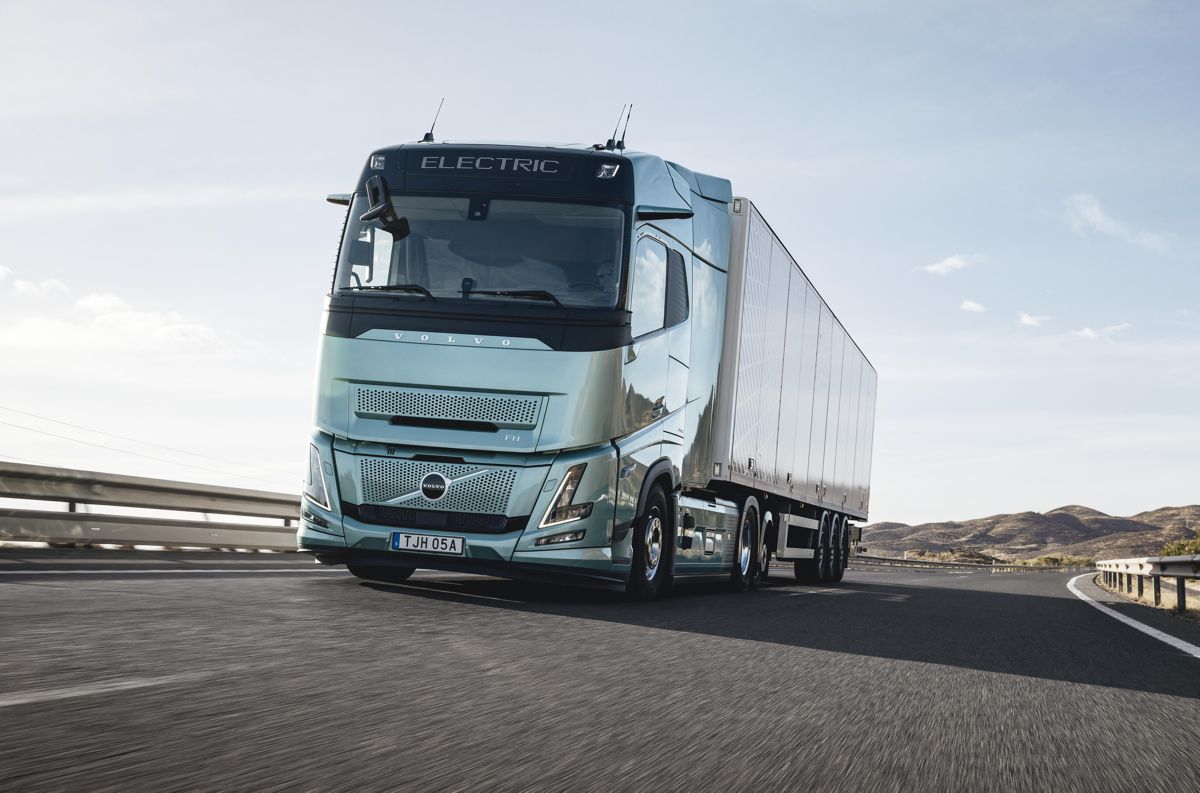
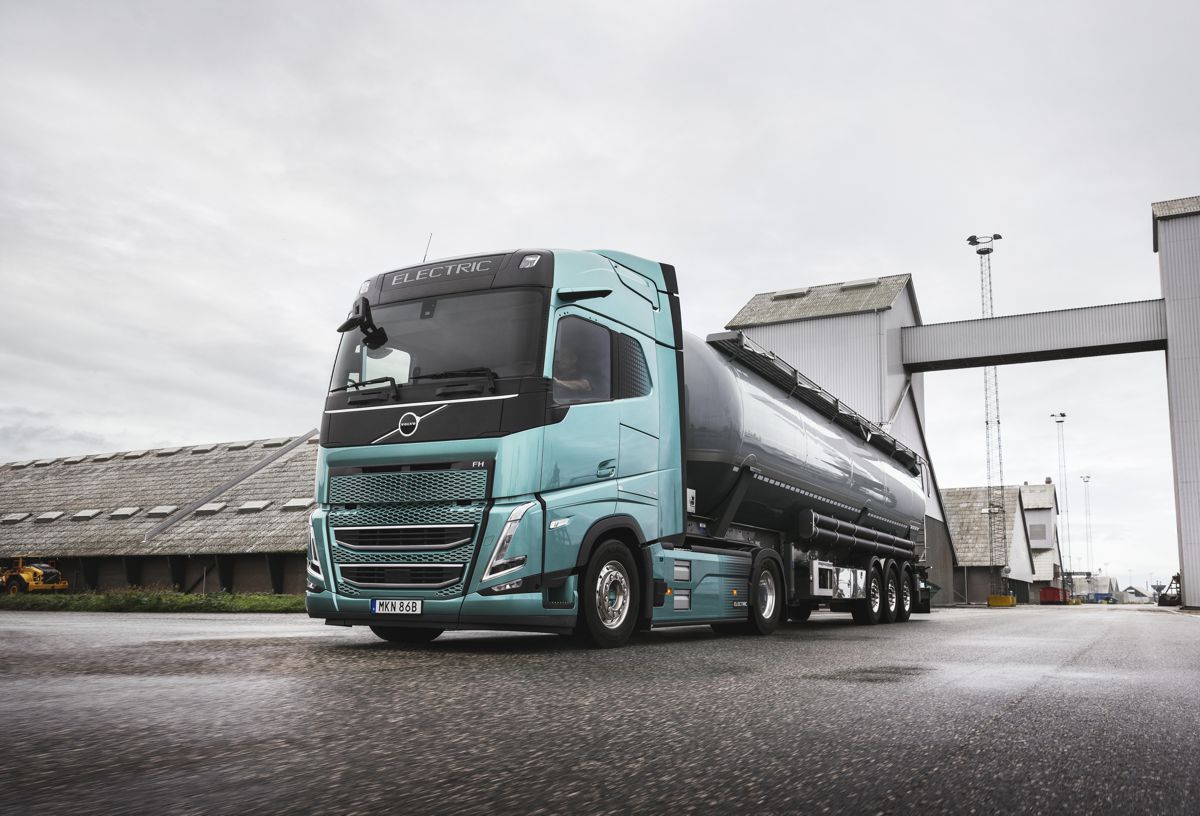
Volvo Trucks has lifted the ceiling on how far a heavy electric truck can run between charges, unveiling an FH Aero Electric with extended range that’s rated for up to 700 kilometres on a single charge. For a segment that’s long been written off as too heavy, too far and too demanding to electrify, that’s a meaningful jump. The truck that does the hard yards, the long-distance hauler crossing borders and clocking up a full working day, has stubbornly resisted the switch away from diesel. Volvo reckons it has now closed much of that gap.
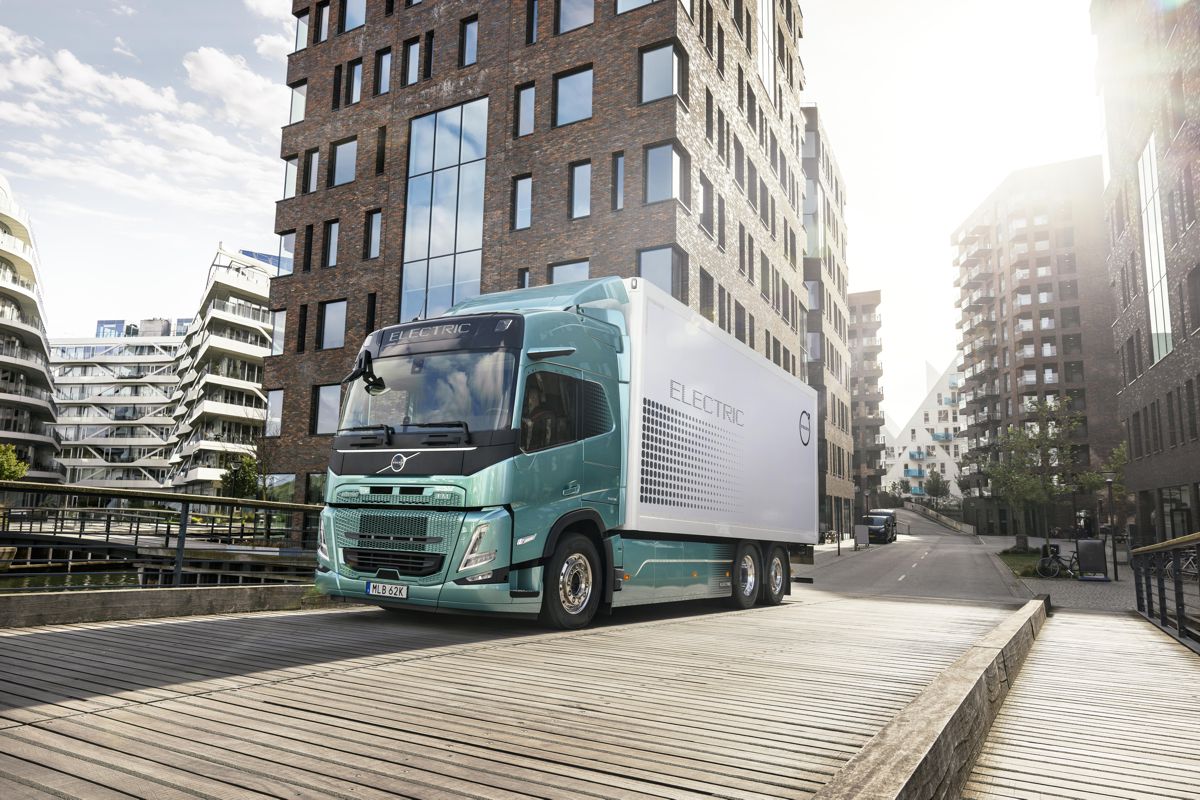
The Gothenburg manufacturer paired that headline machine with a quieter but arguably broader update: next-generation FH, FM and FMX Electric trucks built for construction sites, regional distribution and the messier end of vocational work, with ranges of up to 470 kilometres. Taken together, the two launches widen the slice of freight that fleets can plausibly move on batteries. And the timing isn’t accidental. After five years at the top of Europe’s electric heavy-truck table, Volvo slipped behind Mercedes-Benz in 2025, so this is as much about defending turf as it is about engineering.
Briefing
- The FH Aero Electric with extended range covers up to 700 km per charge, built around a new e-axle that frees chassis space for eight battery packs and a claimed 28 tonne payload.
- Megawatt charging takes the long-haul truck from 20 to 80 per cent in roughly 50 minutes, which Volvo says fits inside drivers’ legislated rest periods.
- The next-generation FH, FM and FMX Electric reach up to 470 km, with a new dual-motor driveline and an integrated power take-off for cranes, tippers and refuse bodies.
- Roll-out begins in 2026, landing just as Volvo’s European zero-emission share slipped behind Mercedes-Benz the previous year.
- Gross combination weights run up to 48 tonnes for the FH Aero and 65 tonnes for the heavy-duty range, keeping payload close to diesel equivalents.
Why The 700 Kilometre Truck Changes The Maths
The standout here is the driveline. The FH Aero Electric with extended range is built around a compact e-axle that tucks two electric motors and a six-speed gearbox into the rear axle itself. Doing so clears out the chassis space normally taken up by hardware, and Volvo has used that room for batteries, fitting eight packs where the current FH Electric carries six.
The result is up to 700 kilometres of range with 460 kW, or 623 horsepower, on tap, and a gross combination weight of up to 48 tonnes. Crucially, payload climbs to around 28 tonnes, which is the number that actually matters to operators. A long-range truck that can’t carry a competitive load is a poor trade, so keeping payload near diesel levels is the genuine breakthrough rather than the range figure on its own.
It’s worth noting how Volvo arrived at that 700 kilometre claim. The same flagship was first announced in 2024 at up to 600 kilometres, and the company has since revised the top figure upward without spelling out in detail how the extra distance was found. The “up to” caveat does a lot of work too, since real-world range bends to weather, terrain, weight and how the truck is driven. Even so, the comparison with rivals is striking.
Tesla’s Semi is generally quoted at around 550 kilometres and the Mercedes-Benz eActros at roughly 500, which leaves Volvo with a clear paper advantage in the part of the market that has been hardest to crack.
Roger Alm, President of Volvo Trucks, didn’t hold back on the positioning. “This long-haul electric truck is the best in the industry. It offers an outstanding range in combination with high payload, fast charging and great riding comfort. With this truck, our customers can drive the really long distances and throughout an entire working day with the same productivity as diesel trucks,” he said.
Charging Is The Real Bottleneck
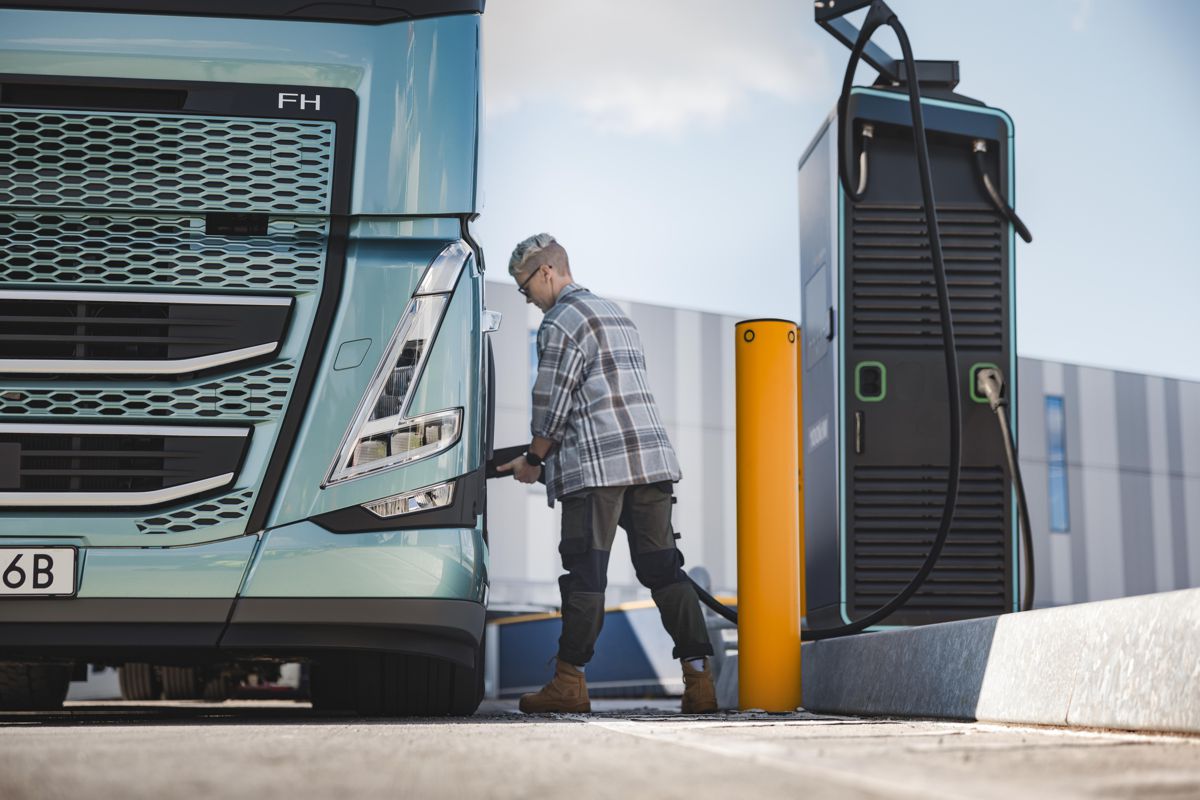
Range grabs the attention, but charging is where long-haul electrification lives or dies. The FH Aero Electric is built for the new Megawatt Charging System, the heavy-vehicle standard designed to push power far beyond what today’s car-derived connectors manage. On MCS at 700 kW, Volvo says the truck refills from 20 to 80 per cent in about 50 minutes, and on the older CCS standard at 350 kW that stretches to roughly 85 minutes.
The headline pitch is that the faster top-up slots into the breaks European drivers are legally obliged to take, so the truck charges while the driver rests rather than eating into productive hours. That said, EU rules typically require a 45 minute break after four and a half hours behind the wheel, so a 50 minute charge sits just beyond that window, and operators will want to test how neatly the two line up in practice.
The bigger question is whether the chargers will actually be there. MCS hardware is only now reaching the road, and 2026 is shaping up as the year the standard goes commercial across several manufacturers. Volvo isn’t waiting on others to build the network either.
Through Milence, the joint venture it runs with Daimler Truck and Traton, the industry is targeting 1,700 high-power charging points across Europe by 2027, with public corridors opening along major freight routes. Plenty of obstacles remain, from grid connections to the cost of pulling megawatts into a depot, and infrastructure analysts have flagged that demand charges and patchy interconnections can quickly erode the business case.
A 700 kilometre truck is only as useful as the next available charger, so the vehicle launch and the network buildout are really two halves of the same bet.
A Versatile Range For The Working Week
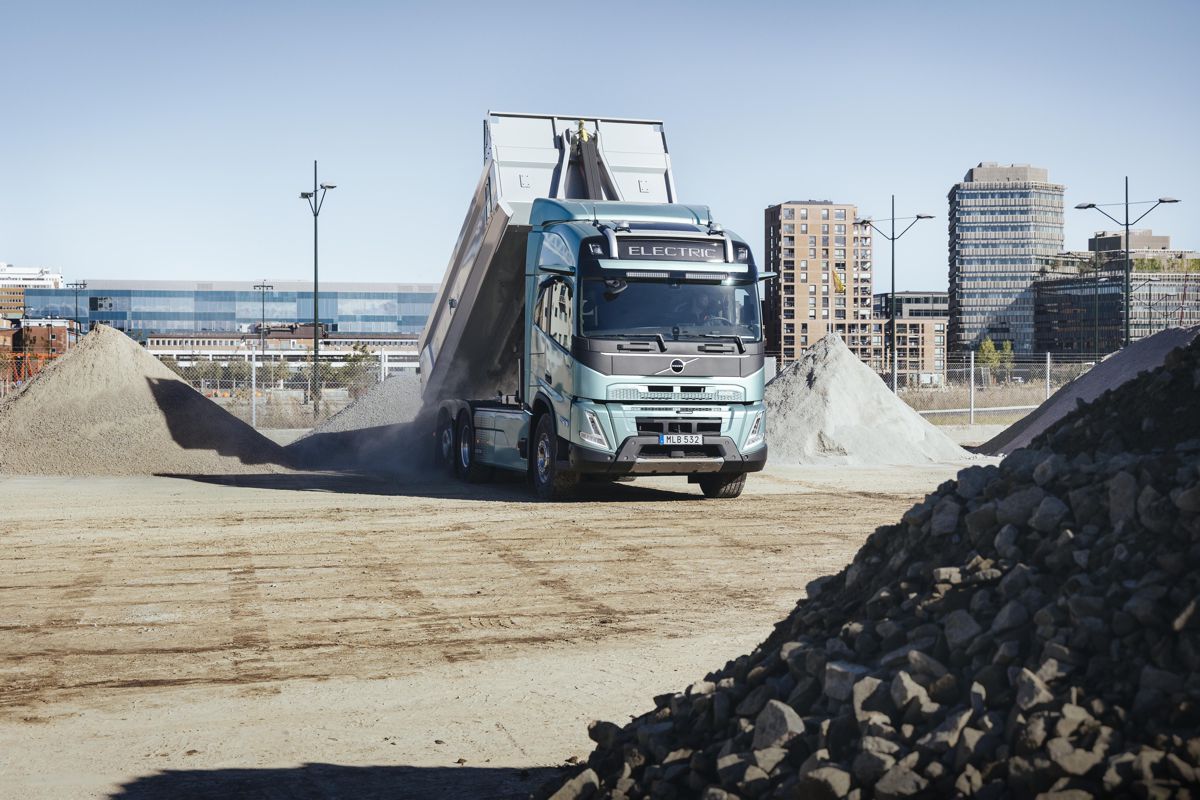
While the FH Aero chases distance, the refreshed FH, FM and FMX Electric trucks are aimed squarely at the everyday grind of construction, utilities, refuse and regional haulage. They share an all-new dual-motor driveline paired with a purpose-built eight-speed gearbox, and Volvo has engineered them so a driver can run auxiliary kit, think concrete mixers, hook lifts or refuse units, straight off an integrated gearbox power take-off without bolting on extra motors.
For vocational operators that’s a practical win, since the body and the truck can work at the same time. Range tops out at up to 470 kilometres and a 20 to 80 per cent CCS charge takes around 65 minutes.
These trucks also stretch further up the weight scale, handling gross combination weights of up to 65 tonnes and offering twin-drive axles and low gearing for heavy loads and steep ground.
Alm framed the update around breadth rather than headline numbers. “The next-generation FH, FM and FMX Electric are packed with new, smart functions, they offer great driver comfort and make zero tailpipe emissions transport available for very wide range of transport assignments,” he said. All four new trucks, the long-haul Aero included, get powershift gearboxes tuned for electric transmission, which Volvo says cut noise and vibration alongside smoothing out the shifts.
Defending A Crown Volvo Used To Own
The commercial backdrop sharpens the stakes. Volvo led Europe’s heavy electric truck segment for five years running, holding close to a 47 per cent share at the end of 2024. Then 2025 reshuffled the deck. Propelled by the eActros, Mercedes-Benz sold roughly 1,400 zero-emission heavy trucks last year and became the clear leader in the EU, while Volvo’s zero-emission share in that segment slipped to around 2 per cent, according to the International Council on Clean Transportation.
Tightening CO2 standards are forcing the issue, with trucks registered between mid-2025 and mid-2026 required to emit 15 per cent less CO2 than their 2019 baseline, and that regulatory squeeze is pulling every major maker toward battery models whether they’re ready or not.
So this launch reads as a deliberate move to reclaim ground in the segment Volvo can’t afford to cede. The broader market still leans heavily on diesel, which accounted for well over 90 per cent of new heavy registrations in 2025, and zero-emission trucks remain a low single-digit slice of the whole. But the direction of travel is set, and the firms that own the long-haul electric niche early will be well placed as the corridors and chargers fill in.
Alm put the company’s conviction plainly: “We’re really sharpening our offering here. We are broadening it and making electric solutions possible for an even wider range of transport assignments, and also adding a cutting‑edge electric truck with a range of up to 700 km. This means we can fully match the business needs of our customers. It has never been easier to replace diesel trucks with electric ones,” he said.
Seen Up Close At Volvo Days
A note from this correspondent, who caught the wider Volvo electrification drive first-hand at this year’s Volvo Days. The event is the Volvo Construction Equipment showcase, held in Eskilstuna, Sweden, and it drew a record crowd under the banner “Smarter Solutions. Driven by you.” It’s a sister operation to Volvo Trucks inside the broader Volvo Group, and while the kit on the test track was construction machinery rather than the long-haul trucks above, the through-line was identical: the company leaning hard into electric and digital, and putting real products in front of customers rather than slides.
The choice of Eskilstuna was pointed, since it’s where Volvo CE is committing long-term investment, including a new excavator plant, to anchor that transformation closer to its customers.
Taking one of the electric machines out for a drive did more to sell the technology than any spec sheet. The ride was genuinely quiet, eerily so next to a diesel equivalent, and the power and performance left a strong impression, with the instant torque and none of the lag you brace for. That’s the part the range debates tend to gloss over.
On the move, these vehicles already feel like the better tool for the job, and once the charging network and the economics fall into line, the case for sticking with diesel only gets harder to make.
What Comes Next
Volvo’s pitch sits inside a wider strategy it calls three-path, betting on battery electric, fuel-cell electric and combustion engines running on renewable fuels such as green hydrogen, biogas and HVO, all pointed at a net-zero target for 2040. The new trucks roll out market by market through 2026, so the proof will come in deliveries and real-world range rather than spec sheets.
The company shifted roughly 120,000 trucks of all kinds worldwide in 2025 and supports them through some 2,200 service points in around 130 countries, which gives it the reach to scale an electric range quickly if demand follows.
For fleet operators, investors and the policymakers shaping freight decarbonisation, the takeaway is that the technical excuses are thinning out. A heavy truck that can cover 700 kilometres, carry a near-diesel payload and top up over a driver’s break removes one of the last big reasons to wait. Whether the charging network keeps pace, and whether Volvo can convert engineering into orders fast enough to fend off Mercedes, are the open questions that will decide how much this announcement is worth.
“We stand firm in our belief that electric vehicles will deliver a large part of the world’s truck transport in the future. With the amazing performance of all our new trucks, it’s easy to see why,” Alm said.