The Autonomous Construction Company
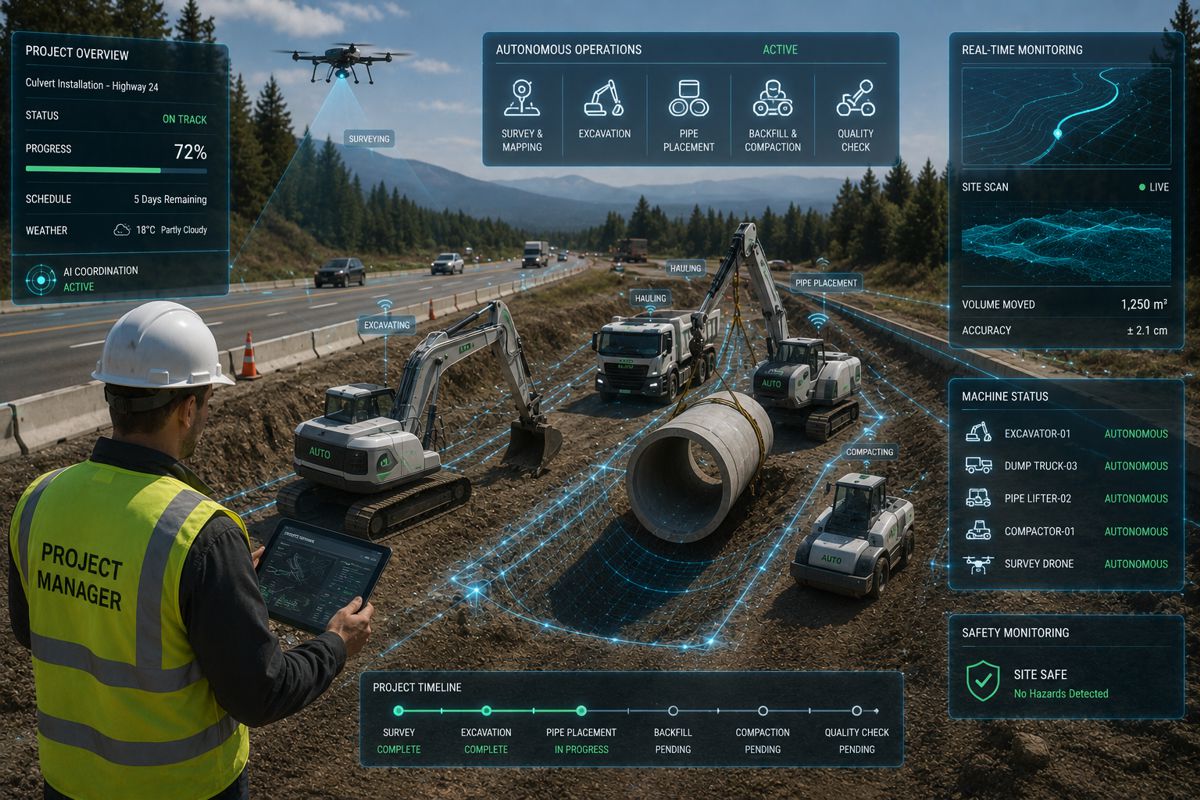
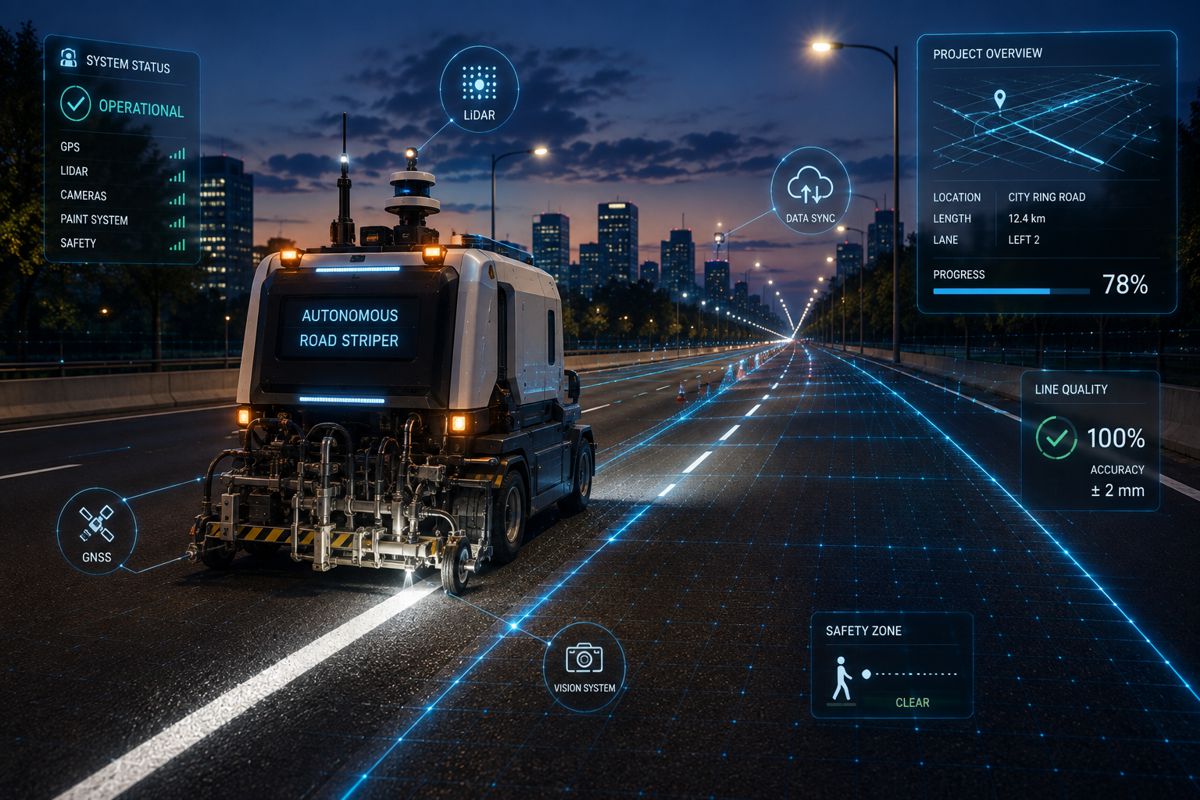
The familiar vision of construction autonomy is a physical one. An autonomous excavator works a site while drones survey progress overhead and robotic equipment handles the repetitive tasks that once tied up operators for entire shifts. It is an arresting image, and it has dominated the industry’s picture of what a smarter sector will look like.
The contradiction sits one step behind that machine. The contractor operating the autonomous excavator may still have people transferring quantities into spreadsheets by hand, chasing subcontractor quotations by email, checking invoices line by line, updating programmes manually and compiling Friday afternoon reports that nobody reads in full. Construction has poured years of effort into automating physical work while the business surrounding that work has stayed surprisingly manual.
That imbalance points to where the next phase of smart construction may actually land. It is less about removing the operator from the cab and more about removing the administrative friction that runs through the whole enterprise, and it does not mean removing people so much as changing what those people are asked to manage. The real destination is not simply a contractor that automates its work, but one that closes the loop between what it expected to happen, what actually happened and what it does differently next time, and that idea, the closed-loop contractor, is where this argument is heading.
Briefing
- The industry has framed autonomy as a machine problem, yet the larger transformation is the contractor itself becoming a system that observes, decides, acts and increasingly learns, with people governing the exceptions rather than initiating every routine decision.
- The shift that matters is from artificial intelligence that answers to artificial intelligence that acts, because agents that request quotations, route invoice mismatches and hold an approval until a certificate arrives turn a smarter toolset into a semi-autonomous business.
- The real prize is the closed-loop contractor, in which estimating, procurement, delivery, plant and finance feed one another and each completed project teaches the next, ending construction’s long habit of losing its own institutional memory at handover.
- The economics are the actual story, because if software absorbs the administrative complexity that has always made contractors heavier as they grow, revenue can begin to scale faster than overhead, and capabilities once reserved for the largest firms become available to the smallest.
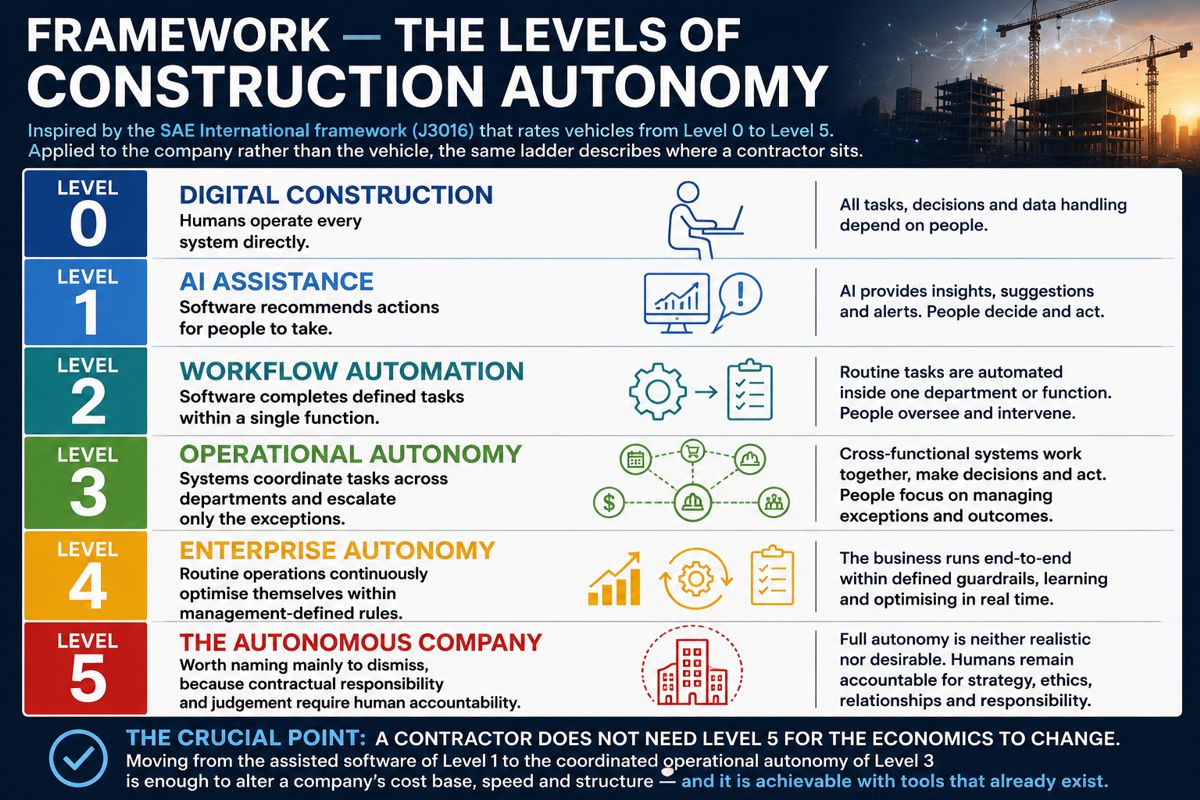
- Autonomy arrives in levels rather than all at once, and it is defined not by giving software unlimited authority but by setting precisely how much authority it holds, which keeps human accountability at the centre of an otherwise automated business.
The Contractor Is A Decision Machine
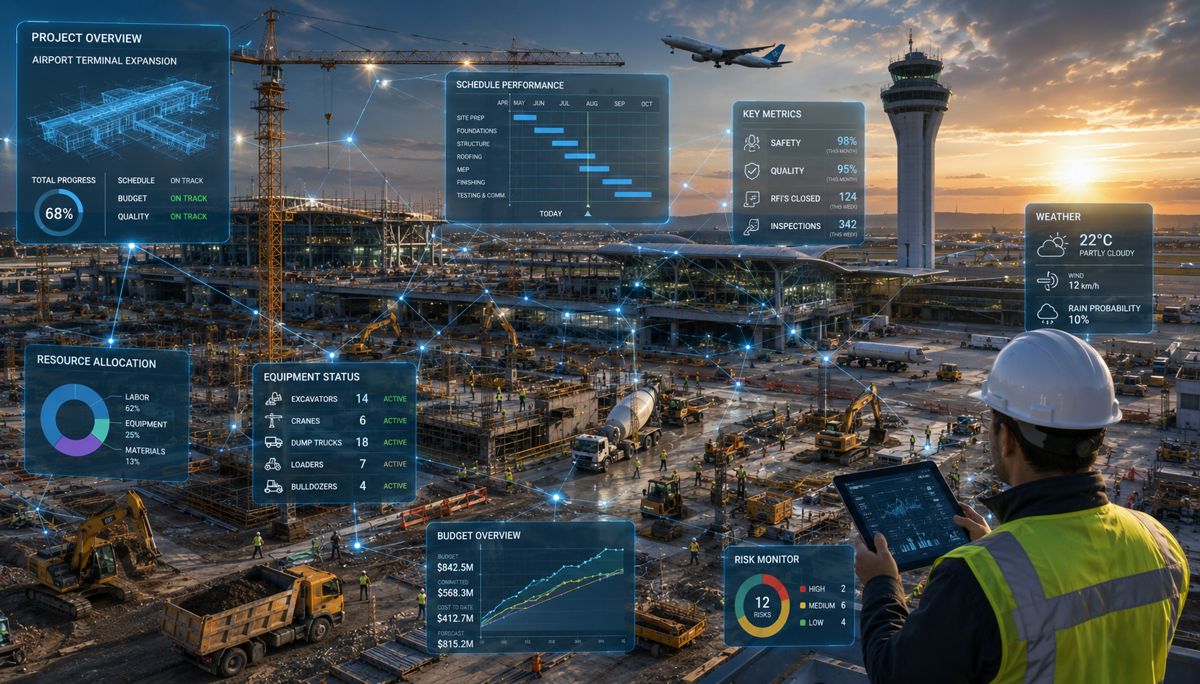
A construction company is not simply an organisation that builds things. Underneath the plant and the sites it is effectively a very large decision-making system, and every project it runs generates thousands of individual decisions that have to be made, coordinated and recorded. The cost of a work package, the choice of supplier for an order, whether a programme has slipped, whether a variation erodes margin, whether an invoice is correct, whether a subcontractor remains compliant, whether a machine needs servicing and whether the company faces a cash shortfall three months out are all live at any given moment.
Historically those decisions have been distributed across estimators, quantity surveyors, planners, procurement teams, project managers, accountants, engineers and directors. The striking part is how much of their week is spent not deciding but preparing to decide, by finding information, compiling it, checking it and passing it on so that somebody else can act.
The 2018 Construction Disconnected study by FMI and PlanGrid put figures on that burden, finding that construction professionals spend around thirty-five per cent of their time, more than fourteen hours a week, on non-productive activities such as looking for project data, resolving conflicts and dealing with mistakes and rework, at a cost the study placed above 177 billion dollars a year in the United States alone.
That is the machinery an autonomous company begins to automate, and it leads to a definition worth holding onto for the rest of this feature. The autonomous construction company is not a company without employees, it is a company where routine operational decisions increasingly happen without requiring an employee to initiate them. None of the individual capabilities now reaching the market delivers that on its own, and the transformation depends less on any single tool than on what happens when the tools begin to act, and to talk to one another.
From AI Assistants To AI Agents
The most important development of the last two years is easy to miss because it sounds like a technical distinction rather than a commercial one. Most construction AI to date has been an assistant, which is to say it answers. It reads a drawing and returns quantities, interrogates a contract and flags a clause, compares an estimate against history and highlights a variance, and then waits for a person to do something about the answer. That is useful, and it is not autonomy.
An agent acts. Where an assistant tells a procurement manager that three quotations are needed, an agentic system requests them; where an assistant notes that an invoice does not match its purchase order, an agent routes it for investigation; where an assistant identifies an expiring insurance certificate, an agent requests the replacement and withholds approval until it arrives. The industry framing captures the shift neatly, in that generative AI lowered the cost of producing an answer while agentic AI lowers the cost of taking an action.
This is no longer prospective, because in May 2026 Procore launched a suite of construction AI agents, built on its acquisition of the agent platform Datagrid, able to take action across project workflows including invoices and payment applications, and Gartner expects that by 2028 roughly a third of enterprise software applications will include agentic capabilities, up from almost none in 2024.
The construction implications follow directly. An agent integrated with project financials could detect anomalies in subcontractor invoices, cross-reference purchase orders against actual deliveries, automate initial approvals within defined thresholds and hold a payment or an approval until a compliance document is in place, and each of those actions removes a person from the routine case while keeping them available for the exception.
An assistant makes each person faster at their existing job, whereas an agent begins to remove the need for a person to sit in the loop at all for the routine cases, escalating only what falls outside the rules it has been given. Stack enough agents together, and let them act across the systems a contractor already runs, and the company stops being a group of people operating software and starts becoming a system that a smaller group of people governs.
The Project That Starts Running Itself
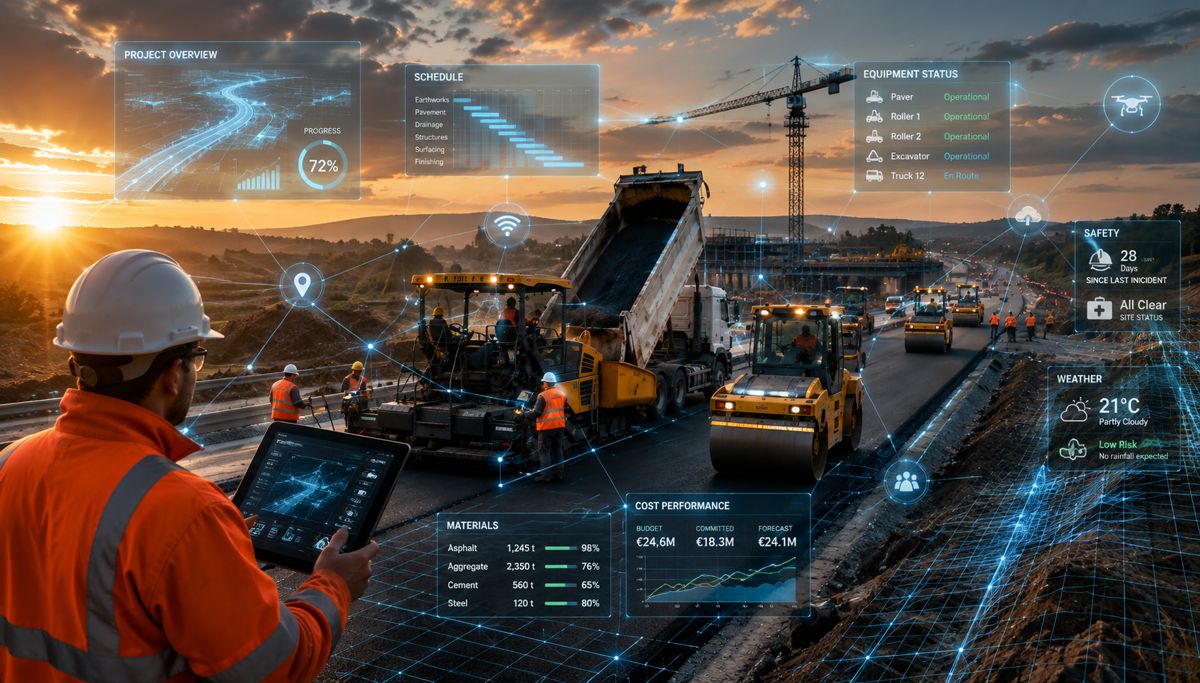
The idea becomes concrete when a single project is followed through the business, so consider a contractor tendering for a 70 million euro highway rehabilitation scheme. At the tender, its systems read the documents, extract quantities, compare the scope against the recorded outcomes of previous pavement projects, price the materials, discover and shortlist suppliers, model several programme options and assemble a bid, while a contract-review layer examines the same documents for onerous payment terms, liabilities and specification conflicts.
The point is not only that this happens faster, because speed alone changes little, but that the estimate is no longer being built from a blank sheet, it is being built from what the company already knows about work exactly like this. The contract review, meanwhile, is doing something more than checking clauses, it is helping determine whether the company should carry the risk of the project at all, a judgement that matters given that Arcadis put the average United States construction dispute at 60.1 million dollars in its 2025 report and found that errors and omissions in contract documents have been the leading cause of disputes for six of the last nine years.
Then the contractor wins, and the difference between a smarter tool and an autonomous company appears in what happens next. The estimate does not stop at the estimate, because it becomes the cost baseline that procurement now sources against, and procurement does not begin from nothing, because it inherits the quantities, the suppliers and the prices the tender already assembled. The programme translates that scope into requirements, requirements pull plant and labour into an allocation, and site progress starts flowing back in, so that when a concrete pour slips the delay does not sit in a report until Friday, it moves.
Equipment shows how far that movement now reaches. The slipped pour alters a dependent activity, which changes an equipment requirement, so that an excavator booked for Tuesday is suddenly not needed, and because the system can see across the contractor’s other sites, it recognises that a second project needs exactly that machine on the same day. It weighs the cost of transporting the owned excavator against hiring one in, and reallocates the machine rather than leaving it idle on one site while the other pays rental, a decision that in a traditional business stays invisible until somebody happens to notice the standing plant. That single reallocation then ripples onward, because the delivery shifts, procurement adjusts, and the combined change in programme, plant and procurement feeds through into the cash-flow forecast before the month-end accounts would ever have shown it.
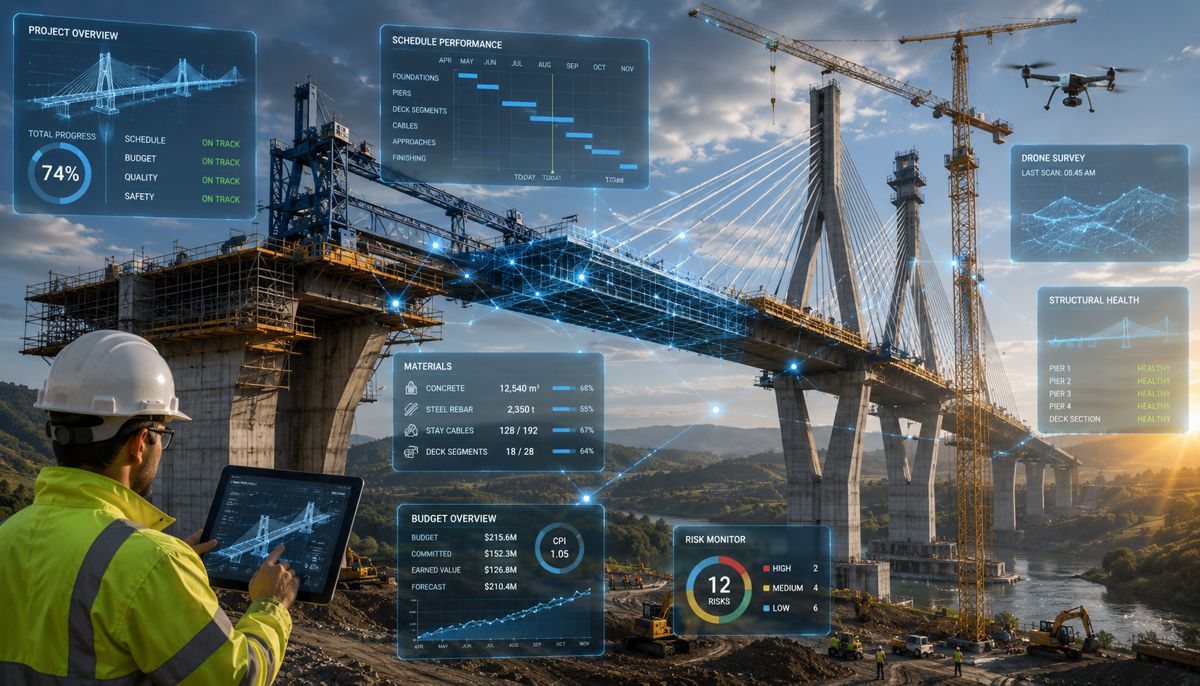
Vision-based progress platforms already supply the raw signal that starts this chain, with Sir Robert McAlpine reporting the use of Buildots, which compares camera-captured site reality against the model and the schedule, across more than 260,000 square metres of construction on five projects, using it to identify potential delays early and, in the contractor’s own words, to build a culture of continuous learning and improvement.
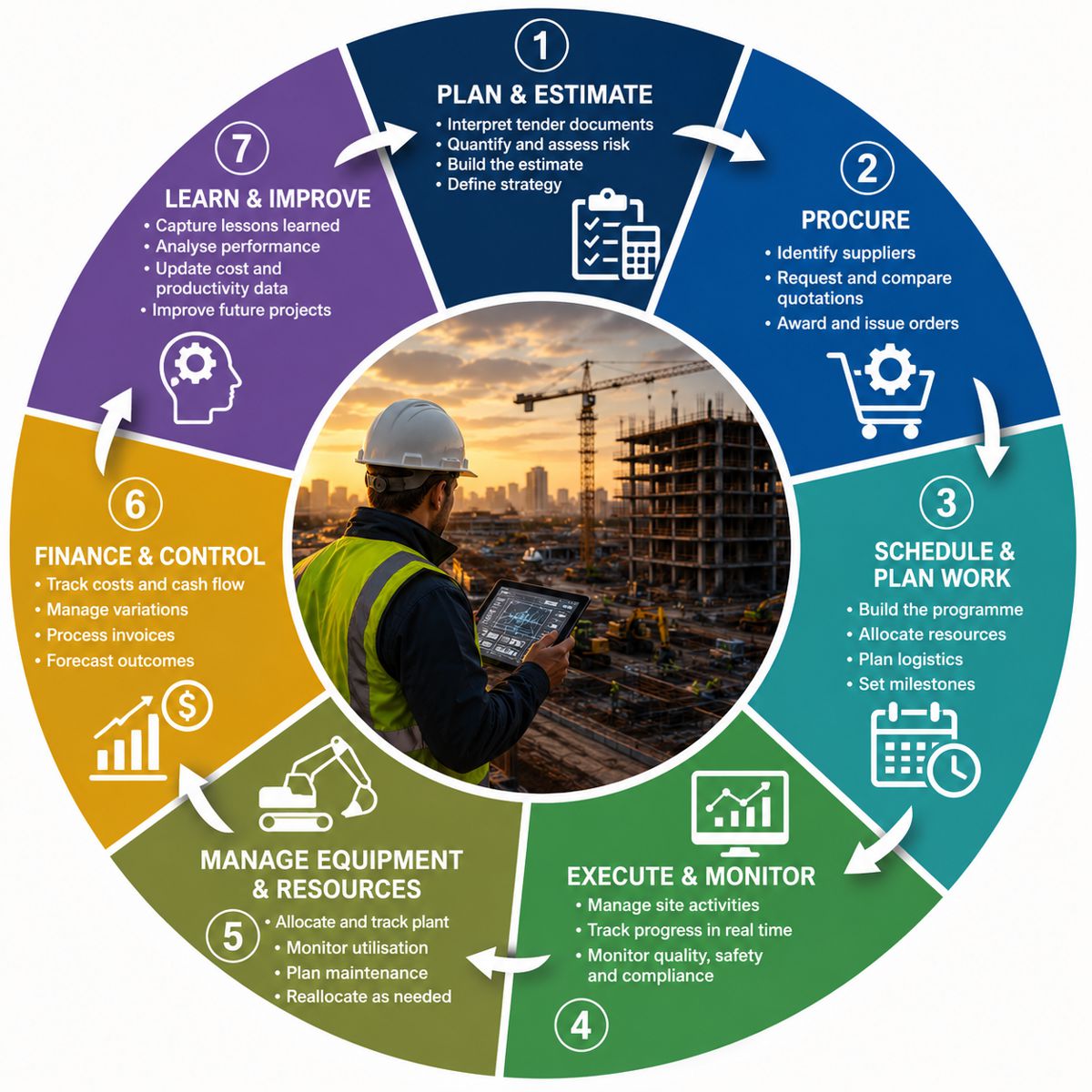
What has happened, across that single project, is that the functions have started talking to each other. Estimating talked to procurement, procurement talked to scheduling, scheduling talked to plant, plant and site talked to finance, and finance is about to talk back to estimating, because when the project completes, its actual productivity, its real material consumption and its true costs against every line of the estimate are known. That closing feedback is the part construction has always thrown away, and it is where the autonomous company becomes something more interesting than an efficient one.
The Closed-Loop Contractor
Construction has been extraordinarily poor at institutional memory, for a simple structural reason. Knowledge tends to walk off the project at completion, carried in the heads of the people who ran it, and the next tender often starts another spreadsheet as if the last project had never been built. The cost of that forgetting is visible in the data, with Autodesk and FMI estimating in 2021 that bad data, meaning information that is incomplete, inaccurate, inconsistent or out of date, may have caused around 1.8 trillion dollars in losses worldwide in a single year, and with almost a third of surveyed professionals reporting that more than half of their own project data was effectively useless.
That depends on preserving information well enough for the business to learn from it. As we explored in The Golden Thread is Becoming Construction’s Information Backbone, connected and trustworthy project records increasingly provide the context that AI needs to understand not merely what happened, but which asset, decision, inspection or change it related to.
An intelligent contractor breaks that pattern by closing the loop, so that a project runs not as a straight line from estimate to completion but as a cycle: estimate, build, measure, learn, and then estimate better. When the 70 million euro highway scheme finishes, the gap between what each work package was priced at and what it actually cost does not evaporate, it updates the database that the next tender will draw on.
Six months later, when a similar scheme arrives, the company is no longer guessing at labour rates for that pavement specification, it is pricing from what genuinely happened last time, and its programme assumptions are calibrated against real durations rather than optimistic ones. Sir Robert McAlpine’s description of a culture of continuous learning and improvement is exactly this loop beginning to turn, with automated measurement feeding back into how the next job is planned.
The closed-loop contractor is the difference between automating construction and improving it. A contractor that merely automates its admin gets cheaper at doing the same things, whereas a contractor that closes the loop gets better at them with every project, compounding an advantage that is very hard for a competitor to copy because it is built from that contractor’s own operational history. That history becomes an asset in its own right, and it reframes the whole exercise, because the autonomous construction company is not really a company that automates work, it is a company that learns from it.
When Revenue Grows Faster Than Overhead
At this point the story stops being an artificial-intelligence story and becomes a construction economics one. Contractors have always become administratively heavier as they grow, because more projects mean more quantity surveyors, more planners, more procurement, more finance staff, more document control and more reporting, and that incremental overhead is one of the quiet reasons construction margins stay thin and scaling stays hard. If software absorbs a meaningful share of that incremental complexity, the relationship between revenue and corporate overhead begins to change, which is a far larger idea than faster estimating.
The prize, stated plainly, is a contractor that scales its revenue faster than it scales its overhead. For a century those two have risen together, so that winning more work has meant carrying more back office, and breaking that link would change the economics of the contracting business more profoundly than any individual efficiency. Consider a contractor turning over 500 million pounds that can run the same volume of work with fewer administrative processes, faster tender turnaround, better equipment utilisation, fewer invoice errors, earlier detection of margin erosion, less duplicated data entry, faster management decisions and greater consistency between projects.
Each of those improvements is modest on its own, but together they loosen the historic constraint in which growth in revenue demanded a matching growth in back-office headcount, and that is the thread connecting this feature to Week One’s examination of recurring revenue.
There is a competitive edge to this as well. When one contractor becomes substantially more autonomous than another, it does not simply become more productive, it becomes able to bid differently, pricing more tenders, reacting faster, buying more intelligently, spotting losses sooner and carrying less overhead into every rate. That advantage cuts in two directions at once, and the more interesting of the two is counter-intuitive.
A regional contractor has never been able to afford the large estimating, procurement, planning and commercial-intelligence departments that give major contractors their edge, yet AI services increasingly offer some of those capabilities without the department, which could allow smaller firms to operate with a sophistication once reserved for the largest.
Set against that, the major contractors hold something the newcomers cannot buy, which is decades of proprietary project history, and in a world where the closed loop turns that history into pricing and planning advantage, the deepest datasets may prove to be the most durable moat in the industry. The resulting contest, between smaller firms gaining access to enterprise-grade capability and larger firms exploiting operational data nobody else can see, is likely to shape competition in construction more than any individual product will.
The Construction Operating System
None of this arrives simply because artificial intelligence is bolted onto each application a contractor already runs. Most contractors operate a considerable stack, spanning enterprise resource planning, estimating, the building information model, project management, accounting, procurement, telematics, document management and scheduling, and a collection of individually smarter tools is still a collection of silos. Autonomy emerges only when those systems communicate and act across workflows rather than within them, which is why integration, rather than intelligence, is the real gating factor.
There is an important qualification to that integration. Contractors first need to establish whether the workflows being connected deserve to survive at all. As Highways.Today recently explored in Construction Prone to Digitising the Problems It Should Be Eliminating, automating an inherited workaround does not transform the operating model; it can simply allow the business to execute an outdated process faster.
The market is visibly consolidating in that direction, and the clearest signal is an acquisition. When Trimble bought the AI contract-review specialist Document Crunch in April 2026, a tool already used on more than ten thousand projects by over five hundred contractors, the significance was not that another software company acquired another AI business. It was that an autonomous capability was being pulled inside a larger operating platform, becoming the risk layer of a connected system rather than a standalone app a contractor logs into separately, which is precisely how disconnected capabilities turn into an operating system that can act across the workflow.
The same logic runs through the scheduling world, where McKinsey’s April 2026 alliance with ALICE Technologies to deploy generative scheduling, capable of testing millions of build sequences and reported to shorten some programmes by up to a fifth, came with a caveat both firms were careful to state, that the technology alone does not close the productivity gap and that the operating model around it has to change as well.
That caveat is the whole argument in miniature. The competitive question for contractors is shifting away from which individual tool is best and towards how well the tools are joined, because it is the joins, not the applications, that let a delay identified on site ripple automatically through procurement, programme, plant and forecast. Software that once merely recorded the business is beginning to operate parts of it, and the contractors who benefit will be those who treat their systems as one operating system rather than a drawer full of subscriptions.
The Manager Of Exceptions
If agents take on increasing shares of estimating, procurement, reporting, finance and compliance, the obvious question is what remains for construction management, and the answer is not the disappearance of management but a change in what management is for. The manager of an autonomous company spends less time moving information through the organisation and more time setting and policing the rules by which the organisation moves it for them. Management shifts from handling information flows to handling exceptions, and from doing the routine work to defining where the routine ends.
That makes the manager’s real job the governance of the system rather than the operation of it, and the mechanism of that governance is an authority architecture. Autonomy is not the granting of unlimited authority to software. It is the precise definition of how much authority that software has, and where it stops. In practice that means rules such as allowing an agent to recommend any supplier but to order automatically only from approved suppliers below a set value, to reschedule non-critical activities within a fixed tolerance of a few days, to flag a contractual risk but never to accept it, and to process an invoice but never to authorise payment above a defined ceiling. Those are not technical settings, they are commercial and ethical judgements about how much authority the business is prepared to delegate, and they sit squarely with people.
One of those judgements matters more than the rest, which is who remains accountable when autonomous workflows interact and something goes wrong. This is not an argument against the autonomous company, it is a condition of it, because machines can increasingly make operational decisions but companies still need identifiable humans who are answerable for them, to clients, to regulators and to the law. The skills that rise in value are therefore the ones that resist automation, being commercial judgement, negotiation, leadership, relationships, risk appetite and the willingness to own a decision, and a workforce freed from data-gathering is a workforce able to apply more of them.
There is an organisational consequence in that shift as well, since a contractor traditionally needs layers of administration partly because information has to travel through the business to reach the people who act on it, and if software observes the systems directly and escalates only what matters, some of those layers may thin or change shape.
The Company That Runs Overnight
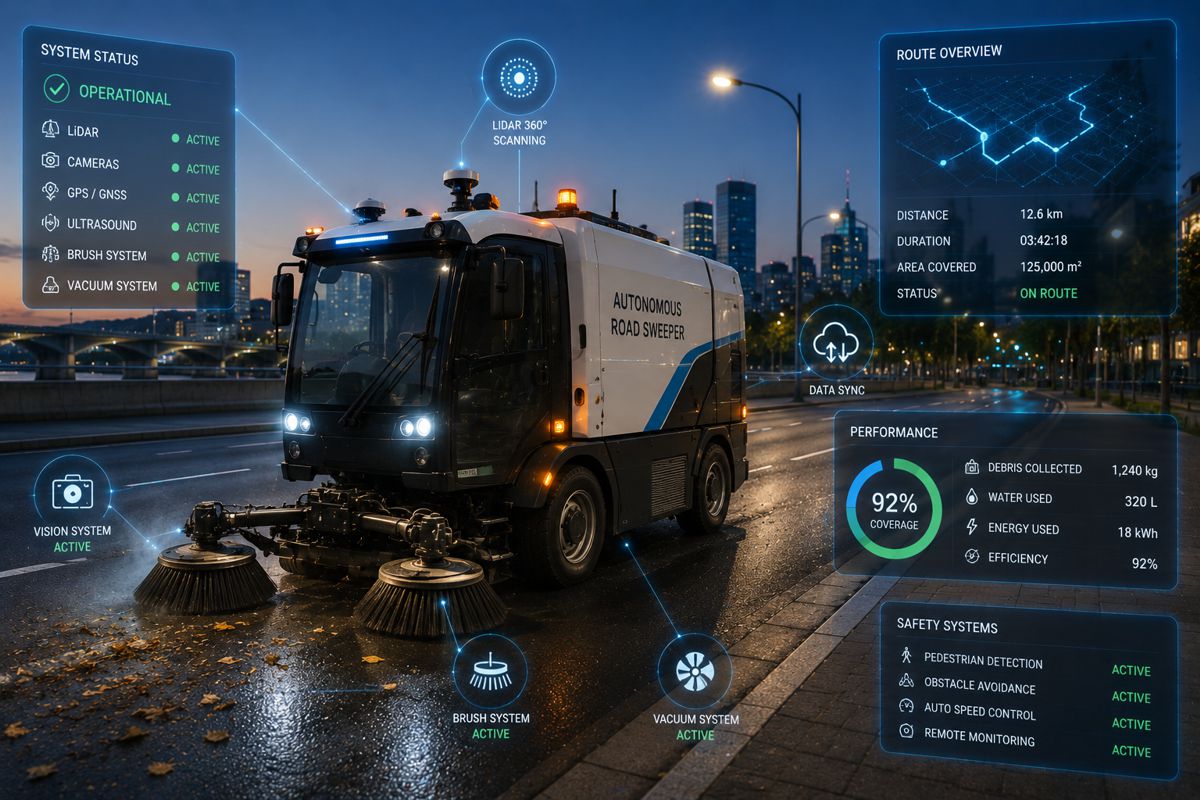
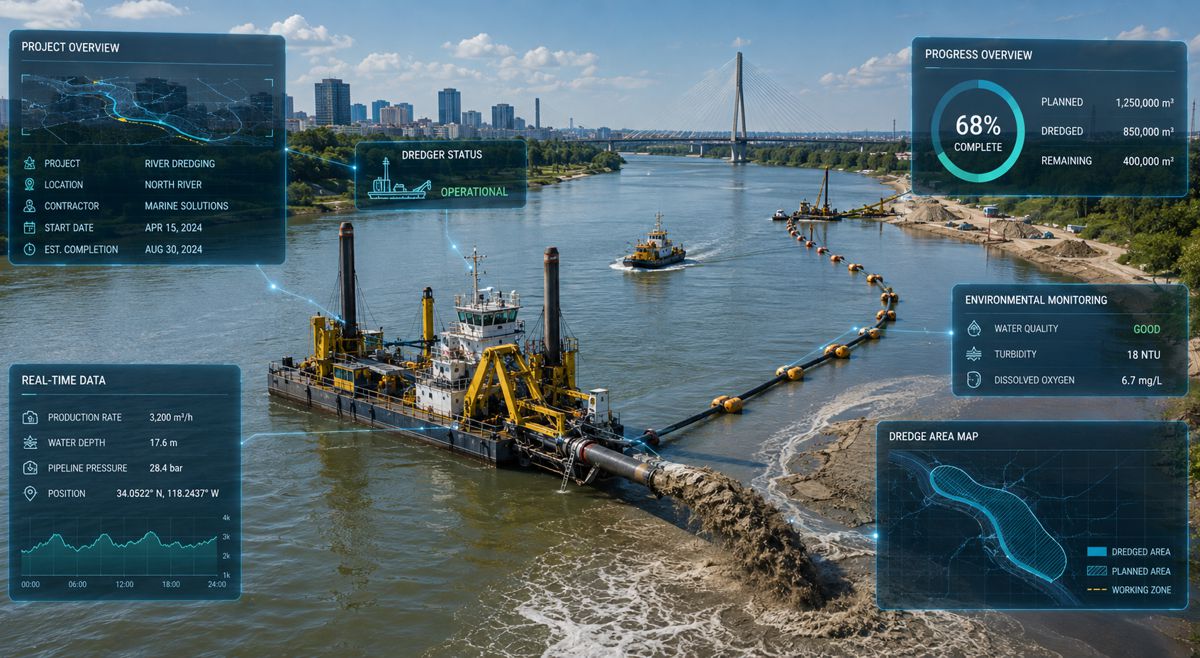
The autonomous excavator is easy to photograph, which is part of why it has captured the industry’s imagination so completely. The autonomous construction company is not, because there is no single dramatic moment when it arrives and no image that captures it. Estimating becomes partially autonomous, then procurement, then reporting, then project controls, then finance, then equipment management, and each individual step looks modest on its own.
Taken together, though, the increments amount to something substantial, and the change is best understood not as automation but as a closed loop that observes, decides, acts and learns. Eventually a management team arrives on a Monday morning to find that much of what once required people to find, compile, check and distribute information happened automatically overnight, that the exceptions requiring a human decision are already waiting, sorted and explained, and that the lessons of the last project are already priced into the next one. The contractor has not become a robot, and no operator has been removed from a cab, but the business has developed something closer to a digital nervous system running underneath it.
That reframes where the sector’s largest productivity opportunity may actually lie. It is possible that the biggest prize in construction is not teaching machines to build without people, striking as that vision is, but building companies that can increasingly run, and learn, without people having to manage every transaction, document and routine decision. Week One of Smart Construction Month examined how smart construction changes the way contractors make money, and this is its counterpart, because the autonomous construction company is a change in how contractors operate, the two shifts are arriving together, and the contractor that masters both stops being a collection of people operating software and starts becoming a system that people govern.
Key Industry Questions
- What exactly is an autonomous construction company? It is not a contractor without employees. It is a contractor where routine operational decisions increasingly happen without a person needing to initiate them, because software observes the business, acts within defined limits and escalates only what falls outside them. Estimating, procurement, scheduling, plant allocation, invoice matching and compliance checking each run with less manual intervention, and the more significant step is that they begin to feed one another rather than operating in isolation. Full autonomy is neither realistic nor desirable, because contractual responsibility and judgement remain human. The practical target is a business that handles its routine decisions automatically while people concentrate on the exceptions, the relationships and the commercial calls that software cannot own.
- How is agentic AI different from the AI tools contractors already use? Most construction AI to date has been an assistant, which answers a question and then waits for a person to act. It reads a drawing and returns quantities, or flags a risky clause, but a human still has to do something with the answer. An agent acts within permitted limits, so it does not only note that an invoice fails to match its purchase order, it routes the exception, and it does not only flag an expiring certificate, it requests the replacement and holds the approval. That shift, from answering to acting, is what turns a faster toolset into a semi-autonomous business. Procore launched a suite of construction agents in 2026, and the distinction matters commercially because agents remove the need for a person in the routine cases rather than merely speeding that person up.
- What is the closed-loop contractor, and why does it matter? Construction has been poor at learning from itself, because knowledge tends to leave with the people who ran a project and the next tender often starts from a blank spreadsheet. A closed-loop contractor runs each project as a cycle rather than a line, estimating, building, measuring what actually happened, learning from the gap and pricing the next job from reality rather than optimism. The commercial consequence is that the advantage compounds. A contractor that merely automates admin gets cheaper at the same work, whereas one that closes the loop gets better at it with every project, building an advantage from its own operational history that competitors cannot simply buy. In an industry where roughly half of rework traces to poor data and miscommunication, turning that data into institutional memory is a substantial prize.
- Will AI reduce the number of construction management and back-office jobs? It may reduce some administrative roles, and the economic argument does not depend on pretending otherwise. Much of the work that fills a contractor’s back office, transferring quantities, chasing quotations, checking invoices and compiling reports, is precisely what agents are built to absorb. What changes for management is not the disappearance of the role but its purpose, as the manager moves from processing information to governing the rules by which software processes it, setting thresholds, approving exceptions and owning accountability. The skills that gain value are the ones that resist automation, including judgement, negotiation, leadership and the willingness to own a decision. The likeliest outcome is fewer people on routine administration and more value placed on those who exercise commercial judgement, rather than the wholesale replacement of management.
- Can smaller contractors compete with large firms once AI is involved? The picture cuts both ways. A regional contractor has never been able to afford the large estimating, procurement, planning and commercial-intelligence departments that give major firms their edge, and AI services increasingly offer versions of those capabilities without the headcount, which could let smaller firms operate with a sophistication once reserved for the largest. Set against that, major contractors hold something a subscription cannot supply, namely decades of proprietary project history, and in a closed-loop model that history sharpens pricing and planning in ways rivals cannot replicate. The contest therefore becomes smaller firms renting enterprise-grade capability against larger firms exploiting operational data nobody else can see. Which advantage proves more durable will vary by market, but the era of capability being available only to the biggest is ending.
- How does a contractor stay in control when AI systems can act on their own? Through an authority architecture, which is the defining discipline of the autonomous company. Autonomy is not the granting of unlimited authority to software, it is the precise definition of how much authority that software has and where it stops. In practice that means rules such as allowing an agent to recommend any supplier but to order automatically only from approved suppliers below a set value, to reschedule non-critical activities within a fixed tolerance, to flag a contractual risk but never to accept it, and to process an invoice but never to authorise payment above a defined ceiling. These are commercial and ethical judgements about delegated authority, not technical settings, and they belong with people. The clearest question a contractor must answer is who remains accountable when autonomous workflows interact and something goes wrong.
- Which parts of a contractor’s business can realistically be automated today? A good deal already can, in isolation. AI reads drawings and extracts quantities, reviews contracts for onerous terms, discovers and compares suppliers, monitors site progress against the model and schedule, matches invoices against orders and deliveries, and tracks compliance documents against their expiry dates, and commercially available tools do each of these now. What does not yet exist as a single product is the fully connected version in which those functions act on one another automatically across the whole business, though the acquisitions and platform moves of 2026 show the market assembling it. The realistic position for most contractors is that individual functions can be automated today, the connective tissue between them is emerging, and the competitive advantage will come from how well the pieces are joined.
- Is a fully autonomous construction company actually realistic? No, and it is not the goal. A company running its own affairs with no human in the loop is worth naming mainly to dismiss, because contractual responsibility, judgement, relationships and strategic decisions require accountable people and almost certainly always will. The important point is that a contractor does not need full autonomy for the economics to change dramatically. Borrowing the automotive framing, moving from software that merely assists to systems that coordinate tasks across departments and escalate only the exceptions is enough to reshape a company’s cost base, speed and competitive position, and it is achievable with tools that exist today. The realistic destination is a business that runs its routine decisions automatically and reserves its people for the exceptions, not one that removes them.
Strategic Takeaways
- The competitive frontier in construction technology is moving from owning the best individual tool to connecting tools into loops that act on one another, so contractors weighing software in their next procurement cycle should judge integration and the ability to take action far more heavily than standalone features.
- Proprietary operational history is becoming a strategic asset rather than an archive, because closed-loop learning converts a contractor’s own project data into pricing and planning advantage that rivals cannot purchase, and firms that fail to capture and structure that data now will forfeit an edge that compounds over time.
- The nearest-term impact is on construction economics rather than the jobsite, because software that absorbs the administrative complexity of growth loosens the historic link between revenue and overhead, with direct consequences for margins, scalability and the investment case for contracting businesses.
- AI is poised to redistribute competitive power in two opposing directions at once, handing smaller contractors access to enterprise-grade capability while deepening the data moat of large incumbents, and owners, investors and policymakers should expect that balance to differ sharply by market and segment.
- Governance, not capability, will separate the contractors that adopt autonomy safely from those that do not, because defining exactly how much authority software holds and who remains accountable when automated workflows interact is becoming a question for boards, insurers and regulators rather than for IT teams alone.