From the Baltic to the Alps: 10 Infrastructure Projects to Watch Across Europe
Deep beneath the Alps in July 2026, excavation crews working from Austria and Italy broke through the final rock separating the two main tubes of the Brenner Base Tunnel at the national border.
A month later, tunnel boring machine Wilma completed the western main tube between the Sill Gorge near Innsbruck and Fortezza in Italy. For the first time, a continuous 55 km railway tunnel existed beneath the Brenner Pass.
Europe already possesses dense railway, motorway, metro and port networks, but mountains, seas, borders, incompatible railway systems and congested cities still interrupt them. Beneath the Alps, Brenner and Lyon-Turin are cutting new railway routes through mountain barriers. Between Denmark and Germany, enormous prefabricated tunnel elements are being lowered into the Baltic Sea. Farther east, Rail Baltica is laying the foundations for a standard-gauge railway through Estonia, Latvia and Lithuania.
Beneath Paris, Stuttgart and London, construction teams face a different problem: inserting new capacity into transport networks and cities that must continue functioning around them. Many of Europe’s largest projects are now concentrated on these gaps between existing networks, from missing cross-border links to congested approaches and routes interrupted by mountains or seas.
Briefing
- The Brenner Base Tunnel achieved a major cross-border breakthrough in July 2026, followed by completion of a continuous 55 km main railway tunnel between Austria and Italy in August.
- The first 217 m, 73,500-tonne tunnel element for the 18 km Fehmarnbelt Fixed Link was successfully immersed beneath the Baltic Sea in May.
- Rail Baltica has moved into substantial construction, with 107 km under construction in Estonia, 30 km of priority works in Latvia and 114 km in Lithuania during 2026.
- A 334 m, 3,200-tonne tunnel boring machine is being assembled for an 18 km drive on the Lyon-Turin railway beneath the Alps.
- Norway’s Rogfast will create the world’s longest and deepest subsea road tunnel as part of the programme to remove ferry crossings from the E39.
1. Brenner Base Tunnel, Austria and Italy
The Brenner Pass has carried people and freight across the Alps for centuries. Modern railway traffic still climbs the historic Brenner line, negotiating gradients and curves that limit capacity and complicate heavy freight operations.
The Brenner Base Tunnel takes a different route: through the mountain rather than over it.
The system extends approximately 64 km between Innsbruck in Austria and Fortezza in Italy when the existing Innsbruck bypass is included. Two single-track main railway tunnels run largely parallel, accompanied by an exploratory tunnel positioned between and beneath them, cross-passages, access tunnels and underground emergency facilities.
The relatively low-gradient alignment is intended particularly to improve rail freight performance across the Alps. Heavy trains will require less locomotive power than on the existing mountain route, while passenger trains will also benefit from shorter journey times.
July 2026 brought one of the project’s defining construction moments when excavation teams broke through beneath the Austrian-Italian border, physically connecting the main tunnel system between the two countries.
Another milestone followed on 25 August. TBM Wilma completed its drive in the western main tube, establishing a continuous 55 km railway tunnel from the Sill Gorge near Innsbruck to Fortezza. During its final 7.5 km drive, the machine installed more than 23,000 precast segment rings behind the cutterhead.
Excavation is only part of the programme. The tunnels require track, power, communications, signalling, ventilation, drainage, safety systems and extensive connections with the railway infrastructure approaching Brenner from both north and south.
Those approaches will determine how effectively the new tunnel can be used. A high-capacity base tunnel cannot remove an Alpine rail bottleneck if trains simply encounter another capacity constraint after emerging from it.
2. Fehmarnbelt Fixed Link, Denmark and Germany
Between the Danish island of Lolland and the German island of Fehmarn, Europe is building an 18 km road and railway tunnel beneath the Baltic Sea.
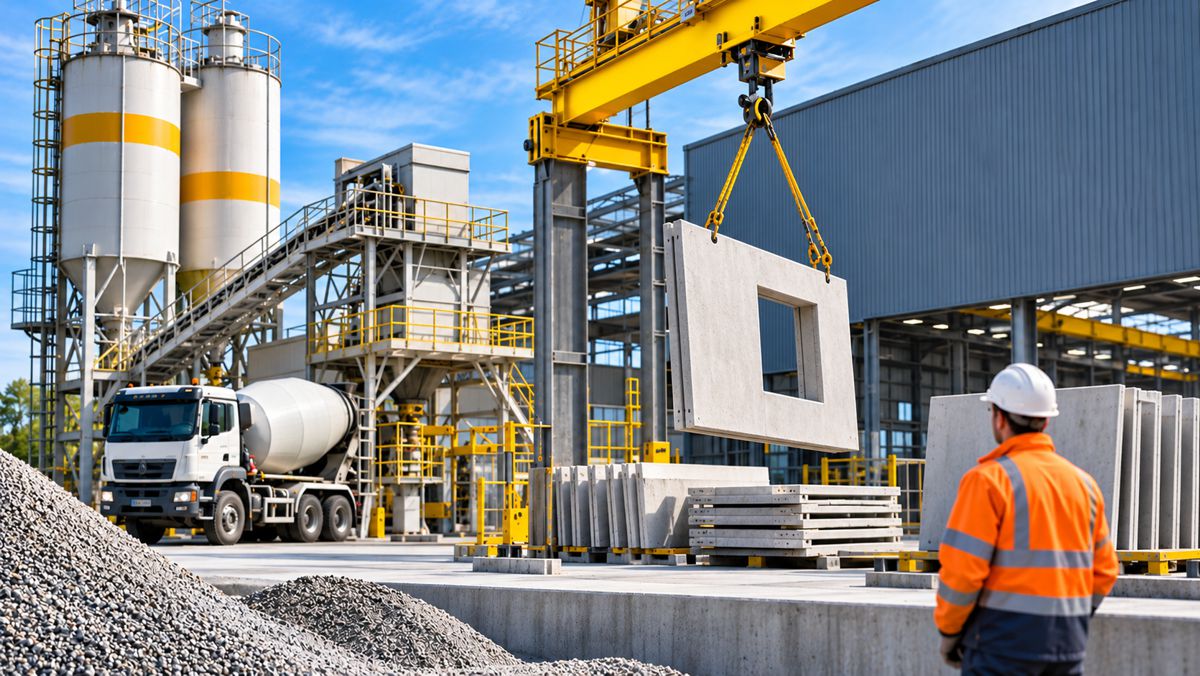
Unlike Brenner, Fehmarnbelt is not being bored. The tunnel is being manufactured in enormous reinforced-concrete sections at Rødbyhavn in Denmark. Each standard element is approximately 217 m long and contains separate tubes for road traffic and railway tracks. Once completed, the elements are sealed, floated from the factory and transported to the prepared trench across the Fehmarnbelt.
The first element made that journey in May 2026. At approximately 73,500 tonnes before additional ballast concrete was added, the structure was moved from the production facility by five tugs and the purpose-built immersion vessel IVY. The controlled immersion operation took around 14 hours before the element reached its position on the seabed.
The complete tunnel will require 79 standard elements and ten shorter special elements containing technical facilities.
The production operation at Rødbyhavn functions more like an industrial manufacturing complex than a conventional tunnel construction site. Reinforcement, concrete production, casting, curing, waterproofing and finishing have to operate as a repeatable process capable of producing structures that will eventually sit beneath the Baltic for generations.
When the tunnel opens, road and rail traffic will no longer depend on the ferry crossing between Rødby and Puttgarden. The fixed link will also form part of the wider Scandinavian-Mediterranean transport corridor, shortening railway and motorway connections between Scandinavia and continental Europe.
The engineering challenge does not finish at either portal. Railway and road upgrades in Denmark and Germany are required to absorb the traffic reaching the new crossing, making the Fehmarnbelt tunnel the centrepiece of a much larger corridor rather than an isolated subsea structure.
3. Rail Baltica, Estonia, Latvia and Lithuania
The Baltic states possess extensive railway networks, but history left most of them using the broad 1,520 mm gauge inherited from the Russian and Soviet railway systems.
Rail Baltica is building a new standard-gauge railway through Estonia, Latvia and Lithuania towards Poland, connecting the Baltic states more directly with the wider European railway network.
After years dominated by planning, design, land acquisition and procurement, the project has entered a much more physical stage. During 2026, approximately 107 km of main line was under construction in Estonia. Latvia had around 30 km of priority southern works under way, while Lithuania had 114 km in construction.
The wider programme involves far more than track. Contractors are building bridges, viaducts, embankments, cuttings, drainage, wildlife crossings, stations and maintenance facilities across three countries, while the eventual railway will require electrification, signalling and European Rail Traffic Management System infrastructure.
Major passenger stations and urban connections add another layer of complexity, particularly around Tallinn and Riga. At Riga, Rail Baltica interfaces with the central station, airport and existing Latvian transport system.
The railway is designed for passenger trains operating at up to 249 km/h as well as freight, providing a north-south route from Tallinn through Riga and Kaunas towards the Polish border. It introduces a new European-gauge railway through countries whose existing networks developed around a different technical geography.
In Lithuania, the change is already visible in steel and ballast. The first 8.8 km section has begun receiving rails and sleepers as civil-engineering formation becomes an operating railway.
4. Lyon-Turin and the Mont Cenis Base Tunnel, France and Italy
Farther south, another railway is being driven through the Alps.
The new Lyon-Turin connection centres on the Mont Cenis Base Tunnel between Saint-Jean-de-Maurienne in France and Susa in Italy. At 57.5 km, the twin-bore base tunnel will rank among the world’s longest railway tunnels.
By September 2026, approximately 49.5 km of the project’s planned 164 km of underground galleries had been excavated, equivalent to just over 30% of the total underground works. Seventeen excavation fronts were active.
The scale of the machinery reflects the geology and distances still ahead. At Modane, a new Herrenknecht gripper tunnel boring machine is being assembled for an approximately 18 km drive towards the underground safety site at Clarea in Italy. The machine is around 334 m long, weighs approximately 3,200 tonnes and carries a cutterhead 10.4 m in diameter.
The TBM will operate alongside conventional excavation taking place elsewhere on the project. Access adits, ventilation structures, cross-passages and underground safety facilities are being created alongside the main running tunnels.
The route is intended to shift passenger and freight traffic away from the existing mountain railway, where gradients and alignment constrain train performance. It forms part of the Mediterranean section of Europe’s TEN-T network, with construction continuing simultaneously from multiple sites on both sides of the border.
5. HS2, United Kingdom
HS2 has been reshaped repeatedly since Britain first committed to a new high-speed railway, but the civil engineering between London and Birmingham has continued on an extraordinary scale.
The railway currently under construction extends for approximately 140 miles and includes 681 major structures, 169 bridges, 52 viaducts, 110 embankments and 71 cuttings. More than 32 miles of tunnels form part of the route.
All 23 miles of deep-bore tunnelling between Old Oak Common in west London and Birmingham have now been excavated. Elsewhere, major structures including the Colne Valley Viaduct, Delta Junction and approaches into Birmingham have transformed large sections of the route from earthworks into recognisable railway infrastructure.
London remains one of the project’s most difficult interfaces. In January 2026, TBM Madeleine began driving the first Euston Tunnel from the Old Oak Common area towards central London. Karen, the second machine, followed in March. The pair are capable of progressing at up to approximately 150 m per week as they excavate parallel tunnels towards Euston.
The work takes place beneath densely developed west and north-west London, requiring extensive ground monitoring, logistics planning and management of interfaces with roads, utilities, buildings and existing railway infrastructure.
HS2’s difficulties are substantial. Cost increases, programme delays, changes in scope and the cancellation of the northern phases have transformed the railway from the national network originally proposed.
HS2 estimates the overall programme to be roughly one-third complete, while the main civil works between London and Birmingham are around two-thirds complete. Increasingly, the task is to convert those structures into an operating railway as track, power, signalling, stations, depots, systems integration and testing follow the tunnels, viaducts and earthworks.
6. Grand Paris Express, France
Beneath Paris and its suburbs, one of Europe’s largest transport projects is beginning the transition from construction programme to operating railway.
Grand Paris Express comprises around 200 km of automatic metro lines and 68 stations, extending rapid transit deep into the suburbs surrounding the existing Paris Métro. Much of the network is underground.
The scale has required an industrial tunnelling operation involving dozens of tunnel boring machines, enormous quantities of excavated material and construction sites distributed across a densely developed metropolitan region.
By 2026, different parts of the programme had reached very different stages. Line 15 South was approaching entry into passenger service, scheduled for the fourth quarter of 2026, while initial sections of Lines 16 and 17 are expected to follow in 2027.
Construction continues elsewhere. In April, the project’s 34th tunnel boring machine was named Tiphaine ahead of a planned 5 km drive on Line 15 West between Sèvres and Rueil-Malmaison.
Stations are among the most complex structures. Many are being constructed deep below ground with multiple levels, interchange passages, shafts, ventilation systems and connections into existing rail and metro services that must remain operational during the work.
Much of Grand Paris Express connects suburbs directly with one another rather than requiring passengers to travel through central Paris before changing direction. When complete, the system is expected to carry close to three million passengers each day.
Multiple automated lines now have to be equipped, tested, commissioned and integrated with the existing public transport network while tunnelling and station construction continue elsewhere across the programme.
7. Naples-Bari High-Speed/High-Capacity Railway, Italy
Italy is building a faster railway across the southern Apennines between Naples and Bari, improving connections between the Tyrrhenian and Adriatic sides of the country.
The Naples-Bari programme combines new alignments, extensive tunnelling, viaducts, bridges, station reconstruction and upgrades to existing railway infrastructure. Several sections are already moving from construction into operation.
In February 2026, RFI activated the new 18 km double-track Cancello-Frasso Telesino-Dugenta section. The alignment includes the approximately 4 km Monte Aglio Tunnel and eight viaducts, while 13 level crossings were removed as part of the works.
Farther east, the Apice-Hirpinia section presents a different engineering challenge. Around 13 km of its 18.7 km alignment runs through tunnels beneath the southern Apennines.
In May, TBM Futura completed the 6.5 km Rocchetta Tunnel after 18 months of excavation. The machine advanced at an average of approximately 16 metres per day, with peaks above 29 metres, while installing more than 32,500 precast segments to form the tunnel lining.
The same section includes the Grottaminarda Tunnel, previously excavated by TBM Aurora. In September 2026, Aurora began another drive, this time through approximately 4.4 km of the Melito Tunnel, the third and final tunnel on the Apice-Hirpinia package.
Webuild is delivering the Apice-Hirpinia works for RFI, alongside three other sections of the Naples-Bari programme. The 18.7 km package also includes four viaducts and the new Hirpinia station, where civil works have been completed and access infrastructure is advancing.
Across the wider railway, sections under construction have to be connected progressively with the operating network. That requires carefully planned possessions in which track, signalling, power and other systems are commissioned while existing passenger services are managed around the works.
The completed route will provide 145 km of new railway and form part of the Scandinavian-Mediterranean TEN-T corridor, strengthening the east-west connection across southern Italy.
8. Stuttgart 21, Germany
Few European infrastructure projects demonstrate the difficulty of rebuilding a railway node beneath an operating city as clearly as Stuttgart 21.
The programme replaces Stuttgart’s existing terminus with a new underground through-station and reorganises the surrounding railway network through a system of new tunnels, approaches and connections.
Much of the civil engineering is already physically complete or well advanced. The project includes around 60 km of new railway, much of it underground, together with the new central station and connections towards the airport and regional network.
The transition from civil construction to a functioning railway has proved considerably more difficult than anticipated.
In 2026, Deutsche Bahn revised the commissioning programme following an internal review that identified shortcomings in planning, management and risk control. Rather than opening as previously planned, different elements of the Stuttgart railway node are now expected to enter operation progressively between 2027 and 2033.
The financial forecast has also increased by around €3 billion to approximately €14.5 billion.
Digital railway systems are among the difficult interfaces. Stuttgart is intended to become a major deployment area for digital signalling and train-control technology, adding systems integration to the already complicated task of bringing new tunnels, platforms and approaches into an existing national railway.
Excavation and structural construction can be highly visible, but signalling, software, testing, commissioning and interfaces with an operating railway can determine when passengers actually use what has been built.
9. E39 Rogfast, Norway
Norway’s western coastline presents road engineers with a problem of geography on a different scale.
Deep fjords repeatedly interrupt the E39 between Stavanger and Bergen, requiring vehicles to use ferries as the highway moves along the coast. Rogfast is intended to remove one of those interruptions by taking the motorway beneath the sea.
The project will create the world’s longest and deepest subsea road tunnel, with twin tubes extending for approximately 26.7 km beneath Boknafjorden and Kvitsøyfjorden. At its deepest point, the road will run around 390 m below sea level.
An underground junction will connect the main tunnel with Kvitsøy through a separate tunnel system, adding another level of complexity to the subterranean road network.
Ventilation is a major engineering requirement at these depths and distances. In February 2026, crews achieved breakthrough on the first of two approximately 211 m-deep ventilation shafts on Kvitsøy. One shaft has a diameter of around 9.4 m and the other 8.6 m, descending towards a ventilation cavern approximately 20 m high.
Implenia and Stangeland are among the contractors delivering the Kvitsøy works, which include extensive underground excavation as well as the ventilation system.
Rogfast forms part of the wider ferry-free E39 programme along Norway’s west coast. When completed, it is expected to remove the Mortavika-Arsvågen ferry crossing and reduce the Stavanger-Bergen journey by around 40 minutes. Opening is currently expected in 2033.
The project turns a maritime interruption into continuous highway infrastructure, but doing so requires motorway-scale tunnels at depths normally associated with mining rather than everyday road transport.
10. Ostlänken, Sweden
Sweden’s Ostlänken programme is adding a new double-track railway between Järna and Linköping, increasing capacity on one of the country’s principal north-south transport corridors.
The approximately 160 km railway will connect Stockholm’s wider region with Nyköping, Skavsta Airport, Norrköping and Linköping, separating faster passenger services from parts of the existing network and releasing capacity for regional and freight trains.
After a long planning and design period, the programme is moving into substantial procurement and construction.
Nyköping provides one of the clearest examples. Work around the existing railway and station continued during 2026, including foundations, retaining structures, platforms and track modifications.
A railway bridge weighing approximately 1,000 tonnes has been moved into position, while a new 230 m section of platform entered use in April as construction continued around the operating station.
The wider Ostlänken programme has been divided into eleven major projects and contracts. Several large packages are using two-stage contracting and early contractor involvement, allowing contractors to participate in design and construction planning before the principal works begin.
Two major contracts were signed in March 2026, while additional packages continued through procurement and detailed design. As the new line is delivered, faster passenger services will move onto dedicated infrastructure while capacity is released on existing routes for regional trains and freight.
Completing the Connections
Europe’s infrastructure map is already dense. Many of its largest projects are therefore concentrated on connections that geography, history or capacity have left incomplete.
Brenner and Lyon-Turin are creating lower-gradient railway routes beneath the Alps. Fehmarnbelt is replacing a ferry crossing with permanent road and rail infrastructure. Rail Baltica is extending standard-gauge railway north towards Tallinn, while Rogfast takes a motorway beneath a fjord that currently interrupts it.
The same problem appears differently inside cities. Grand Paris Express is creating new routes beneath and around an established metropolis. Stuttgart is rebuilding the architecture of an operating railway node, while HS2 must reach central London through one of Europe’s most congested urban environments.
A tunnel, bridge or railway can remove one bottleneck only to reveal another farther along the route. Brenner requires capable approaches. Fehmarnbelt depends on railway and motorway upgrades on both shores. Rail Baltica has to work across three national systems before connecting with Poland. New civil engineering must increasingly connect with assets built under different technical standards and operating assumptions, often while those assets continue carrying passengers and freight.
The continent is not short of infrastructure. Much of its current engineering effort is concentrated on making the infrastructure it already has work more effectively together.

Key Industry Questions
- How long is the Brenner Base Tunnel? The core base tunnel between Innsbruck and Fortezza is approximately 55 km long. Including the existing Innsbruck bypass, the underground railway system extends to around 64 km.
- How is the Fehmarnbelt tunnel being constructed? The 18 km tunnel is being assembled from 89 prefabricated concrete elements manufactured at Rødbyhavn, floated into position and immersed into a prepared trench on the Baltic seabed.
- When is the Fehmarnbelt tunnel expected to open? The project is intended to create a permanent road and rail connection between Denmark and Germany. The opening programme depends on completion of the immersed tunnel, technical systems and connecting infrastructure on both sides.
- How much of Rail Baltica is under construction? During 2026, approximately 107 km was under construction in Estonia, 30 km of priority works in Latvia and 114 km in Lithuania, where the first track installation has also begun.
- How advanced is the Lyon-Turin base tunnel? By September 2026, approximately 49.5 km of the project’s planned 164 km of underground galleries had been excavated, equivalent to just over 30%.
- How much HS2 tunnelling has been completed? All 23 miles of deep-bore tunnels between Old Oak Common and Birmingham have been excavated. Two additional TBMs began driving towards Euston during 2026.
- How large is Grand Paris Express? The programme comprises approximately 200 km of new automatic metro and 68 stations, with different lines entering operation progressively while construction continues elsewhere.
- Why has Stuttgart 21 been delayed again? Deutsche Bahn’s 2026 review identified problems in planning, management, risk control and systems integration. Commissioning is now expected to take place progressively between 2027 and 2033.
- What makes Rogfast unusual? The approximately 26.7 km project will become the world’s longest and deepest subsea road tunnel, reaching around 390 m below sea level.
- What is Ostlänken? Ostlänken is an approximately 160 km new double-track railway between Järna and Linköping intended to increase passenger capacity while releasing space on existing lines for regional and freight services.
Strategic Takeaways
- Many of Europe’s largest transport investments are adding capacity or removing bottlenecks within established networks rather than opening entirely new transport territories.
- Mountain ranges, seas, ferry crossings and incompatible railway systems continue to create physical breaks between otherwise sophisticated national networks.
- Existing infrastructure around a megaproject can be as important as the project itself, particularly where approach routes lack sufficient capacity.
- Signalling, software, testing, commissioning and systems integration can become critical programme risks after the principal civil engineering is complete.
- Construction through established cities and transport corridors increasingly depends on delivery methods that allow existing infrastructure to remain in use.
Explore the Global Infrastructure Series
This article is part of Highways.Today’s global review of 110 infrastructure projects across 11 regions, examining the major transport, energy and civil engineering projects shaping investment and construction around the world.
- Middle East & North Africa
- Southeast Asia
- Africa
- Latin America
- Europe
- North America
- Central Asia
- South Asia
- China
- East Asia
- Australia, New Zealand & the Pacific