From Laboratory Alloy to Working Engine in Just Four Years
When Oak Ridge National Laboratory and General Motors confirmed that a pair of advanced aluminium alloys had cleared the strength and durability thresholds of a new medium-duty truck engine, most of the coverage settled on the headline numbers: a weight reduction of around 15 percent and a fuel-efficiency gain of more than 10 percent.
Those figures matter to any fleet operator watching running costs, yet they understate what the project actually demonstrates. The more consequential development sits in the timeline rather than the powertrain. The alloys at the centre of the work were designed and matured on a schedule that materials scientists would once have considered implausible, and that shift in pace carries implications reaching well beyond a single engine programme.
For decades the practical brake on materials innovation has not been a shortage of promising chemistries but the sheer time required to move any of them from concept to qualified, production-relevant hardware. Oak Ridge puts the historical figure at 10 to 15 years for a genuinely new structural alloy, a horizon long enough to deter most commercial sponsors and to strand many laboratory breakthroughs before they ever reach a foundry.
The laboratory’s accelerated design methodology has cut that pathway to somewhere between two and four years. That compression, rather than any individual mechanical property, is the reason the engineering and investment community should be paying attention, because a faster route to proven metal changes the economics of every sector that depends on demanding structural components.
Briefing
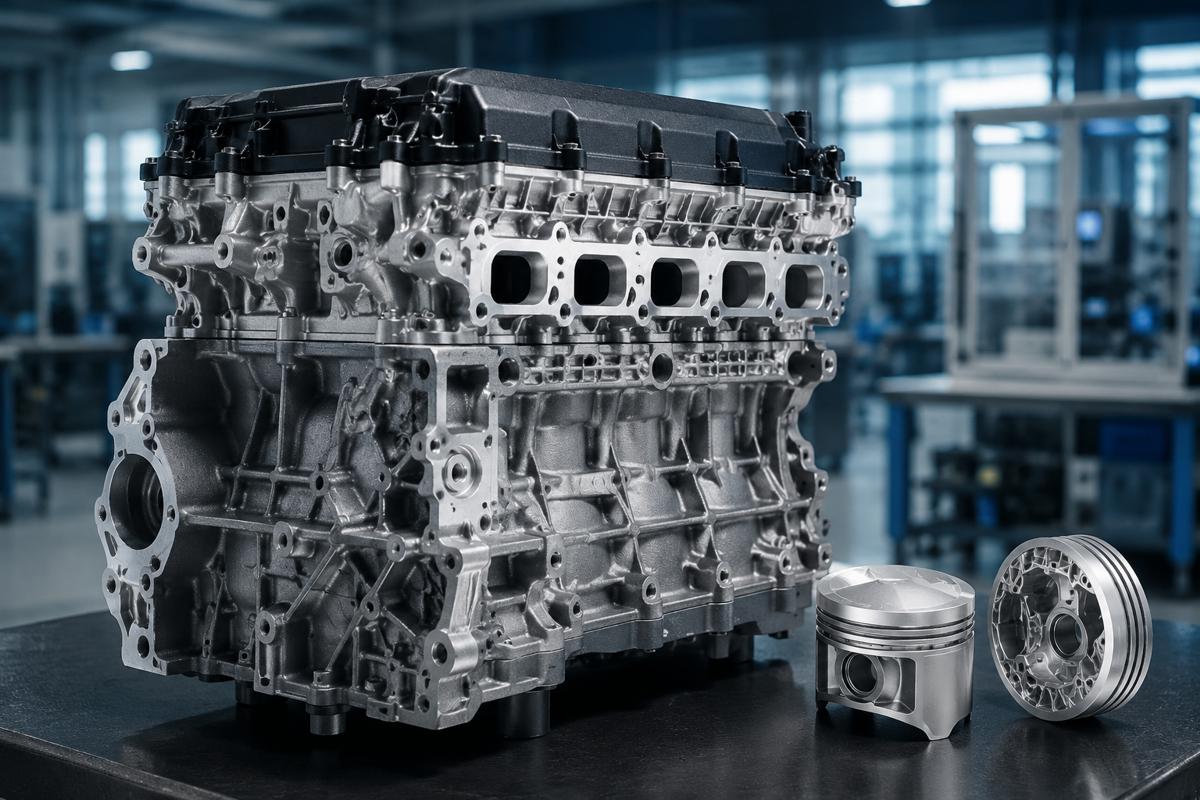
- The GM low-mass, high-efficiency (LMHE) medium-duty truck engine used two ORNL-developed aluminium alloys, cast ACMZ for the block and cylinder heads and printed DuAlumin3D for the pistons, delivering a weight reduction of roughly 15 percent and a fuel-efficiency improvement of more than 10 percent.
- ORNL’s accelerated alloy-design approach shortens the route from targeted concept to production-relevant prototype from a historical 10 to 15 years down to between two and four years, cutting the time, cost and risk of commercialising new materials.
- ACMZ resolves a long-standing trade-off by holding strength at temperatures around 100°C above conventional automotive cast grades such as the 319 and 356 families, while DuAlumin3D is formulated specifically for additive manufacturing and retains useful properties towards 400°C.
- The programme earned a 2025 R&D 100 Award and a DOE 2025 Team Award, extending a lineage that began with ACMZ’s development alongside FCA US and Nemak from 2012 and continued through DuAlumin3D’s later additive-manufacturing work.
- Medium-duty chassis-cab trucks are core infrastructure and construction fleet assets, upfitted as tippers, service bodies and utility platforms, which places the engine’s efficiency and lifecycle gains directly in the path of vocational operators.
Why the Development Timeline Is the Real Headline
The methodology behind the compression is not a single tool but an integrated way of working that the materials community has spent two decades assembling. Integrated computational materials engineering, usually shortened to ICME, replaces much of the traditional trial-and-error of alloy development with computational modelling of how a given chemistry will behave, validated against targeted physical experiments rather than exhaustive ones.
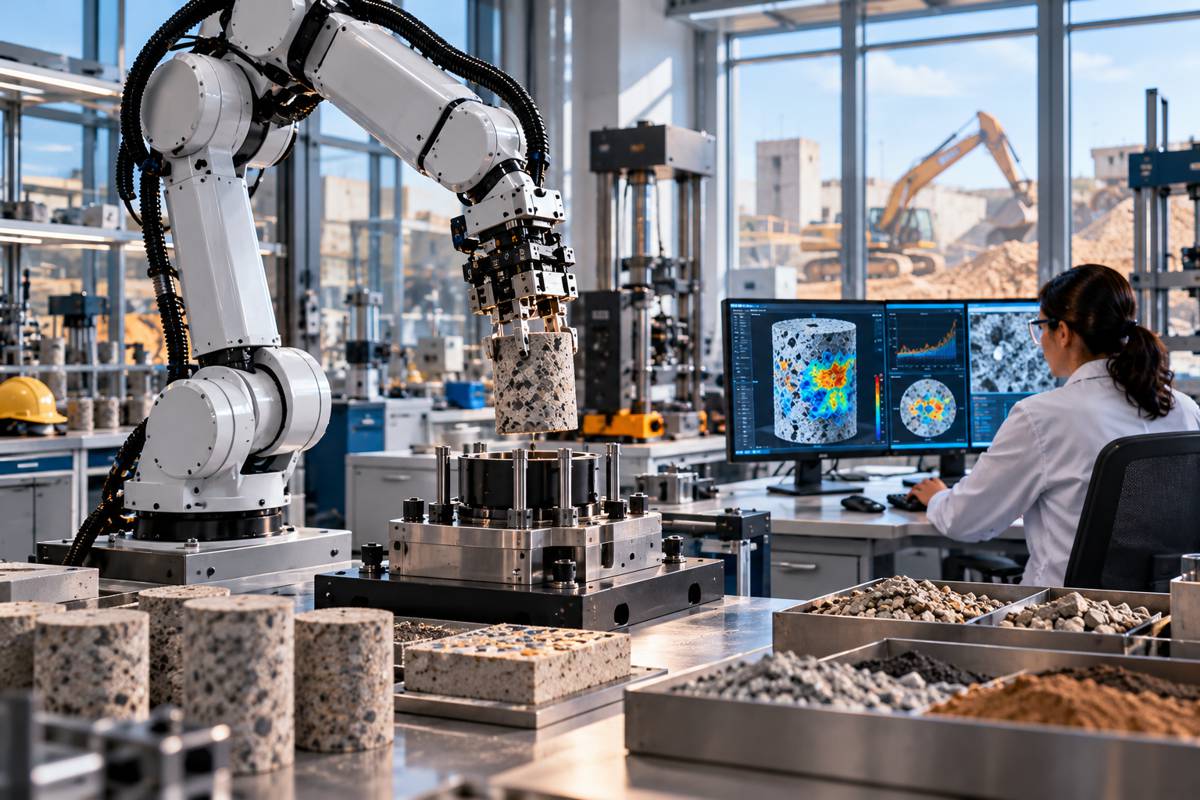
At Oak Ridge that modelling sits alongside a substantial experimental apparatus, including rapid X-ray computed tomography, advanced electron microscopy, computational thermodynamics and neutron diffraction carried out while components are under load. The combination allows researchers to predict, test and refine a composition in cycles measured in months rather than years.
That approach did not appear in isolation. It reflects the broader ambition of the United States Materials Genome Initiative, established to halve both the time and the cost of bringing a new material to market, and it draws on decades of steady progress in computational methods such as CALPHAD phase-diagram modelling. The significance for industry is straightforward in commercial terms even where the metallurgy is complex.
When the qualification pathway for a new structural material collapses from a decade or more into a handful of years, the calculation that a manufacturer, foundry or component supplier makes about whether to sponsor materials work changes fundamentally. A shorter horizon lowers the capital at risk, shortens payback and makes bespoke materials a realistic lever for competitive advantage rather than a research luxury reserved for the best-funded programmes.
Solving the Weight Against Heat Trade-Off
The technical problem the alloys address has constrained engine design for years. Materials tough enough to survive the loads and sustained running of a commercial truck engine tend to be dense, and density works directly against fuel economy. Lighter metals improve mileage, but most commercially available lightweight alloys lose strength as temperatures and pressures climb inside a high-performance engine, which invites premature failure.
The aluminium grades that have served the industry for decades, the 319 and 356 families, begin to weaken appreciably above around 200°C, which caps how hard and how efficiently an engine can be run.
ACMZ, an aluminium-copper-manganese-zirconium alloy, was designed to break that ceiling. It holds strength at temperatures roughly 100°C higher than the standard cast grades while remaining affordable and castable on existing foundry lines, which is why it was chosen for the LMHE engine’s block and cylinder heads. DuAlumin3D takes a different route for the most thermally punished component.
Built for the pistons and formulated for additive manufacturing, it retains useful mechanical properties towards 400°C and offers what the laboratory describes as the best-known combination of strength and durability at extreme temperatures for a structural aluminium alloy. As Allen Haynes, who directs the ORNL-led Powertrain Materials Core Program consortium, put it: “The shared goal between ORNL and GM was to demonstrate next-generation engines for high-volume trucks that are lighter, lower-cost, and more efficient, all without sacrificing power and performance.”
An Alloy Built for the Printer, Not Adapted to It
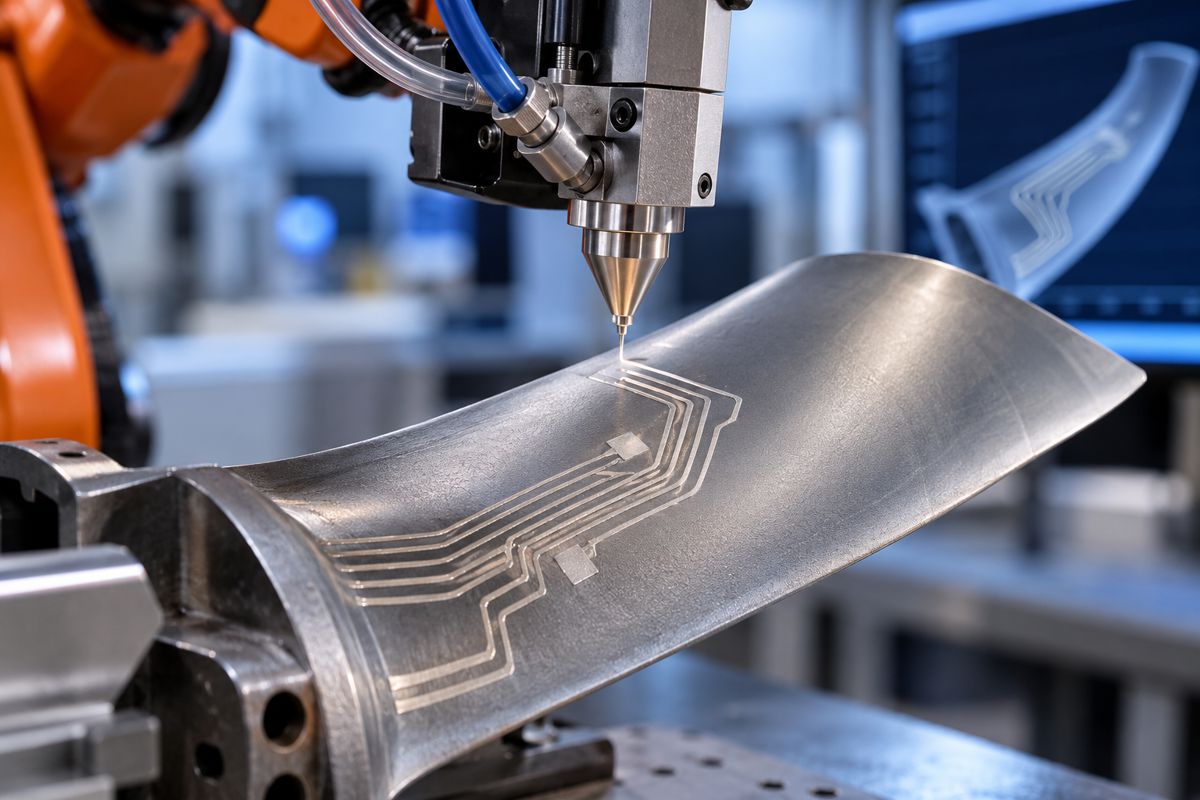
DuAlumin3D matters for a reason that extends past its temperature rating. The overwhelming majority of alloys developed for conventional manufacturing cannot be printed at all, and by ORNL’s account fewer than one in two hundred of the thousands of available alloys are suitable for additive manufacturing. High-strength aluminium alloys are particularly troublesome because they tend to crack as they cool during laser powder bed fusion, a defect known as hot cracking that has kept many desirable compositions off the printer bed entirely.
DuAlumin3D, with a nominal composition of aluminium alloyed with cerium, nickel, manganese and zirconium, was engineered to exploit the rapid solidification of additive manufacturing rather than fight it, forming heat-resistant strengthening particles at the nanoscale as the part builds.
Designing the alloy around the process rather than the other way round is the point that industrial engineers should take from this. Additive manufacturing earns its cost premium when it enables geometries and internal features that casting or machining cannot achieve, and a printable high-temperature aluminium opens that design freedom for components that previously demanded heavier titanium, steel or nickel-based materials.
The laboratory has pointed to heat exchangers as an obvious beneficiary, estimating that substituting DuAlumin3D for titanium in aviation heat exchangers could remove hundreds of pounds per aircraft. For construction and industrial equipment the same logic applies to any thermally loaded part where weight, geometric complexity or spare-part availability drives lifecycle cost.
Where the Efficiency Gain Lands in the Field
The engine at the centre of the work is a medium-duty unit, and that classification places it squarely in infrastructure and construction territory. Medium-duty chassis-cab trucks are the platforms that arrive on site as tippers, service rigs, utility bodies and crew transport, upfitted to specification and expected to work hard for years. For the operators who run them in fleets, a double-digit fuel-efficiency improvement compounds across mileage and vehicle count into a material line on the operating budget, and a lighter powertrain can free additional payload capacity within the same weight rating.
Amit Shyam, who leads the laboratory’s Alloy Behavior and Design Group, framed the driver economics plainly, observing that “Any weight shaved off an engine equates to more miles per gallon for the average driver, saving not only energy, but money.”
The wider prize is larger still. Oak Ridge has estimated that adoption of DuAlumin3D across even a tenth of the automotive sector could save the United States in the region of three billion dollars in annual fuel costs, an indication of the scale at which incremental materials gains accumulate when multiplied across a national vehicle parc.
Those figures are laboratory projections rather than booked savings, and the LMHE engine itself remains a demonstrator rather than a catalogue product, yet the direction of travel is clear. Efficiency improvements delivered through materials rather than through wholesale powertrain replacement are commercially attractive precisely because they can be adopted within existing manufacturing footprints and familiar vehicle formats, without asking operators to change how they buy or run their fleets.
Where Commercial Value Is Beginning to Concentrate
The GM programme is best read as one visible output of a materials-development capability that has been maturing for more than a decade. ACMZ traces back to a 2012 challenge from the Department of Energy, developed with FCA US and Nemak and delivered in just under four years against an expectation of ten to twenty; DuAlumin3D followed, reaching prototype automotive pistons in under three.
That the same laboratory group has now put both alloys into a single working engine, and collected a 2025 R&D 100 Award and a DOE Team Award for the effort, signals that the accelerated methodology is repeatable rather than a fortunate one-off.
For industry leaders the strategic reading is about where advantage is accumulating. Value is concentrating in the materials intellectual property itself, in the computational toolchains and characterisation infrastructure that make rapid design possible, and in the additive-manufacturing supply chains capable of turning novel alloys into qualified parts.
National laboratories occupy an unusual position in that landscape, combining the modelling expertise, the instruments and the industry partnerships needed to carry a material from concept to road-ready hardware. Shyam was explicit about that role, describing the national laboratories as “uniquely positioned to rapidly develop the next generation of lightweight material innovations to help drive the future competitiveness of U.S. manufacturing.”
What Industry Leaders Should Take From This
The practical message for procurement teams, infrastructure owners and equipment manufacturers is that materials are moving from a fixed constraint to an adjustable variable. A component that could not previously be made lighter, run hotter or printed in a single piece may now be a two-to-four-year development question rather than a decade-long one, which changes what is worth specifying and what is worth sponsoring.
Fleet operators and their suppliers can reasonably expect efficiency and lifecycle gains to keep arriving through materials substitution, delivered inside familiar vehicle and equipment formats rather than requiring disruptive platform change.
For investors and policymakers the signal is about the industrial value of sustained materials capability. The lineage running from ACMZ through DuAlumin3D to a working GM engine shows what an integrated modelling, characterisation and manufacturing base can produce when it is funded and kept intact across successive programmes.
Shyam’s summary of the achievement captures the shift better than any specification sheet, with the observation that the work “proves that materials science is not just groundbreaking, but also road ready.”
The commercial takeaway is not that one truck engine will reshape the market. It is that the distance between a laboratory alloy and a production component is shrinking, and the organisations that understand where that capability sits, and how to access it, will be better placed to turn materials into a durable competitive advantage.
Key Industry Questions
- What makes ORNL’s accelerated alloy-development approach faster than traditional methods? The gain comes from integrated computational materials engineering, which models how a candidate composition will behave before it is cast or printed, then validates those predictions with targeted rather than exhaustive physical testing. Oak Ridge pairs that modelling with rapid X-ray computed tomography, electron microscopy, computational thermodynamics and neutron diffraction on components under load. Together these tools replace slow trial-and-error iteration with focused design cycles, allowing the laboratory to move from a targeted concept to a production-relevant prototype in two to four years rather than the ten to fifteen historically required. The approach is also described as generalisable, meaning it can be applied to other alloy families and manufacturing routes.
- How significant is a 15 percent weight reduction and 10 percent fuel-efficiency gain for a truck engine? For a single vehicle the figures are meaningful; across a fleet they compound. A more than 10 percent efficiency improvement lowers fuel spend proportionally over the working life of each truck, and a 15 percent lighter engine can release payload headroom within a fixed gross vehicle weight rating. In vocational fleets, where trucks run high mileage over many years, those effects accumulate into a substantial operating saving. The gains are also delivered through materials substitution inside a conventional engine architecture, which means operators do not have to change vehicle format, refuelling behaviour or maintenance practice to capture them.
- Why is a printable high-temperature aluminium alloy important for manufacturers? Fewer than one in two hundred conventional alloys can be additively manufactured, and high-strength aluminium grades are especially prone to hot cracking during laser powder bed fusion. That has kept many attractive compositions off the printer entirely. DuAlumin3D was designed to suit the rapid solidification of printing rather than resist it, which unlocks components that need both light weight and high-temperature strength. The commercial value lies in design freedom: printed parts can carry internal channels and complex geometries that casting or machining cannot achieve, and a printable aluminium can replace heavier titanium, steel or nickel in thermally demanding applications while reducing part mass and, in some cases, supply-chain dependence.
- Are ACMZ and DuAlumin3D available for commercial use now? Both alloys have completed demonstration in a working prototype engine and have accumulated recognition, including R&D 100 Awards for their underlying development and a 2025 award for the GM engine that used them. The LMHE engine itself remains a demonstrator rather than a production catalogue item, so wider commercial availability depends on manufacturers taking the materials through their own qualification and tooling. ACMZ has the longer commercial track record, having been cast into production-style cylinder heads with industry partners during earlier work. Prospective adopters would typically engage through licensing and cooperative development rather than buying finished components off the shelf.
- What does this mean for construction and infrastructure fleet operators? The engine is a medium-duty unit, the class that underpins tippers, service trucks, utility bodies and site transport across construction and infrastructure work. Efficiency and weight gains at this level translate into lower running costs and potential payload benefits for exactly the vehicles operators rely on daily. More broadly, the development signals that materials-driven improvements will keep arriving in vocational equipment without demanding new platforms or refuelling infrastructure. Operators evaluating fleet renewal should factor in that powertrain efficiency is now advancing through metallurgy as well as through electrification and combustion tuning, which widens the routes to lower total cost of ownership.
- How does additive manufacturing change the economics of engine and equipment components? Additive manufacturing carries a cost premium, so it pays where it enables something conventional methods cannot: intricate internal geometries, part consolidation, weight reduction in critical locations, or on-demand production of low-volume spares. A printable high-temperature alloy extends that value into hot, highly stressed components that previously required heavier or more expensive metals. For equipment makers this can mean lighter assemblies, fewer joints and the ability to produce specialised parts closer to demand. The economics improve further as printable alloy options expand, because design teams gain more freedom to optimise a component for performance rather than for the limits of casting or machining.
- Why do national laboratories feature so heavily in advanced materials development? Rapid alloy design demands a rare combination of computational modelling, high-end characterisation instruments and close industry partnership, and national laboratories are among the few institutions that hold all three under one roof. Oak Ridge combines its modelling capability with facilities such as its neutron sources and advanced microscopy, then works directly with manufacturers and suppliers through cooperative agreements. That structure lets a material progress from concept to validated hardware without the fragmentation that slows development spread across separate academic and commercial actors. The result is a repeatable pipeline that private firms can tap through collaboration rather than having to build the entire capability themselves.
- Could this methodology apply to construction plant and heavy equipment beyond trucks? The accelerated design approach is described as generalisable, so in principle it applies wherever demanding structural components could benefit from lighter, stronger or more heat-resistant materials. Construction plant, hydraulic systems, engine and driveline parts, and thermally loaded components are all candidates. The same compression of development time that produced the truck-engine alloys could shorten the route to bespoke materials for excavators, loaders, generators and other heavy equipment. The practical constraint is qualification and cost for each specific application, but the underlying message holds: materials that were once fixed limits are becoming design variables that manufacturers can realistically influence.
Strategic Takeaways
- The decisive shift is the collapse of alloy-development timelines from a historical decade-plus to two-to-four years, which turns bespoke materials from a research luxury into a viable commercial lever for manufacturers and their suppliers.
- Efficiency gains delivered through materials substitution are attractive because they fit inside existing engine architectures, manufacturing footprints and vehicle formats, offering lower running costs without the disruption of platform change.
- Printable high-temperature aluminium such as DuAlumin3D expands additive manufacturing into hot, highly stressed components, opening design freedom and potential substitution for heavier titanium, steel and nickel across transport and industrial equipment.
- Commercial value is concentrating in materials intellectual property, computational and characterisation infrastructure, and additive-manufacturing supply chains, with national laboratories positioned as key access points for firms unable to build that capability alone.
- The ACMZ-to-DuAlumin3D lineage shows a repeatable pipeline rather than a single success, and organisations that learn how to engage with it early will be better placed to convert materials capability into durable competitive advantage.