VolvoCE Celebrates the First SD120 Compactor in Thailand
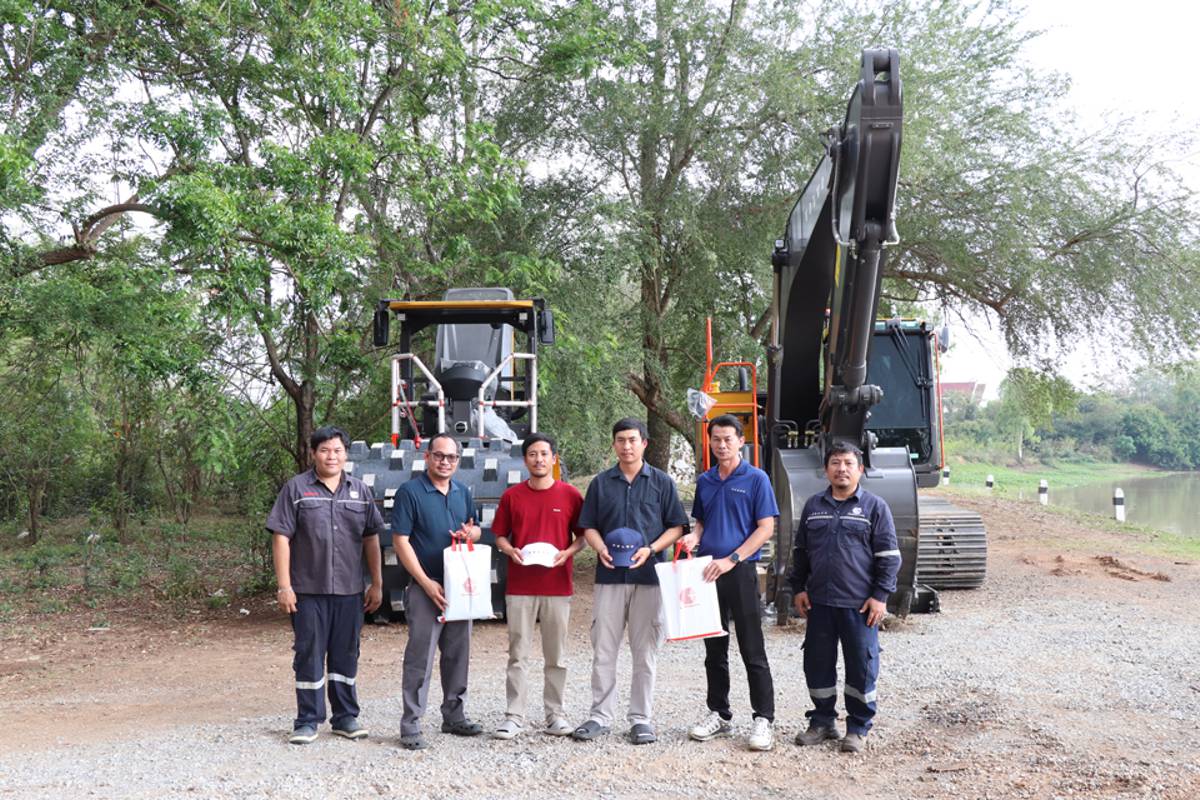
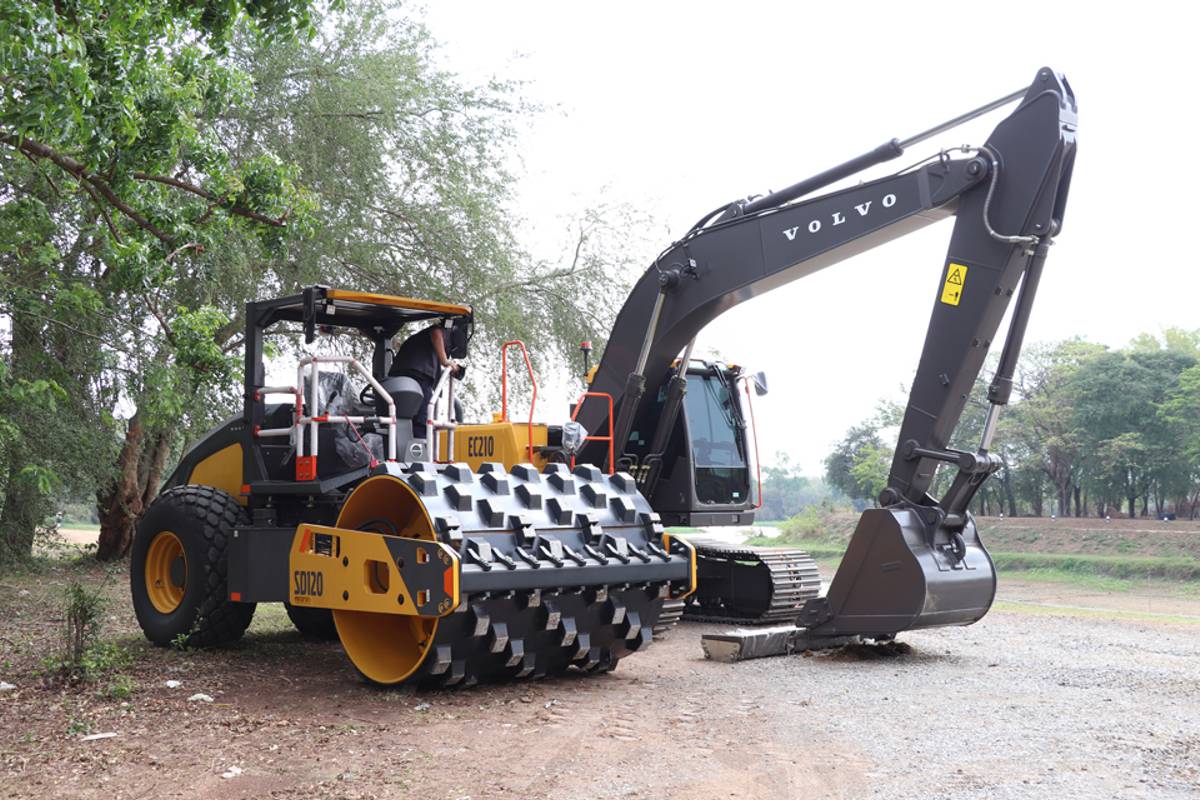
When Volvo Construction Equipment handed over its first New Generation SD120 soil compactor in Thailand, the machine itself was only half the story. The delivery, completed through authorised dealer CHAIRATCHAKARN (Bangkok) Co., Ltd., known across the trade simply as CHAB, went to local contractor Gabion (Thailand), a returning buyer whose Volvo fleet has been steadily widening over the past year.
On paper it reads as a routine commercial transaction. Look a little closer, though, and it works as a useful barometer for where Thailand’s road construction sector is heading.
The compactor did not arrive on its own. It came bundled with a New Generation EC210 excavator as part of a fleet package, and that pairing matters. Gabion had already taken on two EC210 units during 2025 and, by the company’s own account, came away satisfied with how the machines performed and how the aftersales support held up.
Those experiences fed directly into the decision to add the SD120, which is exactly the kind of repeat-purchase pattern equipment makers chase. The order also followed hard on the heels of the SD120 range’s official launch at CHAB’s customer expo in February 2026, the event that introduced the model to Thai buyers in the first place.
Briefing
- Volvo CE has delivered its first New Generation SD120 soil compactor in Thailand through dealer CHAB, supplied to contractor Gabion (Thailand) alongside a New Generation EC210 excavator.
- CHAB has ordered eight SD120 units from the factory, with four already delivered and the remaining four scheduled to follow, pointing to firm demand rather than a one-off sale.
- The 11.4 tonne SD120 was engineered specifically for Asian markets, carries a 99kW Volvo D5 engine, and offers up to 8% better fuel efficiency than its predecessor along with CareTrack telematics.
- Thailand’s Ministry of Transport has been allocated roughly THB265 billion for 2026, with a pipeline of road, rail and airport projects waiting on a new government after the February election.
- Volvo CE opened 2026 with deliveries up 12% in the first quarter, and growth across Southeast Asia helped offset softer conditions in Europe, China, Japan and South Korea.
Why Eight Units Tells You More Than One
A first delivery generates the headline, but the order book behind it carries the weight. CHAB has committed to eight SD120 machines from the factory, half of which have already landed with the remainder due to follow. That is not the footprint of a dealer testing the water. It signals a read on demand that is confident enough to tie up working capital in inventory ahead of firm orders, which dealers tend to do only when they can see the pipeline filling.
CHAB traces the momentum back to the final quarter of 2025, when activity in road construction and maintenance started picking up noticeably. Compaction equipment sits at an interesting point in that cycle. Soil compactors are early-stage machines, the ones that go to work once earthmoving is underway and the subgrade needs preparing before any surfacing happens. A surge in compactor demand, then, often shows up before the more visible signs of a roadbuilding boom, which makes it a leading indicator worth watching for anyone tracking the sector’s direction.
Dwi Prihartono, Head of Market Thailand at Volvo CE, said: “Thailand is an important market for Volvo CE, and we are seeing strong demand for efficient and reliable compaction solutions. The delivery of our first SD120 soil compactor reflects both the growing opportunities in infrastructure development and the confidence customers place in Volvo machines and services.”
Inside the Machine
The New Generation SD120 was not a global model adapted for the region as an afterthought. Volvo CE built it with Asian customers specifically in mind, and it made its broader debut in September 2025 at the Inspire event in Indonesia, co-hosted with dealer PT Indotruck Utama. Weighing in at 11.4 tonnes, the single-drum machine is pitched at earthworks and roadbuilding jobs where reliability and running costs tend to decide which brand a contractor keeps coming back to.
Under the bonnet sits a 99kW Volvo D5 engine matched to revised hydraulics, and the headline figure Volvo quotes is up to 8% better fuel efficiency than the outgoing generation. That gain comes partly from a reworked throttle that now offers three speed settings rather than two, giving operators finer control over how hard the machine works and how much diesel it burns in the process. Other tweaks address the day-to-day grind of site life: a sturdier propulsion lever, a repositioned throttle, and a ROPS canopy with a bolt-on sunshade that comes apart easily for transport. The version reaching Thai customers also ships with CareTrack, Volvo’s telematics platform, which feeds back machine data in real time and underpins the proactive maintenance that contractors increasingly expect as standard rather than a luxury.
Thailand’s Roadbuilding Backdrop
None of this is happening in a vacuum. Thailand has set out an ambitious infrastructure agenda, and the Ministry of Transport secured roughly THB265 billion for 2026, an increase of around 8.5% on the previous year. The ministry has assembled a pipeline of road, rail and airport schemes, including the Nakhon Pathom to Cha-am Motorway and the Phuket Expressway, that it wants to push forward quickly. Beyond the annual budget, the government has floated a much larger transport blueprint running to well over a trillion baht, with the Land Bridge project linking the Gulf of Thailand and the Andaman Sea among the headline ambitions.
There is a caveat worth flagging, and it cuts both ways for equipment suppliers. The country held a general election in February 2026, and political transition has a habit of stalling approvals on projects that carry long-term budget commitments. Several major schemes were left waiting on a new Cabinet’s sign-off. For a contractor like Gabion, that uncertainty makes machine reliability and the strength of dealer support more valuable, not less, since fleets need to stay productive through whatever delays materialise. Looking further out, PwC Thailand has projected that annual infrastructure spending could climb from around USD18 billion in 2024 to USD28 billion by 2050, with transport remaining the single largest segment. The longer arc, in other words, points firmly upward even if the near term carries some political noise.
A Regional Bright Spot for Volvo
The Thailand delivery slots into a wider pattern that has been working in Volvo CE’s favour. The company opened 2026 with deliveries up 12% in the first quarter, and while Europe and China softened and Japan and South Korea declined, the markets across Southeast Asia, alongside Indonesia, the Middle East, Africa and Oceania, kept growing. Asia outside China registered an increase, and that regional spread has helped the group hold its margins steady through a period of currency headwinds and US tariff costs.
Nunnapin Petcharapirat, known as Nan, CEO of CHAIRATCHAKARN (Bangkok) Co., Ltd., added: “This delivery marks an exciting step forward for our compaction business in Thailand. Customers are increasingly looking for solutions that combine performance with strong aftermarket support. Our partnership with Volvo CE allows us to deliver both, and we are proud to support Gabion (Thailand) as they continue to grow their operations with Volvo equipment.”
Competition in the region is anything but gentle, mind you. Southeast Asia’s construction equipment market was sized at roughly 53,000 units in 2024 and is forecast to push past 69,000 by 2030, and the established global names jostle with fast-moving Chinese manufacturers competing hard on price. In that fight, the SD120 story is instructive: Gabion came back not chiefly because of a spec sheet but because the earlier machines did what they were supposed to and the support held up. For Volvo and CHAB, that is the loyalty loop they are banking on, and a single compactor in Thailand is one more turn of it.