Brick in Architecture Awards Return for 2026 As Durability Becomes the Story
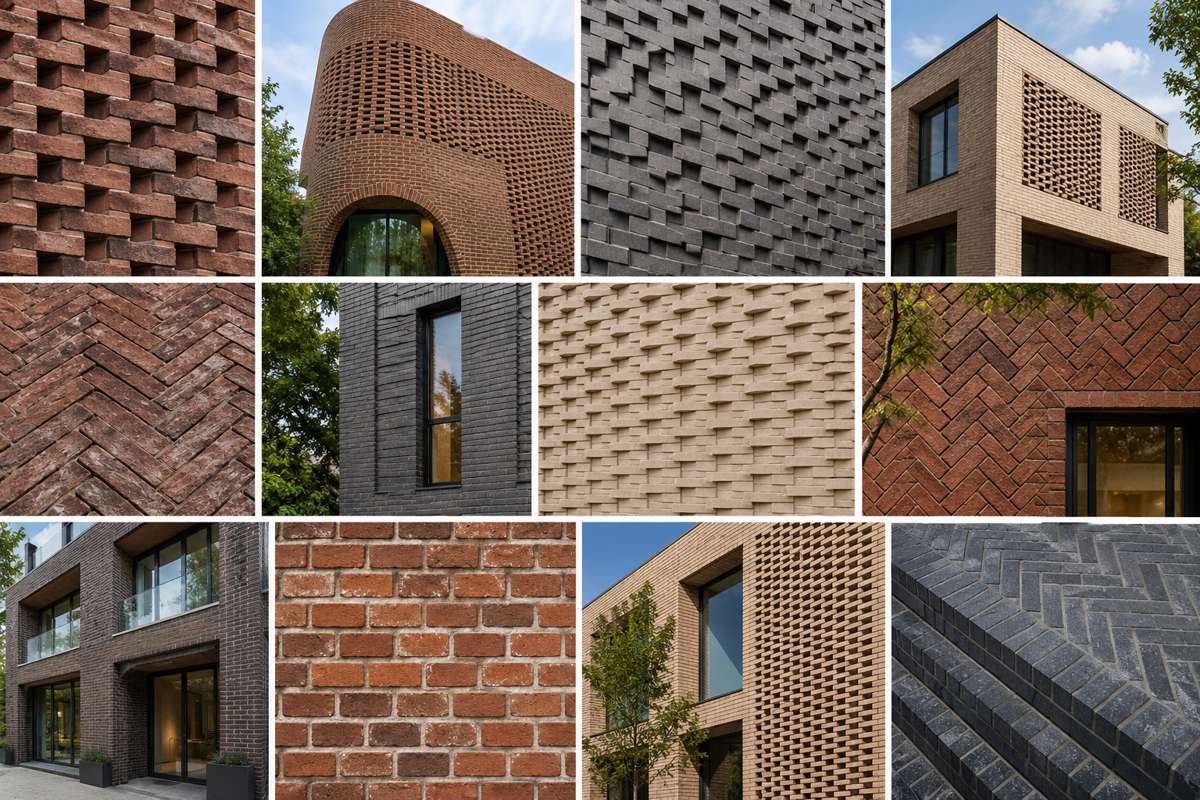
The Brick Industry Association has thrown open entries for its 2026 Brick in Architecture Awards, and while a design competition rarely makes headlines in the same breath as a motorway scheme or a port expansion, this one carries a longer shadow than its modest framing suggests.
Running since 1989, the programme has become the most widely watched international showcase for fired-clay brick, and the projects it crowns tend to set the visual and technical reference points that architects, specifiers and developers reach for over the following decade. Entries close on 25 September at 11:59 p.m. EDT, with judging by industry peers in October.
What gives the 2026 cycle weight beyond the design press is timing. Brick is being reappraised across the construction value chain as owners, lenders and regulators sharpen their focus on durability, whole-life carbon and the cost of replacing short-lived cladding. A competition that rewards buildings still performing well decades after completion is, in effect, advertising the material’s case for resilient, low-maintenance construction at exactly the moment that case is commercially relevant.
For an industry weighing the trade-offs between cheaper envelopes and assets that hold their value, the awards double as a barometer of where serious clay specification is heading.
Briefing
- The Brick Industry Association (BIA) has opened entries for the 2026 Brick in Architecture Awards, the leading international competition for fired-clay brick, with a submission deadline of 25 September at 11:59 p.m. EDT and peer judging in October.
- Projects compete across nine categories for Best in Class, Gold, Silver or Bronze, plus a single overall Craftsmanship Award, with winners celebrated at the Brick Excellence Gala in Nashville, Tennessee, during the National Clay Brick Expo.
- Eligibility is tightly drawn: entrants must be architects or designers at architectural, design-build or landscape firms, projects must have completed on or after 1 January 2020, and new clay brick must form more than half of the visible exterior surface.
- The reopening lands as clay reasserts its commercial position on the strength of thermal mass, fire resistance and a service life that supports whole-life carbon and resilience arguments now shaping procurement.
- Brick remains a foundational construction material, with clay holding the largest share of global brick consumption and Asia-Pacific dominating production, even as carbon pricing and energy costs reshape where and how it is made.
Why a Brick Award Now Reads as a Market Signal
The shift in how brick is judged commercially has been gradual, then suddenly obvious. For years the conversation around facades fixated on upfront cost and speed, which pushed lightweight rainscreen systems and thin claddings to the front of the queue. That calculus is changing as building owners absorb the bill for envelopes that need recladding within a generation, and as insurers and planning authorities lean harder on fire performance after a decade of scrutiny. Fired clay, which does not burn, weathers slowly and routinely outlasts the structures it wraps, sits comfortably inside that reframed brief.
Sustainability mandates have sharpened the point. Analysts tracking clay-based construction products describe a market being reshaped by tightening building codes that favour materials with strong thermal mass and fire resistance, alongside steady urbanisation.
In Europe, the Carbon Border Adjustment Mechanism is beginning to expose carbon-intensive imports to a price signal, which rewards lower-carbon local production and forces manufacturers to account for the energy their kilns consume. Brick is not a zero-carbon material, and the firing process remains energy-hungry, but a long service life spreads that embodied carbon across many decades of use. That is the argument the awards quietly reinforce every time they honour a building still doing its job.
Inside the Competition and Who Can Enter
The structure is straightforward but demanding. Projects compete in nine categories: Commercial, Education at K-12 level, Higher Education, Single-Family Residential, Multifamily Residential, Thin Brick, Paving and Landscape, Historic Renovation and International. Anything built outside the United States, Canada or a US territory must enter through the International category, which over recent cycles has drawn work from Belgium, China, Colombia, South Africa and beyond, giving the contest a genuinely global field rather than a domestic one with foreign guests.
Eligibility rules keep the bar high and the comparisons fair. Entrants must be architects or designers employed by an architectural, design-build or landscape architecture firm, and every project must have completed on or after 1 January 2020. New clay brick must make up more than half of the visible exterior building or paving surface, a threshold that rules out projects where brick is a token accent.
There are sensible carve-outs: paving entries must use clay pavers across at least half the scheme, while Historic Renovation submissions are exempt from the new-brick rule provided more than half the project involves renovated brick. The association has also built in a safety valve, folding any commercial subcategory that attracts fewer than ten entries into a General Commercial group so that thin fields do not distort the judging.
What the Numbers Say About Brick’s Standing
Strip away the design gloss and brick remains one of the construction sector’s true heavyweights by volume. Industry analyses put global brick production above 1.6 trillion units a year, with Asia-Pacific responsible for the lion’s share on the back of construction activity in China and India, and clay accounting for the largest single slice of worldwide consumption thanks to its compressive strength and thermal performance. Those are not the figures of a material in retreat. They describe a mature, foundational segment whose fortunes track the broader building cycle while structural trends, sustainability among them, nudge specification toward higher-performing products.
The near-term demand picture is cautiously constructive. The American Institute of Architects’ consensus forecast has pointed to non-residential construction spending edging up through 2025 and into 2026, the kind of measured recovery that favours operators who manage costs well and specify intelligently rather than those chasing volume.
Designers hunting green-building credits have leaned toward fly-ash and lower-carbon brick variants, while thin-brick panels have found a niche speeding up urban multifamily construction, a category the awards now recognise in its own right. The competition’s nine categories map almost exactly onto where that demand is concentrated, which is part of why the entry list each year functions as a useful read on the market’s direction of travel.
Recognition That Travels Beyond the Trophy
There is a hard-nosed commercial logic to why firms bother entering. Winning projects are pushed out through the BIA’s website, press releases, media coverage and social campaigns, giving architects and the manufacturers, distributors and mason contractors behind each build a credential that carries weight in pitches and procurement. In a sector where specification decisions hinge on demonstrable track record, a Best in Class or Craftsmanship Award is marketing that money cannot easily buy, and it tends to follow a firm into its next competition shortlist.
The celebration itself has grown into a fixture. Winners will be honoured live at the Brick Excellence Gala on 8 April 2027 during the National Clay Brick Expo in Nashville, Tennessee, the second outing for an event that drew architects, designers and masonry professionals from around the world to its debut.
As BIA President and CEO Tricia Mauer put it: “These global projects showcase brick’s virtually unlimited flexibility to achieve any aesthetic with exceptional durability for sustainable design.” For an industry that often struggles to put a human face on its materials, an evening that recognises named teams on a stage does real work, turning anonymous supply chains into reputations and giving the next generation of specifiers something to aim at.
A Quiet Bellwether for the Built Environment
It would be easy to file the awards under industry housekeeping, a competition that comes round each year and changes little. That reading misses what the entry pool actually represents. Each cycle gathers a fresh snapshot of how the world’s architects are using a material that has built cities for millennia and now finds itself, somewhat unexpectedly, aligned with the priorities of a carbon-conscious, resilience-minded construction economy.
The buildings that win in 2026 will not just be handsome. They will be evidence of where durable, low-maintenance, long-life construction is heading, and that is a conversation builders, investors and policymakers can no longer afford to treat as merely decorative.
Entries close on 25 September, and the field that assembles between now and then will tell its own story about clay’s place in the next decade of building. For a material this old, the more interesting question is no longer whether brick endures, which it plainly does, but whether the wider industry is finally pricing that endurance into the decisions that matter.